

Dust and overspray contamination cost auto body shops and industrial painting facilities thousands of dollars every year in rework, wasted materials, and equipment wear. If you’ve ever pulled a freshly painted panel out of the booth only to find embedded particles or uneven texture, you already know the frustration. Spray booth films have emerged as one of the most practical, measurable solutions for facility managers who need consistent, high-quality finishes without the constant battle against airborne debris. This article breaks down the top 10 benefits, explains how to choose the right film for your operation, and gives you actionable tips to get the most out of every roll.
Table of Contents
- How spray booth films work: Technology and mechanisms
- Superior dust and overspray defense
- Protecting booth assets: Floors, walls, and lighting
- Safety: Non-slip surfaces and heat resistance
- Cost efficiency: Materials savings and equipment longevity
- Operational flexibility: Easy installation and maintenance
- Next steps: Upgrade your spray booth protection
- Frequently asked questions
Key Takeaways
| Point | Details |
|---|---|
| Reduces paint defects | Using booth films leads to up to 25% fewer coating flaws and higher-quality finishes. |
| Saves on maintenance | Protective films shield assets and minimize the need for frequent cleaning or repairs. |
| Boosts efficiency | Quick installation and lower material consumption keep production streamlined and economical. |
| Enhances safety | Non-slip, heat-resistant options improve staff safety in busy, high-temperature booth environments. |
How spray booth films work: Technology and mechanisms
Before you can choose the right film, you need to understand what’s actually happening at the surface level. Spray booth films fall into a few main categories, each engineered for a specific job inside your booth.
Key film types and their roles:
- Electrostatic films use a controlled charge to attract and trap airborne dust particles before they settle on wet paint
- Self-adhesive multi-layer films bond directly to walls and floors, allowing you to peel off one contaminated layer and expose a fresh surface underneath
- Spray-on protective coatings conform to irregular shapes, corners, and fixtures where sheet films can’t reach
- Light and window films maintain optical clarity so your technicians can accurately assess color and finish
As electrostatic film research confirms, spray booth films provide effective dust protection by attracting and trapping dust particles, reducing contamination on paint surfaces. Choosing the right film starts with your environment: high-heat booths need heat-resistant options, while facilities with heavy foot traffic need durable, non-slip floor films. Explore the full range of types of electrostatic films and compare spray booth protection options to match your specific setup.
“The right film for the wrong surface is still the wrong choice. Match film properties to the specific demands of each booth zone.”
Pro Tip: Pair electrostatic wall films with high-efficiency intake filters. The filters handle large particles; the films catch the fine dust that slips through. Together, they create a layered defense that neither can achieve alone.
Superior dust and overspray defense
The primary reason most facilities adopt spray booth films is straightforward: they dramatically reduce the contamination that ruins finishes. Airborne dust doesn’t just settle on surfaces between jobs. It circulates during active spray cycles, lands in wet paint, and creates defects that require sanding, re-coating, and additional labor.
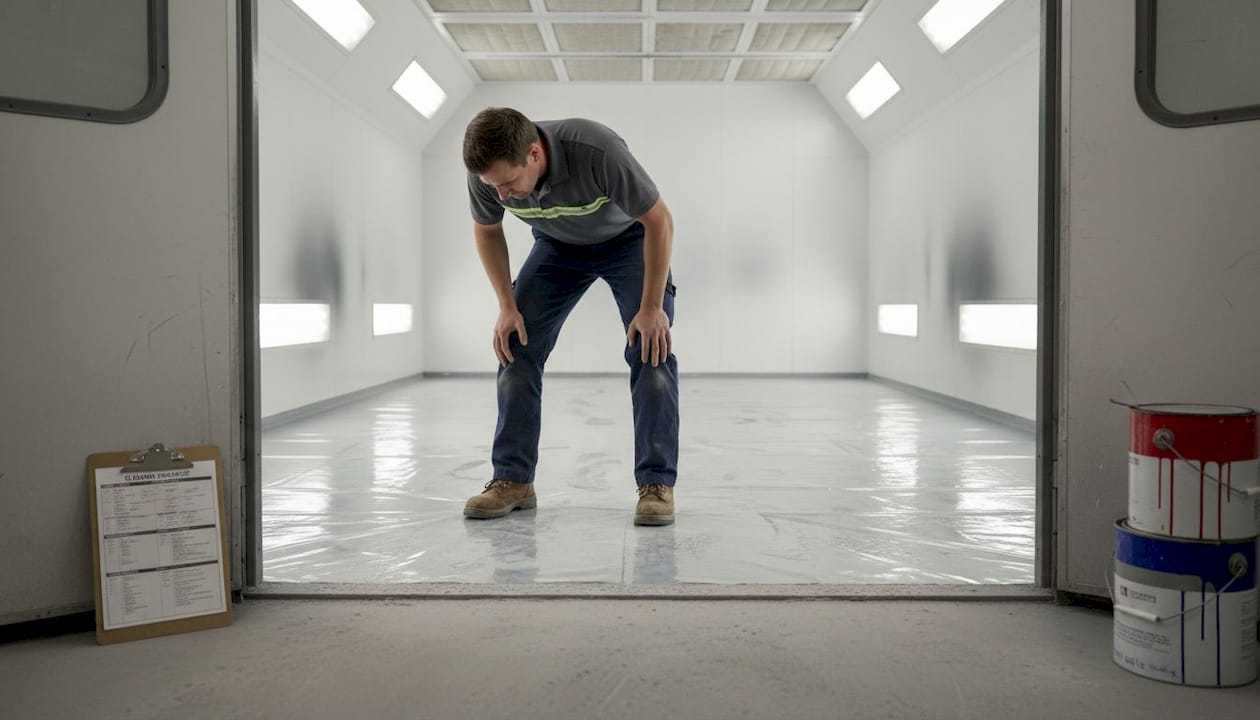
Films intercept this contamination at the source. Wall films trap overspray before it can bounce back into the spray zone. Floor films prevent dust kick-up when technicians move around the vehicle. The cumulative effect on finish quality is significant.
Measured outcomes from film-protected booths:
- Fewer visible inclusions and fish-eye defects in finished coats
- Reduced need for wet sanding and polishing after clear coat application
- More consistent color matching across multiple panels
- Lower airborne particle counts during active spray cycles
The numbers back this up. Empirical performance data shows up to 25% fewer coating defects, 15-25% lower paint consumption, and material waste reduced from 30-40% to under 15%. That’s not a marginal improvement. That’s a fundamental shift in how your booth performs. For a deeper look at practical strategies, review reducing dust in spray booths and dust-free booth setups for implementation guidance.
“Overspray that settles on booth walls doesn’t stay there. Airflow and foot traffic redistribute it directly into your next paint job.”
Protecting booth assets: Floors, walls, and lighting
Your spray booth represents a significant capital investment. The walls, floor grating, light fixtures, and glass panels all degrade faster when exposed to repeated cycles of paint, solvent, and cleaning chemicals without protection. Films act as a sacrificial barrier, absorbing the damage so your booth infrastructure doesn’t have to.
What films protect against:
- Paint and solvent penetration into porous floor surfaces
- Chemical staining on walls and reflective panels
- Overspray buildup on light lenses that reduces illumination output
- Scratching and etching on glass observation windows
As industry data on booth protection confirms, films protect booth floors, walls, lights, and windows from overspray, chemicals, and solvents, preventing permanent damage and maintaining brightness for accurate color matching. Lighting clarity is especially critical. A booth that’s even 20% dimmer than spec makes it nearly impossible to catch metallic flake alignment issues or subtle color mismatches before the job leaves the facility. Review the best protection products to find options rated for your specific booth configuration.
Pro Tip: Replace light fixture films on a fixed schedule, not just when they look dirty. Paint haze accumulates gradually and your eyes adjust to the reduced brightness without you noticing. A fresh film every 60 days keeps your color assessment accurate.
Safety: Non-slip surfaces and heat resistance
A busy spray booth is a high-risk environment. Technicians carry panels, move spray guns, and navigate around vehicles in a space where floors can become slick with overspray residue. Add elevated temperatures from curing cycles and you have conditions that demand purpose-built protective materials.
| Feature | Spray booth floor film | Traditional booth mat | Bare floor grating |
|---|---|---|---|
| Non-slip surface | Yes | Varies | No |
| Heat resistance | Up to 200°F | Limited | N/A |
| Dust kick-up reduction | Yes | Minimal | No |
| Easy replacement | Yes (peel and replace) | No (requires cleaning) | N/A |
| Overspray containment | Yes | No | No |
Specialized floor films withstand up to 200°F and provide non-slip surfaces that reduce personnel accidents in high-activity areas. They also suppress dust kick-up during hot spray cycles, which is a problem that bare grating and standard mats simply can’t address. For a full breakdown of material specifications, see heat-resistant spray booth films and spray booth safety solutions.
Cost efficiency: Materials savings and equipment longevity
The financial case for spray booth films is compelling once you look at the full picture. Most facility managers focus on the upfront cost of the film itself, but the real savings come from what you stop spending on.
Where the savings accumulate:
- Fewer rework jobs mean less paint, primer, and clear coat consumed per vehicle
- Reduced defect rates cut labor hours spent on wet sanding and re-coating
- Films absorb chemical exposure that would otherwise degrade booth surfaces
- Protected equipment holds its value longer and requires less frequent deep cleaning
Performance data shows 15-25% lower paint consumption and material waste dropping from 30-40% to under 15% in film-protected booths. On the maintenance side, replacing films every 60-90 days or after 250 spray cycles costs significantly less than scheduling professional cleaning or repairing chemically damaged surfaces. For a practical look at how these savings compound over time, explore boosting booth efficiency with a full operational audit framework.
| Cost category | Without films | With films |
|---|---|---|
| Paint waste rate | 30-40% | Under 15% |
| Coating defect rate | Baseline | Up to 25% lower |
| Cleaning frequency | High | Reduced |
| Equipment lifespan | Shorter | Extended |
Operational flexibility: Easy installation and maintenance
One of the most underrated advantages of modern spray booth films is how little they disrupt your workflow. Traditional booth cleaning requires shutting down production, waiting for surfaces to dry, and often bringing in outside contractors. Films flip that model entirely.
- Peel and replace in minutes. Multi-layer films let you remove a contaminated layer and expose a fresh surface without stopping production.
- No adhesive residue on booth surfaces. Quality films release cleanly, leaving walls and floors ready for the next application.
- Spray-on options for complex geometry. Corners, fixtures, and curved surfaces get full coverage without gaps or bubbles.
- Scheduled changes align with existing maintenance windows. You don’t need a separate maintenance event just for film replacement.
Film replacement every 60-90 days or 250 cycles is a predictable, low-disruption task that fits naturally into any maintenance schedule. For a complete workflow model, the spray booth maintenance workflow guide walks through how to integrate film changes with filter checks and equipment inspections.
Pro Tip: Schedule film changes on the same day as your filter replacements. Both tasks take similar time, and combining them into one maintenance window keeps your booth running at peak performance without doubling your downtime.
Next steps: Upgrade your spray booth protection
If you’re managing a facility where finish quality and throughput directly affect your bottom line, spray booth films are one of the highest-return upgrades you can make. The data is clear: fewer defects, lower material costs, safer working conditions, and longer equipment life.
At Dust Free Film, we’ve been engineering premium protective films for automotive refinishing and industrial painting operations since 2012. Our multi-layer electrostatic films, patented dispenser systems, and floor protection solutions are built for the demands of high-volume, professional spray environments. Browse our shop floor protection films to find the right fit for your booth, or visit Dust Free Film solutions to request samples, get a custom configuration quote, or speak with a product specialist who understands your operation.
Frequently asked questions
How often should spray booth films be replaced?
Most spray booth films should be changed every 60-90 days or after about 250 spray cycles for consistent protection and optimal finish quality.
Do spray booth films work in high-heat painting environments?
Yes, many films are engineered to withstand up to 200°F, making them suitable for most automotive bake cycles and industrial curing applications.
What surfaces should be covered by spray booth films?
You should cover floors, walls, lights, and windows. Full surface coverage prevents overspray migration and chemical damage across every zone of the booth.
Are spray booth films cost-effective compared to traditional cleaning?
Yes. Films reduce coating defects by up to 25% and cut material waste significantly, making regular film replacement far less expensive than periodic deep cleaning or surface repairs.