
Dust and surface contamination can ruin even the most meticulous spray booth results. Choosing the right protection requires more than just a quick fix or guesswork. You need solutions that stand up to harsh conditions, constant movement, and the tiniest airborne particles.
This guide unlocks practical methods and advanced technologies to safeguard your workspace. From blocking microscopic dust to handling high heat and heavy traffic, you will see how modern protective films and systems make a measurable difference. Get ready to discover effective strategies that keep your booth running clean and your results consistent.
Table of Contents
- 1. Understanding Basic Dust Protection Films
- 2. Using Multi-Layer Electrostatic Wall Covers
- 3. Benefits of Heat-Resistant Protective Films
- 4. Floor Protection Options for High-Traffic Areas
- 5. Static-Free Solutions for Cleaner Environments
- 6. Customizable Protection for Large Booths
- 7. Patented Dispenser Systems for Fast Installation
Quick Summary
| Key Message | Explanation |
|---|---|
| 1. Choose the Right Dust Protection Film | Select single or multi-layer films based on specific contamination risks in spray booth environments. |
| 2. Implement Electrostatic Wall Covers | Use multi-layer electrostatic wall covers to actively trap dust, preventing surface contamination. |
| 3. Use Heat-Resistant Films for Extreme Conditions | Invest in heat-resistant protective films that maintain integrity under high temperatures. |
| 4. Prioritize Durable Floor Protection | Opt for strong floor materials like porcelain tiles or epoxy to withstand daily wear and tear. |
| 5. Create Static-Free Environments | Employ ionization technologies and anti-static coatings to effectively manage dust attraction and surface cleanliness. |
1. Understanding Basic Dust Protection Films
Dust protection films are specialized barriers designed to prevent microscopic particles from compromising sensitive surfaces in spray booth environments. These advanced protective materials work by creating a tightly packed molecular barrier that blocks dust contamination effectively.
At their core, dust protection films function as a critical defense mechanism for industrial settings where pristine surface conditions are paramount. Single layer films provide fundamental protection by creating a physical shield that prevents dust particles from making direct contact with surfaces. More advanced multi layer barrier films offer enhanced protection by incorporating additional strength and moisture resistance features.
For facility managers, understanding the fundamental characteristics of dust protection films is crucial. These films are engineered with precision molecular structures that trap and block dust particles smaller than traditional barriers. This means even microscopic contaminants that might normally penetrate standard coverings are effectively prevented from reaching critical surfaces.
In spray booth environments, these films serve multiple protective functions. They shield walls, floors, and equipment from dust accumulation, which can compromise paint finishes, electronic components, and overall operational quality. By selecting the right dust protection film, managers can significantly reduce contamination risks and maintain high standards of cleanliness.
Pro tip: Always inspect dust protection films for consistent coverage and replace them at the first sign of wear to maintain optimal protection standards.
2. Using Multi-Layer Electrostatic Wall Covers
Multi-layer electrostatic wall covers represent a cutting edge solution for maintaining pristine surfaces in spray booth environments. These advanced protective systems leverage sophisticated electrostatic adhesion technologies to create powerful dust prevention mechanisms.
The core functionality of these wall covers relies on specialized layers of electrodes and dielectric materials that generate strong electrostatic attraction forces. By utilizing precise molecular engineering, these covers can effectively trap and immobilize dust particles before they settle on critical surfaces. This means spray booth walls remain clean and free from contaminants that could compromise paint quality or equipment performance.
Managers seeking optimal spray booth protection will find multi-layer electrostatic wall covers particularly advantageous. These covers not only prevent dust accumulation but also create a uniform protective barrier that can be quickly installed and removed. The advanced design allows for seamless integration into existing spray booth workflows, minimizing downtime and maintaining high operational standards.
Unlike traditional protective materials, electrostatic wall covers actively interact with surrounding particles. Their unique molecular structure generates an electromagnetic field that captures dust before it can settle, providing a more dynamic and effective protection strategy. This makes them especially valuable in high precision painting and manufacturing environments where surface cleanliness is critical.
Pro tip: Rotate and replace multi-layer electrostatic wall covers systematically to maintain maximum dust prevention effectiveness and ensure consistent surface protection.
3. Benefits of Heat-Resistant Protective Films
Heat-resistant protective films represent a critical technological advancement for industrial protection strategies. These specialized films provide remarkable defense against extreme temperatures and harsh manufacturing conditions, with the ability to withstand temperatures up to 260°C.
The core advantage of these protective films lies in their extraordinary thermal stability. Engineered with advanced molecular structures, they maintain physical and chemical integrity under intense heat conditions that would compromise traditional protective materials. This means manufacturers can safeguard critical surfaces during high temperature processes without worrying about film degradation or surface contamination.
Spray booth managers will find these films particularly valuable across multiple industrial applications. Their resistance to thermal shrinkage, chemical corrosion, and oxidation makes them ideal for protecting sensitive equipment in automotive manufacturing, electronics production, and precision engineering environments. Unlike standard protective coverings, heat-resistant films offer optical clarity and easy application while providing robust defense against potential damage.
The unique properties of these protective films extend beyond temperature resistance. They demonstrate remarkable durability against abrasion, chemical exposure, and mechanical stress. This multifaceted protection ensures that expensive equipment and delicate surfaces remain pristine during complex manufacturing processes, ultimately reducing maintenance costs and potential production interruptions.
Pro tip: Always verify the specific temperature range of your heat-resistant protective film and match it precisely to your operational requirements to ensure maximum effectiveness.
4. Floor Protection Options for High-Traffic Areas
Spray booth floor protection represents a critical investment for maintaining operational efficiency and safety in industrial environments. Managers must select materials that can withstand constant machinery movement, paint overspray, and intense daily wear.
When considering floor protection for high traffic zones, several advanced materials stand out for their exceptional durability. Luxury vinyl planks, porcelain tiles, and epoxy-coated concrete offer remarkable resistance to scratching, moisture, and mechanical stress. These surfaces not only protect underlying structures but also provide slip resistant properties crucial for workplace safety.
Industrial spray booth floors endure extreme conditions including chemical exposure, heavy equipment movement, and constant foot traffic. The right protective solution must balance durability with ease of maintenance. Ceramic tiles and specialized rubber flooring can create seamless protective barriers that resist paint contamination while remaining easy to clean and replace when necessary.
Understanding the specific requirements of your spray booth environment is crucial when selecting floor protection. Factors such as temperature variations, potential chemical interactions, and expected load bearing capacities should guide your material selection. Some advanced protective films can be applied directly over existing surfaces, providing an additional layer of defense without extensive renovation.
Pro tip: Conduct regular visual inspections of your floor protection and replace sections showing signs of wear to prevent potential contamination or safety risks.
5. Static-Free Solutions for Cleaner Environments
Static electricity represents a hidden challenge in spray booth environments, causing dust attraction and surface contamination that can compromise paint quality. Modern industrial settings require sophisticated anti-static solutions to neutralize electrical charges.
The science behind static free environments involves advanced ionization technologies that systematically eliminate electrical buildup. Specialized anti-static cleaners and ionizing bars work to neutralize charged particles, preventing dust from accumulating on critical surfaces. This approach goes beyond traditional cleaning methods by addressing the fundamental electromagnetic interactions that cause contamination.
Spray booth managers can implement multiple strategies to create static free environments. Ionization systems can be integrated directly into booth infrastructure, providing continuous protection against electrostatic dust attraction. Anti-static coatings applied to walls, floors, and equipment surfaces create an additional layer of defense, ensuring that sensitive painting processes remain uncontaminated by floating particulates.
Understanding the complex interactions between surfaces, dust particles, and electrical charges is crucial for maintaining high quality industrial environments. Static electricity can cause dust to cling persistently to surfaces, creating significant challenges in painting and manufacturing processes. By implementing comprehensive static neutralization strategies, managers can dramatically improve surface cleanliness and reduce potential defects in final products.
Pro tip: Regularly measure and monitor static charge levels in your spray booth using specialized electromagnetic detection equipment to maintain optimal protection.
6. Customizable Protection for Large Booths
Large spray booths present unique challenges for facility managers seeking comprehensive dust and contamination protection. Customizable protection solutions enable precise coverage for expansive industrial painting environments.
Managerial approaches to booth protection must account for variability in booth dimensions, surface types, and specific operational requirements. Modular protective film systems allow for seamless adaptation to complex booth geometries, ensuring complete surface coverage without compromise. These solutions can be strategically cut, shaped, and configured to match exact booth specifications.
Advanced protective films for large booths offer remarkable flexibility beyond standard sizing constraints. Managers can select films with varying thickness, adhesive strengths, and material compositions to address specific environmental challenges. Some films feature pre marked cutting lines, allowing technicians to quickly customize protection for irregular surfaces or equipment with complex configurations.
The key to effective large booth protection lies in understanding the nuanced requirements of your specific industrial painting environment. Factors such as temperature variations, chemical exposure, and mechanical stress must be considered when selecting protective materials. Custom solutions can incorporate multiple layers of protection, addressing potential contamination risks from different angles.
Pro tip: Measure booth surfaces precisely and maintain a small inventory of adaptable protective films to enable rapid reconfiguration and emergency coverage.
7. Patented Dispenser Systems for Fast Installation
Patented dispenser systems represent a technological breakthrough in spray booth protection, offering managers innovative solutions for rapid and precise protective film installation. Spring-loaded pushing mechanisms enable unprecedented speed and control during product deployment.
These advanced dispensing technologies go beyond traditional installation methods by incorporating sophisticated engineering principles. Motorized stepper controls and volumetric dispensing technologies allow for precise, programmable film advancement that minimizes waste and ensures consistent coverage. Managers can now achieve uniform protective film installation in a fraction of the time required by manual methods.
The core advantage of patented dispenser systems lies in their ability to support multiple operational requirements. Designed with ergonomic considerations, these systems can handle various film viscosities and accommodate different booth configurations. Their programmable nature means technicians can set specific dispensing modes tailored to unique surface geometries and protection needs.
Industrial painting environments demand efficiency and precision. Patented dispenser systems deliver both by reducing installation time, minimizing human error, and providing theft resistant product management. The integration of advanced control mechanisms ensures that protective films are applied smoothly, without bubbles or misalignments that could compromise surface protection.
Pro tip: Train multiple team members on dispenser system operation to ensure consistent performance and maintain workflow flexibility during installation processes.
Below is a comprehensive table summarizing the key concepts, functionalities, and benefits discussed throughout the article regarding protective films and systems for industrial spray booth environments.
| Category | Description | Benefits |
|---|---|---|
| Dust Protection Films | Specialized barriers to prevent dust contamination on sensitive surfaces. | Maintains pristine surfaces and reduces risk of compromised finishes. |
| Multi-Layer Electrostatic Wall Covers | Advanced solutions using electrostatic adhesion to trap dust particles effectively. | Provides dynamic dust prevention and seamless integration into spraying environments. |
| Heat-Resistant Protective Films | Films designed to withstand extremely high temperatures while maintaining integrity. | Ideal for thermal and chemical resistant protection, ensuring durability and safety. |
| Floor Protection Options | Materials like epoxy-coated concrete and rubber flooring to endure high traffic and chemical exposure. | Creates durable, slip-resistant surfaces to protect structural integrity and ensure safety. |
| Static-Free Solutions | Implementing ionization technology and anti-static materials to mitigate static dust attraction. | Improves cleanliness in painting processes and minimizes contaminants. |
| Customizable Protection | Modular protective systems tailored to accommodate varying booth dimensions and surface types. | Enables precise, adaptable coverage for complex booth environments. |
| Patented Dispenser Systems | Mechanisms designed for efficient and swift installation of protective films. | Reduces application time, ensures consistent outcome, and enhances operational efficiency. |
Elevate Your Spray Booth Protection with Proven Solutions
Managing a spray booth’s dust and contamination challenges demands reliable, innovative products that match the advanced protection types outlined in the article. Whether it is utilizing multi-layer electrostatic wall covers, heat-resistant protective films, or customizable large booth solutions, every feature targets high performance and operational efficiency. The key pain points of maintaining a clean, static-free, and heat-resistant environment while ensuring quick and precise application are solved by Dust Free Film’s industry-leading offerings.
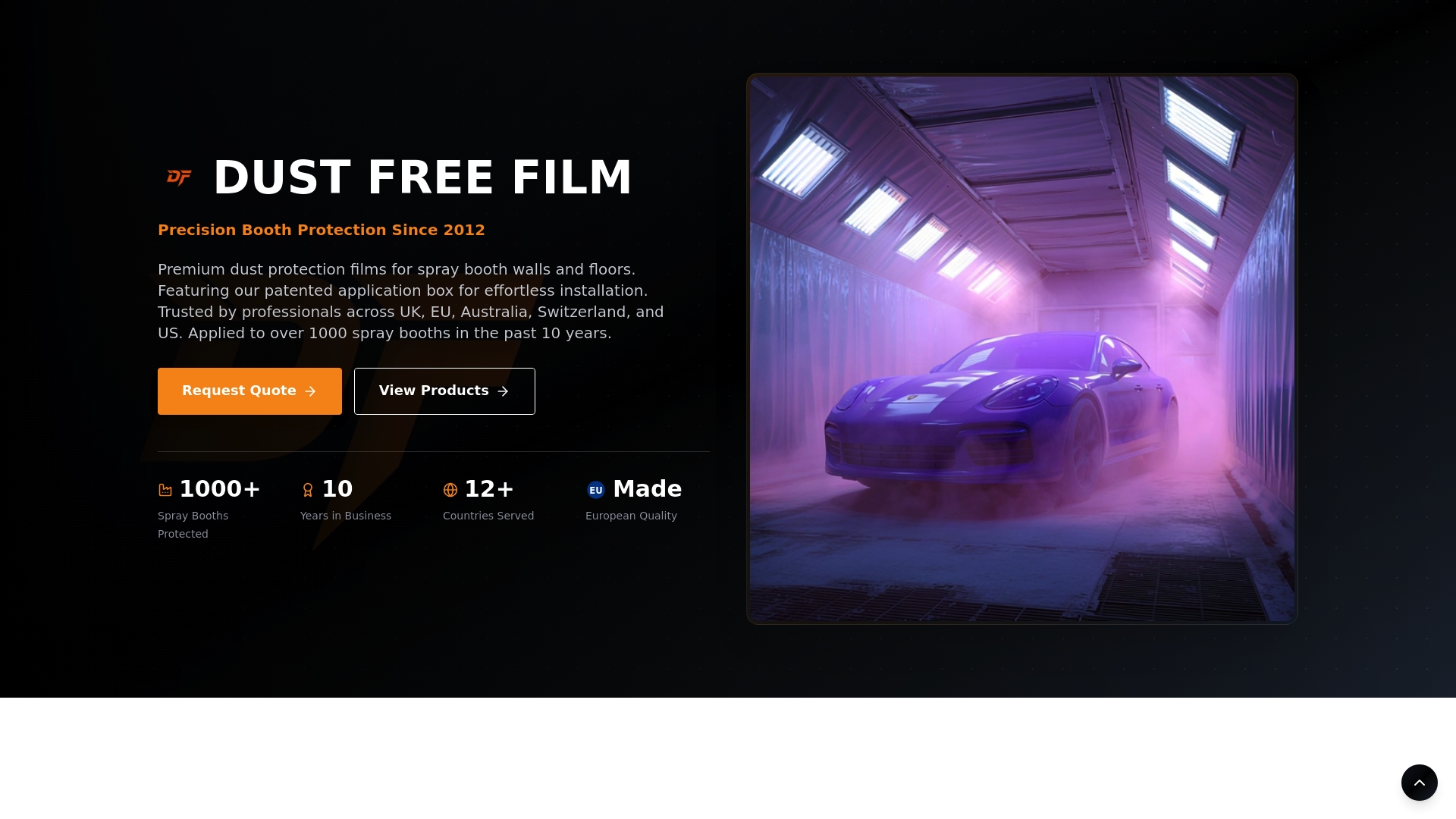
Take control of spray booth cleanliness and surface protection now with Dust Free Film’s premium protective films designed specifically for automotive refinishing and industrial painting settings. Explore our patented dispenser systems for fast, bubble-free installation and discover customizable options tailored to your booth’s unique dimensions. Visit Dust Free Film and see how easy it is to reduce contamination risk, improve paint finishes, and enhance productivity today.
Frequently Asked Questions
What are the main types of dust protection films available for spray booths?
Dust protection films typically come in single-layer and multi-layer options. Single-layer films provide basic protection, while multi-layer films offer enhanced strength and moisture resistance. Evaluate your specific needs to choose the right type for your spray booth environment.
How can multi-layer electrostatic wall covers improve dust prevention?
Multi-layer electrostatic wall covers utilize electrostatic adhesion technologies to trap dust particles effectively. By implementing these covers, you can create a uniform protective barrier that minimizes dust accumulation, ensuring high-quality surface conditions.
What factors should I consider when selecting heat-resistant protective films?
When choosing heat-resistant protective films, consider their temperature resistance, chemical stability, and physical durability in high-heat processes. Ensure that the selected film can withstand temperatures relevant to your operations, protecting critical surfaces effectively.
How do I maintain floor protection in high-traffic areas?
To maintain floor protection in high-traffic areas, regularly inspect the material for signs of wear and damage. Replace any sections that show wear to prevent contamination and ensure safety, ideally doing so within weeks to keep your spray booth operationally efficient.
What steps can I take to create a static-free environment in my spray booth?
To create a static-free environment, consider integrating ionization systems and using anti-static coatings on surfaces. Regularly monitor static charge levels using detection equipment to adjust your strategies and maintain optimal cleanliness in your spray booth.
How can I customize protective solutions for large spray booths?
To customize protective solutions for large spray booths, measure your booth dimensions accurately and select modular protective films. This approach allows you to cut and shape the film to match complex geometries, ensuring thorough coverage and protection against dust and contamination.
Recommended
- Dust Free Film for Spray Booth Protection | Wall and Floor
- Dust Free Film for Spray Booth Protection | Wall and Floor
- Dust Free Film for Spray Booth Protection | Wall and Floor
- Dust Free Film for Spray Booth Protection | Wall and Floor
- Defining Custom Workwear – Elevating Team Safety and Image - Custom T-Shirts and Embroider in Utah | Pulse Merch