

TL;DR:
- Proper surface preparation is essential for long-lasting automotive finishes, with over 80% of paint failures linked to rushing this step. Skilled spray technique, material compatibility, and a dust-free environment significantly influence final quality. Patience and discipline in every process step produce the best results, especially for complex multi-stage color work.
Automotive refinishing, known in the industry as collision repair coating, is the process of restoring or repainting a vehicle’s surface to factory or better-than-factory quality. The automotive refinishing tips 2026 professionals rely on share one common thread: preparation, technique, and environment control determine whether a finish lasts two years or seven. Over 80% of paint failures trace back to skipped or rushed prep work. That single statistic defines every decision you make before the spray gun fires. Whether you work in a production body shop or restore classics on weekends, the principles below apply directly to your results.
1. Why surface preparation dominates refinishing success
Surface preparation is the foundation of every lasting automotive finish. Finishes last 5–7 years when prep is done correctly, and they fail prematurely when it is not. No amount of premium paint recovers from a poorly prepared substrate.
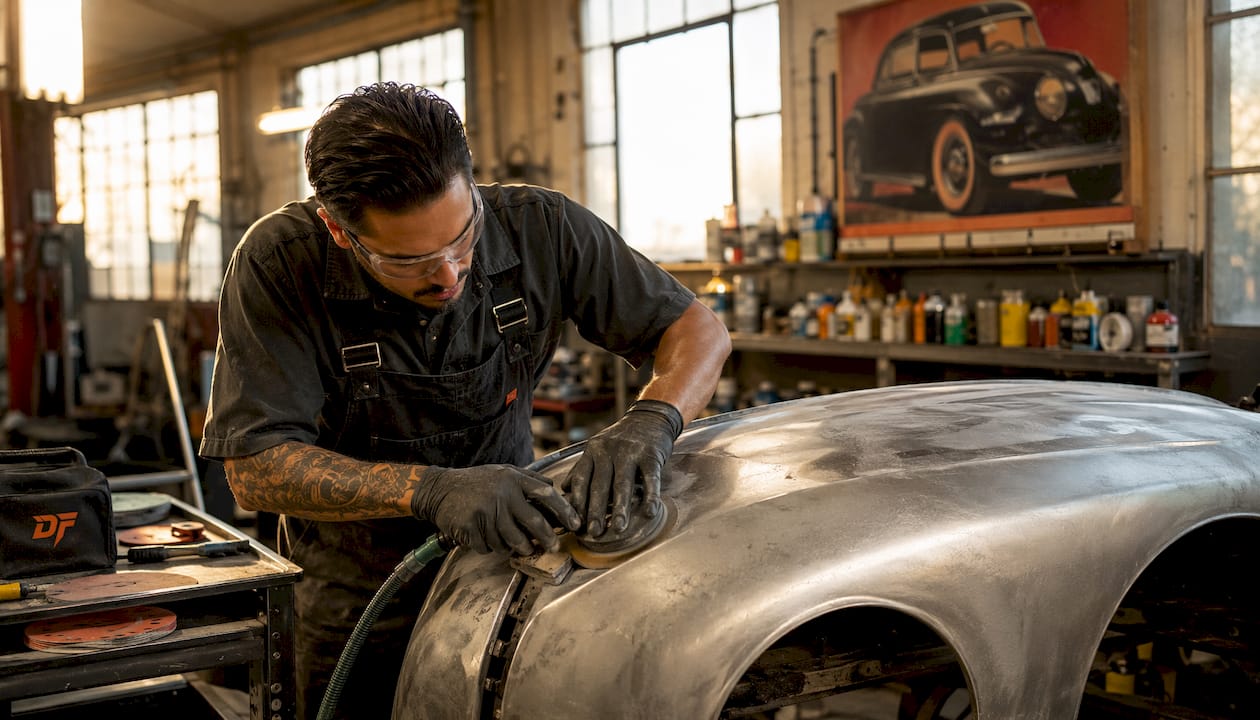
Start with a thorough chemical decontamination wash using a wax and grease remover. Follow that with a clay bar treatment to pull embedded contaminants from the surface. Any remaining silicone, wax, or road film will cause fisheyes and adhesion failures under the primer.
Sanding sequences matter as much as the cleaning stage. For bare metal or heavily damaged panels, start at 80 grit to shape, move to 180 grit to refine, then finish at 320 grit before primer. For scuff-and-shoot repairs on existing paint, 400 to 600 grit creates the mechanical bond the primer needs.
Masking is where many technicians lose time and quality. Use fine-line tape at panel edges for crisp paint breaks. Back-mask door jambs and trim pieces to prevent overspray from contaminating adjacent surfaces. Sloppy masking creates rework that costs more time than the masking itself.
Primer selection sets the stage for topcoat performance:
- Etching primer: Bonds directly to bare metal and provides corrosion resistance. Use it as a first coat on stripped panels.
- High-build primer: Fills minor surface imperfections and sanding scratches. Apply in multiple coats and block sand to flat.
- Epoxy primer: The most durable option for sealing bare metal. Resists moisture intrusion and is the preferred choice under body filler.
Pro Tip: Always apply a guide coat, a thin mist of contrasting color, over your high-build primer before block sanding. Any low spots or scratches will show immediately, saving you from discovering them after the topcoat goes on.
2. Mastering spray application for uniform coverage
Spray gun technique separates a professional finish from an amateur one. Maintaining 50% overlap on each pass, keeping the gun 6–8 inches from the surface, and holding it at a 90-degree angle are the three non-negotiable rules of consistent coverage. Deviation from any one of them introduces dry spray, runs, or tiger stripes.
Trigger timing controls where paint starts and stops. Pull the trigger just before the gun reaches the panel edge, and release it just after passing the edge. This prevents heavy buildup at the corners and keeps wet edges consistent across the entire panel.
Gun speed and overlap require adjustment when spraying multi-stage OEM colors. Tighten the overlap and increase gun speed to avoid blotchy mid-coats and uneven metallic flake orientation. Slowing down on metallics causes flake to pile up and creates a mottled appearance that no amount of polishing will fix.
Key spray application rules to follow on every job:
- Distance: Keep the gun 6–8 inches from the surface. Closer causes runs; farther causes dry spray and texture.
- Angle: Hold the gun perpendicular to the panel. Angling it changes the spray pattern and creates uneven film build.
- Overlap: Use 50% overlap on every pass. This delivers consistent wet film thickness across the panel.
- Trigger discipline: Start and stop the trigger at the panel edge, not in the middle of the surface.
- Flash time: Respect the manufacturer’s flash time between coats. Trapping solvents causes solvent pop and blistering.
Pro Tip: Use the recommended fluid tip size listed in the Technical Data Sheet for each specific OEM color. Deviating from specification changes how metallic flakes orient in the film and produces a finish that does not match the factory panel.
3. Selecting the right paint and clear coat materials
Paint system compatibility is the most underrated factor in refinishing quality. Using primers, basecoats, and clear coats from the same manufacturer’s product line eliminates the risk of inter-coat adhesion failures and solvent incompatibility. Mixing brands across a system is a common shortcut that creates unpredictable results.
Primer type should match the substrate condition. Etching primers work on bare metal. High-build primers fill scratches and surface irregularities. Epoxy primers seal and protect in high-moisture environments. Choosing the wrong primer for the substrate wastes material and creates adhesion problems.
Basecoat choice comes down to shop environment and local regulations. Solvent-based basecoats offer fast flash times and strong color depth, but face increasing VOC restrictions in many states. Waterborne basecoats meet stricter environmental standards and deliver excellent color accuracy, though they require proper airflow and temperature control to flash correctly.
Clear coat selection determines both finish quality and production speed. High-velocity clear coats dry in 30–60 minutes and suit high-throughput production shops. Slower-drying clears level better and reduce orange peel texture, making them the preferred choice for show-quality or concours-level work. Choosing the right clear coat depends on whether your priority is throughput or finish perfection.
| Clear coat type | Dry time | Best for |
|---|---|---|
| High-velocity production clear | 30–60 minutes | High-volume body shops |
| Medium-build standard clear | 2–4 hours | General repair work |
| Slow-cure show clear | 8–24 hours | Show cars, concours finishes |
4. Creating a clean, dust-free spray environment
Dust contamination can triple rework time on any refinishing job. A single dust nib in fresh clear coat means wet sanding, compounding, and polishing before the job is complete. Controlling the spray environment is as critical as controlling the paint itself.
Electrostatic booth wall protection is one of the most effective tools for reducing airborne contamination. Electrostatic films attract and hold dust particles before they reach the wet paint surface. Dustfreefilm’s multi-layer electrostatic booth wall and floor protectors, built to European manufacturing standards, provide a static-free, heat-resistant barrier that keeps booth surfaces clean across multiple jobs.
Moisture in compressed air lines causes fisheyes, cratering, and adhesion failures. A high-quality water trap and specialized inline air filters are not optional equipment. They are the minimum standard for any shop producing consistent, defect-free finishes.
Spray gun maintenance directly affects finish quality. Follow these practices on every job:
- Clean the gun immediately after each use. Dried paint in the fluid passages changes spray pattern and introduces contamination.
- Inspect the needle and nozzle before each job. Worn or damaged tips produce uneven spray patterns.
- Check air cap passages for blockages. Clogged air caps cause spitting and uneven atomization.
- Purge the air lines before spraying. Run air through the system to clear any accumulated moisture or debris.
- Store guns properly with the fluid needle slightly loosened to prevent tip seal damage.
For more detail on booth contamination prevention, a clean environment is the single most controllable variable in finish quality.
5. Finishing techniques: sanding, polishing, and protection
Clear coat finishing is where good work becomes great work. Wet sanding removes orange peel, dust nibs, and surface texture left by the spray process. Start at 1200 grit to level the surface, move to 1500 grit to refine the scratches, and finish at 2000 grit or finer before compounding. Each grit removes the scratches left by the previous one.
Polishing too early on air-dried clear coats causes micro-scratches that appear under direct sunlight. Wait for the clear coat to reach full cure before any machine polishing. Full cure time varies by product, but most air-dry clears require at least 24 hours at room temperature before polishing is safe.
The compounding and polishing sequence follows a clear progression:
- Heavy compound: Removes 1200 to 1500 grit sanding scratches. Use a foam cutting pad or wool pad on a dual-action or rotary polisher.
- Medium polish: Refines the surface after compounding. Removes compound haze and light scratches.
- Fine polish or finishing glaze: Brings out maximum gloss and removes any remaining light swirl marks.
- Sealant or ceramic coating: Locks in the finish and provides UV and chemical protection.
Paint protection film applied over a freshly polished clear coat extends finish life significantly. Ceramic coatings bond to the clear coat surface and provide a hydrophobic layer that repels water, road grime, and minor chemical contamination. For show cars, a combination of ceramic coating and paint protection film on high-impact areas delivers the best long-term result.
Pro Tip: Inspect the finish under multiple light sources before declaring the job complete. Fluorescent shop lights reveal orange peel and texture. Direct sunlight reveals swirl marks and micro-scratches. A finish that passes both tests is a finish worth delivering.
For a complete overview of refinishing essentials, including safety protocols and equipment checks, the fundamentals remain consistent regardless of paint system.
Key takeaways
The most effective automotive refinishing results in 2026 come from combining thorough surface preparation, disciplined spray technique, compatible material systems, and a controlled booth environment.
| Point | Details |
|---|---|
| Prep determines longevity | Over 80% of paint failures trace to poor prep; correct prep produces finishes lasting 5–7 years. |
| Spray technique is non-negotiable | Maintain 50% overlap, 6–8 inch distance, and a 90-degree gun angle on every pass. |
| Match materials to the job | Choose clear coat speed based on throughput needs; always use compatible product systems. |
| Control the environment | Dust contamination triples rework time; electrostatic booth protection and clean air supply are critical. |
| Polish only after full cure | Polishing before clear coat cures causes micro-scratches that compromise long-term gloss. |
What I’ve learned from years of watching refinishing go right and wrong
The most common mistake I see is not a technique error. It is impatience. Technicians rush the flash time between coats, skip the guide coat on primer, or polish the clear coat the same afternoon it was sprayed. Every one of those shortcuts creates a problem that takes longer to fix than the time saved.
The second pattern I notice is over-reliance on product quality to compensate for process gaps. Premium clear coat does not fix a contaminated surface. Expensive spray equipment does not fix poor trigger discipline. The fundamentals of dust-free painting practices and methodical preparation outperform any single product upgrade.
Multi-stage OEM colors intimidate a lot of technicians, and I understand why. The margin for error is narrow. But the solution is not to avoid them. It is to read the Technical Data Sheet completely before mixing a drop of paint, set up the gun to specification, and spray test panels until the technique is dialed in. Confidence with complex colors comes from repetition, not from guessing.
The shops producing the most consistent results in 2026 are not necessarily the ones with the newest equipment. They are the ones that treat every step of the process with equal discipline, from the first decontamination wash to the final inspection under sunlight.
— Dust
How Dustfreefilm supports cleaner, better finishes
A controlled spray environment is not a luxury. It is the baseline requirement for producing finishes that hold up over time.
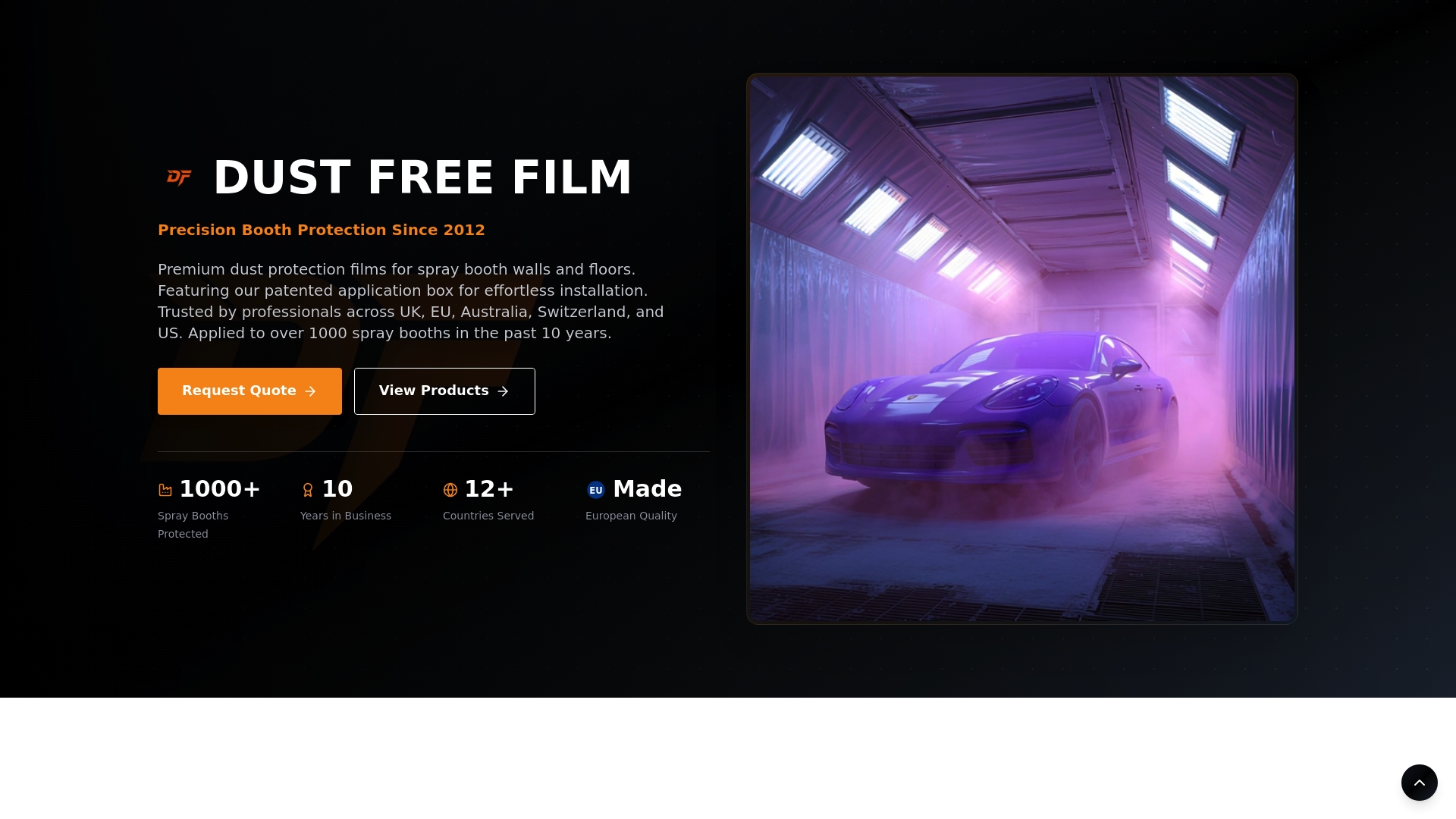
Dustfreefilm has manufactured premium electrostatic booth wall and floor protection films since 2012, built to European manufacturing standards for auto body shops and industrial painting facilities. The multi-layer films attract and hold airborne dust before it reaches wet paint, and the patented dispenser system allows fast, bubble-free installation between jobs. Reducing paint booth dust directly cuts rework time and improves finish consistency across every vehicle in the shop. Visit Dustfreefilm to see the full product range and find the right booth protection solution for your operation.
FAQ
What causes most automotive paint failures?
Over 80% of paint failures result from improper surface preparation. Skipping decontamination, using the wrong primer, or rushing sanding sequences are the most common causes.
How far should a spray gun be from the surface?
Maintain a distance of 6–8 inches between the spray gun and the panel surface. Closer causes runs; farther causes dry spray and rough texture.
When is it safe to polish clear coat?
Polishing before full cure causes micro-scratches visible under sunlight. Most air-dry clear coats require at least 24 hours at room temperature before machine polishing.
Why does moisture in air lines matter?
Moisture in compressed air causes fisheyes, cratering, and adhesion failures in the finish. A quality water trap and inline air filters are required equipment for defect-free results.
What is the best clear coat for show-quality finishes?
Slow-cure show clear coats level better and reduce orange peel texture, making them the preferred choice for concours or show-quality work over high-velocity production clears.