

TL;DR:
- Dust contamination causes finish defects and costly rework in spray painting processes.
- Proper equipment, environment, preparation, and maintenance are essential for dust-free results.
- Consistent discipline and advanced solutions help shops achieve and sustain flawless, dust-free finishes.
A single dust particle landing on a freshly sprayed panel can mean hours of rework, wasted materials, and a frustrated customer. Even the most advanced spray booths on the market won’t protect you if your process isn’t airtight. Dust contamination is one of the top causes of finish defects in automotive refinishing and industrial painting, and the cost compounds fast when you factor in labor, materials, and scheduling delays. This guide breaks down the exact tools, preparation steps, painting techniques, and maintenance routines that separate shops producing flawless finishes from those constantly fighting contamination.
Table of Contents
- Essential tools and requirements for dust-free painting
- Step-by-step surface and environment preparation
- Best painting techniques for minimizing dust
- Maintenance and ongoing verification for dust-free results
- Why most shops underestimate the fight against dust
- Take your dust-free results further with advanced solutions
- Frequently asked questions
Key Takeaways
| Point | Details |
|---|---|
| Control the environment | Optimal dust-free results depend on tools, booth controls, and stable atmospheric conditions. |
| Prep is critical | Thorough pre-paint cleaning and disciplined procedures lay the foundation for flawless finishes. |
| Technique matters | Using HVLP spray guns and minimizing booth disruption sharply reduce airborne dust. |
| Maintenance sustains quality | Regular inspections, filter changes, and accountability keep dust at bay long-term. |
Essential tools and requirements for dust-free painting
Having highlighted the importance of dust control, let’s outline the equipment and key requirements every dust-free painting process demands.
No dust-free operation runs on good intentions alone. You need the right hardware, the right environment, and the right habits working together. Missing any one of these creates a gap that dust will find.
Must-have tools and materials:
- High-efficiency booth intake and exhaust filters (rated for PM control)
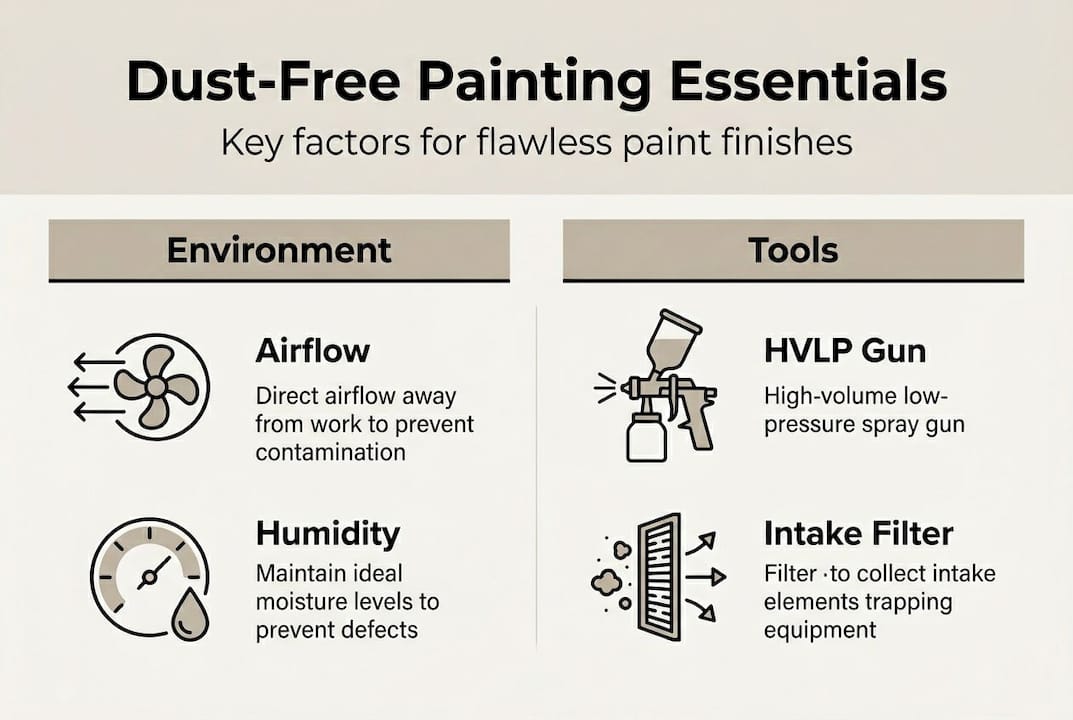
- HVLP (High Volume Low Pressure) spray guns
- Dust-free protective films for booth walls and floors
- Tack cloths for final surface wipe-down
- Full PPE including lint-free coveralls and gloves
- Particle counters or air quality monitors
- Pressure gauges for booth pressurization checks
Environmental controls are just as critical as physical tools. Booth pressurization keeps unfiltered outside air from sneaking in through gaps. Aim for a slightly positive pressure inside the booth, which pushes air outward rather than pulling contaminated air in. Humidity should stay between 40% and 60% to prevent static buildup, which attracts dust to surfaces. Consistent airflow, typically between 60 and 100 feet per minute across the work zone, keeps airborne particles moving toward exhaust filters rather than settling on your work.
Transfer efficiency matters more than most operators realize. Booth emission benchmarks show that HVLP guns significantly reduce particulate matter compared to conventional spray equipment, which means less overspray floating in the booth and fewer particles available to contaminate your finish. Higher solid content coatings also reduce the volume of solvent evaporating into the air, which lowers the chance of particulate suspension.
| Environmental Factor | Recommended Range | Risk if Out of Range |
|---|---|---|
| Booth pressure | Slightly positive | Unfiltered air intrusion |
| Humidity | 40% to 60% | Static buildup, dust adhesion |
| Airflow velocity | 60 to 100 ft/min | Particle settling on surfaces |
| Filter PM efficiency | 90% or above | Contaminated air recirculation |
For a deeper look at setting up your operation correctly, the spray booth setup essentials guide covers layout, filtration, and pressurization in detail. You can also find actionable steps in our resource on improving spray booth air quality.
Pro Tip: Replace intake filters on a fixed schedule, not just when they look dirty. A filter that appears clean can still be loaded with fine particulates that restrict airflow and reduce PM capture efficiency.
Step-by-step surface and environment preparation
With the right tools and conditions in place, the next step is preparing surfaces and environments to eliminate hidden dust risks.
Preparation is where most contamination problems are either solved or created. Rushing this phase is the single fastest way to guarantee a dusty finish, regardless of how good your booth is.
- Clear and vacuum the booth. Remove all loose debris, sweep floors, and vacuum all surfaces including walls, ceiling fixtures, and light covers. Work top to bottom so falling particles don’t re-contaminate cleaned areas.
- Wipe all booth surfaces with a damp cloth. This captures fine dust that vacuuming misses. Allow surfaces to dry completely before proceeding.
- Inspect and replace filters. Check intake and exhaust filters for loading or damage. A partially blocked filter disrupts airflow patterns and creates dead zones where dust accumulates.
- Check for air leaks. Inspect door seals, panel joints, and any penetrations in the booth shell. Even a small gap can introduce unfiltered air during operation.
- Prepare the vehicle or workpiece. Sand, degrease, and blow off the surface. Then perform a final wipe with a quality tack cloth immediately before spraying.
- Mix and thin coatings correctly. Proper viscosity reduces overspray and atomization issues, both of which generate fine particles inside the booth.
Surface prep standards from SSPC-PA 1 are clear: thorough removal of dirt and dust after surface preparation and before painting is non-negotiable for a quality result. Skipping or shortcutting any step in this sequence creates the exact conditions dust needs to ruin your work.
Weather matters more than many shops acknowledge. High wind outside increases pressure differentials that can force air through small gaps. High humidity above 60% can cause blushing in solvent-based coatings and promote static. Check conditions before scheduling critical jobs and use our guide on how to reduce dust in booths for environment-specific strategies.
“Thorough removal of dirt and dust after surface prep and before painting is a baseline requirement, not an optional step.” — SSPC-PA 1
For a complete routine, the booth maintenance best practices resource outlines daily, weekly, and monthly tasks that keep preparation consistent.
Pro Tip: Schedule prep work during off-peak hours when foot traffic in and around the booth is minimal. Every person walking nearby stirs up airborne particles that take 20 to 30 minutes to settle.
Best painting techniques for minimizing dust
Once surfaces are ready, applying optimal painting techniques can significantly cut down new dust issues.
Technique is where preparation pays off or falls apart. Even a perfectly prepped surface can end up contaminated if the operator’s habits introduce turbulence, overspray, or unnecessary movement inside the booth.
HVLP vs. conventional spray: what the data shows
| Technique | Transfer efficiency | Overspray level | Dust risk |
|---|---|---|---|
| HVLP spray gun | High (65% to 90%) | Low | Lower |
| Conventional spray | Lower (25% to 50%) | High | Higher |
| Wet-on-wet application | N/A | Minimal | Lowest |
| Dry sanding between coats | N/A | High dust generation | Highest |
Spray gun efficiency data confirms that HVLP guns improve transfer efficiency and reduce overspray particulate matter, which directly lowers the volume of airborne contaminants in the booth during application. Less overspray means fewer particles available to land on your work.
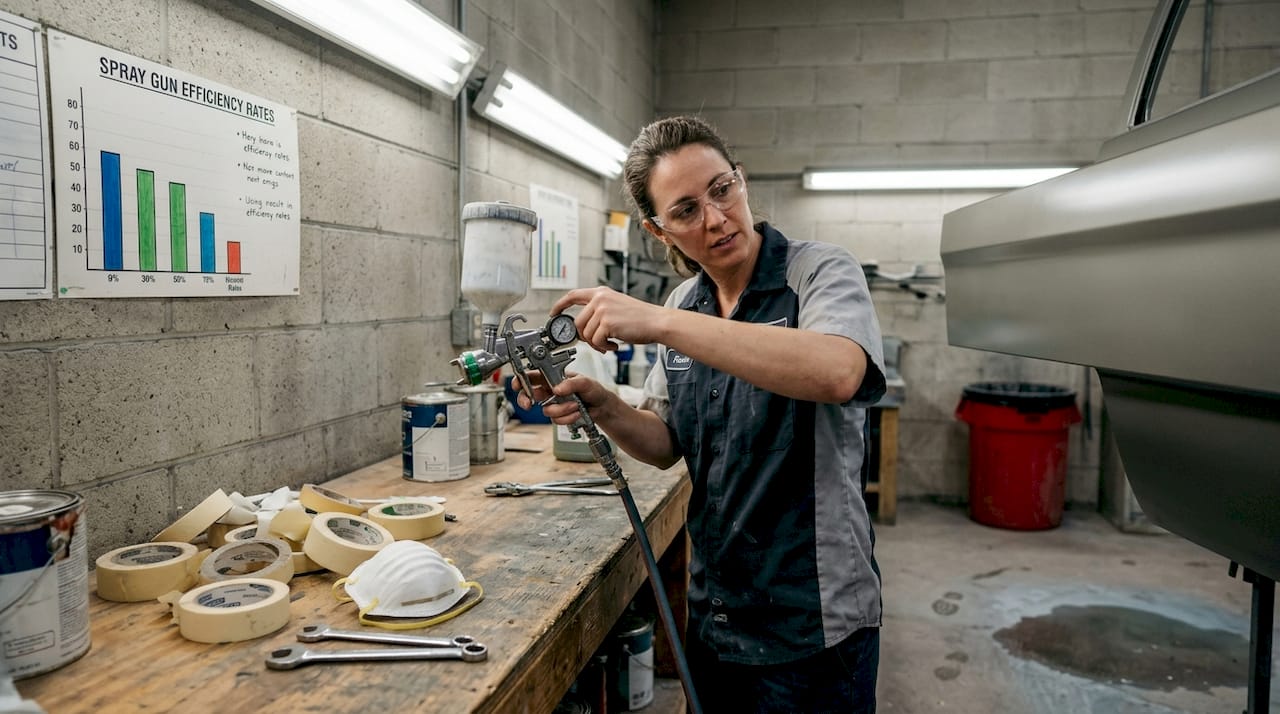
Gun handling discipline matters just as much as equipment choice. Maintain a consistent distance of 6 to 8 inches from the surface. Keep gun speed steady and overlap each pass by 50%. Erratic movement creates turbulence that lifts settled dust back into the air. Point the gun perpendicular to the surface to avoid deflection patterns that scatter atomized paint.
Top operator habits for dust prevention:
- Enter and exit the booth slowly to avoid disturbing air patterns
- Wear lint-free coveralls and change them before each session
- Never bring cardboard, paper, or fabric materials into the booth
- Keep booth doors closed except during controlled entry and exit
- Avoid unnecessary movement inside the booth during and after spraying
For more on dialing in your process, see how to optimize booth efficiency and review the spray booth maintenance steps that support consistent results.
Maintenance and ongoing verification for dust-free results
Proper painting technique alone isn’t enough; ongoing maintenance is essential for lasting dust-free results.
A shop that nails its process on Monday can still produce contaminated work on Friday if maintenance slips. Dust-free results require a system, not just a good day.
Routine maintenance sequence:
- Daily: Inspect booth walls and floors for dust buildup. Clean protective films or replace them when loaded. Check door seals for wear.
- Weekly: Inspect intake and exhaust filters. Test booth pressure and airflow velocity. Review particle counter readings if available.
- Monthly: Full booth inspection including light fixtures, ceiling panels, and all penetrations. Verify filter PM efficiency against benchmarks.
- Quarterly: Audit maintenance logs for recurring issues. Recalibrate monitoring equipment. Evaluate filter change intervals based on job volume.
Key benchmark: 90% PM control efficiency is the standard for spray booth particulate matter control. Routine maintenance is what achieves and sustains it.
Particle counters give you real data instead of guesswork. Readings above baseline after booth cleaning signal a filter problem, an air leak, or a contamination source you haven’t identified yet. Don’t wait for a bad job to tell you something is wrong.
Maintenance logs are underused in most shops. A simple checklist with dates, initials, and findings creates accountability and a record you can analyze. Patterns in the log, such as filter loading faster on certain days or pressure dropping after specific jobs, point directly to process improvements. Our resources on booth maintenance for dust-free results and the booth maintenance checklist give you ready-to-use frameworks. You can also explore why the importance of clean booths goes beyond finish quality to operational efficiency.
Pro Tip: Assign one person as the booth maintenance lead. Shared responsibility usually means no responsibility. A single accountable person who owns the checklist and the results makes a measurable difference in consistency.
Why most shops underestimate the fight against dust
After outlining maintenance routines, let’s address why many facilities still fail to reach true dust-free standards.
Here’s what we’ve observed after years of working with auto body shops and industrial painting facilities: the shops that struggle most with dust aren’t the ones that don’t know what to do. They’re the ones that knew, did it well for a while, and then stopped.
Complacency is the real enemy. A shop runs a tight process, gets three or four flawless jobs in a row, and then slowly starts skipping steps. The tack cloth gets used once instead of twice. The filter check gets pushed to Friday. The booth floor film doesn’t get replaced because it “still looks okay.” Each shortcut feels harmless in isolation. Together, they rebuild exactly the conditions that caused contamination problems in the first place.
The top-performing shops we work with share one trait: they treat dust control as a non-negotiable standard, not a goal they’ve already achieved. They audit finished jobs specifically looking for contamination. They calculate the cost of rework and make it visible to the whole team. That number, whether it’s two hours of labor or a full respray, makes the value of discipline concrete.
If you want a practical starting point for rebuilding or reinforcing that discipline, the reduce dust strategy resource gives you a structured approach that works at any shop size.
Take your dust-free results further with advanced solutions
With all practices in place, there are products designed to make dust-free maintenance even easier and more effective.
Building a disciplined process is the foundation, but the right materials make that process faster, more reliable, and easier to sustain across high-volume operations. Specialty multi-layer booth wall and floor protective films from Dust Free Film solutions are engineered specifically for spray booth environments, offering heat resistance, static-free surfaces, and quick-peel replacement that keeps your booth clean without downtime.

Our patented dispenser system means your team can replace a loaded film layer in minutes, not hours, keeping maintenance on schedule even during peak production. Whether you run a single bay or a multi-line industrial facility, we offer custom configurations and bulk options to match your throughput. Ready to see what the right film solution looks like for your operation? Request a dust-free quote and we’ll put together a recommendation built around your specific setup.
Frequently asked questions
What are the main causes of dust contamination during painting?
Common sources include inadequate booth maintenance, improper air filtration, surface debris, and environmental conditions like wind or humidity. Environmental factors and surface cleaning are both addressed in SSPC-PA 1 as primary contamination contributors.
How often should spray booth filters be changed to ensure dust-free results?
Filters should be inspected daily and replaced according to manufacturer specifications or when PM control efficiency drops below 90%. Waiting until filters look visibly dirty is too late.
Is it necessary to adjust painting schedules based on weather conditions?
Yes, wind and high humidity both increase airborne dust risk and can affect coating adhesion. Weather considerations for painting are a core part of SSPC-PA 1 standards, and scheduling around stable conditions protects finish quality.
Do HVLP spray guns really help reduce dust during painting?
Yes. HVLP transfer efficiency is significantly higher than conventional spray equipment, which means less overspray and fewer airborne particles generated during application.