

TL;DR:
- Effective dust prevention in industrial facilities relies on layered controls, including wet cleaning, engineering barriers, and ongoing monitoring to protect worker health and ensure safety. Conducting a comprehensive Dust Hazard Analysis is essential for identifying high-risk zones and prioritizing appropriate controls before implementing equipment or procedures. Continuous inspection, real-time monitoring, and scenario-specific techniques ensure dust accumulation is minimized, preventing explosions, respiratory issues, and contamination hazards.
Dust prevention in industrial facilities is defined as the systematic application of layered controls, including wet cleaning methods, engineering barriers, and continuous monitoring, to eliminate airborne particulates before they threaten worker health, product quality, or facility safety. For facility managers operating under OSHA 29 CFR 1926.1153 and NFPA 660 combustible dust standards, the stakes are not abstract. Uncontrolled dust causes respiratory disease, triggers explosions, and contaminates high-value coatings operations. The best practices for dust prevention covered here consolidate regulatory requirements, proven engineering approaches, and scenario-specific tactics into one operational framework.
1. Best practices for dust prevention start with housekeeping method selection
The single most consequential decision in any dust control program is how you clean. Dry sweeping and compressed-air blowing are prohibited under OSHA 29 CFR 1926.1153(f) when they increase respirable crystalline silica exposure. That prohibition exists because dry methods do not remove dust. They relocate it, suspending fine particles at breathing height where they cause the most harm.
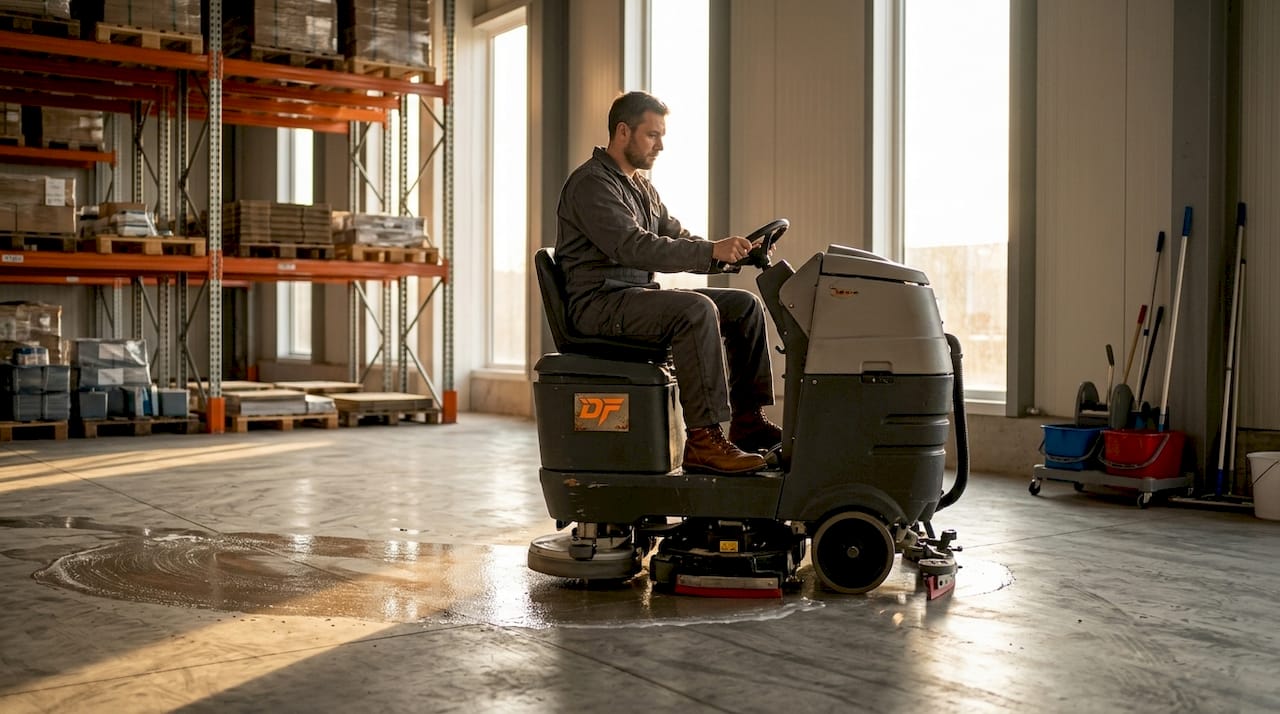
Wet methods are the preferred replacement. Wet sweeping, wet mopping, and damp wiping trap particles at the surface and carry them into containment rather than into the air. HEPA-filtered vacuuming is the second approved method, particularly effective on machinery surfaces, overhead structures, and areas where water would damage equipment or create slip hazards.
- Use wet mopping on concrete floors where silica or metal dust is present
- Deploy HEPA-filtered vacuums (minimum 99.97% filtration at 0.3 microns) on machinery, ledges, and ductwork
- Collect all dust waste in sealed, labeled containers before disposal
- Never use standard shop vacuums, which exhaust fine particles back into the work area
- Schedule housekeeping during low-occupancy periods to minimize worker exposure during cleaning
Pro Tip: Assign housekeeping frequency based on dust generation rate, not calendar schedule. A grinding station running two shifts needs cleaning every shift change, not once per week.
2. How a Dust Hazard Analysis guides your entire prevention program
A Dust Hazard Analysis (DHA) is the structured risk assessment that identifies where combustible or respirable dust is generated, where it accumulates, and what ignition sources exist in proximity. NFPA 660 requires a DHA for any facility handling combustible dust, with revalidation at minimum every five years or after significant process changes.
Conducting a DHA before writing any dust control plan is not optional. It is the foundation that determines which controls are necessary and in what priority order. A DHA without follow-through is a compliance document. A DHA integrated into your maintenance and operations program is a prevention system.
The DHA process addresses four core questions:
- Where is dust generated, and what are its physical and chemical properties?
- What ignition sources exist near dust-generating or dust-accumulating zones?
- How is dust confined, and what surfaces allow accumulation above safe thresholds?
- Which engineering controls, housekeeping protocols, and administrative measures are currently in place, and are they adequate?
The output of a DHA directly informs your housekeeping schedule, equipment inspection intervals, and the operational triggers discussed in the next section. Facilities that skip the DHA and jump to purchasing suppression equipment frequently over-invest in the wrong areas while leaving high-risk accumulation zones unaddressed.
3. Engineering and operational controls that prevent dust at the source
Layered dust control programs combine engineering controls with operational measures, and the combination matters more than any single technology. Engineering controls reduce dust generation or capture it before it disperses. Operational controls adjust human activity based on real-time risk conditions.
Engineering controls to implement by priority:
- Enclosures and local exhaust ventilation: Enclose dust-generating processes such as grinding, cutting, and blending. Connect enclosures to exhaust systems with HEPA or baghouse filtration.
- Water suppression and chemical dust suppressants: Apply water or hygroscopic salts to unpaved roads, stockpiles, and exposed earthwork. Water suppression reduces surface dust by binding particles together.
- Load covers and transfer point enclosures: Cover conveyor transfer points and vehicle loads to prevent fugitive dust during transport.
- Speed limits on unpaved surfaces: Limit vehicle speed to reduce mechanical dust generation from tire contact with loose material.
Operational controls add a dynamic layer that engineering alone cannot provide. Risk-tier triggers define graduated responses: increase water application at moderate wind speeds, suspend earthwork when dust visibly crosses property boundaries, and issue stop-work orders when regulatory thresholds are breached. Assign a dust control coordinator who has authority to escalate through these tiers without management approval delays.
Pro Tip: Post the escalation tier chart at every site entry point and in every equipment cab. Operators who cannot recall the trigger thresholds will default to continuing work when they should stop.
| Control type | Best application | Limitation |
|---|---|---|
| Wet suppression | Unpaved roads, stockpiles, earthwork | Ineffective in freezing temperatures |
| HEPA vacuuming | Machinery surfaces, enclosed spaces | Slower than sweeping for large floor areas |
| Enclosures with LEV | Grinding, cutting, blending stations | High installation cost |
| Chemical suppressants | Long-duration surface stabilization | Requires reapplication after rain |
| Speed limits | Unpaved haul roads | Requires enforcement infrastructure |
4. Maintenance routines and continuous dust level monitoring
Engineering controls fail silently. A spark arrestor clogged with debris provides zero protection. A suppression nozzle with a blocked orifice applies no water. Regular inspection and testing of spark arrestors, suppression systems, isolation valves, and explosion venting devices is not a best practice. It is the minimum standard for any facility with combustible dust.
Monitoring dust levels in real time closes the gap between scheduled inspections. The table below outlines the monitoring methods used in compliant industrial facilities.
| Monitoring method | What it measures | Trigger action |
|---|---|---|
| PM10/PM2.5 fence-line sensors | Airborne particulate concentration at site boundary | Activate enhanced suppression or suspend activity |
| Opacity readings | Visible dust plume density from stacks or surfaces | Regulatory reporting and control adjustment |
| Daily visual inspection | Dust accumulation on overheads, floors, machinery | Immediate housekeeping response |
| Settled dust sampling | Surface loading in grams per square meter | Adjust housekeeping frequency |
PM monitors and opacity readings provide the data needed to demonstrate compliance with emission limits and to justify operational decisions. Document every monitoring result, every control action taken, and every deviation from the baseline. That documentation protects the facility during regulatory audits and provides the trend data needed to improve the program over time.
Housekeeping lapses are the most common cause of dust accumulation on machinery and overheads, which feeds ignition pathways and reduces the effectiveness of safety devices. Schedule overhead cleaning on a separate calendar from floor cleaning, because overhead accumulation is invisible during routine walkthroughs and is frequently missed until an incident occurs.
5. Dust-proofing techniques matched to specific industrial scenarios
Dust control methods are not interchangeable across environments. The right technique depends on the dust type, the process generating it, the regulatory framework, and the physical constraints of the facility. Selecting the wrong method wastes budget and leaves real hazards unaddressed.
Construction and demolition sites generate silica-containing dust from concrete cutting, drilling, and demolition. Wet methods are the primary control. Attach water delivery systems directly to cutting and grinding tools so suppression is continuous and automatic rather than dependent on operator behavior.
Manufacturing and metalworking facilities produce metal dust that is both respirable and potentially combustible. HEPA vacuuming is preferred over wet methods in many areas because water and metal dust create corrosion and slip hazards. Enclose grinding stations and connect them to baghouse filtration systems.
Mining and bulk material handling operations rely on water suppression for haul roads and stockpiles, combined with operational controls like speed limits and activity suspension during high-wind events. Chemical suppressants extend the effectiveness of water application on surfaces that dry quickly.
Spray booths and industrial painting operations present a distinct challenge. Airborne dust contaminating a wet paint surface causes defects that require rework, which multiplies labor and material costs. Dust containment films applied to booth walls and floors capture particles that would otherwise become airborne during painting cycles. This approach is particularly effective because it addresses the accumulation problem at the surface level rather than relying entirely on air filtration. For a detailed breakdown of spray booth dust control, the specific layering of surface protection with ventilation management produces the best finish quality outcomes.
- For high combustible dust risk areas, prioritize enclosures and explosion isolation over suppression alone
- In spray booths, combine HEPA-filtered intake air with surface protection films to address both airborne and settled dust
- In budget-constrained facilities, wet mopping and HEPA vacuuming deliver the highest risk reduction per dollar spent
- Never substitute respiratory protection for engineering controls. PPE is the last line of defense, not the primary control
Key takeaways
Effective dust prevention requires layered controls combining wet housekeeping, engineering barriers, structured hazard analysis, and real-time monitoring to protect workers and maintain regulatory compliance.
| Point | Details |
|---|---|
| Wet methods over dry | OSHA prohibits dry sweeping where silica exposure increases; use wet mopping and HEPA vacuuming instead. |
| DHA is the foundation | NFPA 660 requires a Dust Hazard Analysis revalidated every five years to prioritize controls correctly. |
| Layered controls work together | Engineering enclosures, water suppression, and operational triggers must function as a system, not in isolation. |
| Monitor and document continuously | PM sensors, opacity readings, and daily inspections generate the data needed for compliance and program improvement. |
| Match method to scenario | Spray booths, construction sites, and manufacturing floors each require different dust-proofing techniques and tools. |
What I’ve learned from years of watching dust programs succeed and fail
The facilities that struggle most with dust control share one pattern: they treat housekeeping as a janitorial function rather than a safety-critical engineering layer. When a suppression system fails, the facility with clean overheads and floors has time to respond. The facility with accumulated dust on every horizontal surface has an explosion pathway already built.
The second consistent failure is skipping the DHA and going straight to purchasing equipment. I have seen facilities spend significant budget on baghouse systems while leaving transfer points open and overhead accumulation unaddressed. The DHA forces you to look at the whole system before you spend anything.
The third issue is operational trigger systems that exist on paper but are never enforced. Dust control coordinators need real authority to stop work. If a site supervisor can override a stop-work trigger without documentation and consequence, the trigger system is theater.
The technology side has genuinely improved. Real-time PM monitoring at fence lines gives facility managers data they never had before, and that data changes behavior. When operators can see the particulate count rising on a dashboard, they apply suppression earlier and more consistently than when they are relying on visual observation alone.
For spray booth operations specifically, the combination of HEPA-filtered intake air and physical surface protection films addresses both the airborne and settled dust problems simultaneously. That combination consistently outperforms either approach used alone, and the paint quality improvement is measurable in reduced rework rates.
— Dust
Protect your spray booth with Dustfreefilm
Dustfreefilm has manufactured premium dust protection films for industrial spray booths since 2012, supplying auto body shops and manufacturing facilities across multiple countries with wall and floor protectors that eliminate the settled dust problem at its source.

Their multi-layer electrostatic films use a patented dispenser system for bubble-free installation, and the heat-resistant, static-free construction holds up in high-traffic production environments. If your facility is losing time to paint defects caused by dust contamination, the solution starts with protecting the surfaces inside the booth itself. Explore the full range of booth protection products or request a quote to find the right configuration for your operation.
FAQ
What cleaning methods does OSHA require for silica dust?
OSHA 29 CFR 1926.1153(f) prohibits dry sweeping, dry brushing, and compressed-air cleaning when they increase respirable crystalline silica exposure. Wet sweeping, wet mopping, and HEPA-filtered vacuuming are the required alternatives.
How often must a Dust Hazard Analysis be revalidated?
NFPA 660 requires revalidation of a Dust Hazard Analysis at minimum every five years, or sooner following significant changes to processes, materials, or facility layout.
What triggers a stop-work order in a dust control program?
Operational escalation tiers typically require suspending dust-generating activities when dust visibly crosses property boundaries, when PM monitor readings exceed threshold limits, or when wind speeds exceed the facility’s defined safe operating conditions.
Are dust containment films effective in spray booths?
Yes. Dust containment films applied to booth walls and floors capture settled particles that would otherwise become airborne during painting cycles, reducing contamination defects and rework rates in industrial coating operations.
What is the difference between PM10 and PM2.5 monitoring?
PM10 measures particles 10 microns or smaller, which affect upper respiratory health and visible dust plumes. PM2.5 measures particles 2.5 microns or smaller, which penetrate deep into lung tissue and carry greater long-term health risk. Both are used in fence-line monitoring programs.