

TL;DR:
- A booth film dispenser is a critical system that applies protective film in a controlled, wrinkle-free manner to maintain surface cleanliness in spray booths. Proper alignment, verified airflow containment, and enclosure design are essential for optimal dust control and high-quality paint finishes. Combining a well-maintained dispenser system with validated negative pressure and appropriate enclosure geometry ensures consistent, professional results.
A booth film dispenser is a specialized device that feeds protective film onto spray booth surfaces in a controlled, wrinkle-free manner, directly determining whether your paint finish meets professional standards. Understanding how these systems work, and how they interact with booth containment physics, is the difference between consistent results and costly rework. This article covers the mechanics of booth film dispensing systems, the airflow principles that make them effective, and the enclosure strategies that maximize dust control in automotive and industrial operations.
Explaining booth film dispensers: function and mechanics
A booth film dispenser is not simply a roll holder. It is a process control device that governs how protective film transfers from the roll to the booth surface. The industry term for the broader category is “protective film dispensing system,” and understanding that distinction matters when you are specifying equipment for a professional spray booth.
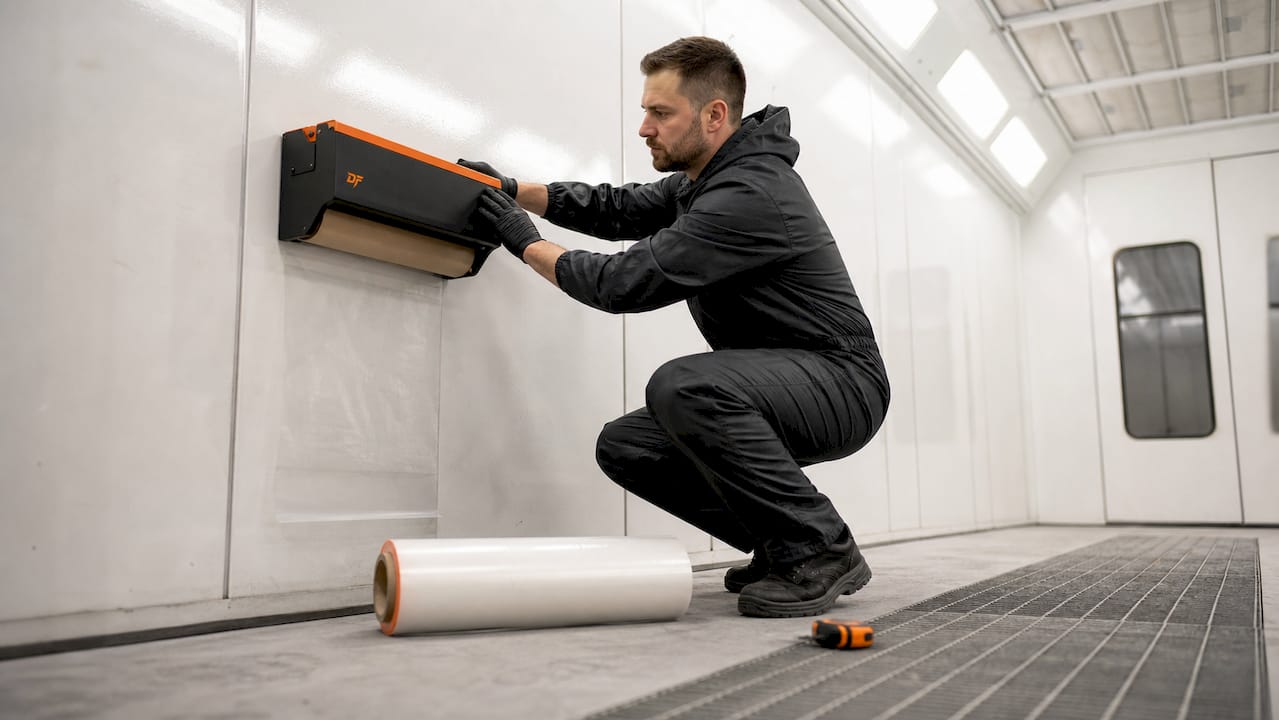
The dispenser’s core job is to maintain consistent film tension and direction during application. Industrial spray booth SOPs specify aligning the dispenser box with the panel so the film feeds straight onto the surface, preventing wrinkles. A wrinkle is not a cosmetic issue. It creates a gap in coverage where dust can accumulate and contaminate a wet paint surface.
Dustfreefilm’s patented dispenser system is built around this principle. The design allows for quick, bubble-free installation of multi-layer electrostatic films onto booth walls and floors. The electrostatic properties of the film itself help it adhere without mechanical fasteners, but the dispenser controls the feed rate and angle that make that adhesion reliable.
Pro Tip: Before you feed the first section from the roll, hold the dispenser box against the panel and confirm the film exits parallel to the surface edge. Thirty seconds of verification here prevents five minutes of correction later.
How do booth film dispensers work step by step?
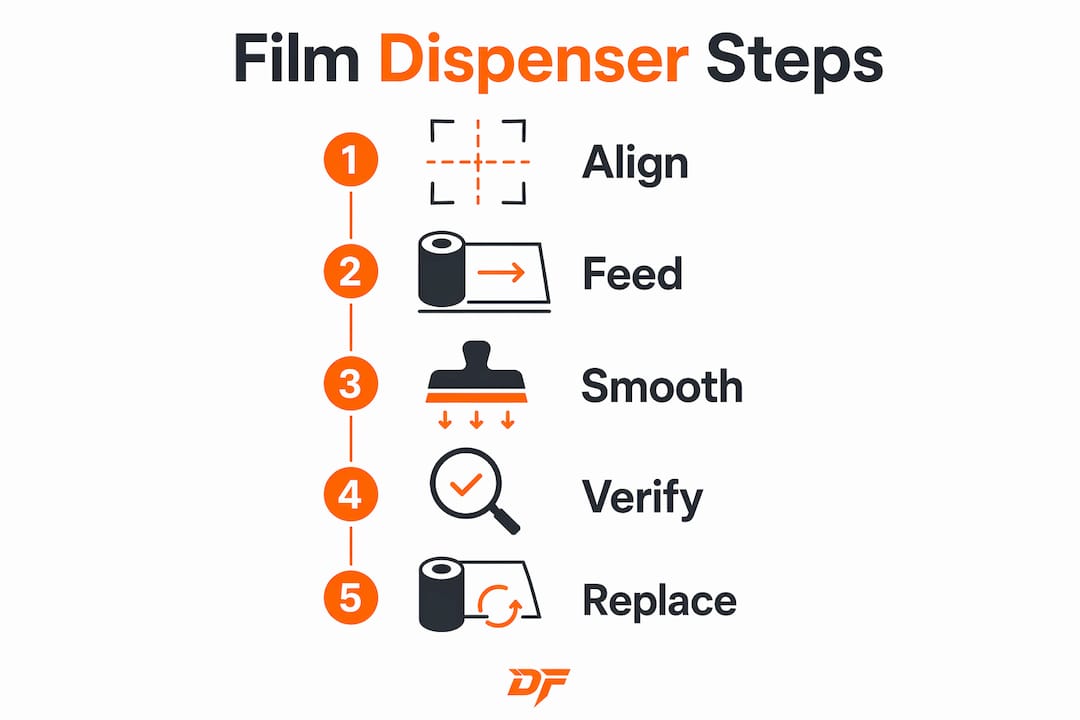
The operation of a film dispenser for booths follows a defined sequence. Each step builds on the previous one, and skipping any step introduces risk.
- Pre-position the dispenser. Place the dispenser box at the starting edge of the panel or wall section. Confirm the box is flush and level before pulling any film.
- Feed the first section. Pull the leading edge of the film from the roll and press it to the surface at the top corner. The film should lie flat with no tension pulling it sideways.
- Walk the dispenser down the surface. Move steadily, keeping the dispenser box close to the surface. Consistent distance prevents the film from lifting or angling off-axis.
- Overlap at seams. When moving to an adjacent panel, overlap the film edge by at least 50 millimeters. This closes the gap that would otherwise allow dust infiltration.
- Verify before moving on. Run a gloved hand across the applied section. Any bubble or wrinkle requires immediate correction before the next layer goes down.
Technicians treat dispensers as process control elements, verifying alignment before feeding film to avoid costly mid-application corrections. That framing matters. If you approach the dispenser as a passive holder, you will skip the verification steps. If you treat it as a control point, you will not.
For multi-layer applications, repeat the sequence for each layer. Dustfreefilm’s multi-layer booth wall and floor protectors are designed so each layer peels cleanly from the one below, meaning you refresh the surface without reapplying from scratch. The dispenser makes that layered workflow practical at production speed.
What is the physics behind spray booth containment?
The dispenser does not work in isolation. The booth environment itself must support dust containment, and that environment is governed by airflow physics.
Dispensing booths maintain negative pressure and a reverse laminar airflow that controls dust containment through fresh air intake, HEPA exhaust, and air recirculation. Typical airflow consists of about 20% fresh air, 20% exhausted through HEPA filters, and 80% recirculated air. That ratio keeps the working zone at lower pressure than the surrounding area, so any leak in the enclosure draws air inward rather than pushing contaminated air out.
Verification by smoke testing is treated as a deliverable, not an optional check. Titanium tetrachloride smoke traces the airflow pattern and confirms that negative pressure containment is functioning as designed. Without that confirmation, you cannot reliably attribute paint finish improvements to your film system.
This matters directly for film dispenser users. If your booth’s negative pressure is compromised, dust enters through gaps that your film cannot cover. The film protects surfaces it covers. Airflow containment protects the entire working volume. Both systems must function together.
Without validated containment boundaries, dust-control improvements and paint finish enhancements cannot be reliably attributed to the protective film system. That is not a theoretical concern. It is the reason professional operations run airflow verification before trusting their finish quality to any single component.
For a complete setup framework, Dustfreefilm’s spray booth setup guide covers how containment principles translate into practical booth configuration decisions.
Single partition vs. multi-sided booth enclosures: which performs better?
Enclosure geometry is the variable most often underestimated in booth film dispenser setups. The dispenser and film can only perform as well as the enclosure allows.
| Enclosure Type | Dust Containment | Overspray Control | Setup Time | Recommended Use |
|---|---|---|---|---|
| Single curtain wall | Low | Minimal | Fast | Temporary or low-risk prep work |
| Three-sided with ceiling valance | High | Good | Moderate | Standard automotive refinishing |
| Four-sided full enclosure | Highest | Excellent | Longer | Industrial painting, high-volume shops |
A single curtain wall enclosure may leak contamination despite good installation. At least three-sided containment with ceiling coverage is the minimum for effective dust control. The reason is pressure-driven leakage. A single wall creates a boundary on one side but leaves three open paths for airflow turbulence to carry dust into the work zone.
Key operational considerations when choosing your enclosure setup:
- Three-sided enclosures with ceiling valances can be installed in hours, not weeks, making them practical for shops that need to reconfigure between jobs.
- Four-sided enclosures deliver the highest overspray and dust trapping performance, which justifies the longer setup time for high-volume or precision industrial work.
- Ceiling coverage is not optional in serious operations. Dust falls. A booth with wall protection but no ceiling film allows overhead contamination to settle directly onto wet paint.
- Incomplete enclosures allow airflow leakage, undermining dust control even when the dispenser and film are applied correctly.
Automotive booth curtain enclosures with three to four-sided containment offer measurably better dust and overspray control than single curtain walls. The film dispenser delivers its full value only inside a properly enclosed space.
Practical integration of film dispensers in automotive operations
Selecting the right film and dispenser combination is the starting point. Applying it correctly under production conditions is where most operations either gain or lose efficiency.
Pre-application checklist before feeding film:
- Confirm booth airflow is active and negative pressure is verified.
- Clean the wall and floor surfaces. Dust on the substrate transfers to the film and creates texture defects.
- Position the dispenser at the correct starting point and confirm alignment before pulling film.
- Check that the film roll is loaded without lateral tension that would cause tracking drift.
Pre-positioning dispensers and stable, wrinkle-free film feeding ensure consistent protective coverage, which is critical for paint finish quality. Operational SOPs emphasize alignment and controlled feed to avoid defects that compromise surface coverage. This is not a detail for new technicians only. Experienced operators who skip pre-positioning checks are the ones who generate the most rework.
Common errors that cost time and material:
- Correcting wrinkles mid-application instead of restarting the section.
- Overlapping seams by less than the recommended 50 millimeters, leaving dust infiltration paths.
- Applying film to a surface with residual contamination from the previous job.
- Using a dispenser that is mismatched to the film width, causing edge curl.
Pro Tip: Keep a dedicated dispenser for each film width you use. Adjusting a single dispenser between widths mid-job introduces alignment error and slows your workflow.
For a detailed installation workflow, Dustfreefilm’s film installation guide walks through each stage with professional-grade specifics.
Key takeaways
Booth film dispensers deliver consistent dust protection only when combined with proper alignment, verified airflow containment, and the right enclosure geometry.
| Point | Details |
|---|---|
| Dispenser alignment is non-negotiable | Pre-position and verify feed direction before pulling film to prevent wrinkles and coverage gaps. |
| Containment physics drives results | Negative pressure and HEPA airflow must be verified before film protection can reliably improve paint finish quality. |
| Enclosure geometry determines effectiveness | Three to four-sided enclosures with ceiling coverage outperform single curtain walls for dust and overspray control. |
| Multi-layer systems multiply efficiency | Layered film designs allow surface refresh without full reapplication, reducing downtime in high-volume operations. |
| Verification is a deliverable | Smoke testing and alignment checks are standard operating requirements, not optional quality steps. |
What i’ve learned after years of watching dispensers get misused
The most common mistake I see in automotive and industrial spray booths is treating the film dispenser as the last step in a setup rather than the first process control point. Technicians rush to get film on the wall because the car is waiting. They skip the alignment check. They accept a small wrinkle at the corner because it looks minor. Then they wonder why the finish has texture defects near the wall edge.
The physics does not forgive shortcuts. A wrinkle in the film creates a micro-gap. Dust settles in that gap. The spray gun picks it up as overspray turbulence passes the wall. The defect shows up in the clear coat, not on the film, which is why it takes a while to connect cause and effect.
The second pattern I see is shops that invest in quality film and dispensers but run them inside inadequate enclosures. A single curtain wall with a premium multi-layer film is still a single curtain wall. The film protects the surface it covers. It cannot compensate for an enclosure that leaks contaminated air from three open sides.
My honest recommendation is to treat the dispenser, the film, and the enclosure as one system. Verify each component before you trust the output. Run the airflow check. Confirm the dispenser alignment. Check the enclosure geometry for gaps. When all three are right, the paint finish quality difference is not subtle. It is the kind of result that changes how a shop prices its work.
— Dust
Upgrade your spray booth with Dustfreefilm protection
Dustfreefilm has supplied premium protective films to automotive refinishing and industrial painting operations since 2012. Their multi-layer electrostatic booth wall and floor protectors are engineered for the exact workflow this article describes: fast dispenser-fed application, bubble-free adhesion, and clean layer-by-layer refresh between jobs.
The films are heat-resistant, static-free, and built to European manufacturing standards for high-traffic industrial settings. Whether you run a single auto body shop or a multi-line manufacturing facility, Dustfreefilm offers custom configurations and bulk purchasing to match your operation’s scale. Visit Dustfreefilm’s booth protection page to explore the full product range, or go directly to the quote request page to get pricing tailored to your booth dimensions and volume.
FAQ
What does a booth film dispenser actually do?
A booth film dispenser feeds protective film from a roll onto spray booth walls and floors in a controlled, straight line. Its primary function is to prevent wrinkles and misalignment that would create gaps in dust protection coverage.
How do film dispensers prevent paint defects?
Alignment and controlled feed are the operational cornerstones of film application quality. A properly fed film creates a continuous barrier that keeps dust off booth surfaces and out of the paint zone.
What enclosure setup works best with film dispensers?
Three to four-sided enclosures with ceiling valances deliver the best results. Single curtain walls create pressure-driven leakage paths that undermine dust control even when the film is applied correctly.
Why is airflow verification required in spray booths?
Negative pressure and HEPA filtration must be confirmed before you can trust that your film system is controlling dust effectively. Smoke testing is the standard method for verifying that containment airflow is functioning as designed.
How often should booth film be replaced?
Multi-layer film systems allow you to peel the top layer between jobs rather than replacing the full application. Full replacement frequency depends on job volume, but any layer showing contamination, tears, or adhesion failure should be refreshed before the next spray cycle begins.