

TL;DR:
- Booth film durability refers to a protective film’s ability to maintain adhesion, structure, and surface protection under stresses within spray booths. Multi-layer electrostatic films can last up to 12 months with scheduled peel-offs every 250 cycles, reducing downtime and rework costs. Proper installation, surface preparation, and adherence to replacement schedules are essential to maximize film longevity and booth performance.
Booth film durability is defined as the capacity of protective films used in spray booths to maintain structural integrity, adhesion, and surface protection under repeated thermal, chemical, and mechanical stress. For automotive refinishing shops and industrial painting facilities, this metric determines how long a film protects booth walls and floors before requiring replacement, directly affecting paint quality, worker safety, and operational costs. Multi-layer electrostatic films now set the 2026 industry benchmark, offering up to 12 months of total protection when managed correctly. Understanding film durability is not optional for high-volume operations. It is the foundation of predictable booth maintenance.
What is booth film durability and how is it measured?
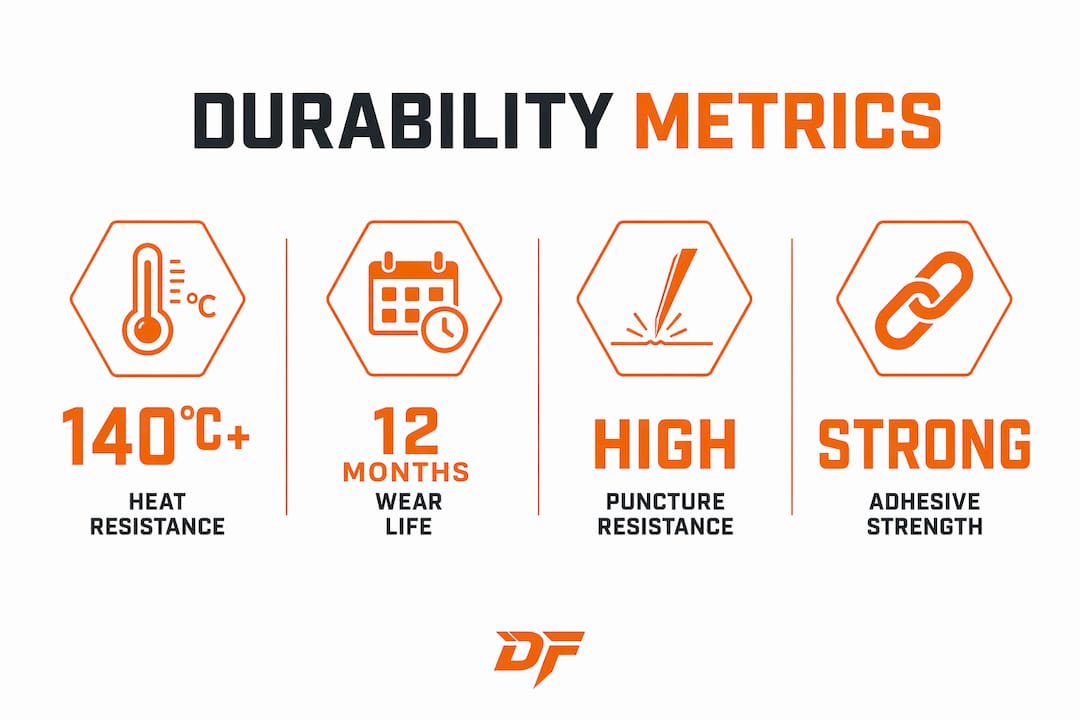
Booth film durability is measured across four performance dimensions: heat resistance, wear life in cycles, puncture resistance, and adhesive strength. Each dimension reflects a different stress the film faces inside an active spray booth.
Heat resistance is the most critical metric. High-quality protective films resist temperatures from approximately 140°C to 200°F during curing cycles without melting, bubbling, or releasing harmful fumes. This matters because a film that degrades under heat does not just fail structurally. It contaminates the paint job with fumes and particulates.
Wear life is expressed in time and cycle counts. Professional-grade multi-layer systems deliver up to 12 months of total protection, with each individual layer replaced every 3 months or 250 booth cycles. That interval is not arbitrary. It reflects the point at which overspray buildup begins to degrade booth lighting and introduce contamination risk.
Puncture resistance addresses the mechanical side of durability. Puncture-resistant construction is critical for withstanding normal booth operations without tearing from accidental tool contact. A film that tears mid-cycle exposes the underlying surface and forces an unplanned replacement, costing time and money.
Adhesive strength determines whether the film stays flat and bonded throughout its service life. Self-adhesive designs with controlled tack allow firm contact during use and clean removal at the end of each cycle, leaving no residue that could contaminate subsequent paint jobs.
Pro Tip: When evaluating film options, request the manufacturer’s documented heat resistance rating and cycle life data. Any supplier that cannot provide both figures is selling on price, not performance.
| Metric | What it measures | Industry standard |
|---|---|---|
| Heat resistance | Thermal stability during curing | 140°C to 200°F minimum |
| Wear life | Usable cycles before replacement | 250 cycles or 3 months per layer |
| Puncture resistance | Mechanical integrity under foot and tool traffic | No tearing under normal booth use |
| Adhesive strength | Bond quality and clean removal | Firm adhesion, residue-free peel |
How durable is booth film in real-world spray booth conditions?
Lab ratings tell part of the story. Real-world durability depends on how a film performs across the full range of conditions inside an active booth, including temperature swings, solvent-laden overspray, foot traffic, and the frequency of vehicle entries and exits.
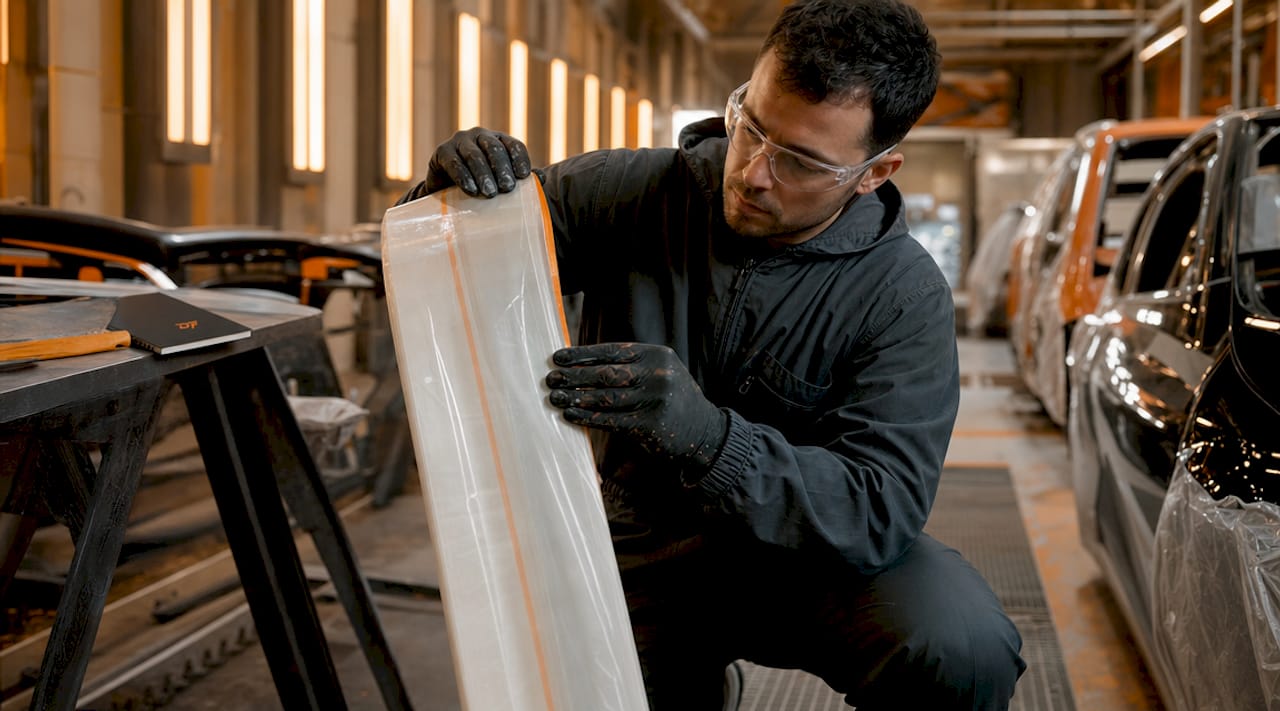
Multi-layer systems from manufacturers like Dustfreefilm are designed specifically for this environment. A 4-layer system with scheduled peel-offs every 250 cycles provides continuous protection without requiring the booth to go offline for deep cleaning. That translates directly to higher booth uptime and more vehicles processed per week.
Temperature fluctuation is one of the most damaging factors in practice. Booths cycle between ambient temperature during prep and curing temperatures above 140°C during the bake phase. Films that are not rated for this range show visible degradation within weeks. Lower quality films often fail by bubbling, peeling, or releasing fumes under heat, which compromises both booth safety and the paint finish on the vehicle. Cheap film is a false economy when a single contaminated paint job costs more to rework than a full roll of premium film.
Chemical exposure compounds thermal stress. Solvent-based paints, thinners, and activators contact the film surface on every spray cycle. A film without adequate chemical resistance will soften, lose adhesion at the edges, and begin to lift. Once lifting starts, overspray migrates underneath the film and defeats the entire purpose of using it.
Floor films carry an additional requirement that wall films do not. Non-slip surface features are critical for worker safety during spray operations involving wet overspray. A floor film that becomes slick under solvent exposure creates a slip hazard that no paint quality benefit can offset.
- Overspray buildup on walls reduces booth lighting intensity over time, degrading color accuracy
- Temperature cycling between ambient and curing temperatures stresses adhesive bonds at film edges
- Foot traffic from technicians and rolling equipment tests puncture resistance on every shift
- Solvent contact softens inadequate films and causes edge lifting within days
Pro Tip: Inspect film edges at the start of every shift. Edge lifting is the earliest visible sign of adhesive failure and, if caught early, can sometimes be pressed back down. Left unaddressed, it accelerates full film failure and contaminates the booth floor.
Multi-layer vs. single-layer booth films: which lasts longer?
The choice between multi-layer and single-layer film is fundamentally a maintenance efficiency decision. Both protect booth surfaces, but they differ significantly in how that protection is managed over time.
Single-layer films require complete removal and reapplication each time the film reaches the end of its service life. That process involves peeling the entire surface, cleaning any adhesive residue, and applying a fresh roll. Depending on booth size, this can take 30 minutes to over an hour per session. Multiply that across a busy shop running multiple booths and the labor cost becomes significant.
Multi-layer systems address this directly. Multi-layer films apply in under 10 minutes and reduce downtime compared to laborious scrubbing sessions. Each layer peels cleanly to reveal a fresh surface underneath, with no adhesive residue and no surface preparation required between layers. For a shop running two or three booths at full capacity, that time saving compounds into hours of recovered productivity each month.
- Assess your booth’s weekly cycle count to determine whether a 3-month or cycle-based replacement schedule fits your operation better.
- Select a multi-layer film with a numbered layering system so technicians can track remaining layers without guesswork.
- Schedule layer peel-offs during natural downtime such as shift changes or end-of-day cleaning routines.
- Document each peel-off date and cycle count to build a maintenance history that supports predictive scheduling.
A numbered layering system allows shops to track remaining protection layers and schedule timely peel-offs, supporting predictable maintenance planning. This is the difference between reactive maintenance and a system that runs on schedule. Shops that treat film replacement as a planned event rather than an emergency response consistently report fewer paint defects and lower total maintenance costs.
| Feature | Multi-layer film | Single-layer film |
|---|---|---|
| Replacement time | Under 10 minutes per layer | 30 to 60 minutes full replacement |
| Layers per installation | 4 layers typical | 1 layer |
| Total service life | Up to 12 months | 60 to 90 days |
| Residue on removal | None between layers | Possible adhesive residue |
| Maintenance predictability | High, numbered layers | Lower, full replacement required |
Replacing booth floor films every 60 to 90 days is more cost-effective than traditional deep cleaning, eliminating labor and chemical costs. Multi-layer systems extend that advantage further by reducing the frequency of full replacements.
Best practices for maximizing booth film longevity
Installation quality determines whether a film reaches its rated service life or fails prematurely. The most durable film on the market will underperform if applied incorrectly.
- Clean the surface before application. Any dust, oil, or residue on the booth wall or floor will prevent full adhesive contact and create weak points that fail under heat.
- Use reverse-wound rolls. Reverse-wound rolls with adhesive on the outside enable bubble-free, smooth application for durable adhesion. This design eliminates the need to flip the film during application and reduces the risk of wrinkles.
- Work from one edge outward. Apply the film in a single continuous motion from one side of the surface to the other, pressing firmly as you go to eliminate air pockets.
- Avoid stretching the film. Stretched film contracts under heat and pulls away from edges, creating the same lifting problem as poor surface preparation.
- Follow the manufacturer’s replacement interval. Scheduled peeling every 250 booth cycles or 3 months prevents lighting degradation and paint defects. Waiting longer does not extend value. It increases contamination risk.
Even minor installation imperfections like wrinkles can cause localized adhesive failure and film bubbling under heat. This is not a theoretical risk. It is the most common cause of premature film failure in shops that otherwise use quality products. The application step deserves the same attention as the paint process itself.
Integrating film maintenance into the booth’s standard operating procedures removes the human variable from the equation. When peel-off schedules are posted in the booth and tied to cycle counters, replacement happens on time regardless of which technician is on shift.
Pro Tip: For high-quality film selection, prioritize films rated for your booth’s peak curing temperature, not just the average operating temperature. Peak temperatures during the bake cycle are what destroy inadequate films.
Key takeaways
Booth film durability determines paint quality, booth uptime, and total maintenance cost, making film selection and installation the most underrated variables in spray booth performance.
| Point | Details |
|---|---|
| Durability has four dimensions | Heat resistance, wear life, puncture resistance, and adhesive strength all determine real-world film performance. |
| Multi-layer systems last longer | A 4-layer system provides up to 12 months of total protection with 10-minute layer replacements every 250 cycles. |
| Installation quality is critical | Wrinkles and poor surface prep cause premature failure regardless of film quality. |
| Cheap films cost more over time | Films that bubble or release fumes under heat cause rework costs that exceed premium film pricing. |
| Scheduled maintenance beats reactive replacement | Numbered layers and cycle-based peel schedules keep booths running predictably and defect-free. |
Why film durability is the metric most shops get wrong
Most shops I talk to evaluate booth film on purchase price per roll. That metric tells you almost nothing about operational cost. What matters is cost per cycle, and that calculation changes completely when you factor in labor, downtime, and rework.
A shop running 15 vehicles per day through a single booth will hit 250 cycles in roughly 16 to 17 working days. At that point, the film has done its job and needs to come off. Shops that push past that interval are not saving money. They are accumulating overspray on walls that degrades lighting, which in turn degrades color accuracy, which produces paint defects that require rework. The film cost is trivial compared to the rework cost.
The other mistake I see consistently is treating wall films and floor films as the same product category. They are not. Floor films carry the additional requirement of non-slip performance under wet overspray conditions. A wall film applied to the floor is a safety liability, regardless of how well it performs as a surface protector.
Multi-layer technology from manufacturers like Dustfreefilm exists precisely because high-volume shops cannot afford the downtime of full film replacement every few weeks. The multi-layer protective film approach treats booth protection as a system rather than a consumable. That shift in thinking is what separates shops that consistently produce clean finishes from those that fight contamination problems every week.
Treat film as preventive maintenance infrastructure, not a commodity. The shops that do this run cleaner, faster, and more profitably.
— Dust
Upgrade your booth protection with Dustfreefilm
Dustfreefilm manufactures multi-layer electrostatic booth wall and floor protectors built to the performance standards this article describes. Every product in the range is heat-resistant to curing temperatures, features non-slip floor surfaces, and installs in under 10 minutes using the patented dispenser system. The numbered layer design supports the cycle-based replacement schedules that keep high-volume booths running without contamination interruptions.
If your current film is not delivering the heat resistance, wear life, or clean peel performance your operation requires, explore the full range of spray booth protection films at Dustfreefilm. European manufacturing standards, bulk purchasing options, and custom configurations are available for operations of any scale.
FAQ
What is booth film durability?
Booth film durability is the ability of a protective film to maintain adhesion, structural integrity, and surface protection under the thermal, chemical, and mechanical stresses of active spray booth operations. It is measured by heat resistance rating, cycle life, puncture resistance, and adhesive performance.
How long does booth film typically last?
Professional-grade multi-layer systems provide up to 12 months of total protection, with individual layers replaced every 3 months or 250 booth cycles. Single-layer films typically require full replacement every 60 to 90 days.
Why do cheap booth films fail faster?
Lower quality films lack the adhesive technology and thermal rating required for spray booth conditions. They bubble, peel, or release fumes under curing heat, which contaminates paint finishes and forces unplanned replacements that cost more than the film savings.
How does multi-layer film reduce booth maintenance time?
Multi-layer films apply in under 10 minutes and each layer peels cleanly to reveal a fresh surface, eliminating the need for scrubbing or adhesive residue removal between cycles. This reduces booth downtime significantly compared to full single-layer replacement.
What causes premature booth film failure?
The most common causes are poor surface preparation before application, wrinkles during installation that create localized adhesive failure under heat, and exceeding the recommended replacement interval. Using a film not rated for the booth’s peak curing temperature also accelerates failure.