

Every European facility manager knows that keeping dust at bay inside a paint booth can make or break the final finish. Paint defects and costly rework often trace back to hidden contaminants on booth floors. Choosing the right floor protection means more than just a clean look—it creates a reliable barrier that ensures consistent quality and saves maintenance effort. This guide breaks down the science and practical strategies behind effective booth floor protection so your automotive refinishing operation can run cleaner and more efficiently.
Table of Contents
- Defining Booth Floor Protection Solutions
- Comparing Floor Protection Film Types
- How Protective Films Control Dust and Debris
- Installation Best Practices and Maintenance
- Avoiding Common Issues and Costly Mistakes
Key Takeaways
| Point | Details |
|---|---|
| Importance of Floor Protection | Effective booth floor protection prevents contamination, ensuring high paint quality and reducing rework costs. |
| Choosing the Right Film | Select the appropriate film type based on traffic patterns and overspray exposure for optimal performance. |
| Regular Maintenance is Crucial | Implement weekly inspections and replace protective layers proactively to maintain cleanliness and function. |
| Proper Installation Techniques | Ensure thorough surface preparation and use bubble-free application methods for reliable adhesion and effectiveness. |
Defining Booth Floor Protection Solutions
Booth floor protection is about creating a barrier between your spray booth floor and contamination sources. Think of it as a catch-all system that traps dust, overspray, and debris before they land on your painted surfaces.
When you’re refinishing automotive parts, floor dust becomes your enemy. Every particle that floats up compromises paint quality and creates rework costs. The goal is simple: keep your floor clean so your finishes stay flawless.
What Floor Protection Actually Does
Effective booth floor protection serves multiple functions simultaneously:
- Captures airborne dust and overspray particles before they settle on work surfaces
- Reduces paint defects like nibs, dust specs, and surface contamination
- Minimizes booth maintenance time between jobs
- Extends the life of your spray booth infrastructure
- Improves visibility inside the booth with clean surfaces
Think about your facility’s current workflow. How much time do technicians spend cleaning booth surfaces mid-shift? How many paint jobs require touch-ups due to contamination? Floor protection addresses both issues at the source.
The Science Behind Protection Systems
Non-woven protection materials work by trapping particles in their fiber structure rather than letting them bounce or drift. The adhesive backing keeps the protective layer anchored during air circulation and foot traffic.
Multi-layer construction matters here. Thicker materials handle more overspray before saturating. The white surface reflects light, creating a cleaner work environment and making contamination visible immediately.
Contamination begins at the floor level. If your floor isn’t protected, everything above it becomes compromised.
Your spray booth operates under negative pressure, which creates suction effects. Floor protection must resist this pressure while remaining flexible enough to handle worker movement and equipment placement.
Key Characteristics of Quality Solutions
When evaluating floor protection systems, look for these specifications:
- Static-free properties to prevent electrostatic discharge in sensitive paint environments
- Heat resistance for booths with elevated temperatures during cure cycles
- Adhesive backing that holds firmly without leaving residue
- Durability that withstands repeated foot traffic and equipment rolling
- Quick installation using bubble-free application methods
European automotive facilities demand high-performance standards. Your protection system needs to meet industrial-grade expectations for both safety and paint quality.
Integration with Overall Booth Strategy
Floor protection works best as part of a complete booth ecosystem. Wall protection, air filtration, and floor systems work together to eliminate contamination sources.
Consider how your current booth setup handles overspray. Does spray settle uniformly across the floor? Are certain areas more contaminated than others? Strategic floor protection placement addresses these patterns.
Pro tip: Inspect your booth floor weekly and replace protective layers when they show visible saturation or damage, even if they still appear to be holding.
Comparing Floor Protection Film Types
Not all floor protection films perform equally. Your choice depends on booth conditions, traffic patterns, and the specific paint finishes you handle daily.
Floor protection films vary in construction, durability, and contamination capacity. Some handle light-duty applications while others withstand heavy overspray and constant foot traffic in high-volume European automotive refinishing facilities.
Understanding Film Construction
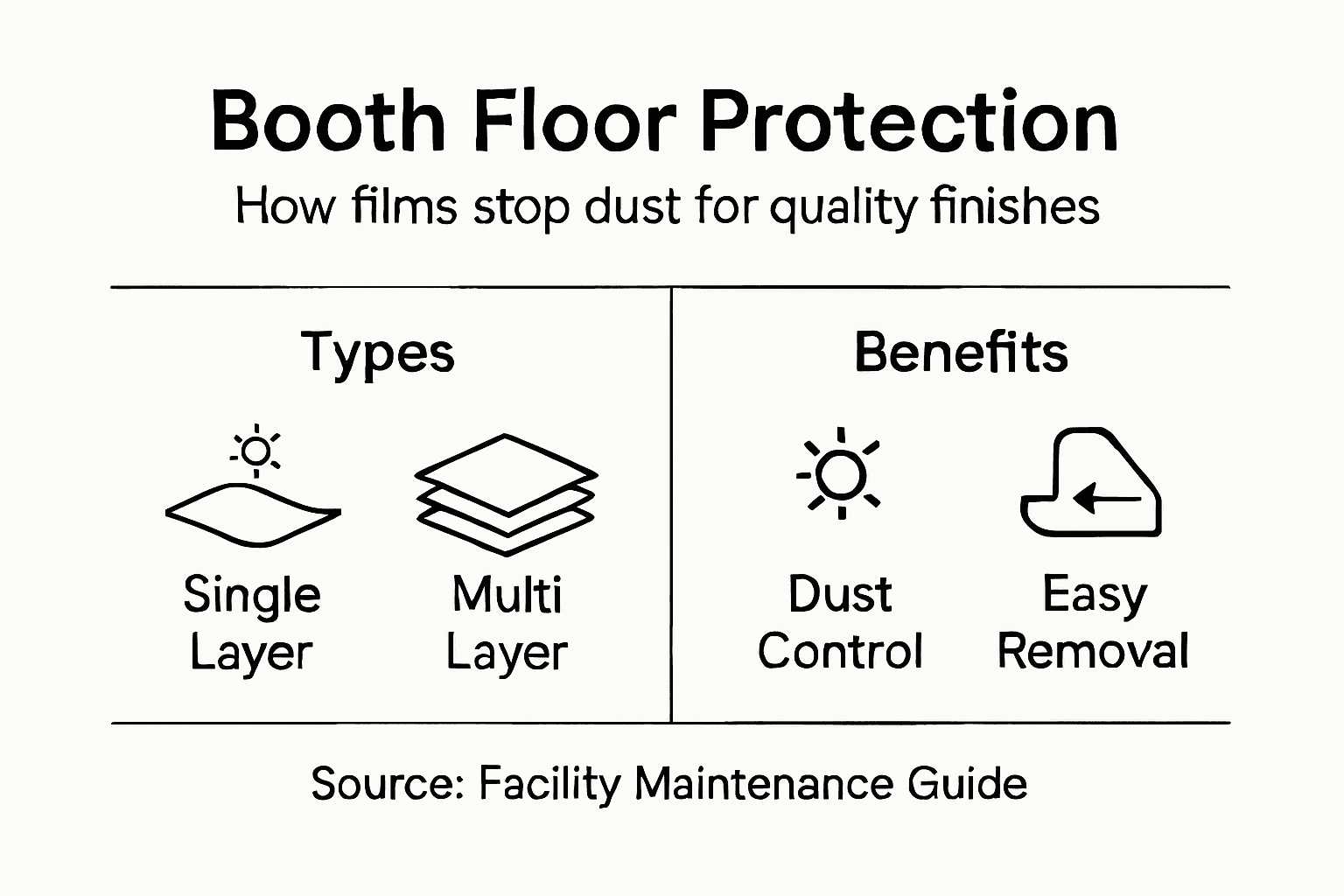
Single-layer films offer basic protection at lower cost. They work for short jobs or temporary booth setups but saturate quickly under heavy overspray.
Multi-layer films provide superior performance. The layered structure traps more particles before saturation occurs, extending service life between replacements.
Electrostatic-dissipative films prevent static buildup during application and removal. This matters when spray painting sensitive substrates or working with volatile solvents.
The difference between these types affects both paint quality and total cost of ownership. A film that lasts twice as long reduces labor spent on replacement cycles.
Here’s a quick comparison of floor protection film types and their best-fit environments:
| Film Type | Durability Level | Recommended Booth Use | Key Advantage |
|---|---|---|---|
| Single-layer | Low | Short-term, low-traffic | Lowest cost per roll |
| Multi-layer | High | High-traffic, heavy overspray | Extended life between swaps |
| Electrostatic-dissipative | Medium | Sensitive materials, solvent use | Reduces static discharge risk |
Key Performance Variables
When evaluating floor protection film options, assess these factors:
- Particle retention capacity (how much overspray before saturation)
- Adhesive strength (whether it holds during high air velocity)
- Heat tolerance (for booths exceeding 50°C during cure)
- Puncture resistance (against equipment wheels and tool impacts)
- Installation speed (time required to apply without bubbles)
Heavy-traffic booths need films rated for continuous abuse. Light-use facilities can optimize for cost efficiency.
Application Environment Considerations
Your booth’s specific conditions determine the right film type. Temperature fluctuations, humidity levels, and air circulation patterns all influence performance.
The cheapest film upfront often costs the most over time through frequent replacements and rework due to contamination.
Boots with elevated humidity require films that resist moisture absorption. Facilities with fluctuating temperatures need films with stable adhesive performance across temperature ranges.
Making Your Selection
Start by mapping your booth’s worst-case scenarios. Where does overspray accumulate most heavily? Which areas experience heaviest foot traffic? Which zones stay cleaner naturally?
Test film performance in your specific conditions before committing to large-scale purchases. Many facilities benefit from using different film types in different booth zones.
Pro tip: Request sample installations from manufacturers to evaluate adhesive performance and ease of removal in your actual booth environment before bulk ordering.
How Protective Films Control Dust and Debris
Protective films work through a deceptively simple mechanism: they capture contamination before it becomes a problem. Understanding how this process works helps you choose the right solution for your facility.
Dust and overspray don’t magically disappear in your booth. They settle on every surface, including your freshly painted parts. Protective films intercept these particles at the source.
The Mechanics of Particle Capture
Non-woven material construction forms the foundation of effective dust control. The fiber structure creates a labyrinth that traps particles rather than deflecting them.
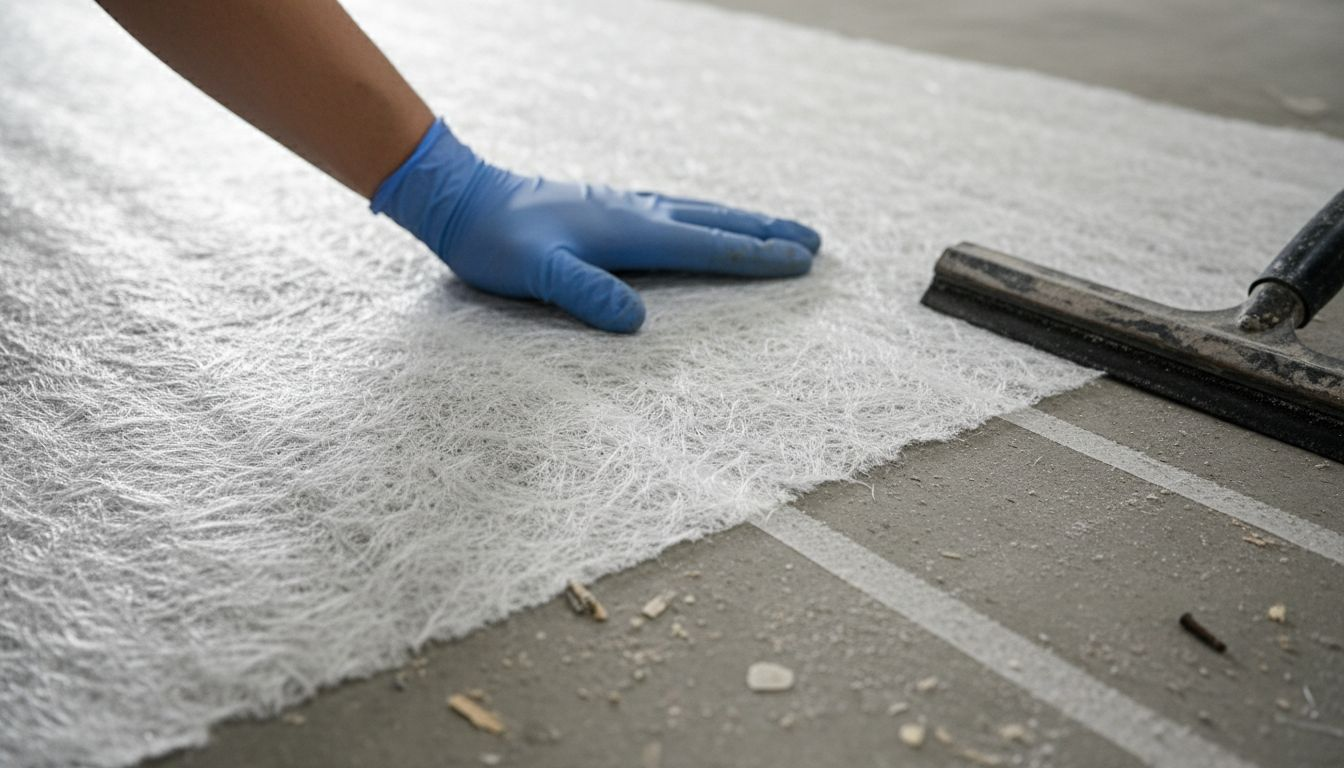
Think of it like a microscopic net. Dust particles hit the film surface and lodge in the fiber matrix instead of bouncing back into the air or settling on painted surfaces.
The adhesive backing holds everything in place during high-velocity air circulation. Without proper adhesion, even the best fiber structure fails when booth air pressure increases.
How Tacky Coatings Work
Some advanced systems use tacky coatings that actively grab dust particles. These coatings remain sticky throughout the booth cycle, continuously capturing contamination.
The tackiness level matters. Too sticky and removal becomes difficult. Too light and particles escape capture. Manufacturers balance this carefully for automotive refinishing environments.
These coatings work in conjunction with the film base layer to create redundant protection. If a particle breaks through the fiber structure, the tacky surface catches it.
Reducing Paint Defects Through Contamination Control
Protective films prevent multiple types of paint defects:
- Dust nibs from airborne particles settling mid-spray
- Orange peel texture caused by overspray interference
- Fish eyes from silicone contamination reaching surfaces
- Surface roughness from embedded debris in wet paint
- Color inconsistencies from contaminated spray patterns
When you eliminate floor-level dust sources, you stop the cascade of defects upstream. Your spray gun applies clean paint to clean surfaces.
Use this reference to understand how common paint defects link to contamination sources and prevention:
| Defect Type | Contamination Source | Floor Protection Benefit |
|---|---|---|
| Dust nibs | Airborne dust | Traps particles before surfaces |
| Orange peel | Overspray interference | Reduces uneven spray patterns |
| Fish eyes | Silicone on floor | Stops transfer to paint surface |
| Surface roughness | Embedded debris | Minimizes particulate buildup |
| Color inconsistency | Settled contamination | Maintains paint color accuracy |
Clean booth floors mean fewer touch-ups, faster turnaround, and better first-pass quality rates.
The Multi-Layer Advantage
Single-layer films capture particles on the surface only. Multi-layer systems provide depth filtration, trapping contamination throughout the material.
This means films last longer before saturation. Heavy overspray environments benefit significantly from this approach, reducing replacement frequency and labor costs.
Clear film sections on windows and lights prevent overspray buildup that reduces visibility and complicates maintenance.
Why Removal Matters
Easy removal prevents damage to booth surfaces. Protective films should peel away cleanly without leaving adhesive residue or gouging floor integrity.
Peelable film technology allows technicians to remove contaminated protection quickly between jobs. This speeds your booth turnaround time.
Pro tip: Monitor film saturation daily by visual inspection; saturated films stop trapping new particles effectively, so replace them before they reach full capacity rather than waiting until paint quality degrades.
Installation Best Practices and Maintenance
Proper installation determines whether your protective film works effectively or becomes a maintenance headache. Rushing this step costs you later through poor adhesion, bubble formation, and premature failure.
Your booth’s success depends on getting the foundation right before any painting begins. Clean surfaces and careful application create the conditions for reliable dust control.
Pre-Installation Surface Preparation
Thorough cleaning is non-negotiable before film application. Dust, debris, and residual coatings on booth surfaces prevent adhesive contact, causing films to lift at edges or fail completely.
Clean your booth floor with appropriate methods for your facility. Remove all loose particles, old film residue, and accumulated overspray using pressure washing or industrial vacuuming as appropriate.
Allow surfaces to dry completely before applying new film. Moisture trapped beneath the adhesive causes premature separation and reduces contamination trapping effectiveness.
Application Sequence and Technique
The order of application matters for efficiency and coverage. Start with walls first, then move to windows and lights, finishing with the floor.
This sequence prevents workers from stepping on freshly applied floor film while completing wall and window protection. It also ensures consistent overlap and eliminates edge gaps.
Use bubble-free installation methods to achieve proper adhesive contact. Trapped air bubbles create weak points where contamination can slip underneath.
Smooth application requires the right tools and technique. Squeegees, rollers, and specialized applicators ensure uniform pressure and eliminate voids.
Replacement Schedules and Saturation Monitoring
Protective films don’t last forever. Overspray accumulation reduces effectiveness until films can no longer trap new particles.
Replace protective films every 2-3 months or when visible saturation occurs, whichever comes first. Heavy-use booths may require monthly replacement during peak production periods.
Monitoring involves visual inspection:
- White films turning gray or brown indicates heavy saturation
- Visible overspray buildup suggests reduced trapping capacity
- Lifting edges or adhesive failure signal replacement time
- Film discoloration patterns show high-traffic contamination areas
Don’t wait for complete saturation. Replacing films proactively maintains consistent paint quality and prevents defect cascades.
Maintenance Between Replacements
Minor cleaning extends film life between full replacements. Light debris can be gently removed with soft brushes without damaging the protective layer.
Preventive replacement costs less than fixing paint defects caused by contaminated booth conditions.
Inspect adhesive integrity weekly. Peeling edges should be re-pressed or marked for replacement at the next scheduled change.
Track replacement cycles in your maintenance logs. This data helps you predict future needs and optimize inventory planning.
Pro tip: Schedule film replacement during slow production periods to minimize booth downtime, and keep one batch of replacement film on hand so you never delay the process due to supply shortages.
Avoiding Common Issues and Costly Mistakes
Most booth floor protection failures stem from preventable mistakes made during planning or execution. Learning what trips up other facilities helps you avoid expensive rework and production delays.
These aren’t theoretical problems. European automotive refinishing plants encounter the same issues repeatedly, and the patterns are clear.
Neglecting Pre-Paint Booth Preparation
Skipping thorough booth cleaning before applying protective films guarantees early failure. Dust particles and old residue prevent adhesive contact with floor surfaces.
Your film won’t stick properly to contaminated floors. Within hours, edges begin lifting and particles slip underneath, defeating the entire purpose.
Clean your booth completely before film installation. Remove all loose debris, old film remnants, and accumulated overspray. This single step determines everything that follows.
Moisture is equally problematic. Damp surfaces trap air bubbles beneath the adhesive, creating weak points where contamination enters.
Poor Airflow Management and Filtration
Effective dust control requires attention to airflow patterns throughout your booth system. Protective films alone cannot overcome inadequate ventilation or blocked filters.
If your booth’s negative pressure system isn’t balanced, air circulates chaotically. Dust settles in dead zones instead of being captured by protective films.
Check your HEPA filters regularly. Clogged filters reduce airflow velocity, preventing films from capturing particles effectively. Replace filters per manufacturer specifications.
Inconsistent Maintenance and Replacement Cycles
The most damaging mistake is delaying film replacement after saturation occurs. Saturated films stop trapping particles—they become contamination sources themselves.
Common errors include:
- Waiting for films to be “completely full” before replacing them
- Ignoring discoloration patterns that indicate saturation
- Skipping weekly inspections to catch edge lifting early
- Not tracking replacement dates, leading to forgotten schedules
- Continuing to paint on contaminated films hoping they’ll last longer
Each decision costs more in rework than the film replacement itself.
Improper Film Handling and Installation
Rushed installation creates bubbles and wrinkles that trap dust underneath. Workers stepping on floor film during application compress air pockets that later separate.
Use proper installation tools and techniques. Squeegees and rollers ensure uniform pressure. Rushing installation to save 30 minutes creates defects costing days of rework.
Missing Personal Protective Equipment Protocols
Workers handling old films risk exposure to accumulated dust and overspray chemicals. Require PPE during film removal and disposal.
This protects both health and ensures careful handling that prevents contamination spread.
Prevention costs pennies per job. Rework costs dollars.
Documentation and Monitoring Gaps
Facilities without maintenance logs lose track of replacement cycles. Without data, you guess at schedules instead of following proven patterns.
Track when films are replaced, note saturation rates under different conditions, and adjust replacement frequency based on actual performance.
Pro tip: Create a booth maintenance calendar visible to all technicians and assign one person responsibility for weekly film inspections and monthly replacement scheduling to ensure accountability.
Elevate Your Spray Booth Quality with Advanced Floor Protection
Booth floor contamination is the hidden enemy that compromises every paint job, increasing rework and slowing production. If you struggle with dust nibs, overspray buildup, or frequent film replacement, you are not alone. Achieving flawless finishes demands a protective floor solution that captures particles before they settle, resists saturation, and withstands harsh industrial conditions.
Dust Free Film understands these challenges and offers specially designed multi-layer, static-free floor protection films that meet stringent European automotive refinishing standards. Our heat-resistant and durable films feature patented, bubble-free application systems for fast and clean installation, minimizing downtime. Protect your investment, reduce defects, and simplify maintenance with our high-performance products engineered for busy spray booths.
Ready to stop dust at the source and improve your booth’s finish quality? Discover how our innovative booth floor protection solutions can transform your paint environment today. Explore our range and request a sample at Dust Free Film. Learn more about our multi-layer electrostatic booth protectors and take control of your spray booth maintenance with proven, effective dust protection.
Frequently Asked Questions
What is booth floor protection and why is it important?
Booth floor protection creates a barrier that prevents dust, overspray, and debris from contaminating painted surfaces, ensuring high-quality finishes and reducing rework costs.
How do different types of floor protection films compare in performance?
Single-layer films provide basic, low-cost protection but saturate quickly, while multi-layer films offer superior durability and longer service life, making them better for high-traffic environments.
How can I tell when to replace my protective film?
Regularly inspect your film for signs of saturation, such as discoloration or visible dust accumulation. Replace it every 2-3 months or sooner if it shows significant wear to maintain optimal performance.
What steps should I take for proper installation of booth floor protection?
Thoroughly clean the booth floor before applying the film. Use bubble-free installation techniques to ensure proper adhesion and avoid air pockets, which can compromise effectiveness.