

TL;DR:
- A comprehensive booth protection system includes filters, peelable films, airflow management, and maintenance routines to prevent dust contamination. Implementing such systems dramatically reduces paint defects, rework, and cleanup time, improving quality and efficiency. Regular inspection, proper product selection, and technician training are essential for sustained success.
Dust contamination is one of the most expensive problems in any spray booth operation, yet most facility managers don’t realize how much it’s costing them until a client rejects a finish or a technician spends hours reworking a panel. A single dust particle landing on wet paint can trigger a cascade of rework, wasted materials, and lost throughput. The reality is that most booths are not as protected as their operators believe. A properly designed booth protection system changes that entirely, covering everything from filtration to surface films to airflow discipline, and the results are measurable, fast, and significant.
Table of Contents
- What is a booth protection system?
- How booth protection impacts quality and efficiency
- Core technologies in modern booth protection
- Implementing and maintaining booth protection systems
- What most facility managers miss about booth protection
- Protect your spray booth for flawless results
- Frequently asked questions
Key Takeaways
| Point | Details |
|---|---|
| Comprehensive dust control | A booth protection system uses multiple layers—filters, films, and airflow—to block contaminants. |
| Quality and efficiency gains | Facilities using booth protection report lower defect rates and faster cleanup times. |
| Technology and compliance matters | Modern systems rely on high-performance filters and airflow management to meet industry standards. |
| Maintenance is essential | Regular filter checks and cleaning routines are key to ongoing paint quality and system reliability. |
What is a booth protection system?
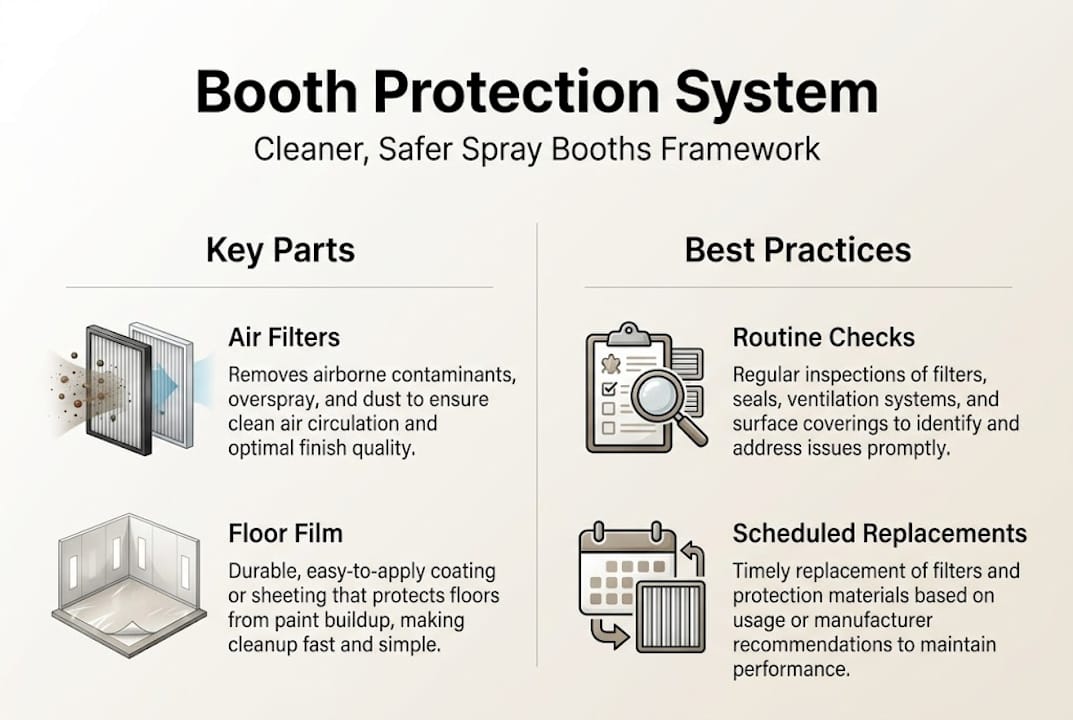
A booth protection system is the full set of physical barriers, filtration equipment, airflow controls, and maintenance routines working together to keep contaminants away from painted surfaces. It’s not just a filter or a sticky mat at the door. It’s a layered strategy where every component has a role.
Think of it this way: your spray booth is only as clean as its weakest link. A powerful exhaust fan means nothing if dust is migrating in from unprotected walls. Pristine filters don’t help if the floor is releasing settled particles every time a technician moves around. Every element must work together.
Here’s what a complete booth protection system typically includes:
- Floor films: Multi-layer peelable films that trap dust, overspray, and debris before they can become airborne again.
- Wall films: Electrostatic or adhesive films that prevent overspray buildup and stop dust from clinging to booth walls and re-entering the air stream.
- Filtration systems: Intake and exhaust filters that capture particulates from incoming and outgoing air. HEPA filter performance shows that HEPA and multi-stage filters can capture 99.97% of particles down to 0.3 microns, which is critical for preventing microscopic contamination.
- Airflow management: Downdraft, crossdraft, or semi-downdraft systems that direct air movement away from the work surface.
- Maintenance protocols: Scheduled filter replacements, film peels, and booth cleaning routines that keep every layer performing at its best.
To prevent paint defects consistently, every one of these components must be in place and functioning correctly.
Here’s a quick comparison of booth protection elements by function:
| Component | Primary Function | Replacement Frequency |
|---|---|---|
| Floor film | Traps dust and overspray at ground level | Per job or as layers fill |
| Wall film | Blocks wall contamination and overspray | Weekly to monthly |
| Intake filters | Cleans incoming air | Monthly or by pressure drop |
| Exhaust filters | Removes paint particles from exhaust | Monthly or by restriction |
| Airflow system | Directs contaminated air away from work | Ongoing monitoring |
This framework helps facility managers prioritize spending and maintenance schedules instead of guessing at what matters most.
How booth protection impacts quality and efficiency
The practical payoff of a well-implemented booth protection system shows up fast. Facilities that take protection seriously report dramatically better first-pass paint quality, meaning fewer vehicles or parts going back for correction. That directly translates to higher throughput and better use of technician time.
Here’s what most shops discover once they upgrade their protection setup:
- Fewer defects per job: Dust inclusions, nibs, and seeds drop significantly when floors, walls, and air are all controlled.
- Lower rework rate: Less rework means technicians spend time on new work instead of correcting previous jobs.
- Faster cleanup between cycles: Peelable film systems make booth turnover much faster than scrubbing and wiping traditional surfaces.
- Consistent finish quality: With contamination controlled, finishes are predictable, which matters enormously for high-volume facilities.
- Reduced labor costs: Proper protection can reduce cleanup time and rework from dust-related paint defects, recovering dozens of labor hours per month.
The numbers are striking. Facilities that implement comprehensive protection systems can cut paint defects by 90% compared to unprotected booths. That’s not a marginal improvement. That’s a fundamental shift in how the operation performs.
Statistic callout: Facilities using full-coverage booth protection systems report up to a 90% reduction in dust-related paint defects. For a shop completing 20 paint jobs per week, that can mean avoiding 18 rework incidents that previously cost hours of labor and materials.
Pro Tip: Track your defect rate before and after implementing a booth protection system. Even informal records over 30 days will show you the difference in rework frequency and cleanup time, giving you a real number to show ownership or justify the investment.
The advantages of dust free booths go beyond quality alone. Cleaner booths also create safer working environments by reducing airborne chemical exposure and improving visibility during spraying. Safety and efficiency are not competing goals here. They reinforce each other.
Here’s how protected versus unprotected booths compare on key performance metrics:
| Metric | Unprotected booth | Protected booth |
|---|---|---|
| Dust defects per 10 jobs | 4 to 7 | 0 to 1 |
| Average cleanup time | 45 to 90 minutes | 10 to 20 minutes |
| Monthly rework rate | High | Very low |
| Technician satisfaction | Low | High |
Core technologies in modern booth protection
Understanding the individual technologies inside a booth protection system helps you make smarter purchasing decisions and avoid over-investing in areas that won’t move the needle.
Here’s what actually matters:
- HEPA and multi-stage filtration: These filters do the heavy lifting on air quality. Multi-stage systems catch large particles early and reserve HEPA layers for fine particulates, which extends filter life and keeps costs reasonable.
- Peelable floor and wall films: This is where facilities often see the fastest return. Instead of scrubbing booth floors and walls during changeovers, technicians simply peel away the top layer of film, revealing a clean surface underneath. The patented multi-layer systems we use at Dust Free Film are specifically engineered for fast, bubble-free installation in high-traffic industrial environments.
- Integrated airflow systems: Downdraft booths pull air from the ceiling down through the floor grate, carrying dust away from the vehicle before it can settle. Crossdraft designs push air from intake at one end to exhaust at the other. Both work, but the booth type must match the protection film layout. Improving booth airflow is often the fastest way to reduce contamination without major capital investment.
- Maintenance discipline: Technology means nothing without consistent upkeep. Dust control methods only work when paired with scheduled filter inspections and film replacements.
Pro Tip: Match your film replacement schedule to your booth’s airflow type. Downdraft booths tend to concentrate overspray at the floor, meaning floor films need more frequent peeling. Crossdraft booths accumulate more on side walls. Knowing your setup saves money and prevents missed contamination points.
On the regulatory side, booth ventilation compliance is non-negotiable. NFPA and OSHA mandate that ventilation systems integrate properly with booth protection, and failure to comply creates both legal and safety risks. Maintaining proper airflow at a minimum of 100 FPM (feet per minute) is essential for both effective dust removal and staying within regulatory requirements.
“The synergy between films, filters, and airflow is what separates a truly protected booth from a booth that just looks clean.”
Implementing and maintaining booth protection systems
Knowing what a booth protection system needs is one thing. Getting it installed and running properly is where most facilities struggle. Here’s a practical sequence that works:
- Assess your booth and workload: Start by understanding your booth type (downdraft, crossdraft, semi-downdraft), the volume of jobs you run per day, the types of coatings you apply, and where contamination most often appears in your current process.
- Select the right products: Match your films and filters to your specific booth geometry and traffic level. A high-volume production facility needs heavier-grade floor films and more frequent filter changes than a low-volume custom shop.
- Install with airflow in mind: Always install floor films in the direction of airflow, not against it. Overlapping seams should never face into incoming air, or you risk film edges lifting during spray cycles. Wall film installation should begin at the ceiling and work downward.
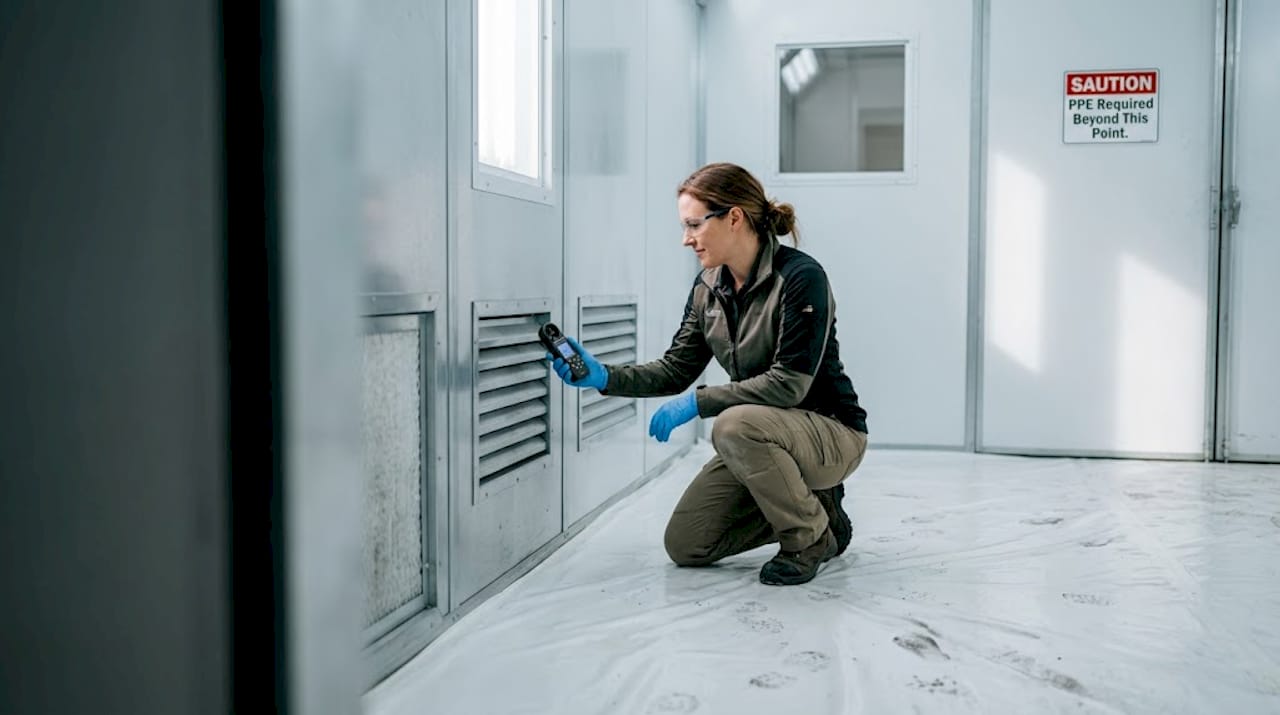
- Run daily checks: A five-minute daily inspection covers filter restriction, film integrity, and any areas where overspray or debris has accumulated at seams or corners. Catching small issues early prevents major contamination events.
- Schedule deep cleans: Combining installation with consistent maintenance, including daily filter checks and annual deep cleaning, is critical to sustaining system performance over time.
Pro Tip: Create a booth protection checklist and post it inside the booth door. Technicians who follow a written checklist consistently outperform those relying on memory alone, especially during high-volume periods when shortcuts become tempting.
Common mistakes to avoid: ignoring filter replacement schedules until airflow visibly drops, skipping corner and seam areas when applying wall films, and neglecting to reduce dust in spray booths at the source by controlling technician movement and clothing. You should also prevent contamination from outside the booth by using sticky entry mats and controlled-access protocols. Facilities that address all entry points consistently improve auto paint finish quality without expensive equipment upgrades.
What most facility managers miss about booth protection
After years of working with automotive and industrial spray facilities across multiple markets, one pattern stands out clearly: the shops that struggle most with dust contamination aren’t the ones with bad equipment. They’re the ones that believe their system is already good enough.
Complacency is the real enemy. A booth that runs cleanly for three months can develop contamination problems almost overnight when a filter goes unchecked, a film layer is skipped, or airflow shifts due to a pressure imbalance. The best facility managers treat booth protection as an active discipline, not a one-time installation.
What genuinely separates high-performing shops is attention to system synergy. Filters, films, and airflow are not independent solutions. They form a chain, and any weak link collapses the whole system. Shops that treat them as isolated purchases miss this entirely.
The other overlooked factor is technician buy-in. A dust-free booth workflow only works when every person using the booth understands why each step matters and follows the process without exception. Training and accountability are part of the protection system, not optional extras.
Protect your spray booth for flawless results
If booth contamination is cutting into your throughput, your quality, or your technician morale, the right protection solution can change all of that quickly.
At Dust Free Film, we’ve built our entire product line around the real-world challenges that automotive and industrial facilities face every day. Our multi-layer electrostatic wall and floor films are engineered for fast installation, maximum dust capture, and compatibility with all major booth configurations. Whether you’re managing a single-bay shop or a multi-line production facility, our booth protection film solutions are designed to integrate immediately and deliver visible results. Ready to find the right system for your specific operation? Request a custom quote and our team will help you configure the best protection setup for your booth type, workload, and budget.
Frequently asked questions
What components make up a booth protection system?
A complete booth protection system uses filters, films, and airflow technology working together alongside a structured cleaning schedule to keep spray booth work surfaces free of dust and contamination.
How often should spray booth filters be changed?
Daily filter checks and routine replacement based on workload are essential, with most facilities changing filters monthly or sooner when airflow restriction becomes noticeable.
Can booth protection systems improve regulatory compliance?
Yes. Modern protection systems help facilities maintain the airflow and ventilation standards required by NFPA and OSHA, reducing the risk of citations or shutdowns.
What is the biggest advantage of using wall and floor films in booths?
Peelable films trap dust and overspray directly at the surface, making booth changeovers dramatically faster while protecting finishes from contamination that would otherwise require rework.
How does airflow velocity affect booth protection?
Maintaining a minimum 100 FPM airflow ensures that dust and overspray are carried out of the booth efficiently, which directly supports both finish quality and compliance with safety regulations.