
Many facility managers assume all spray booth protective films serve the same purpose, but this misconception can cost thousands in maintenance and compromise finish quality. Wall and floor protectors address fundamentally different challenges in your operation. Wall films combat heat exposure and UV degradation on vertical surfaces, while floor protectors withstand abrasion from foot traffic and chemical cleaning agents. Understanding these distinctions helps you select the right protection strategy, reduce downtime, and maintain the dust-free environment critical for professional spray finishes. This guide breaks down the key differences, performance factors, and selection criteria to optimize your spray booth investment.
Table of Contents
- Understanding Spray Booth Protective Films: Wall Vs Floor
- Common Challenges In Spray Booth Protection And How Each Protector Addresses Them
- Comparative Analysis: Performance, Application, And Cost-Effectiveness Of Booth Wall And Floor Protectors
- Best Practices For Selecting And Installing Booth Wall And Floor Protectors
- Explore Dust Free Film For Superior Spray Booth Protection
- What Is The Key Difference Between Booth Wall And Floor Protectors?
- How Does Improper Surface Preparation Affect Protector Performance?
- Can Protective Films Reduce Spray Booth Maintenance Time And Costs?
- What Environmental Conditions Affect The Choice Of Spray Booth Protectors?
Key takeaways
| Point | Details |
|---|---|
| Protective films extend booth life | Quality films reduce overspray accumulation and lower maintenance frequency |
| Wall protectors prioritize heat resistance | Vertical films need UV and temperature tolerance up to 200°F for lighting protection |
| Floor protectors emphasize abrasion durability | Horizontal surfaces require films that handle traffic, chemicals, and cleaning |
| Surface preparation prevents failures | Poor prep causes 60-80% of coating failures, making proper cleaning essential |
| Matching protector to conditions saves costs | Selecting films based on booth environment reduces replacement frequency and labor |
Understanding spray booth protective films: wall vs floor
Spray booth protective films serve distinct roles based on their placement and the environmental stresses they encounter. Wall protectors are engineered for vertical surfaces where they shield booth lighting, panels, and infrastructure from overspray accumulation and UV exposure. These films must maintain adhesion and clarity despite constant exposure to elevated temperatures from curing lamps and spray operations. Self-adhering spray booth film demonstrates heat resistance up to 200°F, ensuring durability in high-temperature applications.
Floor protectors face entirely different demands. These films endure constant foot traffic from technicians, rolling equipment, and cleaning procedures that involve aggressive chemicals. Abrasion resistance becomes the critical performance factor, as floors accumulate overspray that must be removed without damaging the underlying booth surface. The material composition typically includes reinforced layers that prevent tearing and punctures during daily operations.
Self-adhering films simplify installation across both applications by eliminating the need for separate adhesives or fasteners. This design reduces labor time and ensures consistent coverage without bubbles or wrinkles that could compromise protection. The adhesive backing creates a temporary bond strong enough to withstand booth conditions yet gentle enough to remove without leaving residue.
Key properties to evaluate include durability under specific stressors, application simplicity for your team, and environmental factors like temperature fluctuations and chemical exposure. A spray booth wall protector optimized for UV resistance may lack the abrasion tolerance needed for floor applications, while a floor film might not maintain clarity under intense heat.
Pro Tip: Match protector thickness to traffic intensity. High-volume shops benefit from thicker floor films that resist wear, while walls typically perform well with standard-gauge protection focused on heat and UV resistance.
Balance your protector choice based on booth workflow demands and environmental conditions. Automotive refinishing operations with frequent color changes need easy-removal films, while industrial coating facilities prioritize extended durability between replacements. Understanding these material distinctions prevents mismatched applications that waste budget and compromise booth performance.
Common challenges in spray booth protection and how each protector addresses them
Spray booth operators face persistent contamination issues that directly impact finish quality and operational efficiency. Surface preparation stands as the foundation of coating success, yet inadequate surface prep causes 60-80% of coating failures in industrial applications. Protective films mitigate this risk by maintaining clean surfaces between coating cycles, reducing the contamination that undermines adhesion.
Overspray creates multiple problems beyond aesthetic concerns. Accumulated overspray on booth walls obscures lighting, reducing visibility for technicians and increasing the likelihood of application errors. This buildup also harbors dust particles that can dislodge during spray operations, landing on wet surfaces and ruining finishes. Wall films capture this overspray before it bonds to booth infrastructure, allowing simple removal and replacement rather than labor-intensive scraping and cleaning.
Floor contamination presents distinct challenges:
- Overspray accumulates faster on horizontal surfaces due to gravity and spray patterns
- Foot traffic grinds particles into floor coatings, creating permanent damage
- Chemical cleaners used to remove buildup can degrade unprotected floor surfaces
- Abrasion from equipment movement creates rough patches that collect more contamination
Health and safety regulations add another layer of complexity. OSHA standards require maintaining spray booth surfaces to prevent hazardous material accumulation, while EPA guidelines govern waste disposal from booth cleaning. Removable protective films simplify compliance by containing overspray for proper disposal without generating chemical waste from aggressive cleaning procedures.
“Protective films transform booth maintenance from a chemical-intensive scraping process into a simple peel-and-replace procedure, cutting downtime by 70% while improving worker safety.”
Wall protectors specifically address lighting protection and vertical surface integrity. Modern spray booths rely on consistent, bright lighting for color matching and defect detection. Overspray on light fixtures and reflective panels diminishes this critical visibility. Films preserve lighting performance while protecting expensive booth panels from paint buildup that would otherwise require professional restoration.
Floor protectors shield surfaces from the combined assault of abrasion and chemical exposure. Daily foot traffic from technicians wearing contaminated shoes grinds particles into unprotected floors, creating texture that attracts more dirt. Protective films absorb this wear, maintaining smooth surfaces that resist contamination. When cleaning becomes necessary, the film’s chemical resistance allows safe use of solvents without damaging the booth floor beneath.
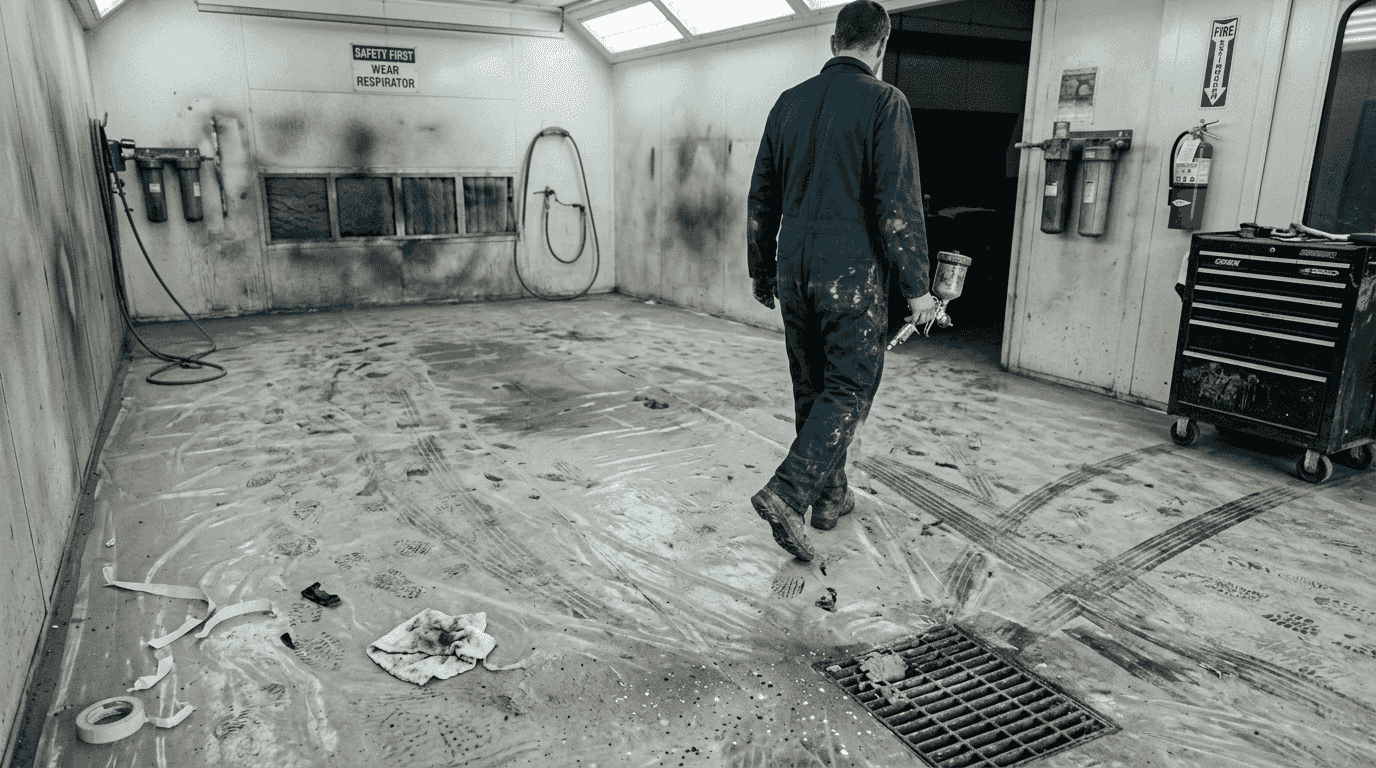
Using appropriate protectors reduces maintenance frequency and duration, directly lowering operational costs. Facilities report 40-60% reductions in booth cleaning time after implementing comprehensive film protection strategies. This efficiency gain translates to more productive spray time and fewer workflow interruptions, improving both output and profitability.
Comparative analysis: performance, application, and cost-effectiveness of booth wall and floor protectors
Selecting between wall and floor protectors requires understanding how each type performs across critical operational dimensions. Performance specifications reveal distinct optimization priorities that align with the unique stresses each surface encounters during spray booth operations.
| Feature | Wall Protectors | Floor Protectors |
|---|---|---|
| Heat resistance | Up to 200°F for curing lamps | Moderate, 120-150°F typical |
| UV protection | High, prevents degradation | Low to moderate |
| Abrasion resistance | Low to moderate | High, withstands traffic |
| Chemical resistance | Moderate | High, handles solvents |
| Application time | 15-30 minutes per panel | 20-40 minutes per section |
| Removal ease | Clean peel, minimal residue | Clean peel, designed for frequent changes |
| Typical lifespan | 3-6 months | 1-3 months |
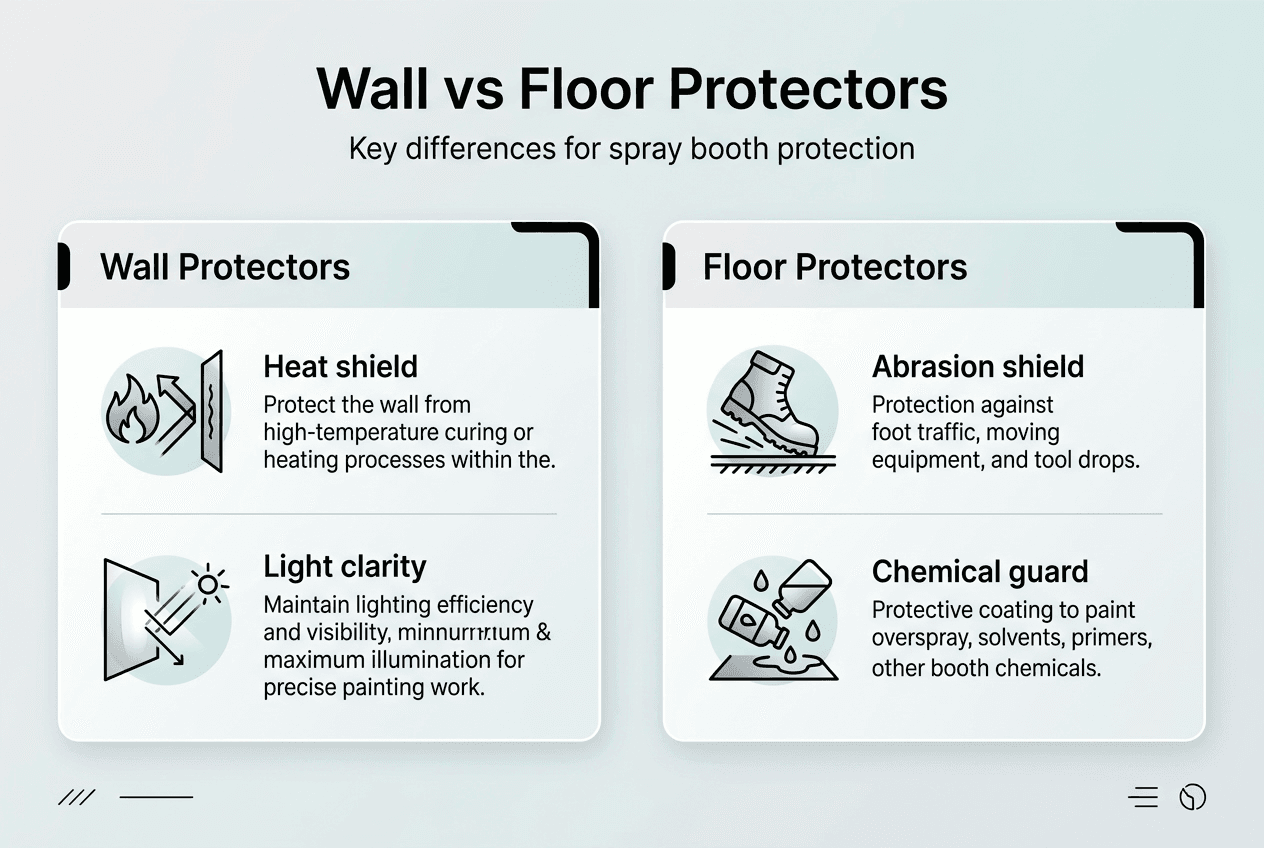
Wall protectors prioritize thermal stability and optical clarity to maintain booth lighting effectiveness. The self-adhering nature saves time during installation by eliminating separate adhesive application steps. These films typically feature UV stabilizers that prevent yellowing and brittleness under constant light exposure, maintaining transparency that keeps booths bright and safe.
Floor protectors emphasize mechanical durability to survive the punishment of daily operations. Reinforced construction resists tearing when technicians drag equipment or walk across wet overspray. The chemical resistance profile accommodates aggressive cleaning agents used to remove stubborn contamination, protecting the underlying floor finish from solvent damage.
Application considerations significantly impact total cost of ownership:
- Self-adhering films reduce installation labor by 50% compared to spray-on alternatives
- Bubble-free application systems minimize waste from rejected installations
- Pre-cut sizes match standard booth dimensions, eliminating measurement and cutting time
- Removal speed determines booth downtime during maintenance cycles
Cost effectiveness extends beyond purchase price to encompass labor savings and booth longevity. Wall protectors that last six months cost more per unit than three-month floor films, but the extended replacement interval reduces labor frequency. Conversely, floor films require more frequent changes due to higher contamination rates, making quick-change designs more valuable despite potentially higher per-unit costs.
Pro Tip: Calculate total cost by multiplying film price by annual replacement frequency, then adding labor costs at your shop rate. A slightly more expensive film that lasts twice as long typically delivers better value than cheaper options requiring frequent replacement.
Maintenance impact represents a hidden cost factor many facilities overlook. Traditional booth cleaning requires shutting down operations for 4-8 hours while technicians scrape and solvent-clean surfaces. Protective films reduce this downtime to 30-60 minutes for film replacement, keeping booths productive and minimizing schedule disruptions. For high-volume operations, this time savings alone justifies the film investment.
Matching protector characteristics to specific booth needs optimizes both performance and economics. Climate-controlled booths with stable temperatures can use standard wall films, while operations in unconditioned spaces need enhanced heat resistance. Similarly, shops with light foot traffic may extend floor film life, while busy facilities benefit from heavy-duty options designed for rapid turnover. Understanding your operational profile guides selection toward solutions that deliver maximum value.
Best practices for selecting and installing booth wall and floor protectors
Successful protective film implementation starts with thorough assessment of your booth’s unique operating conditions and requirements. This evaluation ensures you select products matched to actual environmental stresses rather than generic specifications that may not align with your workflow.
-
Measure booth temperature ranges during typical operations. Coatings require specific temperature conditions for proper curing, and protective films must tolerate these same ranges without degrading. Use infrared thermometers to check wall and floor temperatures during peak spray and cure cycles.
-
Document traffic patterns and intensity. Count daily technician passes through the booth and note equipment movement frequency. High-traffic zones need more robust floor protection, while low-traffic areas can use standard-duty films.
-
Identify chemical exposure from cleaning and coating processes. List all solvents, reducers, and cleaning agents used in your booth. Verify protector chemical resistance against this specific inventory to prevent premature failure.
-
Evaluate humidity fluctuations throughout production cycles. Moisture affects adhesive performance and coating quality. Booths in humid climates or those using water-based coatings need films engineered for these conditions.
Surface preparation determines whether protective films achieve their rated performance or fail prematurely. Contaminated surfaces prevent proper adhesion, causing films to lift, bubble, or peel during use. The preparation process requires systematic attention to detail.
Clean all surfaces with appropriate degreasers to remove oils, wax, and residue from previous coatings. Rinse thoroughly to eliminate cleaning agent residue that could interfere with adhesion. Allow surfaces to dry completely, as moisture trapped under films creates adhesion failures and promotes mold growth. Inspect for damage like cracks or loose paint that could telegraph through the protective film or cause lifting at edges.
Pro Tip: Wipe surfaces with isopropyl alcohol immediately before film application. This final cleaning step removes any remaining contamination and ensures optimal adhesive contact.
Installation technique directly impacts film performance and longevity. Follow these steps for wall protector application and floor coverage:
-
Start from one edge and work systematically across the surface. This approach prevents trapped air pockets that create weak spots.
-
Use a squeegee or application tool to smooth the film as you progress. Apply firm, even pressure to activate the adhesive and eliminate bubbles.
-
Overlap seams by 1-2 inches when using multiple film sections. This overlap prevents gaps where overspray could reach booth surfaces.
-
Trim excess film at edges and corners for clean, professional appearance. Loose edges collect overspray and create lifting points.
-
Inspect the completed installation for bubbles, wrinkles, or lifting. Address any issues immediately while the adhesive remains workable.
Maintain manufacturer guidelines for replacement timing to prevent residue buildup or surface damage. Most films perform best when changed before reaching maximum contamination capacity. Waiting too long can make removal difficult and may allow overspray to seep under film edges. Conversely, premature replacement wastes material and increases costs without delivering additional protection.
Regular inspection identifies wear patterns and potential failures before they compromise booth cleanliness. Check high-traffic floor areas weekly for signs of wear, tears, or lifting. Examine wall films monthly for discoloration, loss of clarity, or edge separation. Document replacement intervals to establish optimal change schedules for your specific conditions. This data-driven approach to floor protection maximizes film value while maintaining consistent booth performance.
Explore Dust Free Film for superior spray booth protection
After understanding the critical differences between wall and floor protectors, you need reliable products engineered specifically for professional spray booth applications. Dust Free Film manufactures self-adhering protective films designed to address the exact challenges covered in this guide. Their multi-layer electrostatic films feature heat resistance, UV protection, and abrasion durability matched to booth wall and floor requirements.
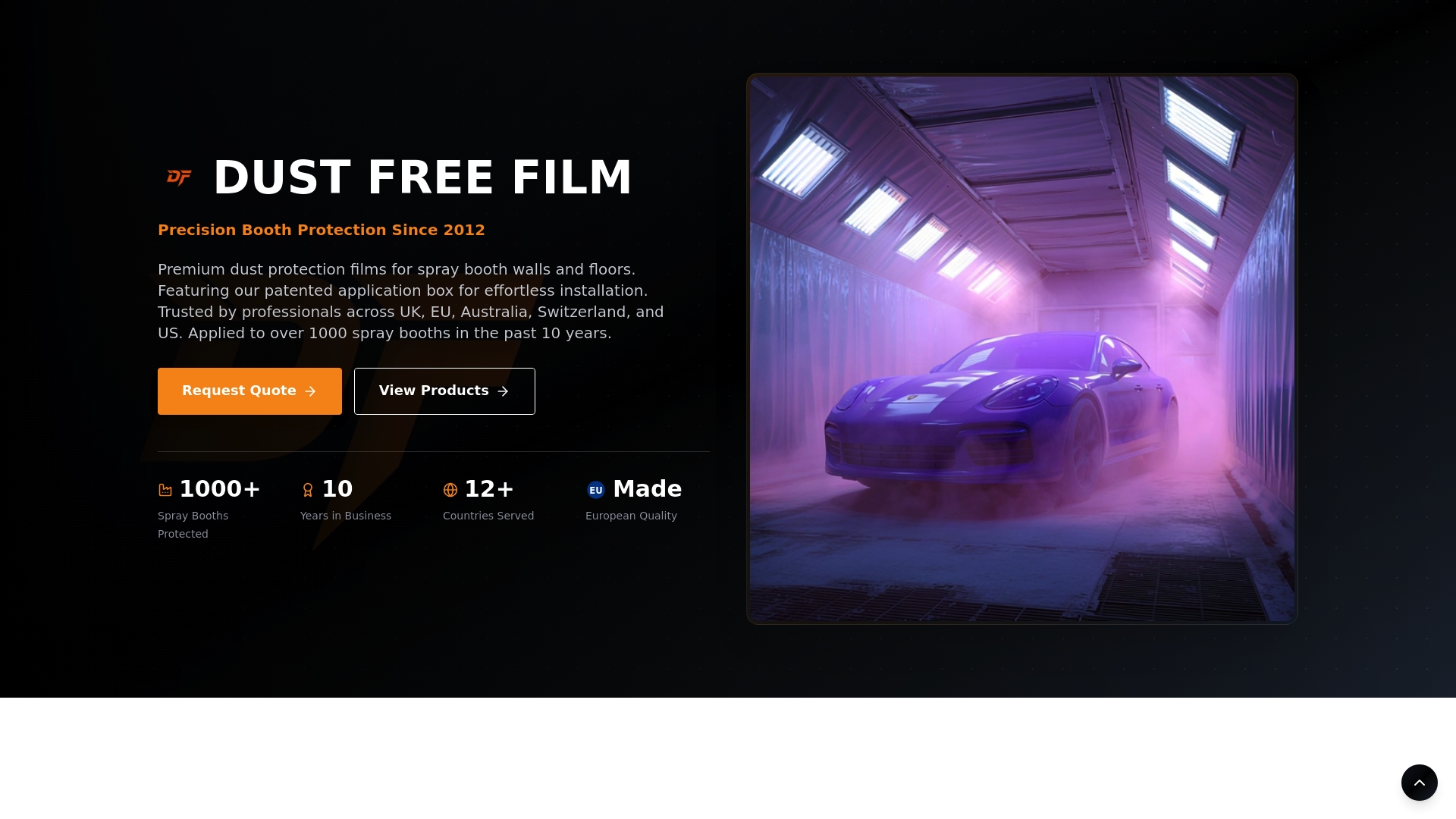
The patented dispenser system enables quick, bubble-free installation that reduces labor time and material waste. European manufacturing standards ensure consistent quality across every roll, while flexible configurations accommodate booths of any size. Whether you operate a single-bay auto body shop or manage industrial coating facilities, Dust Free Film delivers the specialized protection that extends booth life and maintains finish quality. Request a quote to discover custom solutions tailored to your operation’s specific needs.
What is the key difference between booth wall and floor protectors?
Wall protectors prioritize heat and UV resistance to protect vertical surfaces, lighting, and booth panels from temperature exposure and light degradation. Floor protectors emphasize abrasion resistance and chemical tolerance to withstand foot traffic, equipment movement, and cleaning solvents. The right choice depends on which environmental stresses dominate each surface in your specific booth configuration.
How does improper surface preparation affect protector performance?
Poor surface preparation causes adhesion failures that allow protective films to peel, bubble, or lift prematurely. Inadequate prep accounts for 60-80% of coating failures in industrial applications, and the same principle applies to protective films. Proper cleaning removes contaminants like oils, dust, and residue that prevent adhesive contact with booth surfaces. Without thorough preparation, even premium films fail to deliver their rated performance or lifespan.
Can protective films reduce spray booth maintenance time and costs?
Protective films dramatically reduce maintenance requirements by eliminating labor-intensive scraping and chemical cleaning procedures. Self-adhering films contribute to significant time savings by simplifying both installation and removal processes. Facilities typically report 40-60% reductions in booth cleaning time after implementing comprehensive film protection strategies. The quick peel-and-replace process cuts downtime from hours to minutes, keeping booths productive and reducing labor costs while maintaining superior cleanliness standards.
What environmental conditions affect the choice of spray booth protectors?
Temperature and humidity directly impact both coating success and protector performance. Coatings must cure within specific temperature ranges for proper adhesion, and protective films must tolerate these same conditions without degrading. Wall protectors in booths with curing lamps need heat resistance up to 200°F, while floor films must handle temperature fluctuations from door openings and seasonal changes. Humidity affects adhesive performance, making moisture-resistant films essential in humid climates or when using water-based coatings. Chemical exposure from specific solvents and cleaning agents also dictates material selection to ensure compatibility and prevent premature failure.