

Spray booths are vital for automotive refinishing and industrial painting, but they expose workers to serious hazards including toxic fumes, explosive vapors, and fire risks. Workers in spray finishing without proper respiratory protection develop lung disease at rates 10 times higher than the general population. This article identifies critical spray booth hazards and provides practical strategies for facility managers to implement effective controls, ensure regulatory compliance, and protect their teams.
Table of Contents
- Selection Criteria: Evaluating Spray Booth Hazards And Safety Measures
- 1. Toxic Fumes And Chemical Exposure Hazards
- 2. Fire And Explosion Risks In Spray Booths
- 3. Ventilation And Airflow Control Deficiencies
- 4. Personal Protective Equipment (PPE) For Spray Booth Operators
- 5. Maintenance Best Practices To Sustain Safety And Efficiency
- 6. Dust Control And Impact On Finish Quality And Safety
- 7. Regulatory Compliance: OSHA And NFPA 33 Standards For Spray Booth Safety
Key Takeaways
| Point | Details |
|---|---|
| Toxic Exposure | Chemical fumes cause respiratory disease 10x more frequently without proper PPE and ventilation. |
| Fire Hazards | Static electricity triggers 30% of spray booth fires, requiring grounding and suppression systems. |
| Ventilation Standards | Downdraft booths need 100 ft/min airflow; crossdraft booths require 150 ft/min minimum. |
| Maintenance Impact | Clogged filters cut ventilation efficiency by 30%, increasing health and fire risks. |
| Dust Control | Electrostatic films reduce contamination by 80%, improving finish quality and safety. |
Selection Criteria: Evaluating Spray Booth Hazards and Safety Measures
Assessing spray booth hazards requires a structured approach that accounts for both immediate risks and long term operational impacts. Facility managers must evaluate each hazard based on severity, frequency of exposure, and potential consequences to workers and equipment.
Spray booths commonly expose workers to toxic materials, flammable or explosive mists, particulates, and vapors which require effective engineering controls. When evaluating safety measures, prioritize solutions that address multiple hazards simultaneously, such as ventilation systems that reduce both chemical exposure and fire risk.
Key criteria for hazard assessment include:
- Compliance with OSHA spray operations standards and NFPA 33 fire prevention requirements
- Engineering control effectiveness, particularly ventilation capacity and air quality monitoring
- PPE adequacy for specific chemical exposures and operational conditions
- Maintenance requirements and their impact on system reliability
- Cost effectiveness balanced against worker safety and regulatory obligations
Pro Tip: Create a hazard matrix that scores each risk by likelihood and severity. This helps prioritize investments in controls that deliver the greatest safety improvements for your specific operation.
The framework you establish now guides all subsequent safety decisions, from equipment selection to training protocols. Your evaluation should reflect actual working conditions, not just theoretical standards.
1. Toxic Fumes and Chemical Exposure Hazards
Chemical exposures in spray booths present the most persistent health threat to operators. Paints, coatings, and solvents release volatile organic compounds (VOCs), isocyanates, and fine particulates that can cause acute respiratory distress and chronic lung disease.
Workers in spray finishing without proper respiratory protection develop lung disease at rates 10 times higher than the general population. Isocyanates, commonly found in automotive refinishing products, trigger asthma and sensitization reactions even at low concentrations. Long term exposure to VOCs damages the central nervous system and internal organs.
Effective chemical hazard control requires layered protection:
- Supply operators with properly fitted respirators matched to chemical exposures
- Implement annual fit testing and respiratory medical evaluations
- Maintain adequate ventilation to keep contaminant levels below permissible exposure limits
- Provide protective clothing including chemical resistant gloves, goggles, and coveralls
- Monitor air quality in spray booths through regular atmospheric testing
Pro Tip: Keep Safety Data Sheets (SDS) for all coating products readily accessible. Train operators to recognize symptoms of overexposure such as dizziness, nausea, and respiratory irritation so they can exit the booth immediately.
Ventilation serves as your primary defense against airborne contaminants. However, PPE and ventilation importance cannot be overstated as backup protection when engineering controls alone prove insufficient during peak production periods.
2. Fire and Explosion Risks in Spray Booths
Flammable vapors and overspray create explosive atmospheres that can ignite from the smallest spark. Fire and explosion hazards demand rigorous control because a single incident can destroy equipment, injure workers, and halt operations for weeks.
Static electricity ignition causes approximately 30% of spray booth fires. When operators move through the booth or handle spray equipment, static buildup can discharge and ignite solvent vapors. Faulty electrical equipment, hot surfaces, and inadequate grounding compound these risks.
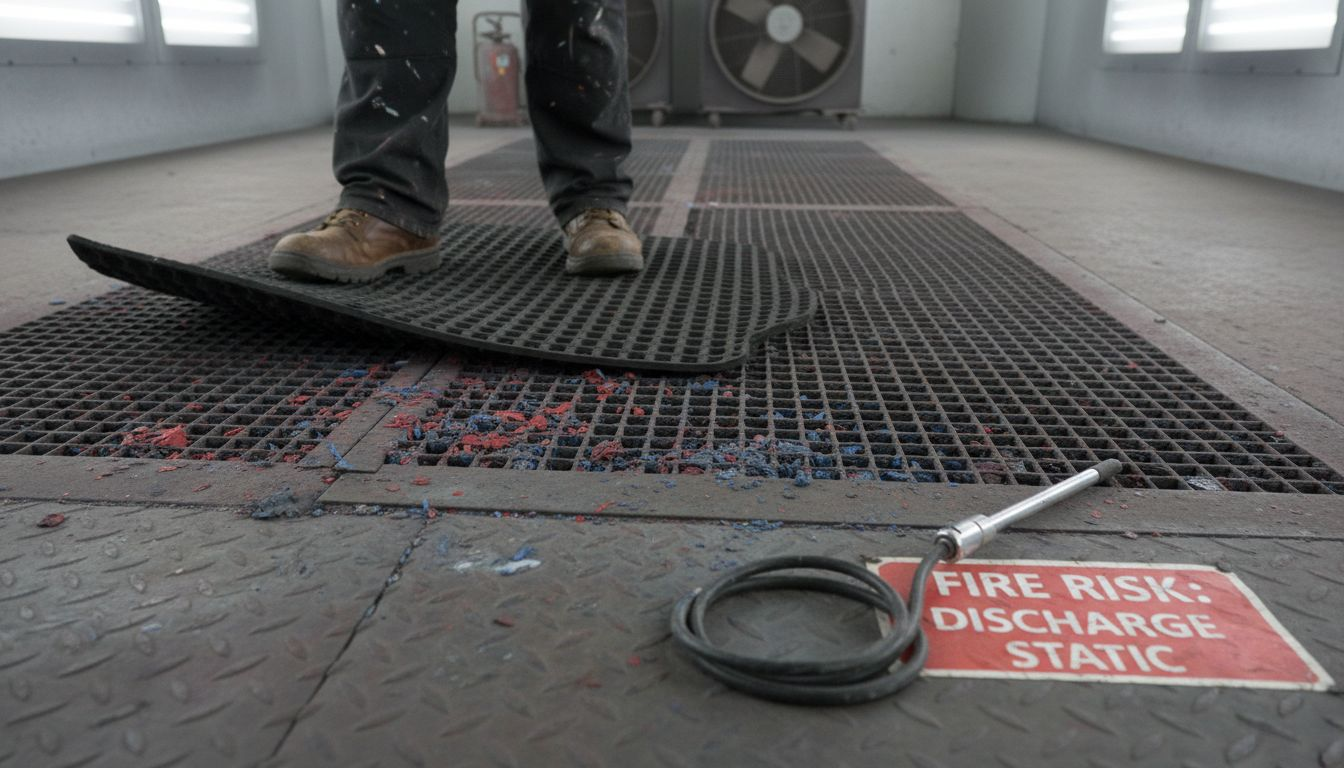
Installing fire suppression systems including automatic sprinklers and explosion relief panels is required by NFPA 33 to minimize fire and explosion risks in paint spray booths. These systems must activate within seconds of detecting flames or excessive heat.
Critical fire prevention measures include:
- Grounding all conductive equipment and containers to prevent static discharge
- Installing explosion proof lighting, switches, and electrical components
- Maintaining automatic fire suppression systems with regular inspections
- Removing ignition sources including smoking materials and non approved tools
- Storing flammable materials in approved cabinets outside the spray area
“A major automotive facility avoided catastrophic loss when their automatic suppression system extinguished a flash fire in under 8 seconds. The incident, caused by ungrounded equipment, resulted in zero injuries and minimal downtime thanks to proper fire controls.”
Your fire prevention program must address both ignition sources and fuel loads. Regular equipment inspections catch electrical faults before they spark disasters.
3. Ventilation and Airflow Control Deficiencies
Ventilation failures create cascading hazards that affect both worker health and fire safety. Inadequate airflow allows toxic fumes to accumulate while simultaneously increasing flammable vapor concentrations to dangerous levels.
Effective spray booth ventilation systems maintain minimum airflow rates of approximately 100 ft/min for downdraft and 150 ft/min for crossdraft booths. These rates ensure sufficient air changes per hour to capture overspray and exhaust contaminated air before it reaches the breathing zone.
Common ventilation deficiencies stem from poor maintenance practices. Clogged filters reduce extraction efficiency by up to 30%, forcing operators to work in hazardous atmospheres. Blocked exhaust ducts, damaged fans, and gaps in booth seals further compromise airflow patterns.
| Booth Type | Minimum Airflow | Filter Change Frequency | Common Issues |
|---|---|---|---|
| Downdraft | 100 ft/min | Every 6-8 weeks | Floor filter clogging |
| Crossdraft | 150 ft/min | Every 4-6 weeks | Uneven air distribution |
| Semi-Downdraft | 100-125 ft/min | Every 5-7 weeks | Dead zones in corners |
Implement these ventilation controls:
- Install magnehelic gauges to monitor filter pressure drop in real time
- Schedule filter replacements based on actual pressure readings, not arbitrary timelines
- Conduct quarterly smoke tests to verify airflow patterns and identify dead zones
- Calibrate ventilation systems annually by certified technicians
Pro Tip: Mount a visible magnehelic gauge at operator eye level. Train your team to check it before each shift and report readings above the acceptable threshold immediately.
Consult your spray booth maintenance guide for detailed procedures that keep ventilation systems operating at peak efficiency. Proper ventilation airflow standards protect workers while maintaining the negative pressure needed for quality finishes.
4. Personal Protective Equipment (PPE) for Spray Booth Operators
Even with robust engineering controls, PPE provides essential backup protection against chemical and particulate exposures. The right equipment blocks multiple exposure routes including inhalation, skin contact, and eye irritation.
Respirators, gloves, goggles, and coveralls are necessary to block inhalation and skin exposure to VOCs and particulates. Half face respirators with organic vapor cartridges suit light duty applications, while supplied air respirators become mandatory for high exposure tasks like isocyanate spraying.
PPE failures typically result from improper selection or user error rather than equipment defects. An ill fitting respirator allows contaminated air to bypass the filter, negating its protection. Similarly, chemical resistant gloves lose effectiveness when workers select materials incompatible with specific solvents.
Essential PPE components include:
- NIOSH approved respirators with cartridges matched to chemical exposures
- Annual fit testing to verify proper seal for each operator
- Chemical resistant gloves rated for solvents and isocyanates in use
- Full face shields or goggles providing splash and vapor protection
- Disposable coveralls preventing skin contact and contamination spread
- Hearing protection in booths exceeding 85 dBA noise levels
Your spray booth PPE usage and training program must include hands on demonstrations of donning, doffing, and seal checking procedures. Schedule refresher training whenever you introduce new coating products or change booth configurations.
Document all fit tests, training sessions, and equipment inspections to demonstrate compliance during OSHA inspections. Follow PPE standards and training guidelines to ensure your program meets regulatory requirements.
5. Maintenance Best Practices to Sustain Safety and Efficiency
Routine maintenance separates safe, efficient spray booths from hazardous operations prone to failures. Neglected systems experience cascading problems as clogged filters stress fans, contaminated surfaces harbor dust, and fire suppression equipment fails when needed most.
Clogged filters reduce extraction efficiency by up to 30%, creating backdrafts that push overspray into operator breathing zones. This degradation happens gradually, making it easy to overlook until air quality becomes obviously compromised.
Filter replacements recommended every 4-6 weeks for crossdraft booths due to higher particulate loading reflect the accelerated wear these configurations experience. Downdraft booths benefit from longer intervals but still require vigilant monitoring.
| Maintenance Task | Downdraft Frequency | Crossdraft Frequency | Safety Impact |
|---|---|---|---|
| Intake Filter Change | 6-8 weeks | 4-6 weeks | Prevents toxic buildup |
| Exhaust Filter Check | 8-10 weeks | 6-8 weeks | Maintains proper airflow |
| Fire Suppression Test | Quarterly | Quarterly | Ensures emergency response |
| Grounding Verification | Monthly | Monthly | Prevents static ignition |
| Fan Belt Inspection | Bi-monthly | Bi-monthly | Avoids ventilation failure |
Establish these maintenance protocols:
- Create filter change schedules based on magnehelic gauge readings, not calendar dates alone
- Inspect fire suppression nozzles and fusible links during quarterly tests
- Verify grounding continuity monthly using a multimeter on all conductive surfaces
- Document every maintenance activity with dates, findings, and corrective actions
- Train maintenance staff on booth specific safety requirements before they work inside
Your spray booth maintenance best practices should integrate with production schedules to minimize downtime while ensuring thorough inspections. The maintenance impact on ventilation efficiency directly determines whether your booth operates safely between service intervals.
6. Dust Control and Impact on Finish Quality and Safety
Dust contamination creates a dual threat by degrading finish quality while increasing fire hazards. Particulates settling on wet paint cause defects requiring costly rework, and accumulated dust on booth surfaces provides fuel for flash fires.
Dust protection films reduce dust contamination by over 80%, protecting booth surfaces and finishes. These electrostatic films capture airborne particles before they settle on walls, floors, or freshly painted surfaces.
The connection between dust control’s role in finish quality and safety becomes clear when you consider how particulates interact with spray operations. Dust disturbed during booth entry or equipment movement can land in wet coatings, necessitating time consuming buffing and respraying. Simultaneously, that same dust accumulating on horizontal surfaces creates ignitable layers.
Dust control strategies include:
- Installing electrostatic protection films on booth walls and floors before painting cycles
- Implementing sticky mats at booth entrances to capture particles from foot traffic
- Scheduling deep cleaning during low production periods to remove built up contamination
- Maintaining positive pressure in adjacent prep areas to prevent dirt infiltration
- Using HEPA filtered vacuums rather than brooms that redistribute particles
Electrostatic films work by attracting and holding charged dust particles, preventing them from becoming airborne again. This static electricity and dust control relationship makes properly grounded films highly effective in busy automotive and industrial facilities.
High volume shops report significant quality improvements after implementing systematic dust control. The dust protection film effectiveness extends beyond immediate finish protection to reduced fire risk and easier booth cleaning between jobs.
7. Regulatory Compliance: OSHA and NFPA 33 Standards for Spray Booth Safety
Regulatory frameworks provide minimum safety standards that protect workers while establishing legal requirements for spray booth operations. Understanding and implementing these standards prevents citations, reduces liability, and demonstrates your commitment to employee welfare.
OSHA spray operations standards require hazard control including ventilation, PPE, and training. These regulations mandate specific engineering controls, respiratory protection programs, and hazard communication procedures. Violations can result in substantial fines and stop work orders.
NFPA 33 mandates fire prevention, ventilation, and fire suppression measures. This standard addresses booth construction, electrical classifications, ventilation rates, and emergency systems. Local fire marshals typically enforce NFPA 33 during facility inspections and permit renewals.
Key compliance requirements include:
- Written respiratory protection program with medical evaluations and fit testing
- Ventilation system design meeting minimum airflow velocities for booth type
- Fire suppression systems inspected and certified annually by qualified technicians
- Hazard communication training covering all coating products and chemicals in use
- Emergency action plans detailing evacuation procedures and equipment shutdown
- Recordkeeping demonstrating ongoing maintenance, training, and equipment certification
Compliance delivers benefits beyond avoiding penalties. Well maintained documentation streamlines insurance renewals and demonstrates due diligence if incidents occur. Regular training sessions keep safety top of mind while reinforcing proper procedures.
Schedule annual reviews of your compliance status against current OSHA spray regulations and NFPA 33 standards. Regulations evolve, and proactive updates prevent surprises during inspections.
Summary Comparison Table: Key Spray Booth Hazards and Safety Solutions
This comprehensive overview consolidates critical information for quick reference when evaluating safety priorities and allocating resources. Use it to identify gaps in your current safety program and plan targeted improvements.
| Hazard Type | Primary Risks | Essential Controls | Regulatory Standard | Maintenance Frequency |
|---|---|---|---|---|
| Toxic Fumes | Lung disease, nervous system damage | Respirators, ventilation, air monitoring | OSHA 1910.94 | Filter changes every 4-8 weeks |
| Fire/Explosion | Burns, equipment destruction, fatalities | Grounding, explosion proof equipment, suppression | NFPA 33 | Fire system tests quarterly |
| Poor Ventilation | Chemical accumulation, inadequate overspray capture | Magnehelic gauges, proper fan sizing | OSHA 1910.94, NFPA 33 | Airflow verification quarterly |
| Inadequate PPE | Direct exposure, skin absorption | Fit tested respirators, chemical gloves, coveralls | OSHA 1910.134 | Annual fit tests, pre-shift checks |
| Dust Contamination | Finish defects, ignition fuel source | Electrostatic films, HEPA cleaning | NFPA 33 | Film replacement per job or weekly |
| Equipment Failures | System downtime, emergency situations | Preventive maintenance schedules, spare parts inventory | Manufacturer specs | Inspections monthly to quarterly |
This matrix helps facility managers prioritize investments based on their specific risk profiles. Operations handling high volumes of isocyanate coatings require more aggressive respiratory protection and ventilation than those using water based products. Similarly, facilities with older electrical systems need more frequent grounding checks than recently upgraded booths.
Consider your operation’s unique characteristics when applying these standards. A high production automotive shop faces different challenges than a low volume industrial coating facility, even though both must meet the same baseline regulations.
Situational Recommendations: Choosing the Right Controls for Your Facility Needs
Tailoring safety controls to your specific operational context ensures maximum protection without unnecessary complexity or cost. Your facility’s size, booth configuration, product mix, and production volume all influence which solutions deliver the best results.
-
For facilities using isocyanate based coatings: Upgrade to supplied air respirators rather than air purifying types. The superior protection justifies the investment when working with highly toxic materials daily.
-
In high volume shops running multiple shifts: Install continuous air quality monitors with alarm systems. Real time detection catches ventilation failures immediately rather than relying on periodic testing.
-
For crossdraft booth operations: Budget for more frequent filter changes and consider automated filter change indicators. These booths load filters faster and benefit from predictive maintenance.
-
When handling large volumes of flammable solvents: Prioritize explosion proof electrical upgrades and enhanced grounding systems. The fire risk increases proportionally with solvent usage.
-
In facilities with frequent product changeovers: Implement electrostatic dust protection films that install and remove quickly between jobs. This reduces cross contamination and maintains finish quality.
-
For operations in older buildings: Conduct comprehensive electrical audits before installing new spray equipment. Legacy wiring may not meet current explosion proof requirements.
Pro Tip: Start with engineering controls that address multiple hazards simultaneously. A ventilation upgrade improves both air quality and fire safety, delivering more value than single purpose solutions.
Balance protection levels against operational realities. A small shop can achieve excellent safety with well maintained basic controls, while a large facility may require sophisticated monitoring systems to manage complex operations. Focus resources where exposure risks run highest based on your hazard assessment.
Enhance Your Spray Booth Safety with Dust Free Film Solutions
Addressing spray booth hazards requires comprehensive strategies that combine engineering controls, PPE, and proactive maintenance. Dust Free Film offers specialized protection films that significantly reduce contamination while supporting safer working environments.
Our electrostatic dust protection film solutions capture airborne particles before they compromise finish quality or accumulate as ignition sources. Facilities report cleaner booths, fewer defects, and reduced fire risks after implementing systematic dust control.

Our multi layer spray booth dust protection films install quickly using patented dispensers, minimizing booth downtime. The heat resistant, static free construction withstands industrial spray operations while maintaining effectiveness throughout extended painting cycles. Visit Dust Free Film to explore product specifications, request samples, or discuss custom configurations for your facility’s unique requirements.
Frequently Asked Questions
What are the most common hazards in spray booths?
The most prevalent hazards include toxic fume exposure from VOCs and isocyanates, fire and explosion risks from flammable vapors, inadequate ventilation causing contaminant buildup, and dust contamination affecting both finish quality and ignition potential. Each hazard requires specific engineering controls and PPE to manage effectively.
How often should spray booth filters be changed?
Filter change frequency depends on booth type and usage intensity. Crossdraft booths typically require changes every 4-6 weeks due to higher particulate loading, while downdraft configurations can extend to 6-8 weeks. Monitor magnehelic gauges rather than relying solely on calendar schedules, and replace filters when pressure drop exceeds manufacturer specifications.
What PPE is required for spray booth operators?
Operators need NIOSH approved respirators matched to chemical exposures, chemical resistant gloves rated for specific solvents, full face shields or goggles, and disposable coveralls. Supplied air respirators become mandatory when working with isocyanates. All respirator users require annual fit testing and medical clearance to ensure proper protection.
How can I reduce dust contamination in my spray booth?
Implement electrostatic dust protection films on booth surfaces, install sticky mats at entrances, maintain positive pressure in prep areas, and use HEPA vacuums for cleaning. Schedule deep cleaning during low production periods and replace films between jobs or weekly in high volume operations. These measures cut contamination by over 80% while reducing fire risks.
What are the key NFPA 33 requirements for spray booth safety?
NFPA 33 mandates adequate ventilation rates, explosion proof electrical equipment, automatic fire suppression systems, explosion relief panels, and proper grounding of all conductive surfaces. The standard also requires specific booth construction materials, separation distances from other operations, and regular inspection and maintenance of safety systems. Compliance protects workers while satisfying fire marshal requirements.