
TL;DR:
- Contamination in spray booths often results from inadequate dust protection films, which generic options fail to address. Custom-configured booth films that match specific facility layouts and traffic patterns significantly reduce surface defects and rework costs. Implementing a zone-by-zone, tailored film system transforms dust control from a costly oversight into a measurable quality advantage.
Contamination ruins more paint jobs than bad technique ever will. Facility managers and procurement officers who invest in skilled painters, premium coatings, and precise climate control often lose those gains to one overlooked variable: inadequate dust protection film configurations in their spray booths. Generic, off-the-shelf booth films were never designed with your specific layout, traffic patterns, or production demands in mind. This article breaks down exactly why that mismatch is so expensive, what custom configurations actually involve, and how to implement them so that dust stops being the silent enemy of finish quality.
Table of Contents
- The real cost of using standard spray booth films
- What makes custom booth film configurations effective?
- Key steps to implementing custom booth film solutions
- Real-world impact: Case examples and industry best practices
- Why most facilities underestimate the potential of custom booth film solutions
- Ready to take control? Explore leading custom booth film solutions
- Frequently asked questions
Key Takeaways
| Point | Details |
|---|---|
| Generic films increase risk | Standard booth films miss unique risks, leading to more defects and higher costs. |
| Customization covers all threats | Tailored films address hidden contamination sources for better paint outcomes. |
| Implementation drives savings | A strategic approach to film choice and installation cuts rework and downtime. |
| Ongoing review maximizes ROI | Regular assessment and adaptation ensure consistent performance and value. |
The real cost of using standard spray booth films
Generic booth films look like a cost-saving move on paper. In practice, they are one of the more expensive decisions a facility can make over a full production year.
Standard booth films often miss hidden dust sources, leading to recurring contamination that shows up as fish-eye defects, grit inclusions, and mottled surfaces. These are not random quality problems. They trace back to specific gaps in film coverage, wrong adhesion strength for the surface, or film materials that attract rather than repel static-charged particles.
Hidden dust sources are where generic films consistently fall short. Consider what actually generates contamination inside a working spray booth:
- Seams and gaps between wall film panels where dust settles overnight
- Floor edges and corners where film doesn’t reach, letting dried overspray flake up
- Equipment bases and fixture mounts left unprotected
- Doorway thresholds where foot traffic kicks up particles
- Ceiling junctions above light fixtures that collect debris and drop it during curing cycles
Each of these is a predictable failure point. Yet most standard film rolls are sized for average booth dimensions, sold without adhesion options, and provide no guidance on corner coverage or high-traffic zones. The result is a film system with multiple unprotected entry points for airborne particles.
The operational math is straightforward. A single rejected panel in automotive refinishing requires sanding, recoating, re-baking, and re-inspection. For a medium-volume shop processing 40 to 60 vehicles per month, even a 5 percent defect rate tied to contamination adds up to significant rework labor and materials costs. The spray booth film benefits extend well beyond surface protection once you start measuring actual defect rates against film changeover costs.
Here is a direct comparison between what generic and custom-configured film systems deliver:
| Performance factor | Generic standard films | Custom-configured films |
|---|---|---|
| Coverage of high-risk zones | Partial, average sizing | Full coverage including corners, floors, edges |
| Adhesion suitability | One option for all surfaces | Matched to surface type and traffic level |
| Static control | Inconsistent or absent | Anti-static treatment built in |
| Changeover time | Manual trimming required | Pre-cut and dispenser-ready |
| Cost per defect prevented | High (more rework) | Low (fewer defects) |
| Durability in high-heat cycles | Variable | Specified for your curing temperature range |
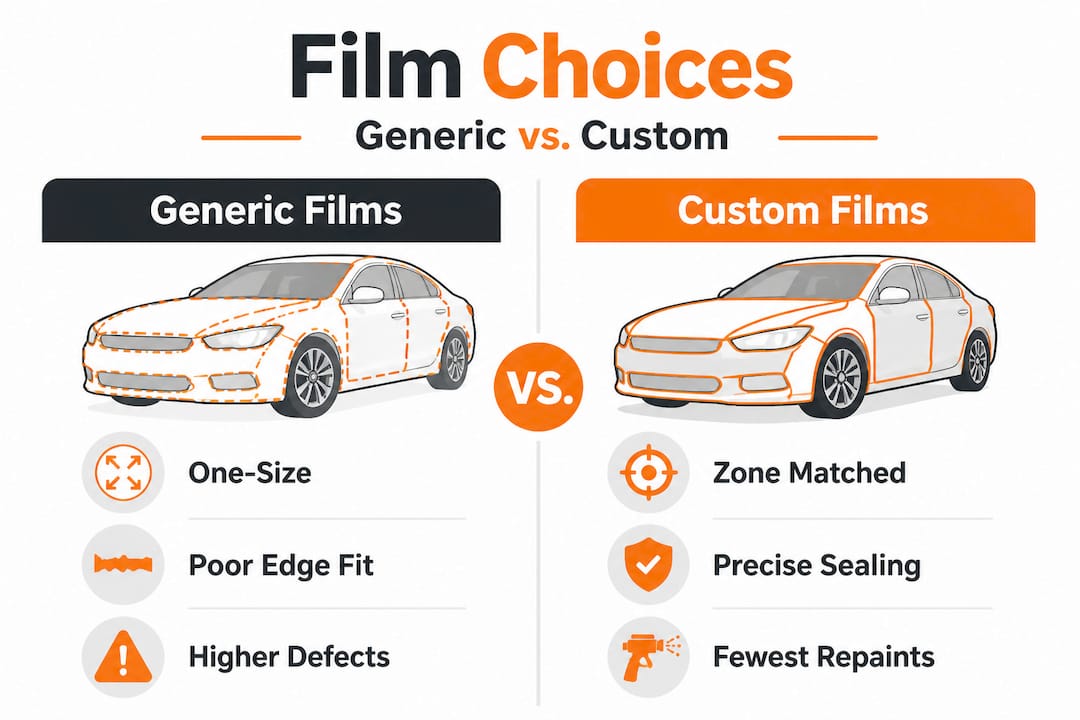
Running a facility without a process optimization checklist that includes booth film review is effectively leaving contamination risk unmanaged. Smart procurement teams are now treating booth film as a process input with measurable quality outcomes, not just a consumable line item.
What makes custom booth film configurations effective?
Understanding the limitations of one-size-fits-all solutions sets the stage for what makes customization so powerful. The short answer: every adjustment to film specification removes one more contamination risk from your production environment.
Customization allows you to adapt film thickness, adhesion, sizing, and application to the specific dust challenges of your space. That flexibility translates into a system that actually fits your booth rather than one you work around.
The variables that drive effective custom configurations include:
- Film thickness: Thicker films hold up better in high-traffic zones, resist puncture from equipment movement, and last through more production cycles before replacement.
- Adhesive type: Low-tack adhesives work on freshly painted walls without leaving residue. High-tack variants grip rough or uneven surfaces that standard adhesives miss.
- Panel sizing: Pre-cut panels sized to your exact wall dimensions eliminate gaps at seams and speed up changeover dramatically.
- Static resistance: Anti-static films actively repel airborne particles rather than collecting them, which is critical in environments with heavy spray activity.
- Color coding: Using distinct film colors for floor zones versus wall zones makes changeover procedures faster and reduces worker error during busy shifts.
The practical impact of matching film type to booth layout is significant. A high-mix industrial facility painting large machinery components has completely different contamination risks compared to a dedicated automotive clear-coat booth. In the machinery application, floor films need to handle heavy foot traffic and equipment rolling across them without tearing. Booth walls need full vertical coverage to manage overspray that travels further with larger spray patterns.
| Configuration variable | Common use case | Key benefit |
|---|---|---|
| Extra-thick floor film (200+ microns) | High-traffic industrial booths | Durability under equipment and foot traffic |
| Low-tack wall film | Freshly painted booth interiors | Clean removal without surface damage |
| Anti-static treatment | Automotive refinishing booths | Repels charged dust particles |
| Pre-cut corner pieces | All booth types | Eliminates the highest-risk contamination zones |
| Extended-width ceiling panels | Large industrial spray areas | Reduces seam count overhead |
When selecting high-quality booth film, the decision should start with a zone-by-zone contamination risk assessment rather than a catalog search. Walls, floors, corners, and equipment surroundings each carry distinct risk profiles. The best spray booth floor films in 2026 reflect this understanding with options specifically engineered for different surface and traffic conditions.
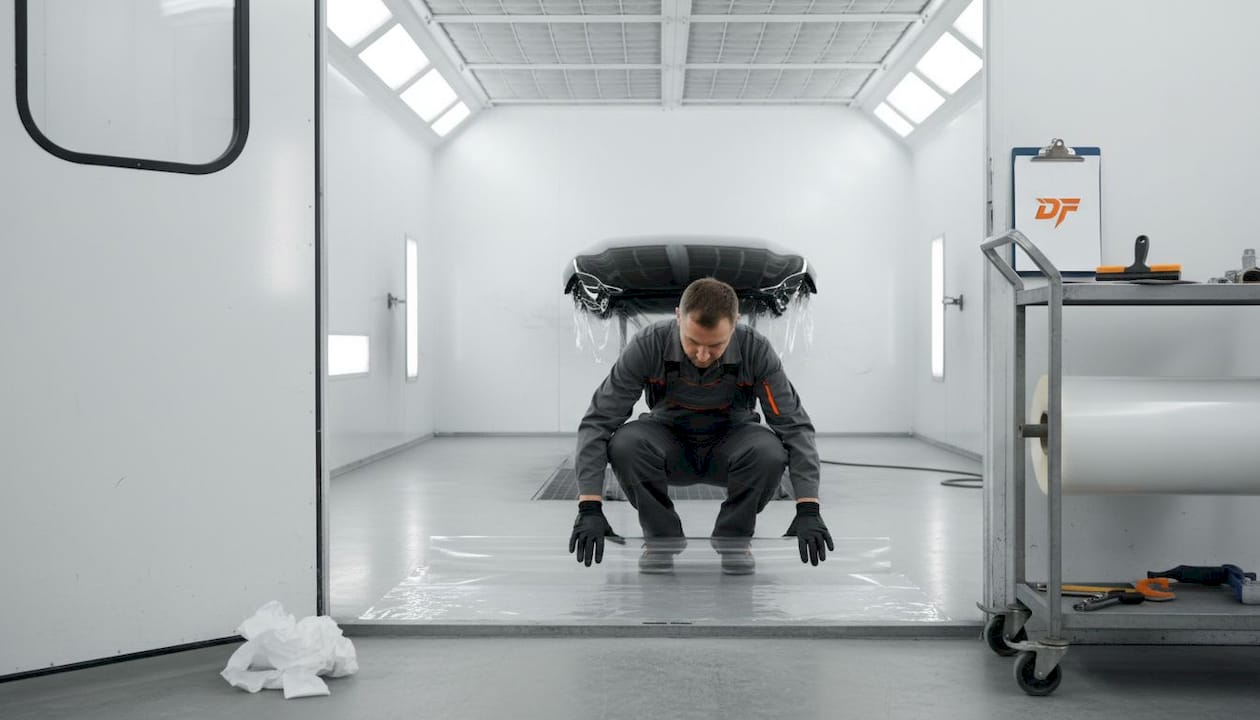
A workflow streamlining guide that doesn’t account for film changeover efficiency is missing a real bottleneck. Pre-cut, dispenser-ready custom panels can reduce booth turnover time by as much as 60 percent compared to manually trimming rolls on-site.
Pro Tip: Match your film thickness and adhesive type to the dominant activity in each booth zone. A wall that faces direct spray will have different durability requirements than a side wall near the ventilation intake. Treat each zone as a separate specification decision.
Key steps to implementing custom booth film solutions
Once you know which configuration options solve your facility’s unique problems, implementation is the next place managers can make or lose value. A structured approach prevents the common mistake of purchasing the right film and applying it incorrectly.
A methodical approach to film selection and installation maximizes dust protection and reduces booth downtime. Here is a step-by-step framework that works across automotive and industrial spray environments:
- Conduct a booth contamination audit. Walk the booth during a non-production window and identify every surface that shows dust accumulation, discoloration, or overspray buildup. Photograph every corner, seam, threshold, and equipment base.
- Map your coverage zones. Divide the booth into distinct zones: floor field, floor edges, lower walls, upper walls, corners, ceiling, equipment surrounds, and entryways. Each zone gets its own specification.
- Match film specifications to zone risk. Use the contamination audit data to assign thickness, adhesion level, and static resistance to each zone. High-risk zones get heavier, more durable film. Lower-risk zones can use lighter, more economical options.
- Source pre-cut panels for your booth dimensions. Provide your exact booth measurements to your film supplier and request panels cut to size with labeled zones. This step alone can cut installation time in half.
- Train your team on the installation sequence. Start from the ceiling, move to upper walls, then lower walls, then floor edges, and finish with the floor field. This order prevents contamination from upper surfaces falling onto freshly protected lower ones.
- Run a test production cycle. After first installation, run a normal production day and inspect film condition, coverage quality, and any areas where contamination still appears.
- Review and refine the configuration. Adjust panel sizing, adhesive strength, or film thickness in zones where the test cycle revealed gaps. Document the final configuration as your facility’s standard.
Using booth floor films effectively requires specific attention to seam placement. Keep seams away from the center of the booth floor where vehicle tires or equipment feet will roll over them, as those are the first points of failure in high-traffic applications. Understanding the purpose of protective floor films helps teams make smarter decisions about layering and replacement frequency.
“Facilities that treat booth film as a configured system rather than a commodity consumable consistently report fewer defect callbacks, faster changeover cycles, and measurable improvements in first-pass finish quality. The ROI becomes clear within the first quarter of properly configured use.” — Industry process efficiency specialist
Aligning this implementation approach with a broader process efficiency guide ensures that booth film management integrates with shift scheduling, material ordering, and quality review cycles rather than running as an afterthought.
Pro Tip: Set a monthly calendar reminder to review film condition and production quality data together. If defect rates tick up mid-month, film coverage gaps are often the first cause to rule out before adjusting coating or airflow variables.
Real-world impact: Case examples and industry best practices
After implementation, results matter most, so let’s look at real outcomes and how strong practices maximize returns.
Refinishing operations using custom-fitted films saw measurable reductions in rework and surface defects. The pattern across different facility types is consistent: customization reduces the two most costly quality problems, rework and downtime.
Three scenarios illustrate how this plays out in practice:
- Auto body refinishing shop (high volume, tight margins): After switching to pre-cut, anti-static wall films sized to their exact booth dimensions and adding dedicated corner pieces, one mid-size refinishing operation cut its contamination-related rework rate by 38 percent within three months. The savings in recoating materials alone covered the full annual cost of upgraded film within the first two quarters.
- Industrial machinery coating facility (large parts, heavy traffic): A plant coating large agricultural equipment switched to 250-micron floor films with high-tack edge adhesion. Equipment rolling across the floor no longer tore film at seams, which had been a daily source of airborne particles. Floor film replacement frequency dropped from twice weekly to once weekly, and surface defect rates on machinery components fell noticeably.
- High-mix manufacturing facility (varied substrates, multiple booths): By color-coding their film zones by booth type, the facility’s changeover crews eliminated cross-contamination from mixing film specifications. Each booth received its specific film configuration, and production quality became consistent across all lines for the first time.
Industry leaders have converged on several best practices that drive these results:
- Conduct quarterly configuration reviews tied to production volume changes
- Use multi-layer film systems in highest-traffic zones to extend protection between changeovers
- Standardize installation procedures in written SOPs with visual guides posted at the booth entrance
- Track defect rates by booth and by week to identify performance trends before they become costly problems
Connecting findings across facilities through shared learning platforms and events, including manufacturing trade shows, accelerates how quickly teams adopt what actually works in the field.
The film application examples that generate the best results share one trait: they were designed around the facility, not around a default catalog option. Reviewing top floor protection films for 2026 confirms that the best products are built with configurability as a core feature, not an add-on.
Why most facilities underestimate the potential of custom booth film solutions
Here is the honest perspective that experience in this industry makes clear: most facilities treat booth film as an afterthought, and that single habit is costing them more than they realize.
The framing is almost always wrong. Booth film gets categorized as a consumable, like tape or masking paper, instead of as a quality control system component. When managers think consumable, they optimize for unit price. When they think quality system, they optimize for performance per dollar. Those are completely different procurement conversations with completely different outcomes.
Many procurement officers rely on what worked five years ago or what the previous manager ordered. The problem is that production volumes, coating technologies, and facility layouts evolve, but booth film specifications rarely get updated to match. A booth running waterborne coatings has different contamination dynamics than one running solvent-based systems, yet facilities often use the same film specification across both.
Expert consensus is shifting toward full customization as ROI data accumulates. The facilities generating the clearest data are the ones investing in measurement, tracking defect rates by booth, correlating them with film age and coverage, and adjusting configurations based on what the numbers show.
The challenge worth considering: what would happen at your facility if booth film received the same systematic attention as HVAC balance or intake filter maintenance? Both of those are recognized as critical to finish quality. Wall film dust control belongs in the same category. The facilities that figure this out first hold a real quality and cost advantage over competitors still buying generic rolls by the pallet.
Ready to take control? Explore leading custom booth film solutions
Knowing the gap between generic and custom booth film performance is one thing. Closing it requires the right partner and the right products configured for your specific operation.
Dust Free Film has been engineering premium spray booth protection solutions since 2012, with multi-layer wall and floor films, patented dispenser systems, and pre-configured panels built to European manufacturing standards. Whether you manage a single automotive refinishing bay or a multi-booth industrial coating line, the custom booth film solutions available cover every zone and every production demand. If you are ready to specify a configuration that actually matches your facility’s layout, traffic levels, and quality targets, the fastest next step is to request a custom quote and let our team build a solution around your real numbers.
Frequently asked questions
How do custom booth films improve paint finish quality?
Custom configurations prevent hidden dust intrusion and cover every risk area in the booth, which leads directly to fewer finish defects and higher first-pass quality rates.
What variables can be customized in booth film solutions?
Film thickness, adhesive strength, panel size, static control treatment, and coverage area are all adjustable, as customization adapts film to the specific dust and contamination challenges of your booth environment.
How often should custom booth films be reviewed or replaced?
Review film condition and contamination levels monthly, and adjust specifications whenever production intensity, coating type, or part volume shifts significantly, since regular review maintains consistent dust control performance.
Is there a strong ROI associated with switching to custom booth film configurations?
Yes. ROI is realized through measurably lower paint defect rates, reduced rework labor and materials costs, and faster booth changeover times, with many facilities seeing the investment pay back within the first two to three months of properly configured use.