

Every day, invisible dust particles threaten to undermine careful work in large automotive refinishing and industrial painting facilities. Even the tiniest airborne contaminants can cause costly imperfections on paint finishes, leading to more rework and higher expenses. Understanding dust contamination is vital, since unchecked dust not only impacts product appearance but also jeopardizes worker safety and compliance with strict standards. This guide offers practical insights into dust behavior and highlights proven strategies for maintaining exceptional, defect-free paint quality.
Table of Contents
- Dust in Industrial Painting: Core Concepts
- Types of Dust Control Solutions for Painting
- How Protection Films Enhance Paint Quality
- Filtration Systems and Booth Design Essentials
- Legal and Safety Standards in Spray Booths
- Operational Costs and Common Mistakes
Key Takeaways
| Point | Details |
|---|---|
| Dust Management is Crucial | Effective dust control is essential for ensuring product quality and worker safety in industrial painting. This involves implementing comprehensive monitoring and cleaning strategies to minimize contamination risks. |
| Advanced Filtration Systems are Key | Utilizing HEPA filters and other sophisticated technologies significantly enhances air quality, reducing defects and improving overall paint quality. Regular maintenance of these systems is crucial. |
| Protection Films Enhance Quality | Applying protection films helps prevent surface contamination and damage during the painting process, leading to superior finishes and reduced rework. Selecting films tailored to specific paint systems is vital. |
| Compliance with Safety Standards | Adhering to OSHA regulations and proactive safety measures creates a safer work environment, safeguarding worker health while optimizing operational efficiency. Regular audits and updates are recommended. |
Dust in Industrial Painting: Core Concepts
Dust represents a critical challenge in industrial painting environments, directly impacting product quality, worker safety, and operational efficiency. Understanding the fundamental nature and behavior of dust particles is essential for developing effective control strategies.
In industrial settings, dust originates from multiple sources and can significantly compromise painting processes. Airborne dust characteristics range from microscopic metallic particles to larger debris generated during manufacturing and painting activities. These particulates can originate from:
- Substrate preparation materials
- Equipment abrasion
- Worker movement
- Raw material processing
- Ventilation system contaminants
The potential consequences of uncontrolled dust are substantial. Dust contamination can create microscopic imperfections in paint surfaces, leading to:
- Reduced paint adhesion
- Compromised finish quality
- Increased rework and waste
- Higher production costs
Effective dust management is not just about cleanliness—it’s about maintaining precise manufacturing standards and protecting product integrity.
Particle size plays a crucial role in understanding dust behavior. Particles smaller than 10 microns can remain suspended in air for extended periods, making them particularly challenging to control. These ultrafine particles can easily penetrate protective coatings and create surface defects invisible to the naked eye.
Modern industrial painting facilities increasingly rely on advanced monitoring technologies to estimate and mitigate dust concentration. Real-time imaging and particle detection systems enable proactive dust management, allowing operations managers to maintain consistent painting environments.
Pro tip: Implement a comprehensive dust monitoring protocol that includes regular surface testing, air quality measurements, and systematic cleaning procedures to minimize contamination risks.
Types of Dust Control Solutions for Painting
Dust control in industrial painting environments requires a multi-faceted approach, incorporating sophisticated technologies and strategic methodologies to minimize particulate interference and maintain exceptional paint quality. Modern facilities employ several advanced solutions designed to address dust contamination comprehensively.
Ventilation systems represent the primary line of defense against airborne contaminants. These sophisticated networks of filters, fans, and ductwork are engineered to capture and remove dust particles efficiently. Key components include:
- HEPA filtration systems
- Activated carbon filters
- Localized exhaust mechanisms
- Positive air pressure zones
- Real-time air quality monitoring sensors
Filtration technologies play a critical role in dust management. High-efficiency particulate air (HEPA) filters can capture microscopic particles as small as 0.3 microns, effectively removing potentially damaging contaminants from the painting environment. Activated carbon filters complement these systems by absorbing volatile organic compounds and additional microscopic debris.
Effective dust control is not just about removing particles—it’s about creating a precision environment that supports flawless paint application.
Industrial painting facilities also utilize advanced protective strategies beyond traditional filtration. Specialized surface protection methods include:
- Electrostatic dust-repelling films
- Tacky floor mats
- Cleanroom-grade protective coverings
- Temporary booth wall barriers
- Disposable paint booth liners
Modern dust control solutions integrate multiple technologies to create comprehensive protection strategies. Automated systems now combine air filtration, surface protection, and real-time monitoring to minimize contamination risks and maintain consistent paint quality.
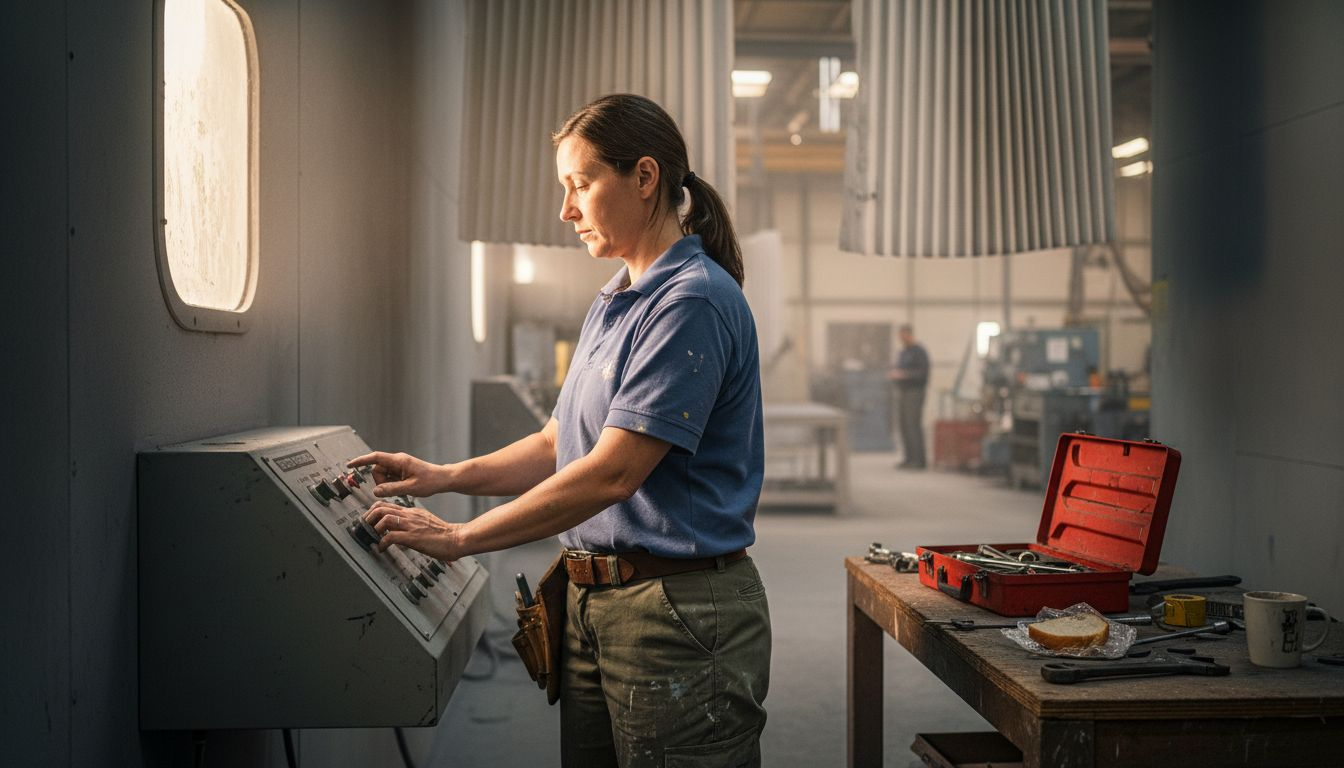
Here is a quick guide to common dust control technologies and their operational impacts:
| Control Technology | Primary Function | Business Benefit |
|---|---|---|
| HEPA Filtration Systems | Remove submicron particulates | Reduces rework and defects |
| Positive Air Pressure Zones | Prevent outside dust intrusion | Maintains consistent paint quality |
| Electrostatic Films | Repel airborne particles | Lowers cleaning and downtime |
| Real-Time Air Monitoring | Track particulate concentration | Enables prompt corrective action |
Pro tip: Implement a systematic dust control protocol that combines multiple technologies, conducts regular maintenance, and uses real-time monitoring to ensure optimal painting environments.
How Protection Films Enhance Paint Quality
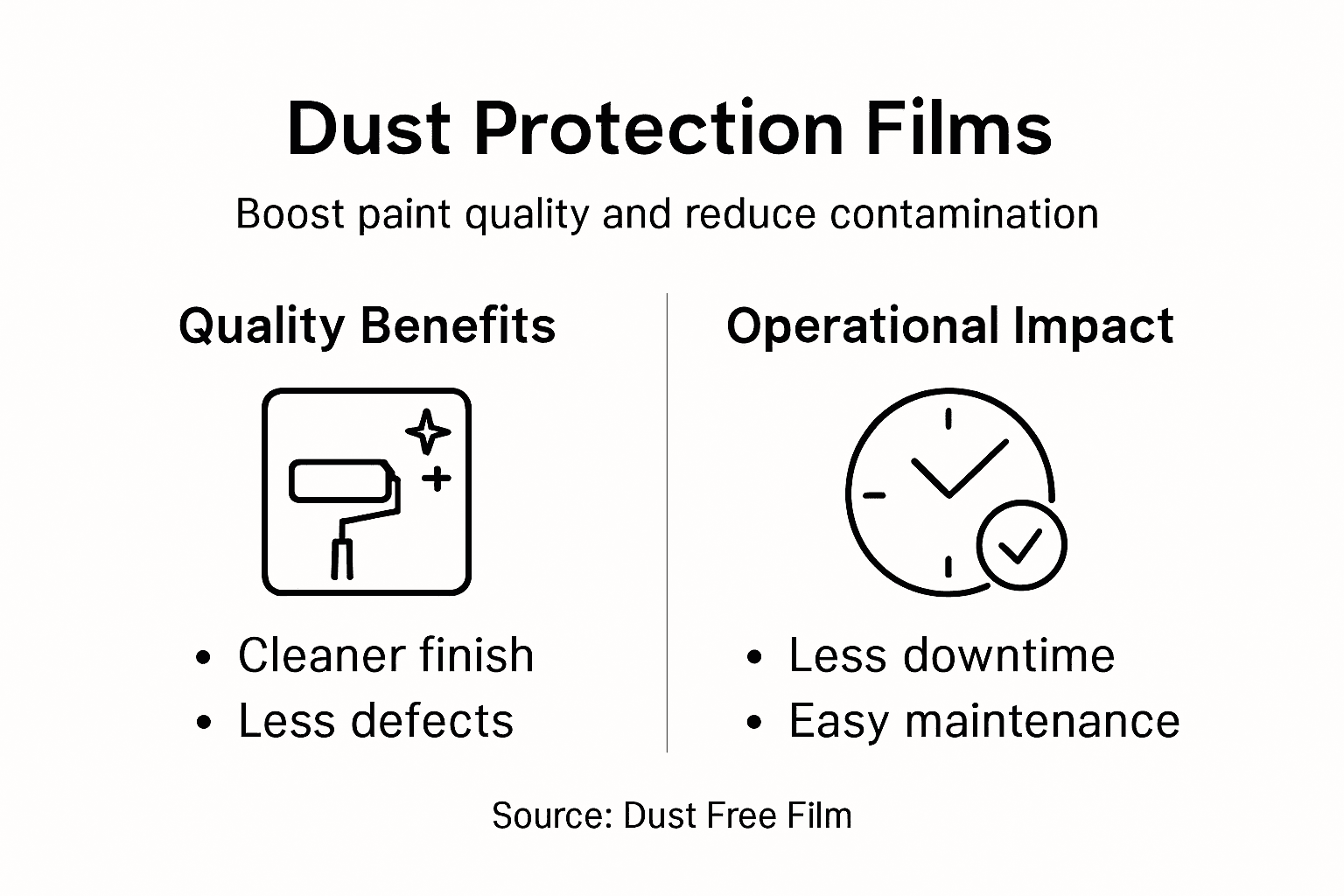
Protection films represent a critical technological solution for maintaining exceptional paint quality in industrial environments. These advanced materials serve as a sophisticated barrier against potential surface contamination and damage, ensuring pristine finishes throughout the manufacturing process.
Protection films are engineered from specialized polymers like polyethylene and polypropylene, designed to shield painted surfaces from various environmental threats. Their key protective characteristics include:
- Chemical resistance
- UV protection
- Scratch prevention
- Abrasion mitigation
- Flexible surface adaptation
Surface integrity is the primary objective of these protective films. By creating a microscopic barrier, they prevent dust, debris, and potential contaminants from compromising the paint’s finish. The films act like invisible armor, preserving the aesthetic and functional qualities of painted surfaces across multiple industrial applications.
Protection films transform vulnerable painted surfaces into resilient, defendable assets with minimal additional investment.
Modern protection films offer multiple layers of defense, each designed to address specific environmental challenges. Advanced formulations now include:
- Electrostatic dissipative properties
- Temperature-resistant materials
- Self-healing surface technologies
- Customizable thickness options
- Quick-release adhesive systems
Industrial painting facilities increasingly recognize these films as an essential quality control tool. By preventing microscopic damage and maintaining surface cleanliness, protection films dramatically reduce rework, minimize material waste, and ensure consistently superior paint finishes.
Pro tip: Select protection films with multi-layered composition and verify their compatibility with specific paint systems to maximize surface preservation and finish quality.
Filtration Systems and Booth Design Essentials
Spray booth filtration represents the critical foundation for achieving superior paint quality in industrial environments. These sophisticated systems create a controlled ecosystem that protects both the painting process and the final product from potentially damaging particulate contamination.
High-quality air filtration is essential for maintaining consistent and defect-free finishes. Advanced filtration systems incorporate multiple stages designed to capture progressively smaller particles and ensure optimal air quality. Key filtration components include:
- Pocket filters for intake air
- Ceiling filters for exhaust management
- Multi-stage particulate capture systems
- Activated carbon compound filters
- Electrostatic precipitation technologies
Airflow dynamics play a crucial role in effective booth design. Proper air circulation prevents dust accumulation and ensures uniform paint application by creating controlled directional air movement. Modern spray booths utilize sophisticated engineering to optimize:
- Laminar airflow patterns
- Balanced air pressure zones
- Directional air velocity
- Consistent air filtration rates
- Minimal turbulence environments
Exceptional spray booth design transforms a simple painting space into a precision engineering marvel that guarantees consistently superior results.
Safety and compliance represent additional critical considerations in booth design. Advanced spray booth configurations integrate multiple protective features to ensure operational reliability:
- Explosion-proof electrical components
- Fire suppression systems
- Environmental control mechanisms
- Worker safety isolation zones
- Energy-efficient ventilation designs
Industrial painting facilities must view filtration systems as strategic investments that directly impact product quality, operational efficiency, and workplace safety. Selecting the right combination of filtration technologies and booth design elements can dramatically reduce rework, minimize contamination risks, and optimize overall production performance.
Pro tip: Conduct quarterly comprehensive filtration system audits to ensure optimal performance, replacing filters before efficiency drops and maintaining precise air quality standards.
Legal and Safety Standards in Spray Booths
Regulatory compliance forms the critical foundation for industrial painting environments, ensuring worker safety and operational integrity. Spray booth operations are subject to stringent legal requirements that govern every aspect of workplace design, equipment use, and hazardous material management.
OSHA regulations establish comprehensive standards for spray painting operations, specifically addressing critical safety considerations. The Code of Federal Regulations 29 CFR 1910.107 provides detailed guidelines covering:
- Ventilation system requirements
- Flammable material handling protocols
- Personal protective equipment specifications
- Fire prevention infrastructure
- Chemical exposure mitigation strategies
Safety design parameters play a crucial role in maintaining legal compliance. Industrial painting facilities must implement multiple protective mechanisms to meet regulatory standards and protect worker health. Key safety design elements include:
- Explosion-proof electrical systems
- Automatic fire suppression mechanisms
- Comprehensive chemical containment zones
- Emergency exit pathways
- Real-time environmental monitoring sensors
Legal compliance is not just about avoiding penalties—it’s about creating a fundamentally safe and sustainable workplace environment.
The complexity of spray booth safety extends beyond basic regulatory checklists. Modern facilities must integrate sophisticated technologies that proactively manage potential risks while maintaining operational efficiency. Advanced safety systems now incorporate:
- Digital monitoring platforms
- Automated risk assessment tools
- Predictive maintenance technologies
- Integrated emergency response protocols
- Comprehensive training management systems
Industrial painting operations require a holistic approach to safety that balances regulatory compliance, technological innovation, and human protection. Facilities must continuously update their safety protocols, invest in training, and implement cutting-edge protective technologies to remain competitive and legally compliant.
Pro tip: Develop a comprehensive safety audit checklist that goes beyond minimum regulatory requirements, incorporating proactive risk assessment and continuous improvement strategies.
Operational Costs and Common Mistakes
Industrial painting facilities face complex financial challenges when establishing and maintaining spray booth operations. Understanding the nuanced economic landscape is crucial for managers seeking to optimize performance while controlling expenditures.
Paint booth installation costs represent significant initial investments that can range dramatically based on specific facility requirements. These expenses encompass multiple critical components:
- Base booth structure
- Advanced ventilation systems
- Filtration technologies
- Electrical infrastructure
- Safety compliance modifications
Operational expense categories typically include recurring investments that directly impact long-term financial performance. Key ongoing costs involve:
- Energy consumption
- Filter replacement schedules
- Maintenance labor
- Equipment calibration
- Environmental compliance monitoring
Strategic cost management transforms operational expenses from financial burdens into calculated investments in quality and efficiency.
Common mistakes that dramatically increase operational costs include:
- Neglecting regular maintenance
- Using inappropriate filtration systems
- Overlooking energy efficiency opportunities
- Inadequate staff training
- Postponing equipment upgrades
Industrial painting facilities must develop comprehensive financial strategies that balance immediate expenses with long-term performance optimization. Proactive management involves continuous assessment of technological innovations, energy recovery systems, and efficiency-enhancing methodologies.
The following table summarizes the main cost factors and how to optimize them in industrial painting:
| Cost Area | Typical Issue | Smart Optimization |
|---|---|---|
| Energy Consumption | High ventilation demand | Invest in efficient motors |
| Filter Replacement | Delayed schedule increases work | Use predictive maintenance |
| Maintenance Labor | Inconsistent filter checks | Implement routine audits |
| Equipment Upgrades | Postponed investments | Budget for phased improvements |
Pro tip: Implement a detailed cost tracking system that monitors both direct and indirect expenses, allowing for precise identification of potential optimization opportunities in spray booth operations.
Elevate Your Industrial Painting with Proven Dust Control Solutions
Dust contamination remains one of the biggest challenges in industrial painting, often leading to surface imperfections, increased rework, and higher operational costs. This article highlights the critical importance of maintaining a dust-free environment through technologies like electrostatic films and real-time monitoring. If protecting surface integrity and achieving flawless finishes are your priorities, then advanced dust protection films are key to your success.
At Dust Free Film, we specialize in high-quality multi-layer dust protection films designed specifically for spray booths used in automotive refinishing and industrial painting. Our patented application systems offer precise, bubble-free installation that saves time while providing superior protection against microscopic dust particles. Designed with heat resistance and static-free properties, our films help maintain the pristine paint quality your operations demand.
Take control of dust contamination now by exploring our premium solutions for spray booth protection. Deliver unmatched paint finishes with durable, easy-to-install films that enhance both quality and efficiency. Visit Dust Free Film today and transform your painting environment into a dust-free zone that supports operational excellence.
Frequently Asked Questions
What are the primary sources of dust in industrial painting environments?
Dust in industrial painting originates from various sources including substrate preparation materials, equipment abrasion, worker movement, raw material processing, and contaminants from the ventilation system.
How can effective dust control improve paint quality in industrial settings?
Effective dust control minimizes contamination risks, which helps maintain paint adhesion and surface finish quality, reducing rework and waste, ultimately lowering production costs and enhancing overall product integrity.
What role do filtration systems play in dust management for painting?
Filtration systems, particularly HEPA filters, are crucial for capturing microscopic particles from the air, improving air quality in the painting environment and ensuring that dust does not compromise the paint application process.
What are some advanced solutions for dust control in industrial painting?
Advanced solutions for dust control include sophisticated ventilation systems, specialized surface protection methods, real-time air quality monitoring, and comprehensive dust management protocols that integrate multiple technologies to minimize contamination.