

TL;DR:
- Effective dust control relies on layered engineering, chemical suppression, and ongoing administrative practices. Facility managers must prioritize source capture, maintain negative pressure, and monitor equipment regularly to meet OSHA limits and ensure safety. Physical barrier protections like Dustfreefilm enhance containment, preventing dust recirculation and improving product quality.
Dust control is defined as the set of methods and engineering systems used to prevent airborne particulate matter from reaching workers, equipment, and finished surfaces in industrial environments. For facility managers, getting this right is not optional. OSHA mandates a respirable crystalline silica exposure limit of 50 micrograms per cubic meter, with an action level of 25 micrograms per cubic meter that triggers mandatory controls, medical surveillance, and documented training. Failing to meet these thresholds carries regulatory penalties, worker health consequences, and production losses. The most effective approach combines source capture, wet suppression, mechanical filtration, and administrative controls into a layered system. Dustfreefilm has built its product line around exactly this kind of layered protection, particularly for spray booths and industrial painting environments where airborne particulates directly compromise finish quality.
1. What is the best hierarchy of dust control methods?
The best dust control tips follow a strict priority order: process improvement first, source capture second, mechanical filtration third, and administrative controls last. This hierarchy exists because each step down the chain is less reliable and more expensive to sustain than the one above it.
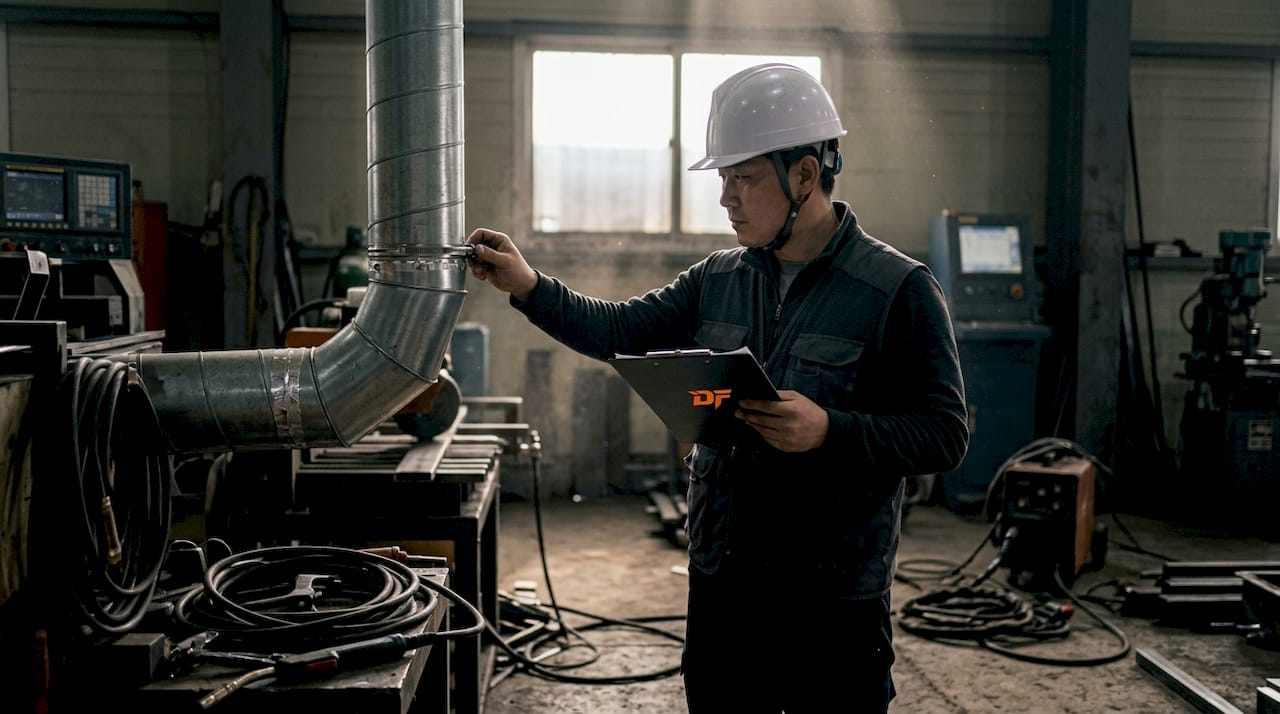
Source capture is the foundation. Capturing dust at the point of generation, using hoods, enclosures, or on-tool extraction, prevents it from becoming airborne in the first place. General air cleaning is less reliable and costlier than source capture. That gap in effectiveness is why facility managers who rely solely on room-level air filtration consistently struggle to meet OSHA thresholds.
The full hierarchy works like this:
- Process improvement: Substitute dry processes with wet ones, or switch to lower-dust materials where feasible.
- Source capture: Install local exhaust ventilation (LEV) or on-tool extraction directly at the dust generation point.
- Mechanical filtration: Use air scrubbers and HEPA-rated systems to clean residual airborne dust.
- Housekeeping: Vacuum with HEPA-filtered equipment rather than sweeping, which redistributes dust.
- Administrative controls: Training, toolbox talks, and rotation schedules reduce individual exposure time.
Pro Tip: Never treat housekeeping as a primary control. Vacuuming and wet wiping are cleanup measures, not prevention. If your facility relies on them as the first line of defense, your upstream controls need a serious review.
2. Which dust suppression techniques work best in industrial settings?
Wet suppression is the most cost-effective starting point for cutting, grinding, and bulk material handling. Continuous water flow at the point of cut prevents dust from becoming airborne and requires sufficient volume to keep the material consistently wet throughout the operation. The key word is “sufficient.” Intermittent wetting does not suppress dust. It creates a wet surface that dries between passes and releases particles freely.
Chemical suppressants extend the effectiveness of water-based methods, particularly in outdoor or high-traffic areas. Magnesium chloride is preferred for its lower corrosivity and environmental compatibility, while calcium chloride performs better in arid climates where moisture absorption is the primary challenge. Choosing the wrong suppressant for your climate reduces its working life and increases reapplication costs.
One critical pitfall with wet suppression is slurry management. Slurry from wet cutting creates a secondary dust source if it dries out before collection. Facilities that run wet suppression without a slurry removal plan often end up with a worse dust problem than they started with.
- Continuous water flow: Best for cutting and grinding; requires volume control to maintain constant wetness.
- Misting systems: Effective for bulk material transfer points and conveyor lines.
- Magnesium chloride: Lower environmental impact; suitable for most climates.
- Calcium chloride: Higher moisture absorption; best for very dry or arid environments.
- Foam suppressants: Used in mining and tunneling where water volume is restricted.
Pro Tip: Schedule slurry collection as part of the suppression task itself, not as a separate cleanup step. If slurry sits overnight, you have already created a new dust hazard.
3. How do engineering controls like ventilation and enclosures improve dust control?
Local Exhaust Ventilation is the most reliable engineering control for industrial dust management. LEV requires capture velocities of 0.5–1.0 m/s for moderate dust activities and 1.0–2.5 m/s for high-dust operations. These are not guidelines. They are minimum thresholds for the system to function as designed. An undersized fan or a hood positioned too far from the source drops capture velocity below the effective range and allows dust to escape into the work zone.
Enclosures with negative pressure add another layer of containment. Negative pressure is maintained by setting the LEV extract rate higher than the makeup air supply. This means that when an access door opens, air flows inward rather than outward, preventing fugitive dust from escaping into adjacent areas. Facilities that skip this step often contaminate clean zones during shift changes or material transfers.
HEPA filtration is the standard for air scrubbers used in industrial settings. HEPA filters capture 99.97% of particles at 0.3 microns, which covers the respirable fraction that poses the greatest health risk. For inline ducting applications, units like the Spider Farmer 4-Inch Air Carbon Filter and the AC Infinity 8" Air Filtration Kit Pro represent the category of inline filtration hardware used to support these systems.
| Engineering control | Capture velocity or efficiency | Best application |
|---|---|---|
| LEV (moderate dust) | 0.5–1.0 m/s | Grinding, sanding, light cutting |
| LEV (high dust) | 1.0–2.5 m/s | Demolition, heavy cutting, blasting |
| HEPA air scrubber | 99.97% at 0.3 microns | Enclosed spaces, spray booths, clean rooms |
| Negative pressure enclosure | Extract rate > makeup air | Spray booths, containment zones |
Pro Tip: Air monitoring is the only reliable way to verify that your LEV system is still performing at design specification. Schedule quarterly checks and document results. Equipment degradation is gradual and often invisible until an OSHA inspection.
4. What administrative practices sustain dust control on industrial sites?
Engineering controls fail without consistent human behavior to support them. Toolbox talks before dust-generating tasks are the most direct way to keep workers aware of current hazards, active control measures, and correct equipment use. These briefings do not need to be long. Five minutes before a shift covers the specific task, the controls in place, and what to do if equipment fails.
A structured administrative program for dust-free environment maintenance includes four core practices:
- Daily toolbox talks: Cover the specific dust hazards for that day’s tasks and confirm all controls are operational before work begins.
- Exposure monitoring: Conduct personal air sampling on a scheduled basis and document results against OSHA action levels.
- Preventive maintenance: Follow a written schedule for filter replacement, nozzle inspection, and fan performance checks. Regular maintenance prevents failures and extends system life significantly.
- Procedure adjustment: Update work methods when conditions change, including weather shifts, new materials, or increased production volume.
Pro Tip: Assign a named individual, not a team, to own the dust control maintenance log. Shared responsibility for maintenance schedules almost always means no one checks.
5. How to select the right dust control solution for your facility
Dust type and process characteristics determine which control methods will actually work. A manufacturing plant processing dry powders needs dry dust collection, specifically cyclones, baghouses, or cartridge filters, because introducing water creates clumping and process contamination. A construction site or bulk material handling facility benefits from wet suppression because moisture does not interfere with the process and reduces airborne dust immediately.
The selection decision comes down to three factors: dust particle size, process moisture sensitivity, and available airflow. Fine respirable dust below 10 microns requires HEPA-rated filtration. Coarser dust from bulk handling responds well to misting and water suppression. Moisture-sensitive processes, such as powder coating or certain chemical manufacturing steps, require dry collection exclusively.
For manufacturing plant dust control, the most effective approach combines source capture at generation points with facility-level air scrubbing as a backup. Spray booths and automotive refinishing environments add a third layer: physical barrier protection using electrostatic films to prevent settled dust from becoming airborne again during painting operations. Dustfreefilm’s multi-layer booth wall and floor protectors address exactly this need, keeping settled particulates contained between the film layers rather than recirculating them into the spray zone.
Regulatory compliance also shapes the selection. Any facility where workers handle crystalline silica must meet OSHA’s 50 micrograms per cubic meter limit. Facilities that process multiple dust types should conduct a dust hazard analysis to identify which areas require the most stringent controls and prioritize engineering investment accordingly. The role of dust control in industrial safety extends beyond compliance. It directly affects product quality, equipment lifespan, and worker retention.
Key takeaways
Effective industrial dust control requires layered engineering controls, chemical suppression matched to climate and process, and consistent administrative practices to sustain performance over time.
| Point | Details |
|---|---|
| Prioritize source capture | Capturing dust at the generation point is more effective and less costly than facility-wide air filtration. |
| Match suppressant to climate | Use magnesium chloride in most environments; switch to calcium chloride in arid conditions for better moisture absorption. |
| Maintain negative pressure | Set LEV extract rates above makeup air supply to prevent dust escape when enclosure doors open. |
| Schedule air monitoring | Quarterly air sampling validates LEV performance and catches equipment degradation before it becomes an OSHA issue. |
| Combine controls for compliance | No single method meets OSHA’s 50 micrograms per cubic meter silica limit alone; layered systems are required. |
What I’ve learned from years of watching dust control go wrong
The most common mistake I see in industrial facilities is treating dust control as a one-time installation project. A facility manager installs LEV, buys an air scrubber, and considers the problem solved. Six months later, a filter goes unchanged, a nozzle clogs, and capture velocity drops below the effective threshold. Nobody notices until a worker files a health complaint or an inspector shows up.
The second mistake is underestimating the importance of negative pressure in enclosed work areas. Facilities invest in expensive enclosures and then leave the makeup air supply unbalanced. Every time a door opens, dust billows out into adjacent clean zones. The fix costs almost nothing. The oversight costs a great deal.
What actually works is treating dust control as an ongoing operational discipline, not a capital project. That means named ownership of maintenance tasks, documented air monitoring results, and toolbox talks that are specific to the day’s work rather than generic safety reminders. It also means selecting physical barrier solutions, like Dustfreefilm’s electrostatic booth protectors, that actively prevent settled dust from recirculating rather than just filtering air after the fact.
The facilities that consistently pass OSHA inspections and maintain high finish quality are not the ones with the most expensive equipment. They are the ones where every worker knows what the controls are, why they matter, and what to do when something is not working.
— Dust
Dustfreefilm’s approach to industrial dust protection
Industrial dust control requires more than ventilation and suppression. Physical barrier protection is the layer most facilities overlook, and it is often the one that determines final product quality.

Dustfreefilm manufactures multi-layer electrostatic booth wall and floor protectors designed for spray booths, automotive refinishing facilities, and industrial painting operations. The films are heat-resistant, static-free, and built for high-traffic environments. Their patented dispenser system allows quick, bubble-free installation, reducing setup time between jobs. For facility managers looking to build a complete dust management program, Dustfreefilm’s industrial dust control solutions cover the physical containment layer that engineering controls alone cannot address. Explore the full product range to find configurations suited to your facility’s scale and workflow.
FAQ
What does OSHA require for industrial dust control?
OSHA sets a permissible exposure limit of 50 micrograms per cubic meter for respirable crystalline silica, with an action level of 25 micrograms per cubic meter that requires documented controls, training, and medical surveillance.
What is the most effective dust suppression method?
Continuous water flow at the point of cut or generation is the most cost-effective starting point. It prevents dust from becoming airborne before it can spread through the facility.
How do HEPA filters help with industrial dust control?
HEPA filters capture 99.97% of particles at 0.3 microns, making them the standard for air scrubbers used in enclosed industrial spaces and spray booths where fine respirable dust is the primary hazard.
Why does negative pressure matter in dust enclosures?
Negative pressure keeps air flowing inward when doors open, preventing dust from escaping into adjacent clean areas. It requires the LEV extract rate to exceed the makeup air supply at all times.
How often should dust control equipment be inspected?
Maintenance schedules should include regular filter checks, nozzle inspections, and fan performance reviews. Quarterly air monitoring validates that systems are still performing at design specification between scheduled maintenance intervals.