

TL;DR:
- Effective dust control improves worker safety, product quality, and operational reliability in facilities. Installing advanced extraction systems and surface protection films reduces contamination, rework, and downtime, saving costs. Compliance with safety standards and protection of finishes support better workforce retention and environmental standards.
Dust-free environment benefits are the measurable gains in worker health, product quality, and operational reliability that result from effective dust control in industrial facilities. For facility managers in automotive finishing and manufacturing, these gains are not abstract. Approximately 2.4 million US workers face harmful dust exposure daily, and the financial consequences of ignoring that fact range from failed paint finishes to catastrophic equipment failures. Systems like HEPA filtration, advanced dust extraction, and ISO cleanroom controls exist precisely because the cost of contamination always exceeds the cost of prevention. Understanding what dust control actually delivers helps you make the case for investment before a problem forces your hand.
1. What are the primary health and safety benefits of dust-free environments?
Effective dust control is the single most direct way to protect your workforce from occupational lung disease. Proper dust extraction systems reduce respirable dust exposure by up to 90%, helping facilities meet OSHA Permissible Exposure Limits (PELs) for over 500 regulated substances. Without that reduction, workers face cumulative exposure to silica, metal fumes, and chemical particulates that cause silicosis, occupational asthma, and chronic obstructive pulmonary disease. The US records 100,000 silicosis cases among workers, a number that reflects decades of inadequate dust management.
Clean air also affects cognitive performance. Improved indoor air quality raises worker cognitive function scores by 61% and correlates with measurable drops in sick days. Fewer sick days mean fewer production gaps and lower costs tied to temporary labor or overtime coverage.
Fire and explosion risk is the less-discussed safety benefit. Combustible dust hazards require a formal hazard analysis under NFPA 652 standards, and facilities that complete this process and install proper grounding and anti-static controls see direct reductions in insurance premiums. Dust that accumulates on hot surfaces or near ignition sources is a liability. Removing it is not just good practice. It is a compliance requirement.
- Reduced respirable dust exposure by up to 90% with extraction systems
- OSHA PEL compliance across 500+ regulated substances
- Lower incidence of silicosis, asthma, and respiratory disease
- Improved cognitive function and reduced absenteeism
- Reduced fire and explosion risk through NFPA 652 compliance
Pro Tip: Install real-time air quality monitors at workstation level, not just at room exits. Monitoring at the source gives you actionable data before exposure becomes a compliance violation.
2. How dust-free environments enhance product quality
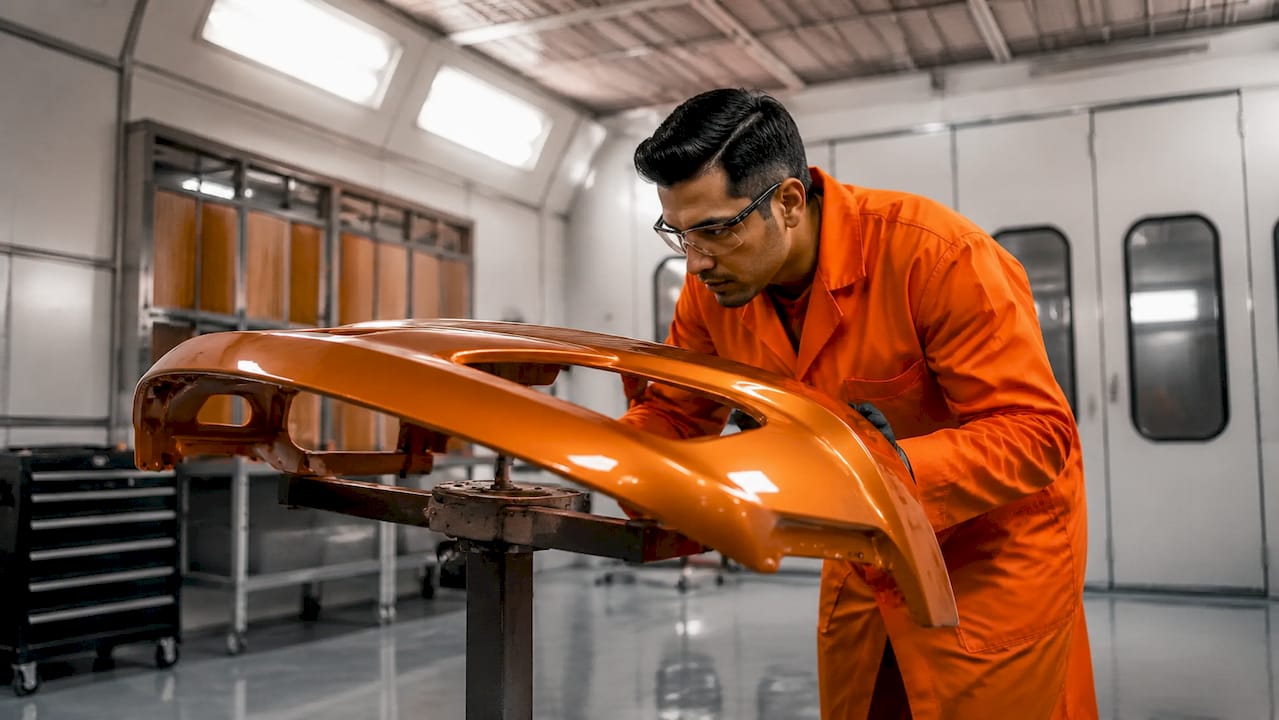
Dust contamination is the leading cause of surface defects in automotive refinishing and industrial coating operations. A single particle settling on a freshly applied paint layer creates a crater, inclusion, or fish-eye that requires sanding, recoating, and additional labor. In high-volume shops, that rework cost compounds quickly across dozens of panels per week.
The stakes are even higher in precision manufacturing. A single microscopic contaminant can ruin a silicon wafer, resulting in losses of up to $500,000 per incident. Semiconductor fabrication at Intel and similar facilities requires ISO Class 1 or 2 cleanroom standards, where particle counts per cubic meter are measured in single digits. That level of control is not achievable without multi-layered contamination management.
Dust inside control cabinets forms conductive layers that cause micro-short circuits and automation failures. Even thin deposits on inverters, fans, and circuit boards trigger false alarms and unplanned shutdowns. The failure is not always dramatic. It is often a gradual degradation in sensor accuracy or motor performance that goes undiagnosed until a line stops.
- Paint defects and surface inclusions from airborne particles
- Sensor drift and false alarms from dust on electronic components
- Automation failures from conductive dust layers in control cabinets
- Wafer and precision component losses in semiconductor and electronics manufacturing
- Inconsistent coating thickness from turbulent, particle-laden airflow
Pro Tip: Multi-layered contamination control works best when personnel discipline is part of the system. Gowning procedures, restricted access zones, and airflow management each address a different contamination pathway. Relying on filtration alone leaves human-generated particles, such as skin flakes and aerosols, uncontrolled.
3. What operational efficiencies and financial advantages come from dust control?
Technical cleanliness programs reduce unplanned downtime by 30–40% by preventing dust-related equipment failures. That figure translates directly to production hours recovered and delivery schedules met. For a facility running two or three shifts, even a 30% reduction in unplanned stops represents a significant gain in annual output.
Machinery lifespan extends when dust is removed from the equation. Bearings, motors, and cooling systems all degrade faster when operating in contaminated air. Replacing a major drive unit or CNC spindle costs far more than the annual budget for a dust extraction system. The math favors prevention every time.
Energy efficiency also improves in clean environments. Dust-clogged filters, heat exchangers, and ventilation systems force equipment to work harder, drawing more power for the same output. Cleaning or replacing those components regularly keeps energy consumption at design levels.
| Financial Impact | Without Dust Control | With Dust Control |
|---|---|---|
| Unplanned downtime | High frequency, unpredictable | Reduced by 30–40% |
| Equipment lifespan | Shortened by contamination | Extended through clean operation |
| Insurance premiums | Higher due to combustible dust risk | Lower with NFPA 652 compliance |
| Rework and scrap costs | Elevated from surface defects | Reduced through contamination control |
| Workforce turnover | Higher in poor air quality environments | Lower when health investment is visible |
Employers who invest in dust-free workplaces also see measurable improvements in workforce retention. Skilled technicians choose facilities where their health is protected. Replacing an experienced spray technician or CNC operator costs more than the dust control measures that would have kept them.
4. What are the best technologies for maintaining dust-free environments?
The foundation of any effective dust management program is a properly specified extraction system. Advanced dust extraction systems use HEPA filters that capture 99.97% of particles at 0.3 microns, the most penetrating particle size. Many systems add activated carbon layers to remove chemical vapors and solvent gases alongside particulates. Real-time monitoring capabilities allow facility managers to track filter loading, airflow velocity, and particle counts continuously rather than relying on scheduled inspections.
Cleanroom-grade contamination control goes further. Facility design, gowning procedures, and airflow control are the three pillars of effective contamination management. Positive pressure differentials prevent outside air from carrying particles into clean zones. Unidirectional airflow sweeps particles away from work surfaces rather than recirculating them. Gowning protocols address the human contribution to contamination, which is often the largest uncontrolled variable in a production environment.
For spray booths specifically, protective films on walls and floors prevent particle accumulation on surfaces that would otherwise shed contamination back into the air. Dustfreefilm’s multi-layer electrostatic booth protectors address this directly, capturing particles at the surface level before they re-enter the airstream.
Key facility practices that support clean environments include:
- Scheduled filter replacement based on pressure drop readings, not calendar dates
- Positive pressure maintenance in clean zones relative to adjacent areas
- Dedicated entry and exit protocols to limit particle introduction
- Anti-static flooring and grounding to prevent electrostatic particle attraction
- Regular environmental monitoring with particle counters at critical process points
- Dust prevention best practices integrated into standard operating procedures
Pro Tip: Address dust at its source first. Extraction at the point of generation is always more efficient than trying to capture particles after they have dispersed into the room air.
5. How dust control supports regulatory compliance and brand reputation
Regulatory compliance is a direct consequence of effective dust management, not a separate program. OSHA PEL compliance, NFPA 652 combustible dust requirements, and ISO cleanroom classifications all require documented dust control measures. Facilities that build these controls into their standard operating procedures pass audits without scrambling. Facilities that treat dust control as a reactive maintenance task fail audits and face citations.
Brand reputation follows quality output. Automotive OEMs and tier-one suppliers audit their finishing partners for contamination control capability. A facility that cannot demonstrate a documented dust control program loses contracts to competitors that can. The quality of a paint finish or a coated component is visible evidence of the process behind it.
Environmental stewardship is the third dimension. Facilities that capture and contain dust rather than releasing it into the surrounding environment meet EPA air quality standards and reduce community impact. That matters to municipal permit holders and to customers who evaluate suppliers on environmental performance.
Key takeaways
Maintaining a dust-free environment is a financial and operational imperative for manufacturing facilities, not an optional maintenance upgrade.
| Point | Details |
|---|---|
| Health and safety gains | Dust extraction cuts respirable exposure by up to 90%, meeting OSHA PELs and reducing silicosis risk. |
| Product quality protection | Even microscopic particles cause surface defects, sensor failures, and losses up to $500,000 per incident. |
| Operational cost reduction | Technical cleanliness programs reduce unplanned downtime by 30–40% and extend equipment lifespan. |
| Compliance and retention | NFPA 652 compliance lowers insurance costs; clean workplaces reduce skilled worker turnover. |
| Technology investment | HEPA extraction, airflow control, and surface protection films form the core of any effective dust management system. |
The case for treating dust control as a business decision
After working with automotive finishing facilities and industrial coating operations for years, I have seen the same pattern repeat. A facility invests in a new spray booth, installs quality equipment, and then cuts corners on contamination control because the budget is tight after the main purchase. Six months later, they are sanding out inclusions on every third panel and wondering why their reject rate is climbing.
The uncomfortable truth is that dust control is not a support function. It is a production function. Every dollar spent on HEPA filtration, protective booth films, and real-time monitoring directly protects the revenue generated by the equipment those systems surround. The facilities I have seen run the cleanest operations are also the ones with the lowest rework rates and the highest customer retention.
There is also a human dimension that gets underweighted in financial models. Technicians who work in clean, well-ventilated environments perform better and stay longer. The connection between clean air and workforce retention is real and measurable. Losing a skilled painter or a CNC operator to a competitor with better working conditions costs more than the dust control investment that would have kept them.
The detail most facilities overlook is surface contamination inside the booth itself. Walls and floors that accumulate overspray and dust become secondary contamination sources that no amount of air filtration can fully compensate for. Addressing that with protective films is one of the highest-return, lowest-complexity improvements available to any finishing operation.
— Dust
Protect your spray booth with Dustfreefilm
Dustfreefilm has supplied premium dust protection films to automotive refinishing and industrial painting operations since 2012. Their multi-layer electrostatic booth wall and floor protectors capture particles at the surface level, preventing accumulated contamination from re-entering the airstream during active spraying. The patented dispenser system allows quick, bubble-free installation with no specialist tools required. Films are heat-resistant and static-free, built for the demands of high-traffic industrial environments.

If your facility is ready to reduce rework, protect finishes, and meet contamination control standards, Dustfreefilm offers custom configurations and bulk purchasing options for operations of any scale. Request a quote and get a solution sized to your booth and production volume.
FAQ
What are the main dust-free environment benefits for manufacturers?
The primary benefits are reduced worker health risks, fewer product defects, lower equipment failure rates, and measurable reductions in unplanned downtime. Technical cleanliness programs alone reduce unplanned downtime by 30–40%.
How does dust affect paint quality in spray booths?
Airborne particles settle on wet paint surfaces and create defects including craters, inclusions, and fish-eye formations that require sanding and recoating. Controlling dust at the source and protecting booth surfaces directly reduces this rework.
What extraction technology is most effective for industrial dust control?
HEPA filters capturing 99.97% of 0.3-micron particles are the industry standard for fine dust removal. Systems with activated carbon layers also remove chemical vapors, making them suitable for solvent-heavy painting and coating environments.
How do dust-free environments reduce insurance costs?
Facilities that complete a combustible dust hazard analysis and implement controls under NFPA 652 standards demonstrate reduced fire and explosion risk to insurers, which directly lowers premium calculations.
What role do booth protective films play in contamination control?
Booth wall and floor films capture overspray and dust particles at the surface, preventing them from re-entering the airstream. They complement air filtration systems by addressing surface-level contamination that filters cannot reach.