

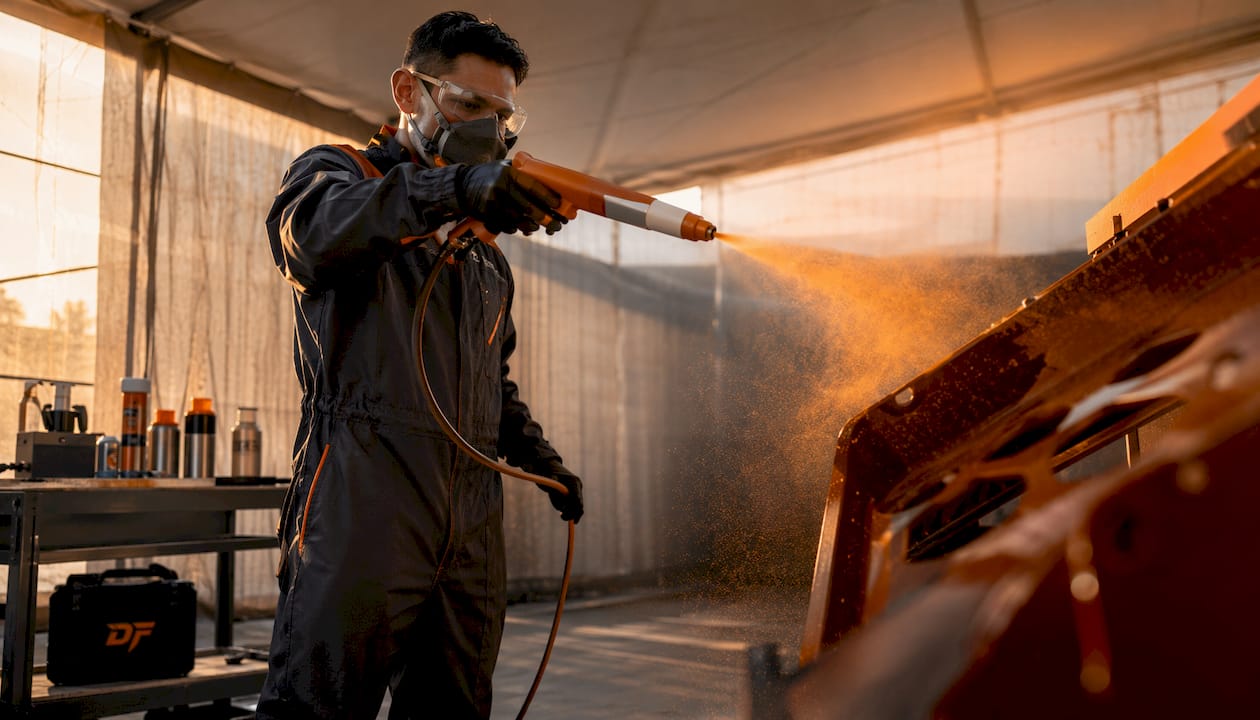
Electrostatic spray painting charges paint particles with high voltage electricity and grounds the workpiece, so opposite charges pull the coating directly onto the surface. The result is dramatically less overspray and a more uniform finish than conventional air spray. Here is what you need to know before specifying or operating this process:
- How it works: Paint particles receive a negative or positive charge at the gun; the grounded workpiece carries the opposite charge, creating strong attraction.
- Transfer efficiency: Overspray reduces significantly compared to conventional spray when parameters are optimized.
- Wrap-around effect: Charged particles follow electric field lines around corners and behind surfaces, coating areas a conventional gun simply cannot reach.
- Paint forms: Both liquid and powder coatings work; the workpiece must be electrically conductive.
- Who uses it: Automotive shops, aerospace fabricators, appliance manufacturers, and metal fabrication facilities rely on it daily.
- Booth environment: Dustfreefilm’s electrostatic protective films help maintain the clean, controlled booth conditions this process demands.
How does electrostatic spray painting work, step by step?
The electrostatic spray painting process follows a logical sequence, and each step directly affects finish quality.
- Ground the workpiece. The part hangs on a conductive hanger connected to earth ground. Without a solid ground, the electrostatic attraction collapses and transfer efficiency drops sharply.
- Charge the paint. Inside the spray gun, paint passes through or near a high-voltage electrode, typically operating at 30,000–100,000 volts DC. Each particle picks up a charge.
- Atomize the paint. The charged particles repel one another, which helps break the liquid into a fine, even mist. This mutual repulsion is what makes electrostatic atomization finer than air-only spray.
- Spray toward the workpiece. The gun projects the charged cloud toward the grounded part. Electric field lines pull particles in, including around edges and behind surfaces.
- Wrap-around deposition. Particles that miss the direct face of the part follow field lines to the sides and back, coating geometry that would otherwise require repositioning.
- Cure the coating. Liquid coatings air-dry or bake in an oven; powder coatings always bake, which fuses the particles into a continuous film.
Equipment you will typically use includes an electrostatic spray gun (rotary bell or air-assisted), a high-voltage power supply, a paint resistivity meter, and grounded hangers or conveyors. Paint resistivity matters because a fluid that conducts too well will bleed the charge back through the gun before the particles reach the part.
Pro Tip: Check paint resistivity before every batch change. Waterborne paints conduct electricity far more readily than solventborne coatings, and using the wrong gun type with a waterborne formula can send charge back into the fluid lines, reducing spray effectiveness and risking equipment damage.
Advantages and disadvantages of electrostatic spray painting
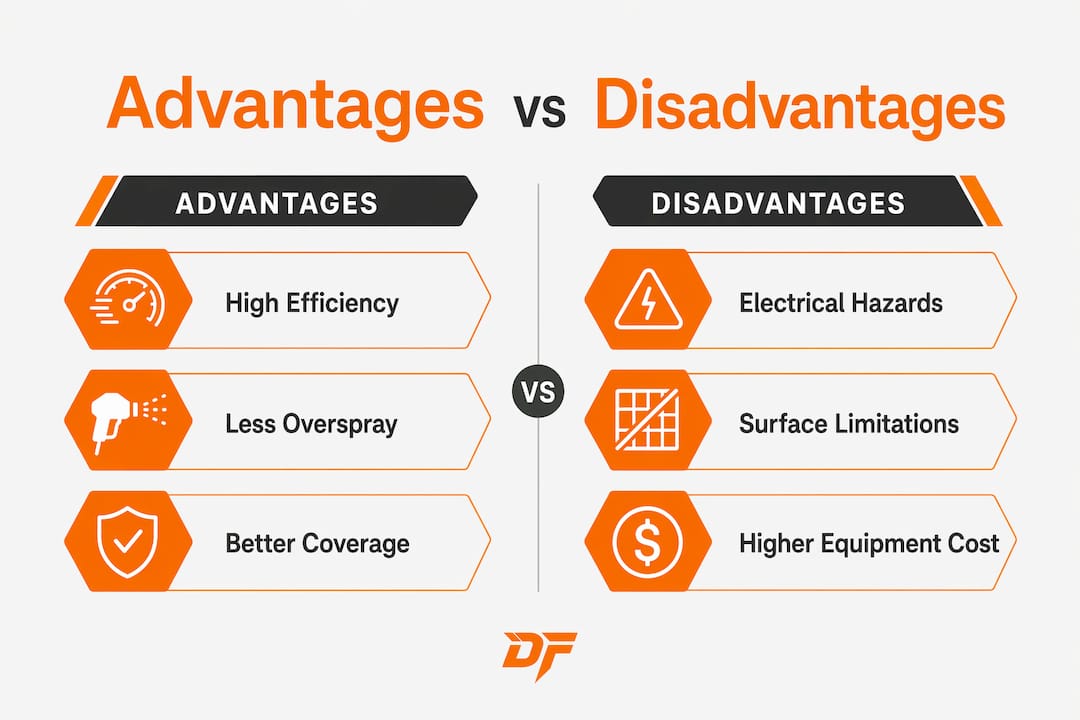
No coating method is perfect for every job. Electrostatic spray painting offers real gains in efficiency and quality, but it also comes with constraints that matter in practice.
Key advantages
- Reduced overspray: Transfer efficiency improves significantly under optimized conditions, cutting both material cost and cleanup time.
- Wrap-around coverage: Charged particles reach the backs and sides of complex parts, reducing manual touch-up labor on tubular frames, wire forms, and irregular geometries.
- Lower VOC emissions: Less overspray means less solvent escaping into the booth atmosphere, which helps facilities meet air quality regulations.
- Powder recovery: In automated powder booths, recovery units capture 95–100% of overspray under controlled conditions, making powder coating nearly zero-waste.
- Uniform film thickness: The self-limiting nature of electrostatic deposition prevents excessive buildup; once a surface is coated, remaining airborne particles lose attraction to that spot.
Key disadvantages
- Conductive surfaces only: Non-conductive materials like plastics and composites require conductive primers or special pretreatment before electrostatic spray will work.
- Faraday cage effect: Deep recesses, blind holes, and sharp interior corners block electric field lines, leaving those areas poorly coated and requiring manual touch-up or part repositioning.
- Electrical arcing risk: If grounding fails or paint builds up on hangers, static charge can arc, damaging equipment or injuring operators.
- Higher equipment cost: Electrostatic guns, power supplies, and resistivity meters represent a larger upfront investment than conventional air spray setups.
- Maintenance demands: Grounding contacts, hangers, and conveyors need frequent cleaning to maintain safe, effective operation.
| Factor | Electrostatic spray | Conventional spray |
|---|---|---|
| Transfer efficiency | High (30–50% less overspray) | Lower, more overspray |
| Wrap-around coverage | Yes, on conductive surfaces | No |
| VOC emissions | Reduced | Higher |
| Equipment cost | Higher upfront | Lower upfront |
| Surface requirement | Must be conductive | Any surface |
| Faraday cage risk | Yes, in recesses | Not applicable |
Where is electrostatic spray painting used?
The industrial applications of electrostatic spray painting span nearly every sector that coats metal parts at volume.
- Automotive manufacturing and refinishing: Body panels, frames, wheels, and underbody components all benefit from the uniform coverage and paint savings electrostatic spray delivers.
- Aerospace: Structural components and interior parts require thin, consistent coatings with minimal added weight; electrostatic spray hits both targets.
- Metal fabrication: Tubular frames, wire shelving, and formed sheet metal parts are ideal candidates because their geometry maximizes the wrap-around effect.
- Appliance manufacturing: Refrigerators, washing machines, and HVAC enclosures receive durable powder coatings applied electrostatically on high-speed conveyors.
- Industrial equipment: Agricultural machinery, construction equipment, and material-handling systems use electrostatic powder coating for corrosion resistance.
- Disinfection and sanitation: Electrostatic spraying technology has expanded into cleaning applications, where charged disinfectant droplets wrap around complex surfaces for uniform coverage, a use that grew substantially during the COVID-19 pandemic.
The common thread across all these sectors is the need for consistent, efficient coverage on parts that would be slow or wasteful to coat by hand with conventional spray.
How electrostatic spray compares to traditional painting methods
The gap between electrostatic and conventional spray is most visible in three areas: material use, coverage quality, and environmental compliance.
- Transfer efficiency: Electrostatic attraction pulls particles back toward the workpiece, cutting overspray by 30–50% compared to conventional spray methods.
- Wrap-around vs. line-of-sight: A conventional gun coats only what it can see directly. Electrostatic spray follows field lines around edges, which is why it reduces labor time on complex shapes, as .
- VOC emissions: Fewer airborne paint particles mean fewer solvents evaporating into the spray booth, which simplifies compliance with air quality standards.
- Cost over time: Higher equipment cost upfront is offset by lower paint consumption, less solvent waste, and reduced labor for touch-up work on complex parts.
- Paint type compatibility: Solventborne paints work well with internal-charging guns. Waterborne paints, with their lower electrical resistivity, need external-charging systems or specialized guns to prevent charge loss back through the fluid supply.
- Productivity: Automated electrostatic systems on conveyors coat parts continuously with minimal operator intervention, a throughput level conventional hand spray cannot match.
The practical takeaway is that electrostatic spray makes the most economic sense for high-volume production of conductive parts with complex geometry. For one-off jobs on non-conductive substrates, conventional spray remains the simpler choice.
Safety, maintenance, and best practices for electrostatic spray painting
Electrostatic spray painting introduces electrical hazards that conventional spray does not, and the consequences of ignoring them range from poor finish quality to serious operator injury.
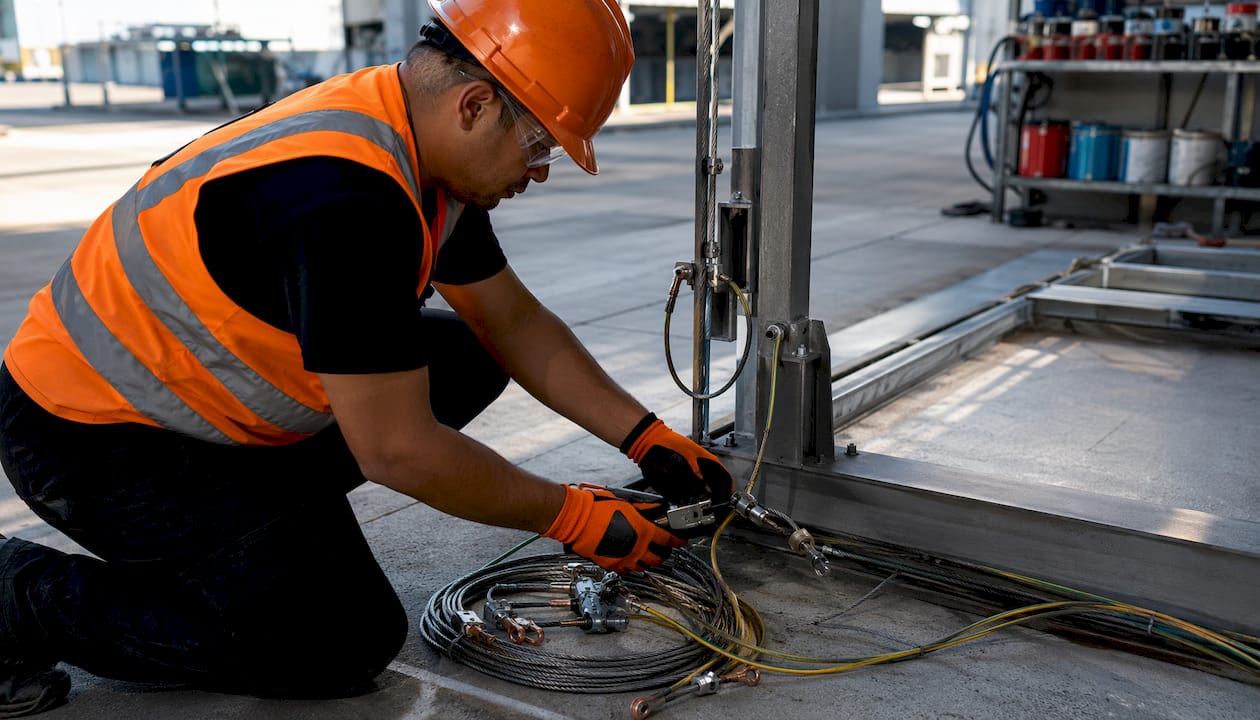
Grounding is the foundation of everything. A workpiece that is not properly grounded will not attract paint efficiently, and the charge that should be pulling particles to the part instead builds up in the surrounding environment. Paint buildup on hangers and conveyor contacts is the most common cause of grounding failure. Clean them regularly.
Safety and maintenance checklist:
- Verify earth ground continuity on all hangers and conveyor hooks before each production run.
- Inspect high-voltage cables and gun electrodes for cracks or wear at the start of every shift.
- Keep the spray booth clean; overspray accumulation on walls and floors creates both a fire risk and a contamination source for fresh coatings.
- Use a paint resistivity meter when switching between paint formulas, especially when moving from solventborne to waterborne coatings.
- Never allow personnel inside the spray zone while the high-voltage system is energized.
- Post grounding diagrams and voltage specifications at the booth entrance.
Waterborne paints deserve special attention. Their low electrical resistivity means charge can travel back through the paint supply line to the pump, reducing spray effectiveness and potentially damaging equipment. Specialized external-charging guns isolate the charge point from the fluid supply, solving this problem. Graco produces well-regarded electrostatic guns designed specifically for waterborne formulas.
Dustfreefilm’s electrostatic protection films for spray booths address another layer of the safety picture: keeping booth walls and floors free of paint buildup reduces contamination, simplifies cleaning, and lowers the risk of static-related incidents in the booth environment. You can also find detailed guidance on spray booth dust control that complements electrostatic spray safety protocols.
Troubleshooting common electrostatic spray painting problems
Even well-maintained systems run into issues. Knowing the cause behind a symptom saves hours of guesswork.
Poor coverage in recesses. The Faraday cage effect is almost always the culprit. Electric field lines concentrate on edges and corners, leaving blind holes and deep channels starved of paint. Solutions include reducing gun voltage to let particles penetrate deeper, repositioning the part, or applying a manual touch-up pass with a conventional gun after the electrostatic coat.
Inconsistent film thickness or bare spots. Check grounding first. A single corroded hanger contact can drop transfer efficiency across an entire batch. If grounding checks out, verify paint resistivity; a formula that has absorbed moisture can conduct too well and lose its charge before reaching the part.
Orange peel or rough texture. This usually points to atomization problems: incorrect fluid pressure, worn nozzle, or paint viscosity outside the gun’s operating range. With electrostatic guns, it can also indicate that voltage is set too high, causing particles to accelerate too fast and hit the surface before they fully level.
Arcing or sparks. Shut down immediately. Arcing means a grounding failure or an accumulation of conductive material close to the high-voltage electrode. Inspect hangers, clean all grounding contacts, and check for paint buildup on booth fixtures before restarting.
Charge bleedback with waterborne paint. If the gun uses internal charging and the paint is waterborne, the fluid itself conducts the charge away. Switch to an external-charging gun designed for waterborne formulas, as noted in the safety section above.
Key Takeaways
Electrostatic spray painting delivers its biggest gains on high-volume, conductive parts with complex geometry, where the wrap-around effect and reduced overspray translate directly into lower material costs and less labor.
| Point | Details |
|---|---|
| Transfer efficiency gain | Optimized electrostatic spray reduces overspray by 30–50% versus conventional methods. |
| Powder recovery rate | Automated powder booths recover 95–100% of overspray under controlled conditions. |
| Grounding is critical | Paint buildup on hangers is the leading cause of grounding failure, arcing, and finish defects. |
| Faraday cage limitation | Deep recesses and blind holes require manual touch-up or part repositioning after electrostatic coating. |
| Waterborne paint handling | Waterborne formulas need external-charging guns to prevent charge loss back through the fluid supply. |