
Spray booth operators face persistent challenges with dust contamination and static buildup that compromise paint quality and inflate operational costs. Selecting the right protective film requires evaluating multiple factors: environmental conditions, booth area requirements, durability needs, and cost constraints. This article examines practical protective film applications across different spray booth environments, providing real-world examples that demonstrate how targeted film solutions reduce defects, lower paint consumption, and streamline maintenance. You’ll discover evaluation criteria, performance data, and decision frameworks to match film types with your specific operational priorities.
Table of Contents
- Key takeaways
- Evaluating criteria for protective film selection
- Electrostatic protective films: managing static and dust
- Floor and surface films: protecting against overspray and damage
- Specialty peelable coatings: white vs. clear applications
- Comparing protective film options: pros, cons, and use cases
- Explore dust free film solutions for your spray booth
- Frequently asked questions about protective film applications
Key Takeaways
| Point | Details |
|---|---|
| Defect and paint savings | Protective films reduce coating defects and lower paint consumption across spray booth operations. |
| Area specific films | Booth areas such as floors walls ceilings and windows require different film types to balance wear durability and static control. |
| Static control in dry environments | Electrostatic films generate controlled charges that attract dust before it contacts wet paint, reducing contamination in low humidity conditions. |
| Heat resistant floor films | Floor films designed to withstand heat and forklift traffic protect floors during hot processes and heavy use. |
Evaluating criteria for protective film selection
Choosing protective films for spray booths requires analyzing environmental factors that directly impact film performance. Temperature extremes, humidity levels, and static electricity risk vary significantly across facilities. High-temperature curing booths demand heat-resistant materials, while dry environments with low humidity create static buildup that attracts airborne contaminants. Anti-static films critical in dry environments, heat-resistant films for curing booths, and floor films handling forklift traffic address these specific operational challenges.
Booth area requirements shape film specifications differently for floors, walls, ceilings, and windows. Floor films must resist mechanical wear from forklift traffic and foot traffic while maintaining non-slip surfaces for operator safety. Wall and ceiling films prioritize dust attraction and static control to prevent particles from settling on wet paint surfaces. Window films balance transparency with overspray protection, allowing visibility while reducing cleaning frequency.
Durability factors include chemical resistance to solvents and paint thinners, heat tolerance for elevated booth temperatures, and mechanical strength against punctures or tears. Films in high-traffic areas endure constant contact, requiring thicker multi-layer construction. Chemical exposure from overspray and cleaning agents degrades inferior materials, shortening replacement intervals and increasing long-term costs.
Cost analysis extends beyond initial purchase price to replacement frequency and labor expenses. Premium electrostatic films carry higher upfront costs but deliver superior contamination control that reduces rework and paint waste. Standard films cost less initially but may require more frequent replacement, increasing cumulative expenses. Installation complexity affects downtime, with pre-formed films offering faster application than liquid coatings that need drying time.
Pro Tip: Calculate total cost of ownership over six months rather than comparing only purchase prices. Include replacement labor, downtime costs, and paint savings from reduced defects to identify the most economical solution for your spray booth setup.
Electrostatic protective films: managing static and dust
Electrostatic films generate controlled static charges that actively attract and trap airborne dust particles before they contact wet paint surfaces. This mechanism proves particularly effective in low-humidity environments where static electricity naturally accumulates. Facilities operating in arid climates or during winter months when indoor air becomes dry benefit most from this technology. The static charge creates an invisible barrier that pulls contaminants away from the paint zone, dramatically reducing defect rates.
Electrostatic protective films reduce coating defects by up to 25% and lower paint consumption by 15-25% compared to standard protective materials. These performance gains translate directly to cost savings through reduced rework, less paint waste, and improved first-pass quality rates. Automotive refinishing facilities report fewer orange peel defects and dirt nibs when using electrostatic wall and ceiling films. Industrial coating operations experience consistent finish quality across production runs, minimizing rejection rates.
Installation focuses on critical contamination zones: walls surrounding the spray area, ceiling surfaces above the paint zone, and air intake regions. Multi-layer electrostatic films attach using patented dispenser systems that prevent air bubbles and ensure complete surface contact. The static charge activates immediately upon installation, beginning dust collection before painting operations resume. Replacement intervals typically range from 90 to 120 days depending on booth usage intensity and accumulated overspray.
Cost considerations balance higher initial investment against performance benefits. Premium electrostatic films cost approximately 40-60% more than standard protective films but deliver measurably superior contamination control. Facilities processing high-value automotive refinishing or precision industrial coatings justify the expense through reduced defect-related losses. Operations with moderate quality requirements may find standard films adequate, reserving electrostatic solutions for critical production periods.
“The static charge in electrostatic films creates an active defense against contamination rather than passive protection. This fundamental difference explains why facilities see immediate quality improvements after switching from conventional booth protection methods.”
Floor and surface films: protecting against overspray and damage
Floor protective films serve as sacrificial barriers against overspray accumulation, chemical spills, and mechanical damage from equipment movement. These specialized materials withstand the harsh conditions of industrial spray environments while maintaining safe working surfaces. Floor protective films withstand temperatures up to 200°F, provide non-slip surfaces, and replace every 60-90 days at lower cost than intensive cleaning operations. Heat resistance proves essential in curing booths where elevated temperatures activate coating catalysts and accelerate drying.
Non-slip surface textures prevent operator accidents on floors coated with paint mist and solvents. Standard smooth films become hazardous when wet, creating liability risks and productivity losses from worker injuries. Textured floor films maintain traction even under overspray conditions, allowing safe movement during painting operations. This safety feature becomes critical in high-volume facilities where operators constantly enter and exit the booth.
Chemical resistance protects underlying floor surfaces from corrosive paint thinners, reducers, and cleaning solvents. Unprotected concrete floors absorb these chemicals, leading to deterioration, staining, and eventual structural damage. Multi-layer floor films create an impermeable barrier that prevents chemical penetration while allowing easy cleanup of spills. When films reach saturation with overspray, operators simply peel away the contaminated layer and apply fresh protection.
Replacement economics favor protective films over traditional cleaning methods. Deep cleaning a spray booth floor requires booth shutdown, chemical strippers, power washing, and drying time that can total 8-12 hours. Film replacement takes 2-3 hours with minimal skill requirements, reducing downtime by 70-80%. Material costs remain modest compared to cleaning chemical expenses and labor rates for intensive scrubbing.
| Floor film type | Durability rating | Temperature resistance | Replacement frequency | Cost per application |
|---|---|---|---|---|
| Standard multi-layer | Moderate | Up to 150°F | 60-75 days | Low |
| Heat-resistant | High | Up to 200°F | 75-90 days | Medium |
| Heavy-duty industrial | Very high | Up to 180°F | 90-120 days | Medium-high |
| Anti-static floor film | Moderate-high | Up to 160°F | 60-90 days | High |
Pro Tip: Mark installation dates on film edges using permanent marker to track replacement schedules accurately. Monitoring actual performance intervals helps optimize inventory ordering and prevents premature or delayed replacements that affect booth efficiency. Consider exploring top industrial floor films for detailed product comparisons.
Specialty peelable coatings: white vs. clear applications
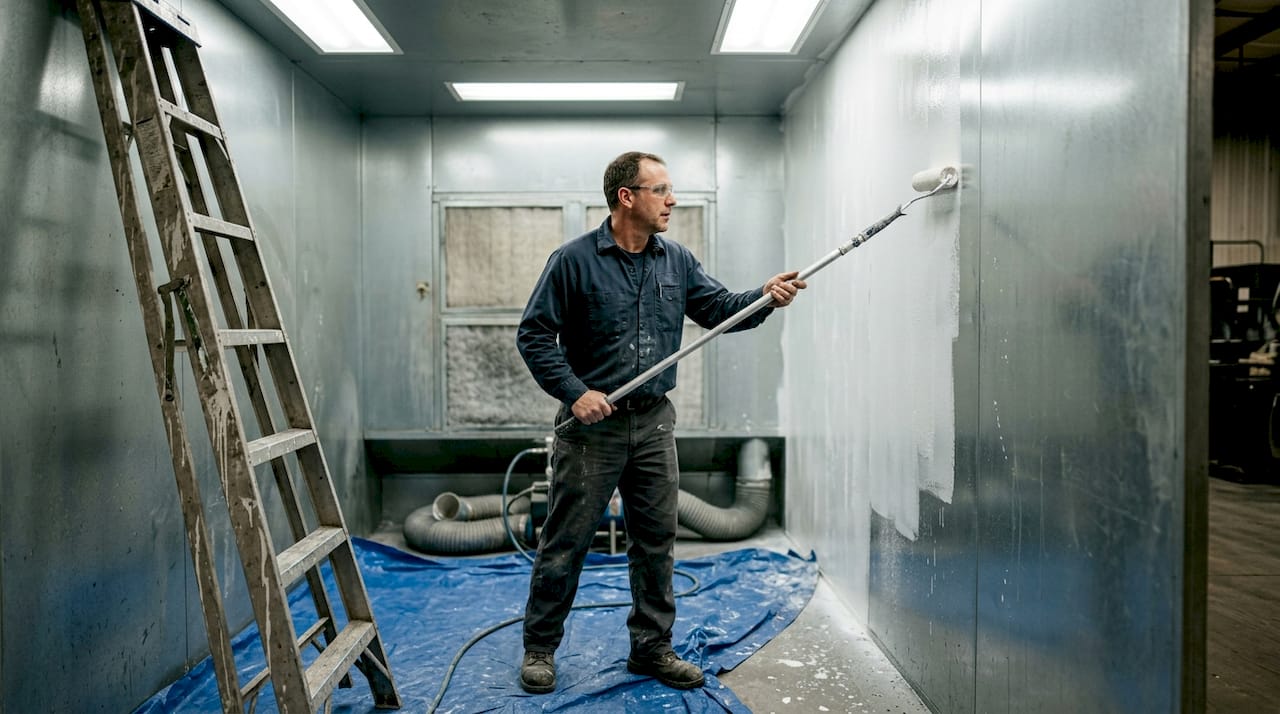
Peelable coatings offer liquid-applied protection that forms removable barriers on booth surfaces, windows, and lighting fixtures. White formulations provide high-contrast backgrounds that make overspray accumulation immediately visible, enabling proactive maintenance scheduling. Operators quickly identify areas requiring attention when white surfaces show paint buildup, preventing excessive contamination that degrades air quality. This visibility advantage helps facilities maintain consistent environmental controls and extends filter life by prompting timely booth cleaning.
Clear peelable coatings deliver discreet protection for glass observation windows, light fixtures, and control panels where visibility must remain unobstructed. These transparent barriers allow full light transmission while preventing overspray adhesion that clouds surfaces and reduces illumination. When coatings accumulate sufficient overspray, operators peel away the contaminated layer to restore original clarity without glass cleaning chemicals or abrasive scrubbing.
White peelable coatings enhance visibility and contrast for overspray monitoring while clear coatings reduce cleaning time and fire hazards with zero VOCs. The zero volatile organic compound formulation eliminates air quality concerns and regulatory compliance issues associated with solvent-based products. Fast-drying properties minimize booth downtime, with most coatings becoming tack-free within 30-45 minutes and fully cured within 2-4 hours.
Fire hazard reduction represents a critical safety benefit of peelable coatings. Accumulated overspray on bare booth surfaces creates combustible material that increases fire risk in environments with flammable solvents and ignition sources. Regular removal of contaminated peelable layers eliminates this fuel source, maintaining safer working conditions. Insurance providers often recognize this risk mitigation, potentially reducing premium costs for facilities implementing comprehensive protective coating programs.
| Coating type | Visibility | Drying time | VOC content | Typical applications |
|---|---|---|---|---|
| White peelable | High contrast, excellent overspray detection | 30-45 minutes tack-free | Zero | Booth walls, ceilings, floors |
| Clear peelable | Transparent, maintains visibility | 30-60 minutes tack-free | Zero | Windows, lights, control panels, glass surfaces |
Application methods include spray guns, rollers, or brushes depending on surface area and coating thickness requirements. Spray application provides fastest coverage for large wall and ceiling areas, while roller application works well for floors and smaller sections. Multiple thin coats build adequate thickness more effectively than single heavy applications that may sag or develop uneven coverage. Consider booth wall film options as alternatives to liquid coatings for specific installation scenarios.
Comparing protective film options: pros, cons, and use cases
Each protective film category delivers distinct advantages suited to specific spray booth conditions and operational priorities. Understanding these trade-offs enables informed decisions that optimize performance within budget constraints.
| Film type | Key benefits | Drawbacks | Best use cases |
|---|---|---|---|
| Electrostatic | Superior dust control, 25% defect reduction, 15-25% paint savings | Higher initial cost, requires dry environment | Low-humidity facilities, precision coating, high-value finishing |
| Heat-resistant floor | Withstands 200°F, non-slip surface, chemical resistant | Higher cost than standard films | Curing booths, high-temperature processes, forklift traffic areas |
| White peelable coating | Excellent overspray visibility, zero VOCs, fast application | Requires drying time, liquid application skills | Booth walls and ceilings needing frequent monitoring |
| Clear peelable coating | Maintains transparency, protects windows and lights, zero VOCs | Less visible contamination tracking | Observation windows, lighting fixtures, control panels |
| Standard multi-layer floor | Cost-effective, adequate protection, easy replacement | Lower temperature tolerance, shorter lifespan | Moderate-use booths, budget-conscious operations |
Installation time varies significantly across film types, impacting booth downtime during maintenance. Pre-formed films offer quicker installation while electrostatic films outperform standard films but have higher costs. Pre-formed floor and wall films install in 2-4 hours for typical booth sizes, while liquid peelable coatings require application time plus 2-4 hours curing before booth operation resumes. Electrostatic films using patented dispenser systems achieve bubble-free installation in similar timeframes to standard films despite their advanced functionality.
Decision-making process for selecting appropriate protective films:
- Assess environmental conditions including temperature ranges, humidity levels, and static electricity risk to identify films with adequate resistance specifications.
- Evaluate contamination control requirements based on coating quality standards, defect tolerance, and paint cost considerations that justify premium film investment.
- Calculate total cost of ownership over six-month periods including purchase price, replacement labor, booth downtime, and quality-related savings from defect reduction.
- Review installation capabilities and available labor skills to determine whether pre-formed films or liquid coatings better match facility resources and scheduling constraints.
- Test selected film options in controlled trials measuring defect rates, replacement intervals, and operator feedback before committing to full-scale implementation.
Operators should match film characteristics to specific booth zones rather than applying uniform solutions throughout facilities. High-traffic floor areas benefit from heavy-duty films while walls may perform adequately with standard protection. Critical coating zones justify electrostatic films while prep areas use economical alternatives. This targeted approach optimizes spending while maintaining necessary performance levels. Explore strategies for boosting spray booth efficiency through comprehensive protective film programs.
Explore dust free film solutions for your spray booth
Dust Free Film manufactures premium protective films engineered specifically for automotive refinishing and industrial painting environments. Our multi-layer electrostatic booth wall and floor protectors feature patented application systems that ensure quick, bubble-free installation while delivering superior dust control. Heat-resistant formulations withstand temperatures up to 200°F, making them ideal for curing booths and high-temperature processes. Static-free designs eliminate contamination sources that compromise paint quality and increase rework costs.
Since 2012, we’ve focused on innovative protective solutions that create dust-free environments for superior paint finishes. Our European manufacturing standards ensure consistent quality across product lines, while flexible options including custom configurations and bulk purchasing support large-scale operations. The patented dispenser system simplifies installation, reducing booth downtime and labor requirements. Visit Dust Free Film to explore our complete product range or request a quote for personalized service and volume pricing tailored to your facility’s specific needs.
Frequently asked questions about protective film applications
What types of protective films are best for static-prone spray booths?
Electrostatic protective films perform best in static-prone environments by actively attracting dust particles through controlled static charges. These films reduce coating defects by up to 25% and lower paint consumption by 15-25% compared to standard options. They work particularly well in low-humidity facilities and dry climates where static electricity naturally accumulates.
How often should floor protective films be replaced?
Floor protective films typically require replacement every 60-90 days depending on booth usage intensity and overspray accumulation. Heat-resistant heavy-duty films may extend to 90-120 days in moderate-use environments. Mark installation dates on film edges to track actual performance intervals and optimize replacement scheduling for your specific operations.
Can peelable coatings reduce fire hazard risks?
Peelable coatings significantly reduce fire hazards by enabling regular removal of combustible overspray accumulation from booth surfaces. Zero VOC formulations eliminate additional flammable vapors while maintaining safer working conditions. Regular peeling of contaminated layers removes fuel sources that could ignite in environments with flammable solvents and potential ignition sources.
Are electrostatic protective films cost-effective for all spray booths?
Electrostatic films prove most cost-effective for precision coating operations, high-value automotive refinishing, and facilities with significant defect-related losses. The 40-60% higher initial cost compared to standard films is justified by measurable quality improvements and paint savings. Operations with moderate quality requirements may find standard films adequate, reserving electrostatic solutions for critical production periods.
What is the easiest protective film to install for large facilities?
Pre-formed multi-layer films with patented dispenser systems offer the easiest installation for large facilities, achieving bubble-free application in 2-4 hours for typical booth sizes. These systems require minimal training and reduce installation errors compared to liquid peelable coatings that demand application skills and curing time. The quick installation minimizes booth downtime during maintenance cycles.