

Every European facility maintenance manager knows the frustration of dust settling on freshly painted surfaces during critical spray booth operations. Protecting workspaces from hidden contaminants is not just about appearance, but about extending surface life, preventing costly rework, and supporting high-quality paint results. With floor protection film built to withstand heavy foot traffic and resist chemical spills, you can guard your spray booth floors while streamlining cleaning and upkeep for a safer, more productive workflow.
Table of Contents
- What Is Floor Protection Film? Core Concept Explained
- Types of Floor Protection Film for Spray Booths
- Key Features and Application in Industrial Settings
- Advantages Over Traditional Dust Control Methods
- Critical Mistakes to Avoid With Protective Films
Key Takeaways
| Point | Details |
|---|---|
| Floor Protection Film Purpose | Designed to safeguard surfaces during industrial operations against scratches, stains, and chemical spills. |
| Types and Features | Various types include standard, multi-layer, and industrial-grade films, each tailored for specific applications and environments. |
| Advantages Over Traditional Methods | Offers superior adhesion and contamination control compared to traditional dust control like paper or cardboard. |
| Critical Application Practices | Proper surface preparation and timely removal are essential to prevent damage and ensure effective protection. |
What Is Floor Protection Film? Core Concept Explained
Floor protection film is a specialized adhesive covering designed to safeguard surfaces during high-risk industrial operations like automotive refinishing and painting. Unlike standard protective materials, these films provide comprehensive defense against potential damage from dust, debris, chemical spills, and mechanical wear. Floor protection solutions are engineered to withstand challenging environments where preserving surface integrity is critical.
In automotive and industrial painting contexts, floor protection film serves multiple crucial functions. It acts as a transparent barrier that shields underlying surfaces from scratches, stains, paint overspray, and chemical contamination. These films are typically constructed from durable polyethylene or specialized polymer materials with adhesive backing that enables secure, bubble-free installation without damaging the protected surface. Key characteristics include water resistance, chemical stability, and the ability to withstand heavy foot traffic and equipment movement.
Manufacturers design floor protection films with specific performance parameters tailored to different industrial applications. Some variants feature non-slip textures, enhanced puncture resistance, and UV stabilization. The most advanced films can protect surfaces during extended renovation projects, construction activities, and precision painting operations. Facility managers rely on these protective layers to maintain cleanliness, prevent surface degradation, and reduce potential repair or replacement costs associated with accidental damage.
Pro Tip: Always clean and dry the surface thoroughly before applying floor protection film to ensure maximum adhesion and optimal protective performance.
Types of Floor Protection Film for Spray Booths
Spray booth floor protection films are engineered with specialized characteristics to meet the demanding requirements of automotive refinishing and industrial painting environments. Different types of floor protection films are designed to address specific operational challenges, ranging from temporary surface coverage to long-term protective solutions. Multi-layer spray booth films represent the most advanced technological approach to maintaining pristine working conditions.
The primary categories of floor protection films include standard adhesive films, multi-layer protective films, and specialized industrial-grade variants. Standard films typically feature a single-layer construction with basic adhesive properties, suitable for short-term protection during minor painting projects. Multi-layer films offer superior performance, with each layer designed to trap dust, overspray, and contaminants while providing a clean surface for subsequent work stages. Advanced industrial-grade films incorporate additional features like anti-static properties, enhanced chemical resistance, and UV stabilization.
Specialized floor protection films for spray booths are distinguished by their unique performance characteristics. Some variants are engineered with non-slip textures to enhance worker safety, while others feature heat-resistant materials capable of withstanding the extreme temperatures encountered in automotive refinishing processes. High-end films may include additional functionalities such as moisture barriers, static dissipation, and precision-cut edges that ensure seamless installation around complex booth geometries.
Pro Tip: Select floor protection films with multiple removable layers to maximize surface cleanliness and minimize downtime during extended painting projects.
Here’s a comparison of floor protection film types used in spray booths:
| Film Type | Key Advantage | Typical Duration | Best Use Case |
|---|---|---|---|
| Standard Adhesive | Quick, easy installation | Short-term (days) | Minor paint projects |
| Multi-Layer | Enhanced dust containment | Medium-term (weeks) | Extended refinishing work |
| Industrial-Grade | Maximum chemical resistance | Long-term (months) | High-traffic environments |
Key Features and Application in Industrial Settings
Industrial floor protection films are engineered to withstand extreme operational conditions, providing comprehensive surface defense in high-stress environments. Floor protection technologies deliver robust protection against mechanical damage, chemical exposure, and environmental contaminants. These specialized films serve as critical protective barriers in automotive refinishing, manufacturing, construction, and other demanding industrial settings where surface integrity is paramount.
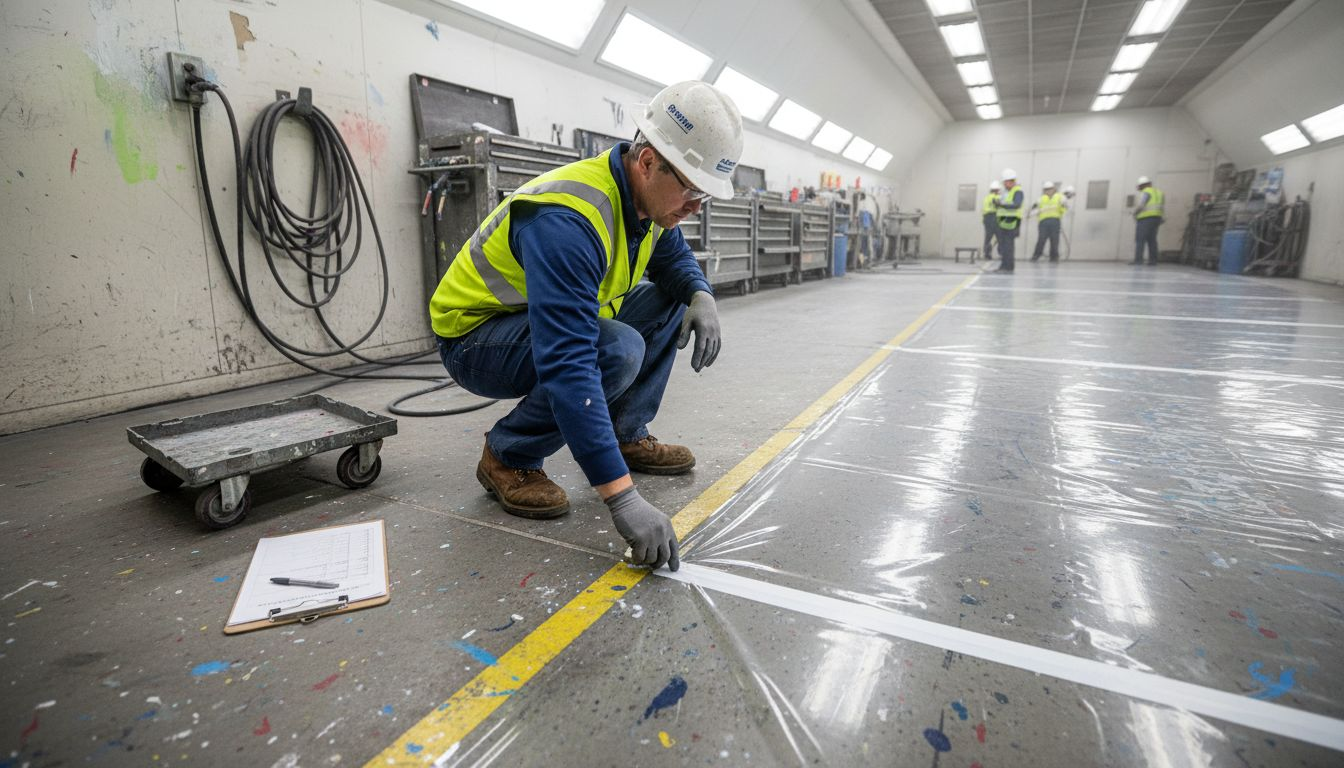
The key features of industrial floor protection films include exceptional durability, chemical resistance, and adaptive performance characteristics. Advanced films incorporate multiple protective layers designed to absorb impact, resist scratching, and prevent permanent surface damage from heavy equipment, tools, and operational debris. Manufacturers engineer these films with specific performance metrics, including non-slip textures, water-resistant properties, and precise adhesive formulations that enable secure installation without surface damage during removal.
Applications for industrial floor protection films span numerous high-risk environments. Automotive spray booths, manufacturing facilities, construction sites, and precision engineering workshops rely on these protective solutions to maintain surface quality and minimize maintenance expenses. Some specialized variants are designed with industry-specific requirements in mind, featuring heat-resistant materials, static dissipation capabilities, and enhanced chemical compatibility. The ability to protect surfaces while maintaining workplace safety makes these films an essential investment for facilities seeking to optimize operational efficiency and protect critical infrastructure.
Pro Tip: Select floor protection films with multiple performance ratings and verify compatibility with your specific industrial environment before large-scale implementation.
Advantages Over Traditional Dust Control Methods
Modern floor protection films represent a significant technological advancement compared to traditional dust control methods like paper sheets, cardboard coverings, and loose protective materials. Surface protection technologies offer comprehensive protection with enhanced performance characteristics that address critical limitations of older dust control approaches. These innovative films provide superior surface defense, operational efficiency, and workplace safety in demanding industrial environments.
Unlike traditional dust control methods, advanced floor protection films deliver multiple strategic advantages. They feature precision-engineered adhesive systems that secure the protective layer directly to surfaces, eliminating movement and slip hazards associated with loose coverings. The multi-layered construction allows for targeted dust and contaminant containment, with each layer capturing microscopic particles that would typically penetrate older protection technologies. Chemical resistance, moisture barriers, and static dissipation capabilities further distinguish these films from conventional dust control solutions.
Traditional dust control approaches often require frequent replacement, manual repositioning, and generate significant workplace waste. Modern floor protection films streamline surface preparation and maintenance processes by providing durable, residue-free protection that can be quickly installed and removed. Automotive refinishing facilities, manufacturing plants, and precision engineering workshops can substantially reduce labor costs and minimize operational disruptions by implementing these advanced protective technologies. The ability to conform to complex surface geometries and maintain consistent protection makes these films a superior alternative to outdated dust control methods.
Pro Tip: Conduct a comprehensive surface compatibility assessment before selecting floor protection films to ensure optimal performance and protection in your specific industrial environment.
Critical Mistakes to Avoid With Protective Films
Selecting and applying floor protection films requires precision and careful consideration to prevent costly damage and performance failures. Film application techniques demand meticulous attention to surface preparation, material selection, and installation protocols. Automotive refinishing professionals must navigate several potential pitfalls that can compromise the effectiveness of their protective solutions.
One of the most critical mistakes involves inappropriate surface preparation and film selection. Facility managers frequently underestimate the importance of thoroughly cleaning and drying surfaces before film application. Contaminants like dust, oils, or moisture can create adhesion problems, leading to film failure or surface damage. Different floor materials require specific film types with compatible adhesive strengths. Using a generic protective film without considering surface composition can result in permanent finish damage, residue buildup, or complete protection system failure.
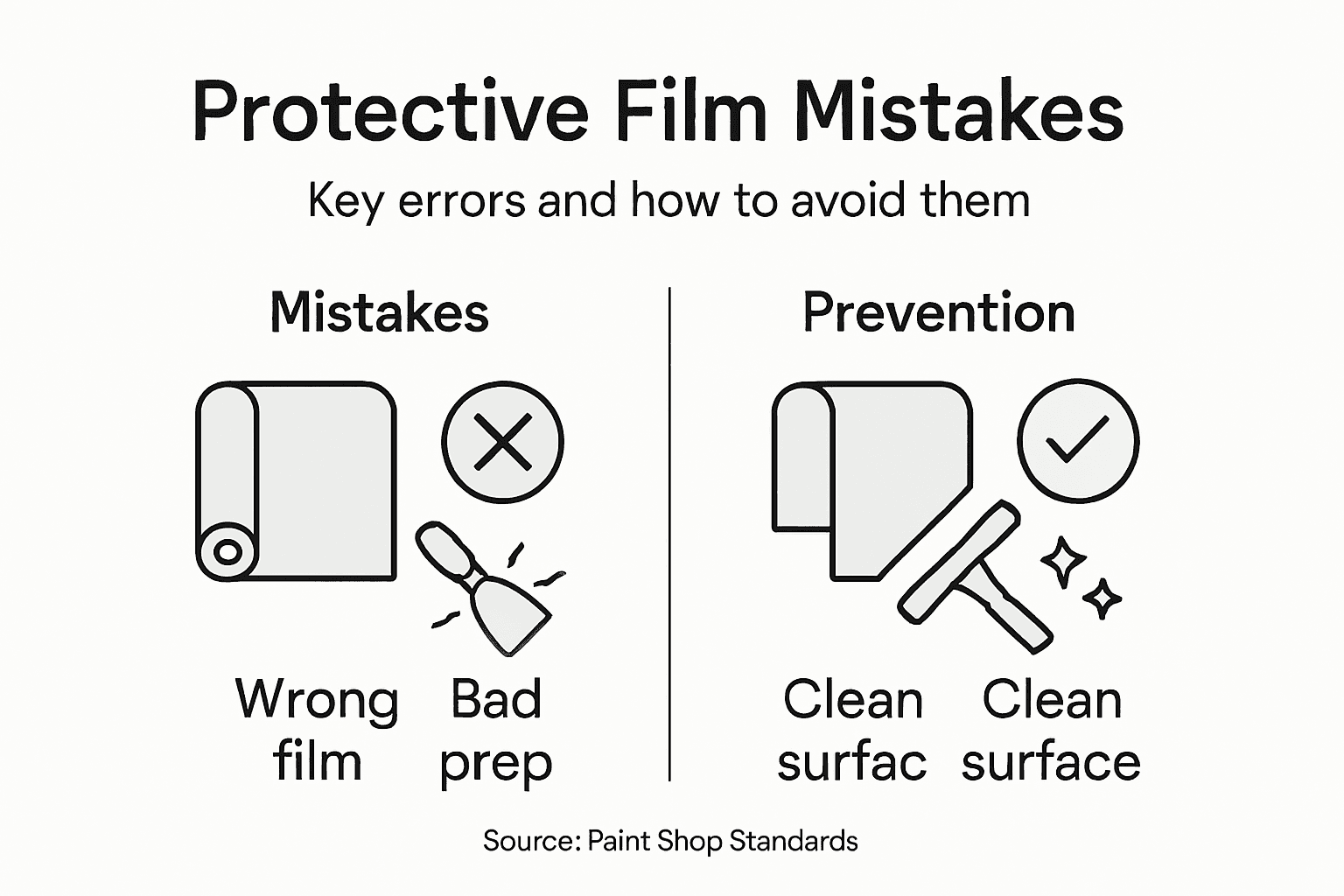
Improper removal techniques represent another significant risk for industrial environments. Leaving protective films in place beyond their recommended duration can cause chemical bonding, discoloration, and surface degradation. Technicians must understand the precise removal window for each film type and follow manufacturer-recommended techniques. Aggressive removal methods or delayed film replacement can lead to costly repairs and compromise the integrity of sensitive surfaces in spray booths, manufacturing areas, and precision engineering facilities.
Pro Tip: Develop a standardized film inspection and replacement protocol to minimize surface damage and maintain consistent protective performance across your facility.
Below is a summary of common mistakes and prevention strategies when using protective films:
| Mistake | Potential Impact | Prevention Strategy |
|---|---|---|
| Poor surface cleaning | Film adhesion failure | Thoroughly clean and dry surface |
| Wrong film selection | Surface damage, residue buildup | Match film with floor material type |
| Delayed film removal | Discoloration, chemical bonding | Follow manufacturer removal window |
Enhance Your Spray Booth Protection with Advanced Floor Films
The article highlights the critical need for reliable floor protection film designed specifically to maintain dust-free paint shops while preventing damage from overspray, chemical spills, and heavy traffic. If you are striving to eliminate contamination risks, reduce costly surface damage, and improve overall paint finish quality, Dust Free Film offers tailored solutions crafted for these exact challenges. Our multi-layer electrostatic floor protectors provide durability, heat resistance, and static-free performance designed to meet the rigorous demands described in the article.
Discover how our patented application system ensures quick, bubble-free installation that saves you time and effort during busy projects. Protect your spray booth floors with products engineered under strict European manufacturing standards and trusted by auto body shops and industrial painters alike. Don’t wait for costly mistakes or surface failures—explore our premium dust protection films and take control of your spray booth environment today. Learn more about our innovative multi-layer booth protection solutions and join facilities nationwide improving operational efficiency with trusted floor protection at Dust Free Film.
Frequently Asked Questions
What is floor protection film and how does it work?
Floor protection film is a specialized adhesive covering that safeguards surfaces during industrial operations, such as automotive refinishing. It acts as a transparent barrier against scratches, stains, and chemical spills, preserving surface integrity.
What types of floor protection films are available for spray booths?
There are several types of floor protection films, including standard adhesive films for short-term use, multi-layer films for enhanced dust containment, and industrial-grade variants with maximum chemical resistance, suitable for high-traffic environments.
How should I prepare a surface before applying floor protection film?
Before applying floor protection film, always ensure the surface is thoroughly cleaned and dried. Contaminants like dust, oils, or moisture can lead to adhesion failures and impact the protective performance of the film.
What common mistakes should I avoid when using protective films?
Common mistakes include inadequate surface cleaning, using the wrong film type for the floor material, and delaying the removal of the film beyond its recommended duration. Proper adherence to manufacturer recommendations can prevent significant damage and performance issues.