

Selecting the right floor protection for your automotive or industrial facility directly impacts paint quality, dust control, and operational efficiency. Facility managers face mounting pressure to maintain pristine environments while managing costs and minimizing downtime. The wrong choice leads to contamination, costly rework, and compromised finishes. This article delivers a practical framework to evaluate floor protection options, compare leading strategies, and select solutions tailored to your facility’s unique demands in 2026.
Table of Contents
- Evaluating Floor Protection: Key Criteria For Automotive And Industrial Facilities
- Top Floor Protection Options For Dust-Free Automotive And Industrial Environments
- Comparing Floor Protection Solutions: Performance, Cost, And Maintenance
- Choosing The Right Floor Protection Strategy For Your Facility: Situational Guidance
- Protect Your Facility With Dust-Free Film Floor Solutions
- Frequently Asked Questions About Floor Protection Strategies
Key takeaways
| Point | Details |
|---|---|
| Evaluation criteria | Durability, slip resistance, moisture control, and maintenance ease determine optimal floor protection for dust-free environments. |
| Top solutions | Industrial epoxy coatings, concrete treatments, and humidification systems each address specific dust control and durability needs. |
| Performance comparison | Specialized coatings reduce surface-related shutdowns by 78% while humidification systems capture airborne particles effectively. |
| Situational guidance | Match floor protection to chemical exposure, traffic patterns, budget constraints, and safety requirements for best results. |
| Maintenance integration | Regular inspection schedules and cleaning protocols extend floor life and prevent contamination risks significantly. |
Evaluating floor protection: key criteria for automotive and industrial facilities
Durability stands as the foundation of effective floor protection. Your floors endure constant abrasion from equipment movement, chemical exposure from solvents and coatings, and heavy traffic from personnel and vehicles. Floors that fail under these stresses create dust, compromise paint finishes, and trigger expensive repairs. Specialized protective systems reduce maintenance incidents by 65% when properly selected and installed.
Slip resistance protects your workforce while maintaining productivity. Wet environments, oil spills, and coating overspray create hazardous conditions that demand textured surfaces or anti-slip additives. Safety cannot be compromised, yet the solution must not trap contaminants that later become airborne dust.
Moisture and contamination resistance directly influence paint quality outcomes. Porous floors absorb moisture, harbor dust particles, and release contaminants into the air during temperature fluctuations. Seamless, non-porous surfaces prevent these issues while supporting effective paint booth contamination prevention protocols.
Maintenance requirements and longevity determine total cost of ownership. Floors demanding frequent recoating or repair disrupt operations and inflate expenses. Consider installation downtime, cure periods, and ongoing cleaning protocols when evaluating options. Compatibility with existing ventilation and humidity control systems ensures integrated performance rather than conflicting technologies.
Pro Tip: Prioritize coatings that bond molecularly with concrete substrates rather than sitting on top, delivering superior adhesion and eliminating delamination risks that create dust and require costly shutdowns.
Understanding your facility’s unique stress factors guides smart selections. Chemical types, temperature ranges, production schedules, and specific processes create distinct demands. A custom automotive refinishing shop faces different challenges than a high-volume industrial coating line. Assess your actual conditions rather than defaulting to generic solutions. Effective paint booth cleaning guide practices work best when floors support rather than hinder cleaning efforts.
Top floor protection options for dust-free automotive and industrial environments
Industrial epoxy flooring delivers exceptional performance across multiple criteria. These systems provide excellent resistance to abrasion and chemicals, making them ideal for automotive shops and industrial facilities. The seamless surface eliminates joints and cracks where dust accumulates, supporting comprehensive dust reduction in spray booths.
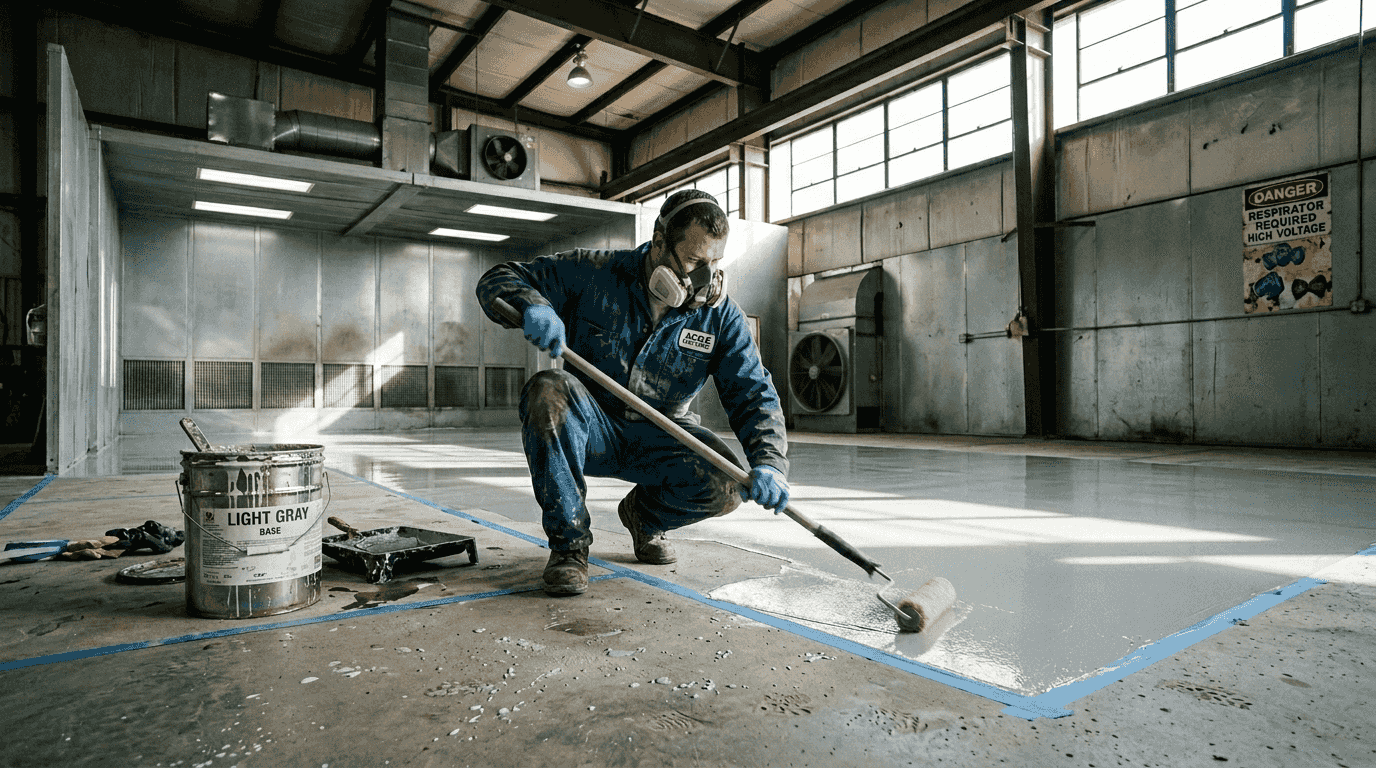
Epoxy formulations range from basic systems to advanced 100% solids variants. Higher solids content means greater durability and chemical resistance but increases material costs and installation complexity. Standard epoxy works well for moderate traffic and chemical exposure, while heavy-duty formulations handle extreme conditions in high-volume facilities. Cure times vary from 24 hours to several days depending on formulation and environmental conditions.
Concrete coatings designed specifically for automotive demands enhance existing floors without complete replacement. These treatments penetrate concrete pores, densifying the surface and reducing dusting while improving abrasion resistance. They offer cost advantages over full epoxy systems and shorter installation times, making them attractive for facilities with budget constraints or limited downtime windows.
High-pressure humidification systems take a different approach by controlling airborne dust effectively and improving paint quality. These systems stabilize humidity levels between 50-60%, causing dust particles to absorb moisture and settle rather than remaining airborne. Temperature regulation provides an additional benefit, creating optimal conditions for paint application and curing.
Pro Tip: Combine epoxy or concrete floor coatings with humidification systems for integrated dust control that addresses both surface and airborne contamination, delivering superior results compared to either solution alone.
Epoxy systems accept customization with anti-slip aggregates broadcast into the surface during installation. This modification adds texture for safety in wet or oily areas without creating pockets that trap contaminants. Broadcast density can be adjusted based on safety requirements and cleaning considerations. Strategic application in high-risk zones while maintaining smooth surfaces elsewhere optimizes both safety and cleanliness. Effective paint booth dust control methods integrate floor protection with comprehensive facility strategies.
Comparing floor protection solutions: performance, cost, and maintenance
| Solution | Abrasion Resistance | Chemical Resistance | Dust Control | Maintenance Frequency | Installation Cost | Expected Lifespan |
|---|---|---|---|---|---|---|
| Industrial Epoxy (100% solids) | Excellent | Excellent | Superior seamless surface | Monthly inspection, quarterly deep clean | High | 15-20 years |
| Standard Epoxy | Very Good | Good | Good seamless surface | Monthly inspection, bi-monthly clean | Moderate | 10-15 years |
| Concrete Coatings | Good | Moderate | Good densified surface | Bi-weekly inspection, monthly clean | Low to Moderate | 7-12 years |
| Humidification Systems | Not applicable | Not applicable | Excellent airborne control | Weekly filter check, monthly service | Moderate to High | 10-15 years |
Specialized industrial epoxy coatings lead in surface durability and reduce surface-related shutdowns by 78% compared to untreated concrete. This dramatic reduction stems from superior bonding, chemical resistance, and abrasion tolerance that prevent surface degradation and dust generation. Initial costs run higher, but extended lifespan and reduced maintenance create favorable return on investment for high-demand facilities.
Humidification systems offer unique advantages for airborne dust control and temperature stabilization that floor coatings cannot match. They work continuously to capture particles before settlement, improving air quality throughout the facility. Integration with existing HVAC systems requires professional design and installation. Operating costs include energy consumption, water usage, and filter replacement, balanced against improved paint quality and reduced rework.
Maintenance requirements vary significantly across solutions. Epoxy floors demand regular inspection for damage and periodic deep cleaning using appropriate methods that preserve the coating. Harsh chemicals or abrasive cleaning tools can damage surfaces and reduce lifespan. Concrete coatings require more frequent attention due to lower durability but accept standard cleaning equipment. Humidification systems need consistent filter maintenance and water quality monitoring to prevent mineral buildup and ensure optimal performance.
Cost-benefit analysis should consider total ownership expenses over expected lifespan:
- Initial installation investment including material, labor, and facility downtime
- Ongoing maintenance costs for cleaning, inspection, and repairs
- Energy and consumable expenses for active systems like humidification
- Avoided costs from reduced contamination, rework, and equipment damage
- Productivity gains from fewer shutdowns and faster cleaning cycles
Management teams evaluating ROI must account for both quantifiable expenses and qualitative benefits like improved worker safety and customer satisfaction. Effective spray booth maintenance workflow integration ensures floor protection investments deliver maximum value. Facilities achieving spray booth cleaning best practices find that proper floor protection dramatically reduces cleaning time and improves results.
Choosing the right floor protection strategy for your facility: situational guidance
-
Heavy chemical exposure and high traffic environments demand industrial epoxy with 100% solids formulation. Automotive body shops using aggressive solvents and experiencing constant vehicle movement need maximum durability. The higher initial investment pays dividends through extended service life and minimal maintenance interruptions.
-
High airborne dust conditions benefit most from combining humidification systems with coated flooring. Facilities struggling with dust settlement on freshly painted surfaces should address both floor and air quality. The integrated approach captures particles before they settle while preventing floor surfaces from generating additional contamination.
-
Budget-constrained operations can achieve significant improvements with high-performance concrete coatings paired with disciplined maintenance schedules. These systems deliver meaningful dust reduction and durability enhancement at lower cost than full epoxy installation. Success requires commitment to regular inspection and cleaning protocols.
-
Safety-critical facilities with wet processes or oil exposure should specify anti-slip epoxy variants. Broadcast aggregate additives provide traction without compromising the seamless, cleanable surface essential for dust control. Zone-specific application targets high-risk areas while maintaining smooth surfaces where safety concerns are lower.
-
Preventive maintenance and inspection practices extend floor life regardless of protection type chosen. Regular inspection of components identifies early damage before it escalates into contamination sources or safety hazards. Scheduled deep cleaning removes accumulated residues that degrade surfaces over time.
Pro Tip: Establish a maintenance schedule integrating cleaning frequency, system inspections, and performance monitoring tailored to your chosen protection strategy, documenting results to optimize protocols and justify future investments.
Implementation timing matters as much as technology selection. Schedule installation during planned shutdowns or low-production periods to minimize disruption. Epoxy systems require specific temperature and humidity conditions during application and cure, making seasonal planning important in facilities without climate control. Proper spray booth preparation steps include floor assessment and protection planning before coating work begins.
Vendor selection influences outcomes significantly. Experienced contractors understand automotive and industrial requirements, proper surface preparation, and application techniques that maximize performance. Request references from similar facilities and verify expertise with your chosen system type. Poor installation negates even premium materials. Facilities implementing comprehensive dust-free spray booth workflow recognize that floor protection forms one critical element of total contamination control.
Protect your facility with dust-free film floor solutions
Floor protection represents just one component of comprehensive dust control in automotive and industrial painting environments. While durable coatings and humidity systems address floor and air quality, booth surfaces require specialized protection to maintain pristine conditions between jobs.
Dust Free Film delivers premium protective films engineered specifically for spray booth applications since 2012. Our multi-layer electrostatic floor and wall protectors create seamless barriers against contamination while supporting efficient booth maintenance. The patented application system enables quick, bubble-free installation that minimizes downtime and maximizes protection.
Heat-resistant and static-free formulations withstand demanding industrial conditions while preventing particle attraction that compromises paint quality. European manufacturing standards ensure consistent performance across high-volume operations. Custom configurations and bulk purchasing options support facilities of any size.
Explore how Dust Free Film spray booth protection complements your floor protection strategy to create truly dust-free painting environments. Request a quote for floor protection solutions tailored to your facility’s specific requirements and operational goals. Our specialists help you select and implement integrated contamination control systems that deliver flawless finishes consistently.
Frequently asked questions about floor protection strategies
What are the best floor materials to reduce dust in automotive shops?
Industrial epoxy flooring and specialized concrete coatings provide the best dust reduction for automotive shops. Seamless epoxy surfaces eliminate cracks and joints where dust accumulates, while densified concrete treatments reduce surface dusting from abrasion. Both options outperform untreated concrete significantly.
How often should paint booth floors be cleaned to maintain dust-free conditions?
Paint booth floors require daily sweeping or vacuuming to remove loose particles, with deep cleaning weekly or bi-weekly depending on production volume. High-traffic facilities benefit from more frequent attention. Proper floor protection reduces cleaning time and improves effectiveness compared to bare concrete.
Can humidification systems really reduce airborne dust and improve paint quality?
Yes, high-pressure humidification systems effectively reduce airborne dust by maintaining 50-60% humidity levels that cause particles to absorb moisture and settle. This significantly improves paint quality by reducing contamination during application and curing. The systems also stabilize temperature for optimal coating performance.
What maintenance is required to keep industrial epoxy floors performing well?
Industrial epoxy floors need monthly visual inspections for damage, quarterly deep cleaning with pH-neutral cleaners, and immediate repair of any chips or cracks. Avoid harsh chemicals and metal scrapers that damage the coating. Proper maintenance extends lifespan to 15-20 years for quality installations.
Are anti-slip epoxy coatings suitable for areas with heavy chemical spills?
Anti-slip epoxy coatings handle chemical spills effectively when formulated with appropriate chemical resistance for your specific solvents and cleaners. The broadcast aggregate texture does not compromise chemical resistance, though it requires more thorough cleaning to remove residues from textured surfaces compared to smooth epoxy.