
TL;DR:
- High-durability films made from TPU and polyimide resist mechanical stress, chemicals, and environmental degradation for over 15 years. Proper film selection, adhesive compatibility, and surface orientation are critical for optimal performance in industrial spray booths. Using engineered multi-layer films reduces maintenance costs, extends service life, and enhances operational efficiency.
High-durability film is defined as an engineered polymeric protective material designed to resist mechanical stress, chemical exposure, and environmental degradation for 15 years or more in industrial service. In spray booth environments, understanding what is high-durability film separates facilities that protect their surfaces once from those that replace protection every few months. These films use base materials like thermoplastic polyurethane (TPU) and polyimide (PI), both chosen for molecular stability under conditions that destroy standard plastic sheeting. Dustfreefilm has built its entire product line around this material science, manufacturing multi-layer booth wall and floor protectors that meet the demands of automotive refinishing and industrial painting operations.
What material properties distinguish high-durability films?
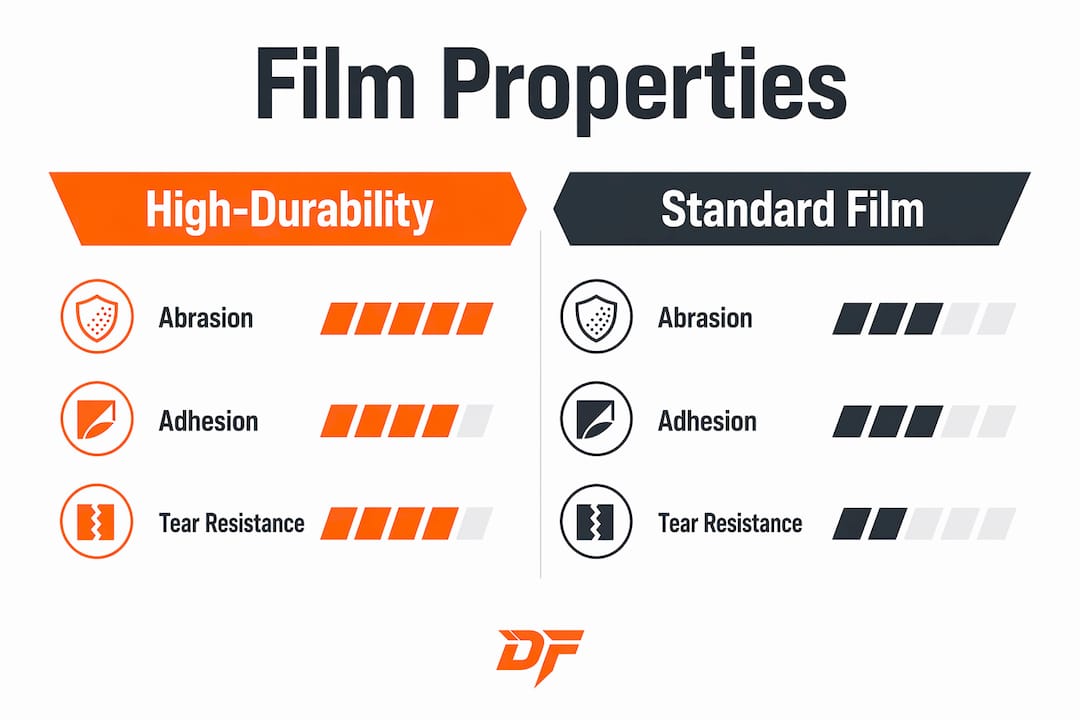
High-durability film earns its classification through measurable physical performance, not marketing claims. The two most critical metrics are abrasion resistance and fold endurance. TPU films show abrasion loss as low as 4mg, compared to 280mg for neoprene. High-modulus polyimide films record zero scratches after 2,500 continuous folding cycles. Those numbers reflect real-world spray booth conditions where films flex around corners, absorb overspray impact, and endure foot traffic.
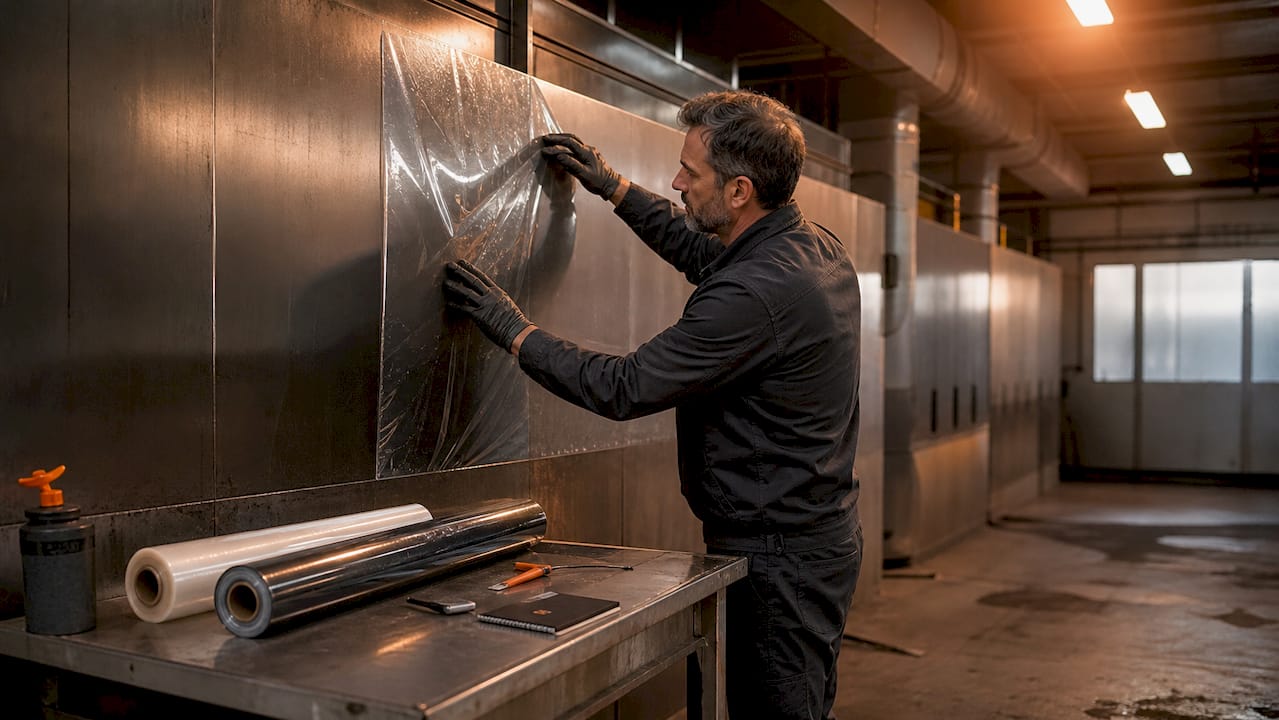
Core materials and their roles
Three polymer families dominate high-performance film types used in industrial protection:
- Thermoplastic polyurethane (TPU): Combines flexibility with exceptional abrasion resistance. TPU bonds well to a wide range of substrates and tolerates solvent exposure without delaminating.
- Polyimide (PI): Preferred where thermal cycling is severe. PI films maintain structural integrity at temperatures that cause standard polyester to warp or shrink.
- Polyester (PET): The most common base for general-purpose protective films. PET offers good tensile strength and UV resistance at lower cost, though it falls short of TPU and PI under heavy mechanical load.
Molecularly stable polymer surfaces in films like polyester and TPU resist solvents, UV radiation, and abrasion in ways that standard paper or plastic stocks cannot match. This molecular stability is what makes these films viable for spray booth walls, where isocyanate-based coatings and solvent vapors are constant.
Adhesive compatibility matters as much as the film itself
The film base is only half the equation. Film failure most often results from incompatible adhesives causing edge lifting on low surface energy substrates like powder-coated steel, not from the film material itself. Spray booth walls are frequently powder-coated. A film with outstanding abrasion resistance will still peel within weeks if the adhesive is not matched to that surface energy profile.
Pro Tip: Before committing to a film product for your booth, test adhesion on a small section of the actual substrate. Powder-coated surfaces vary significantly in surface energy depending on the coating chemistry used.
Multi-layer engineered films with superior tear propagation resistance and tensile strength consistently outperform thicker single-layer films under heavy industrial loads. Thickness alone does not predict performance. A 50-micron multi-layer film engineered for load distribution will outlast a 100-micron monolithic film in a high-traffic spray booth floor application.
| Property | High-Durability Film | Standard Film |
|---|---|---|
| Abrasion loss (TPU) | 4mg | 150–280mg |
| Fold endurance (PI) | 2,500+ cycles, zero scratches | Fails at 200–400 cycles |
| Solvent resistance | High (molecular stability) | Low to moderate |
| Service life | 15–20 years | 2–5 years |
| Adhesive compatibility | Engineered for substrate | Generic |
How do high-durability films meet industrial standards?
ISO 12944 durability classes define three performance tiers: low (2–5 years to first major maintenance), medium (5–15 years), and high (exceeding 15 years). These classifications apply directly to protective coatings and films used in industrial environments. A film claiming high-durability status must demonstrate performance consistent with the high tier under ISO 12944 testing protocols.
Testing for industrial film certification typically covers four areas:
- Abrasion resistance: Measured by material loss in milligrams under standardized friction loads. TPU films at 4mg loss set the benchmark.
- Chemical exposure: Films are subjected to solvents, acids, and alkalis at defined concentrations and durations to verify resistance.
- Thermal cycling: Repeated temperature shifts between extremes test for delamination, cracking, and dimensional change.
- UV degradation: Accelerated weathering chambers simulate years of UV exposure to confirm color stability and surface integrity.
“Durability ratings are performance targets, not guarantees. Facility managers should apply lifecycle cost analysis to justify initial investment by calculating the reduction in maintenance downtime over the film’s service life.”
This distinction matters for budget conversations. A film rated for 15–20 years of service life does not come with a 15-year warranty. The rating reflects expected performance under the specific exposure conditions used during testing, typically vertical surfaces in controlled environments. Horizontal applications, like spray booth floors, operate under different stress conditions entirely.
Films designed for vertical exposures can lose 50–70% of their expected durability when applied horizontally. That is not a minor caveat. It means a film rated for 15 years on a wall may perform for only 4–7 years on a floor under the same conditions. Spray booth floors require films specifically engineered and tested for horizontal, high-traffic use.
What are the benefits of high-durability films in spray booths?
The operational case for protective films in spray booths comes down to three factors: protection quality, maintenance frequency, and total cost over time.
Protection against the spray booth environment
Spray booths expose surfaces to a combination of stressors that few materials handle well simultaneously. High-durability films address each one:
- Overspray accumulation: Film surfaces capture paint particles without absorbing them into the substrate. Replacement is faster and cleaner than stripping paint from bare walls.
- Abrasive particle impact: Sanding dust and media blasting residue abrade unprotected surfaces. TPU-based films absorb this impact without surface degradation.
- Chemical exposure: Isocyanates, thinners, and activators in modern coatings attack standard plastics. Films with weather-resistant stabilizers and scratch-resistant finishes maintain integrity through repeated chemical contact.
- Thermal stress: Spray booths cycle between ambient and curing temperatures, sometimes exceeding 140°F. Films engineered for thermal cycling prevent the bubbling and peeling that disrupt paint quality.
Operational efficiency and cost reduction
Extended service life directly reduces the frequency of booth shutdowns for maintenance. A facility replacing standard film every 6 months loses roughly 12 shutdown cycles per year to film changeover. A high-durability film on the same walls, changed once every 2–3 years, cuts that number by 75–80%. That difference translates directly into production hours recovered.
Lifecycle resource efficiency from high-durability films also reduces total material waste. Fewer replacements mean less plastic disposed of per year, which supports sustainability reporting requirements increasingly common in manufacturing operations.
Pro Tip: Track your booth’s film replacement log for 12 months before switching to high-durability film. That baseline makes the ROI calculation concrete and defensible when presenting the investment to management.
For a deeper look at how film choice affects booth output quality, Dustfreefilm’s overview of spray booth efficiency covers the operational side in detail.
How to choose and apply high-durability films effectively
Selecting the right film starts with four criteria specific to your facility:
- Substrate type: Identify whether booth walls are powder-coated steel, galvanized metal, or painted concrete. Each requires a different adhesive profile.
- Surface energy: Low surface energy substrates need adhesives specifically formulated for that condition. Standard acrylic adhesives will fail on powder-coated surfaces within weeks.
- Environmental stressors: Catalog the chemicals used in your booth. Solvent-borne coatings demand higher chemical resistance than waterborne systems.
- Mechanical load: Floor films face foot traffic, cart wheels, and dropped equipment. Wall films face overspray and occasional contact. These require different tensile and tear resistance specifications.
Installation and maintenance best practices
Edge sealing is the single most overlooked step in film installation. Unsealed edges allow solvent vapors to migrate under the film, weakening the adhesive bond from the inside. Use a compatible edge sealant rated for the chemicals present in your booth.
Film thickness selection follows a counterintuitive rule: thicker is not always better. Tensile strength and tear propagation resistance matter more than raw thickness in high-load environments. A multi-layer 75-micron film engineered for industrial use will outperform a 150-micron commodity film on a spray booth floor.
| Application Zone | Recommended Film Type | Key Property Priority |
|---|---|---|
| Booth walls | TPU or PET multi-layer | Chemical resistance, overspray release |
| Booth floor | Specialized floor-grade film | Tear resistance, anti-slip surface |
| Equipment surfaces | PI or TPU | Thermal tolerance, abrasion resistance |
| Ceiling panels | Lightweight PET | UV stability, static control |
For a comprehensive comparison of floor protection options for industrial painting, Dustfreefilm’s 2026 review covers current ratings and specifications.
Key takeaways
High-durability film is the only protective solution that delivers 15-plus years of spray booth surface protection when matched correctly to substrate, adhesive, and exposure conditions.
| Point | Details |
|---|---|
| Material selection drives performance | TPU and PI films outperform standard plastics by measurable margins in abrasion and fold endurance. |
| Adhesive compatibility is critical | Edge lifting from adhesive mismatch causes more film failures than base material defects. |
| Orientation changes durability ratings | Films rated for vertical use lose 50–70% of expected life when applied horizontally on floors. |
| Standards guide, not guarantee | ISO 12944 high-durability classification targets 15-plus years under specific test conditions, not all real-world scenarios. |
| Multi-layer beats monolithic | Engineered multi-layer films distribute load better and resist puncture more effectively than thicker single-layer alternatives. |
What i’ve learned after years in spray booth film selection
The specification sheet rarely tells the full story. I’ve seen facilities purchase films with impressive abrasion ratings, install them on powder-coated walls without testing adhesive compatibility, and watch them peel within 90 days. The film itself was fine. The adhesive-substrate match was wrong.
The most consistent mistake I observe is treating durability as a single number. A film rated for 15 years on a vertical wall is not a 15-year film on a spray booth floor. That distinction costs facilities real money when they discover it after installation rather than before.
TPU technology has advanced significantly in recent years. Films that once required specialized handling now install with standard dispenser systems, and their chemical resistance profiles have expanded to cover the newer waterborne and high-solid coatings that older TPU formulations struggled with. That shift makes high-durability film accessible to smaller auto body shops, not just large industrial painting operations.
The sustainability angle is also becoming a real operational consideration. Facilities with environmental compliance requirements are tracking material waste more carefully. Replacing a booth film once every two years instead of six times a year is a number that shows up in sustainability reports and procurement audits. That makes the investment case easier to build internally.
My honest recommendation: start with a material durability assessment of your current booth setup before selecting a film. Know your substrates, your chemicals, and your traffic patterns. Then match the film to those conditions rather than buying on price or thickness alone.
— Dust
Protect your spray booth with Dustfreefilm
Dustfreefilm has specialized in spray booth protective films since 2012, manufacturing multi-layer wall and floor protectors built for the chemical, thermal, and mechanical demands of automotive refinishing and industrial painting.
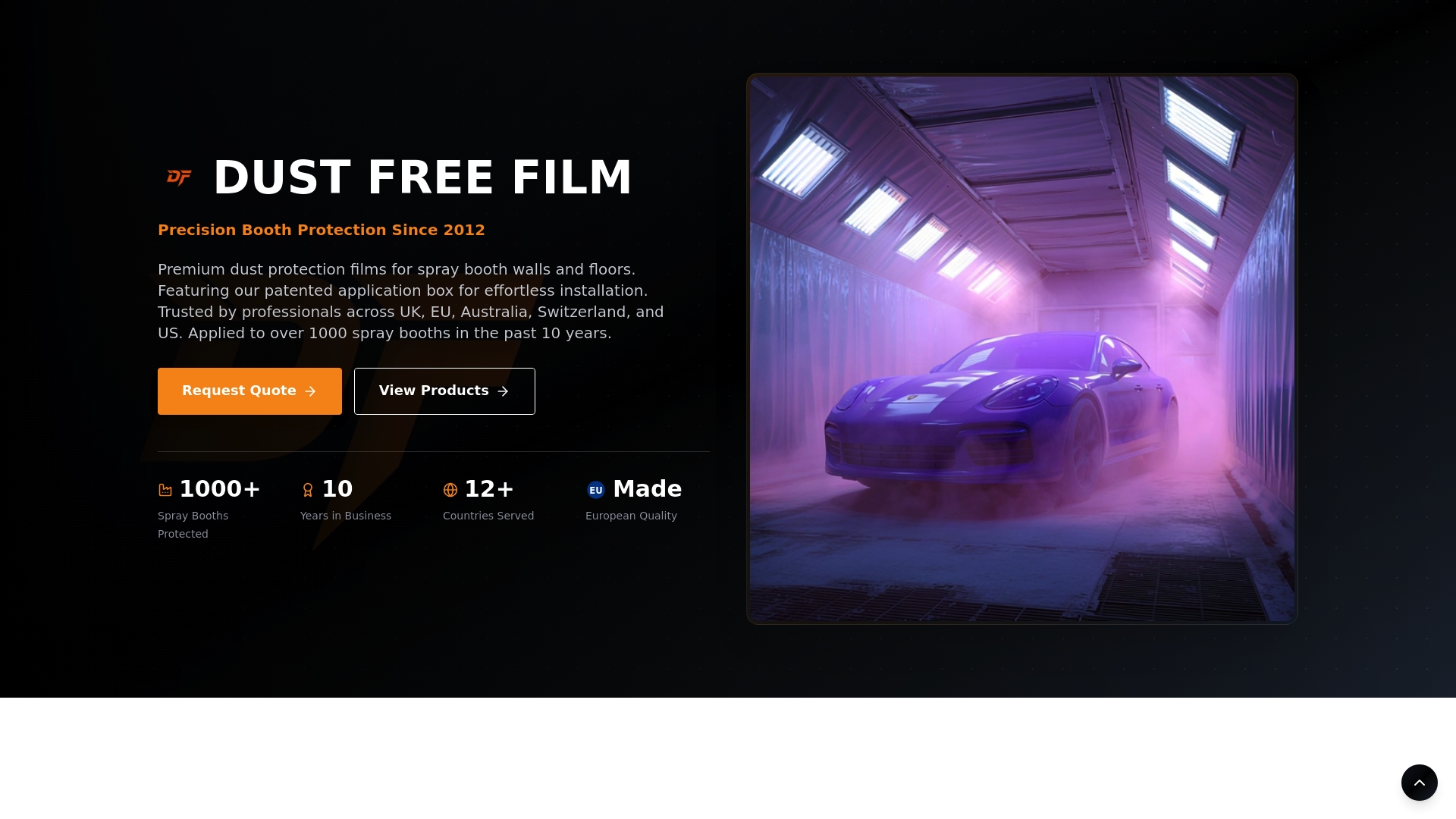
Their products combine heat resistance, static control, and adhesive systems engineered for the low surface energy substrates common in spray booths. The patented dispenser system allows quick, bubble-free installation, reducing changeover time and keeping your booth in production. Whether you manage a single auto body shop or a multi-line industrial painting facility, Dustfreefilm offers spray booth protection solutions scaled to your operation. Ready to specify the right film for your booth? Request a quote and get product recommendations matched to your facility’s specific conditions.
FAQ
What is high-durability film in industrial settings?
High-durability film is an engineered polymeric protective material, typically made from TPU, polyimide, or polyester, designed to resist abrasion, chemicals, and thermal stress for 15 or more years under ISO 12944 high-durability classification standards.
Why use high-durability films instead of standard plastic sheeting?
Standard plastic sheeting requires replacement every few months in spray booth environments. High-durability films reduce replacement frequency by 75–80%, cutting maintenance downtime and total material costs over the facility’s operating life.
How does film orientation affect durability in spray booths?
Films rated for vertical wall applications lose 50–70% of their expected service life when applied horizontally on floors. Spray booth floors require films specifically tested and rated for horizontal, high-traffic use.
What causes high-durability film to fail prematurely?
Adhesive incompatibility with low surface energy substrates like powder-coated steel is the leading cause of premature film failure, producing edge lifting before the film base material shows any degradation.
Are multi-layer films better than thick single-layer films for spray booths?
Multi-layer engineered films outperform thicker monolithic films in spray booth applications because tensile strength and tear propagation resistance matter more than raw thickness under the mechanical loads present in active booths.