
TL;DR:
- Choosing the correct dust protection film is essential to prevent paint defects, residue, and costly rework during industrial painting. Proper selection requires matching the film’s adhesive tack, thickness, and environmental resistance to specific surface types and operational conditions. Using the right film ensures optimal protection, ease of application, and high-quality finishes in spray booth environments.
Dust protection film is defined as a temporary adhesive surface covering applied to spray booth walls, floors, and equipment to prevent contamination during automotive refinishing and industrial painting. Choosing the wrong film is not a minor inconvenience. It causes paint defects, adhesive residue, and costly rework that erodes both finish quality and operational efficiency. The right film selection depends on matching material type, adhesive tack, thickness, and environmental conditions to your specific application. This guide gives you the criteria to make that decision with confidence.
How to choose dust protection film: key selection factors
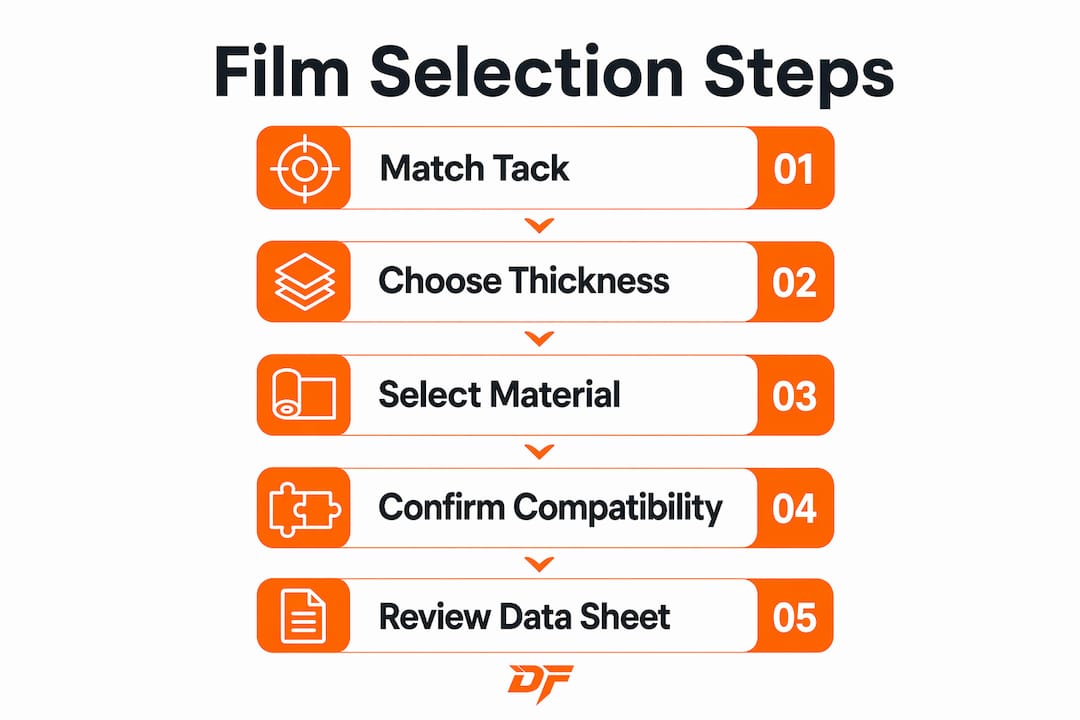
The most important decision in protective film selection is matching adhesive tack level to the surface you are protecting. Delicate surfaces need low-tack adhesives; rough or high-traffic surfaces require high-tack adhesives. Getting this wrong causes two distinct failures: low-tack film lifts off rough surfaces mid-job, and high-tack film tears or leaves residue on sensitive substrates like freshly painted panels.
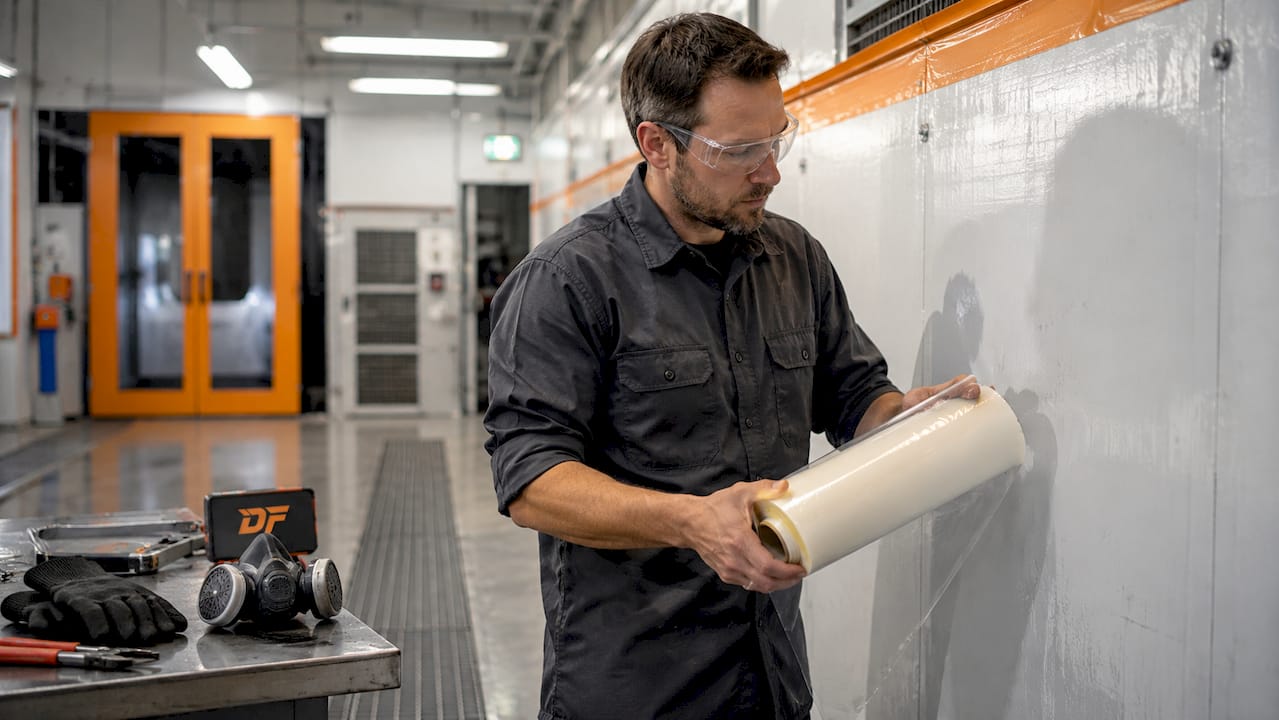
Film thickness is the second critical variable. Industry standards define thickness by environment: 50–70 µm for indoor use, 70–100 µm for outdoor exposure, and 90–150 µm for construction-grade applications. Spray booth wall and floor films typically fall in the 50–100 µm range depending on traffic load and reuse cycles.
Environmental conditions determine whether you need UV stabilization. Outdoor films must be UV stabilized and removed within the manufacturer’s recommended window. Exceeding that window significantly increases adhesive residue risk, which means more surface prep time and potential substrate damage.
Key selection criteria to evaluate before purchasing:
- Surface type: Smooth painted panels, textured booth walls, and concrete floors each require different tack levels and film flexibility.
- Adhesive tack: Low-tack for freshly coated or delicate surfaces; medium-tack for standard booth walls; high-tack for rough concrete or metal floors.
- Film thickness: Match to traffic intensity and whether the film will be single-use or multi-layer.
- UV and heat resistance: Required for any film exposed to curing lamps or outdoor light during the protection period.
- Duration of protection: Short-term jobs (hours to days) tolerate a wider range of adhesives; long-term applications demand UV-stable, low-residue formulations.
Pro Tip: Always request a technical data sheet from the supplier before ordering. Confirm the tack rating, temperature resistance range, and maximum recommended exposure time in writing. These three numbers alone eliminate most poor purchasing decisions.
Which film type is best for automotive and industrial use?
Not all protective films are built from the same material, and the differences matter in practice. The table below compares the three primary film types used in automotive and industrial spray booth environments.
| Film type | Material | Best use case | Key advantage | Key limitation |
|---|---|---|---|---|
| PE (polyethylene) | Flexible plastic | Booth walls, floors, general surfaces | Low cost, residue-free removal, easy to apply | Less impact resistance than PET |
| PET (polyester) | Rigid plastic | High-wear floors, machinery surfaces | High scratch and chemical resistance | Less conformable on curved surfaces |
| PU (polyurethane) | Elastic film | Curved panels, complex geometry | Excellent conformability and self-healing | Higher cost per square meter |
PE adhesive protective film dominates the market because it combines ease of application with residue-free removal. That combination makes it the default choice for spray booth wall and floor protection in most auto body shops and industrial facilities.
Anti-static films serve a specific and often overlooked function. In spray booths, airborne dust particles are attracted to statically charged surfaces. Anti-static film neutralizes that charge, reducing dust adhesion to booth walls and improving the cleanliness of the spray environment. This is particularly relevant in powder coating operations and facilities painting electronics housings.
PU films are the right call for curved automotive body panels or complex surface geometry. Thicker films reduce conformability and cause bubbles on curved surfaces. PU’s elasticity allows it to stretch and conform without lifting at edges, which is a persistent problem with standard PE film on compound curves.
Films with air-release channels and low-tack adhesive are the most efficient choice for high-volume spray booth operations. Air-release channels enable bubble-free installation, cutting labor time significantly on large wall and floor surfaces. For facilities running multiple paint cycles per day, that time saving compounds quickly across a week of operations.
How to evaluate film quality before you buy
Quality verification is not optional when your finish depends on what is under the film. A structured evaluation process prevents costly surprises after large-scale installation.
- Request a sample roll. Apply the film to a representative surface in your booth before committing to a full order. Check adhesion uniformity, edge seal, and whether the film lies flat without lifting.
- Run a scratch resistance test. Scratch resistance is verified by a 3H pencil hardness test applying 500g of force across 10 passes without visible surface damage. This confirms the film will survive normal booth traffic without tearing or abrading.
- Test adhesive residue risk. Apply film to a small area first and remove it after the intended exposure period. Inspect the substrate for any adhesive transfer or surface marking before scaling up.
- Evaluate optical clarity. For applications where visibility matters during the paint process, confirm the film does not distort color perception or create glare under booth lighting.
- Check chemical resistance. Spray booth environments involve solvents, thinners, and cleaning agents. Confirm the film’s chemical resistance rating covers the specific products used in your facility.
Pro Tip: Ask your supplier for third-party test reports, not just spec sheets. Independent lab results on adhesion strength and UV stability are far more reliable than marketing claims printed on a product brochure.
Standardizing your film specification across a facility is one of the most underrated quality control moves available. When every technician uses the same film with the same tack level and thickness, application errors drop and removal becomes predictable. Variation in film type is a hidden source of inconsistent finishes.
Best practices for applying and removing protective film
Surface preparation is the single most controllable variable in film performance. Film applied to dusty or damp surfaces traps contaminants and causes adhesion failure, surface degradation, and a phenomenon known as “ghosting,” where adhesive residue leaves a permanent mark on the substrate. Clean, dry surfaces at stable ambient temperature are non-negotiable before any film goes down.
Application best practices for spray booth environments:
- Clean the surface thoroughly with a lint-free cloth and appropriate solvent before application. Remove all dust, grease, and moisture.
- Control ambient temperature. Apply film at room temperature (ideally 60–80°F). Cold surfaces reduce adhesive contact; hot surfaces accelerate adhesive bonding and increase residue risk on removal.
- Apply immediately after surface finishing. Prompt application after surface prep reduces contamination between cleaning and film placement.
- Use a squeegee or roller to press the film flat from the center outward, eliminating air pockets without stretching the film.
- Overlap film edges by at least 1 inch on seams to prevent dust infiltration at joints.
- Remove film within the recommended exposure window. Leaving film in place beyond the manufacturer’s stated period increases adhesive bonding strength and residue risk, particularly under heat or UV exposure.
For spray booth installation guidance, the removal angle matters as much as timing. Pull the film back at a 45-degree angle rather than straight up. This reduces the peel force required and minimizes the risk of adhesive transfer to the substrate.
Choosing between low-tack and high-tack film for removal ease is a direct tradeoff. Low-tack films remove cleanly and quickly, which is the right choice for freshly painted surfaces and high-turnover booths. High-tack films hold more securely under mechanical stress but require more careful removal and carry higher residue risk if left too long.
Key Takeaways
Choosing the right dust protection film requires matching film type, adhesive tack, thickness, and environmental compatibility to your specific spray booth surface and operational demands.
| Point | Details |
|---|---|
| Match adhesive tack to surface | Low-tack for delicate or freshly coated surfaces; high-tack for rough floors and walls. |
| Select thickness by environment | Use 50–70 µm indoors, 70–100 µm outdoors, and 90–150 µm for heavy-duty applications. |
| Test before full installation | Apply a sample patch and check for residue, adhesion, and clarity before ordering in bulk. |
| Prioritize air-release films | Films with air-release channels cut installation labor time and reduce bubble-related defects. |
| Remove within the exposure window | Exceeding the manufacturer’s removal deadline significantly increases adhesive residue risk. |
What I’ve learned from watching shops get film selection wrong
The most common and expensive mistake I see in spray booth operations is treating film selection as a purchasing decision rather than a process decision. A shop manager orders the cheapest PE film available, the technicians apply it to warm booth walls after a curing cycle, and three days later the film tears on removal and leaves adhesive residue across 40 square feet of wall surface. The rework cost is ten times the price difference between that film and the correct specification.
The second mistake is ignoring conformability on curved surfaces. Shops that protect vehicle panels with standard flat PE film on compound curves end up with lifted edges within hours. Those lifted edges become dust traps, which defeats the entire purpose of the film. A thinner PU film or a properly specified low-tack PE film with air-release channels solves this, but only if someone on the team understands why the specification matters.
My honest view is that protective film use is a standard process step, not an optional cost. Facilities that treat it as optional spend more on surface rework, cleaning, and defect correction than they would ever spend on proper film. The math is not close.
The shops that get this right treat film selection the same way they treat paint selection. They specify the product, train the team on application, and audit the results. That discipline is what separates facilities with consistent finish quality from those that blame dust and environmental factors for problems that are actually process failures.
For a deeper look at how film choice connects to overall booth performance, the spray booth efficiency guide from Dustfreefilm covers the operational side in detail.
— Dust
Dustfreefilm solutions for spray booth dust control
Dustfreefilm has manufactured spray booth protective films to European standards since 2012, with a product range built specifically for the demands of automotive refinishing and industrial painting facilities.
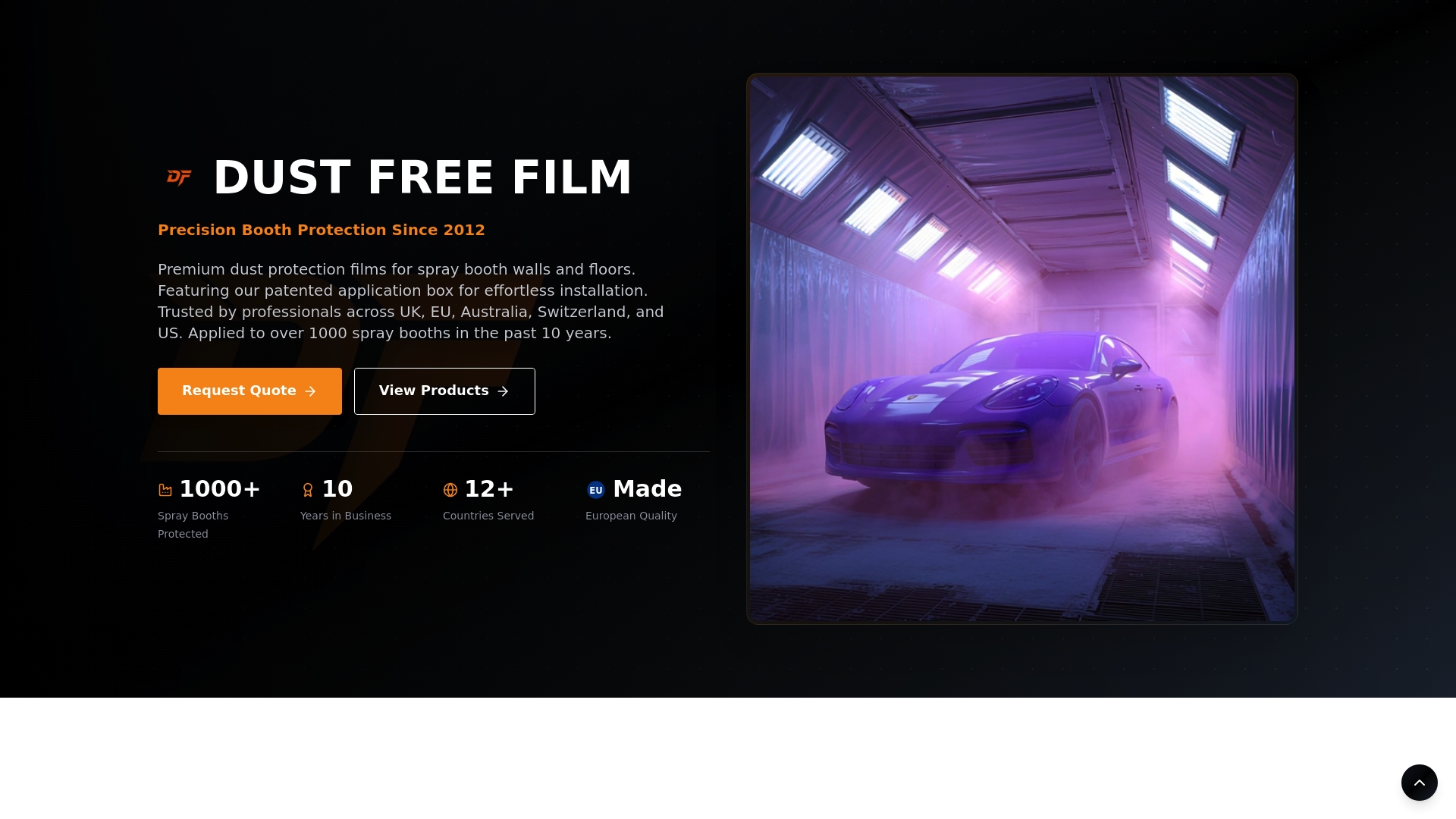
Their multi-layer wall and floor films feature a patented dispenser system that enables fast, bubble-free installation without specialized tools. The films are heat-resistant, static-free, and formulated for clean removal within standard booth operating cycles. For high-volume facilities, Dustfreefilm offers custom configurations and bulk purchasing options that reduce per-unit cost without compromising film specification. Whether you are protecting booth walls, floors, or equipment surfaces, their spray booth protection products are built to the tolerances that professional finishing operations require. Contact Dustfreefilm directly to request a quote tailored to your facility’s volume and surface requirements.
FAQ
What is dust protection film used for in spray booths?
Dust protection film is a temporary adhesive film applied to spray booth walls, floors, and surfaces to prevent dust, overspray, and contamination from affecting paint finishes. It is a standard process step in automotive refinishing and industrial painting operations.
What film thickness should I use for indoor spray booths?
Industry standards specify 50–70 µm for indoor environments. Higher-traffic booth floors may warrant 70–100 µm for added durability and resistance to foot and equipment contact.
How do I know if a film will leave adhesive residue?
Apply the film to a small test area and remove it after your intended exposure period before committing to full installation. UV-stabilized films removed within the manufacturer’s recommended window carry the lowest residue risk.
What is the difference between PE and PU protective film?
PE film is flexible, cost-effective, and ideal for flat booth surfaces with residue-free removal. PU film is more elastic and conforms to curved surfaces without lifting at edges, making it the better choice for complex automotive panel geometry.
How does anti-static film improve spray booth performance?
Anti-static film neutralizes electrostatic charge on booth surfaces, which reduces dust particle attraction during the painting process. This is particularly effective in powder coating operations and facilities where airborne contamination is a persistent quality issue.