

TL;DR:
- Proper protective film selection and application are essential for maintaining a clean spray booth environment.
- Regular inspection, maintenance, and timely replacement of films prevent contamination and ensure finish quality.
- Workflow integration and process discipline often outweigh premium film features in achieving dust-free results.
A single dust particle landing on a freshly sprayed panel can mean hours of rework, wasted materials, and a delayed delivery. For auto body shops and industrial painting facilities, paint defects from booth contamination are not just annoying, they are expensive. The right protection film is the foundation of a clean, efficient spray booth environment. This guide walks you through every stage: understanding what technical properties matter, selecting the correct film type, applying it correctly, and maintaining it for consistent results. Follow this process and you will see fewer rejects, faster turnaround, and a measurable improvement in finish quality.
Table of Contents
- Understanding the core requirements for spray booth protection films
- prepare your tools and choose the right film type
- Step-by-step process to apply protection films
- inspect, maintain, and replace protection films for consistent results
- why the best protection film comes down to workflow fit, not just specs
- upgrade your paint operations with proven protection solutions
- frequently asked questions
Key Takeaways
| Point | Details |
|---|---|
| Know the key criteria | Heat resistance, balanced adhesion, and anti-static properties are must-haves for spray booth protection films. |
| Choose the right film type | Select films matched to your booth’s workflow, paint system, and application environment for best results. |
| Follow a proven application process | Step-by-step preparation and careful installation are required for clean, dust-free outcomes. |
| Maintain and inspect regularly | Routine checks and timely replacement ensure ongoing effectiveness in dust and overspray control. |
| Workflow beats specs alone | The best technical film underperforms if it doesn’t suit your team’s real-world habits and maintenance cycles. |
Understanding the core requirements for spray booth protection films
Not every film that ships in a roll is suitable for a spray booth. The environment is demanding: high temperatures during curing cycles, airborne paint mist, solvent exposure, and heavy foot traffic on floors. A film that works fine in general packaging or surface masking may fail completely inside a heated booth. When choosing protective films for your operation, you need to evaluate several technical properties at once.
The key criteria for protection films include heat resistance, balanced adhesion, overspray retention, conformability, clean removal, and anti-static properties. Each of these plays a specific role:
- Heat resistance: Films must hold up to curing ovens and infrared lamps, which can reach 140°F to 185°F (60°C to 85°C). A film that warps, melts, or releases adhesive at these temperatures will contaminate your paint job rather than protect it.
- balanced adhesion: Strong enough to stay flat against walls and floors during operation, but designed to peel off cleanly without tearing or leaving residue. Any sticky residue becomes a magnet for dust.
- overspray retention: Corona treatment, a process that raises the surface energy of the film, dramatically improves a film’s ability to grab and hold airborne paint mist before it settles elsewhere in the booth.
- Anti-static surface: Static charges attract dust. Anti-static films actively repel airborne particles, keeping the surface cleaner for longer between changes.
- Surface conformability: A film that molds tightly to wall panels, corners, and floor seams leaves no gaps. Air gaps are dust traps.
Think of enhancing spray booth quality as a system, not a single product decision. Every property on the list above works together. A highly heat-resistant film that leaves adhesive residue will still contaminate your next job.
Pro tip: Always request a product data sheet and confirm the film’s rated temperature ceiling against the peak temperatures your curing equipment reaches. A 10°F mismatch can cause film failure mid-job.
One more factor shops often overlook: different paint chemistries, particularly waterborne basecoats and aggressive solvent clears, react differently with adhesive layers. Request compatibility documentation from the manufacturer before committing to a bulk order.
prepare your tools and choose the right film type
With an understanding of required properties, you are ready to assemble what you need and decide which film types best fit your operation.
Before touching a roll of film, gather your prep materials. You will need:
- Surface cleaning solution and clean lint-free cloths
- Chemical-resistant gloves
- A hard rubber squeegee or application roller
- A sharp utility knife and cutting rail for clean edges
- A tape measure and chalk line for alignment
With tools ready, the next decision is film type. Not all films are built the same, and the difference in performance is significant across product categories.
| Film type | durability | Cost | residue risk | ease of removal | Best for |
|---|---|---|---|---|---|
| Standard PE film | Low | Low | Medium | Easy | Short-run or low-heat booths |
| Corona-treated PE | Medium | Medium | Low | Easy | Active spray booths with overspray concerns |
| Multi-layer film | High | Medium-High | Very low | Easy with dispenser | High-traffic booths, wall systems |
| Anti-static film | Medium-High | Medium | Low | Easy | Fine-finish environments, aluminum dust risk |
Multi-layer systems offer a particular operational advantage: instead of removing and reapplying an entire film sheet, you simply peel off the top soiled layer, exposing a fresh surface underneath. For busy shops running multiple jobs per day, this saves significant time. You can see application examples across different booth types to understand which format fits your setup best.
Film material durability also determines how well a product holds up under solvent exposure and repeated thermal cycling. A film that degrades chemically will shed microparticles, which land directly in your finish.
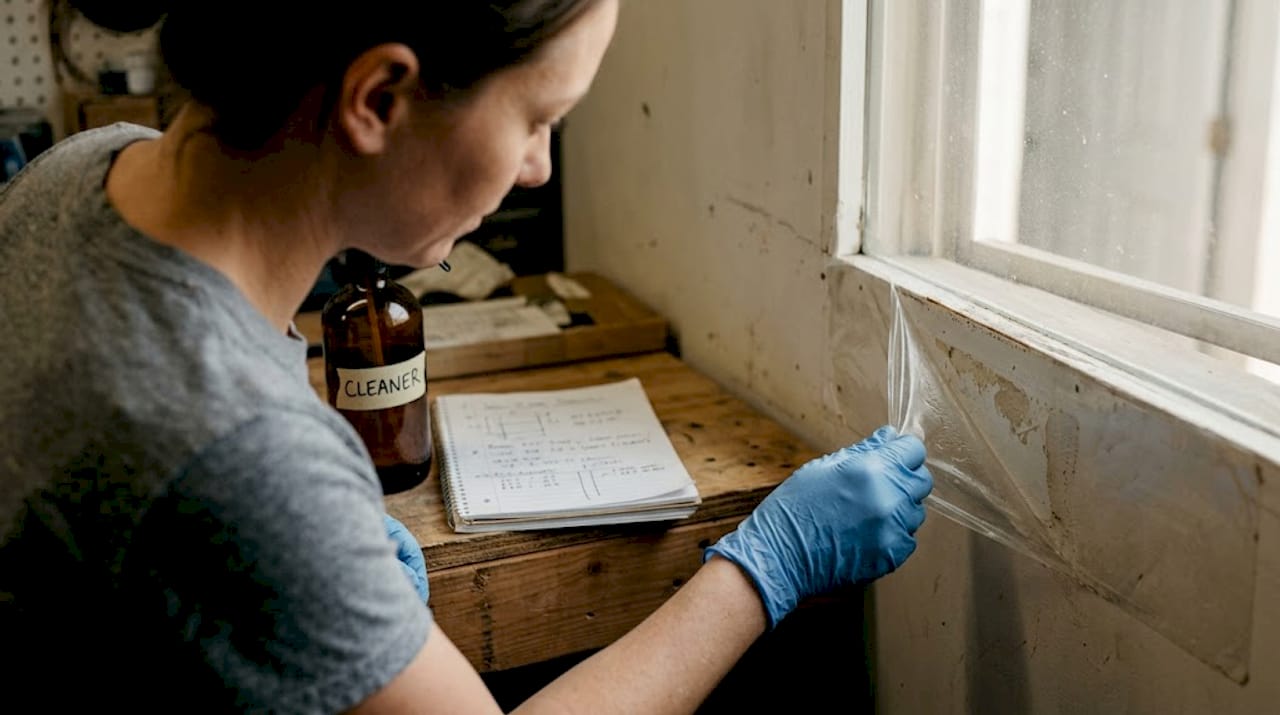
The expert compatibility advice here is clear: verify film compatibility with your specific paint chemistry and booth operating temperatures, and treat corona treatment as non-negotiable for active spray environments.
Pro tip: Match your film change schedule to your painting schedule, not just the calendar. A shop running waterborne metallic finishes five days a week needs a more aggressive replacement interval than one running clears twice a week.
Step-by-step process to apply protection films
Once the optimal product and tools are ready, careful application is the next crucial step.
- Clean the surface. Remove all dust, grease, and old adhesive from walls and floors using a degreaser and lint-free cloths. This is not optional. Any contamination beneath the film will cause adhesion failure and create dust pockets.
- align your starting edge. Use a chalk line or tape measure to mark a straight reference line. Starting crooked compounds across a long run.
- unroll and apply in sections. Work in manageable sections of 3 to 5 feet. Do not unroll the entire width at once. Keep one hand on the backing while the other positions the film.
- contour and squeegee. Use your rubber squeegee or roller in overlapping strokes from the center outward. This pushes air to the edges and ensures full contact with the surface. For a detailed step-by-step application reference, the process is the same whether you are covering walls or floors, but floor work requires more pressure and knee pads.
- seal all edges. Press edges firmly and use a trim knife to cut flush at seams and corners. Open edges curl, catch overspray, and eventually peel.
| Step | Goal | Tools needed | Time per sq. meter |
|---|---|---|---|
| Surface cleaning | Remove contamination | degreaser, cloths | 3-5 min |
| alignment | Even coverage, no gaps | chalk line, tape | 1-2 min |
| application | Full adhesion | squeegee, film roll | 4-6 min |
| contouring | No air bubbles | roller, squeegee | 2-3 min |
| Edge sealing | prevent peeling | trim knife, roller | 1-2 min |
For floor protection tips, pay extra attention to drain covers and threshold strips where film tends to lift under vehicle or cart traffic.
Warning: rushing surface prep is the most common cause of poor adhesion. A film applied over dust or residue will lift within hours, creating edges that trap contamination and defeat the entire purpose of the protection system.
The overspray retention with corona treatment is only effective when the film is properly bonded. A peeling edge bypasses the surface entirely. After full application, walk the booth systematically, pressing any lifted sections and trimming loose edges before the first spray cycle.
inspect, maintain, and replace protection films for consistent results
Proper application is not the end. ongoing maintenance ensures you get maximum value and performance from your protection films.
Even the best film eventually needs replacing. The challenge is knowing when. Many shops wait until there is an obvious problem, like a paint defect traced back to flaking film, before taking action. A proactive approach prevents that entirely.
Signs it is time to replace your protection film:
- yellowing or discoloration from UV exposure or thermal cycling, which indicates material degradation
- peeling or lifted edges, even in isolated spots, because they allow airborne particles underneath
- visible residue or tackiness on the film surface, which attracts and holds dust
- reduced overspray capture, noticeable when more mist settles on surfaces instead of the film
- tearing or punctures from tools, cart wheels, or normal wear
For dust-free booth protection, schedule routine inspections before the start of each shift, not just at week’s end. A film that fails Monday afternoon contaminates jobs through Friday if no one catches it.
Clean removal without residue is critical to preventing secondary contamination. When peeling, work slowly at a low angle rather than pulling straight out. Fast removal tears the adhesive layer and deposits residue that must be cleaned before the next film goes down.
For ensuring dust-free results across your entire operation, standardize your replacement process with a written checklist that your team follows every time.
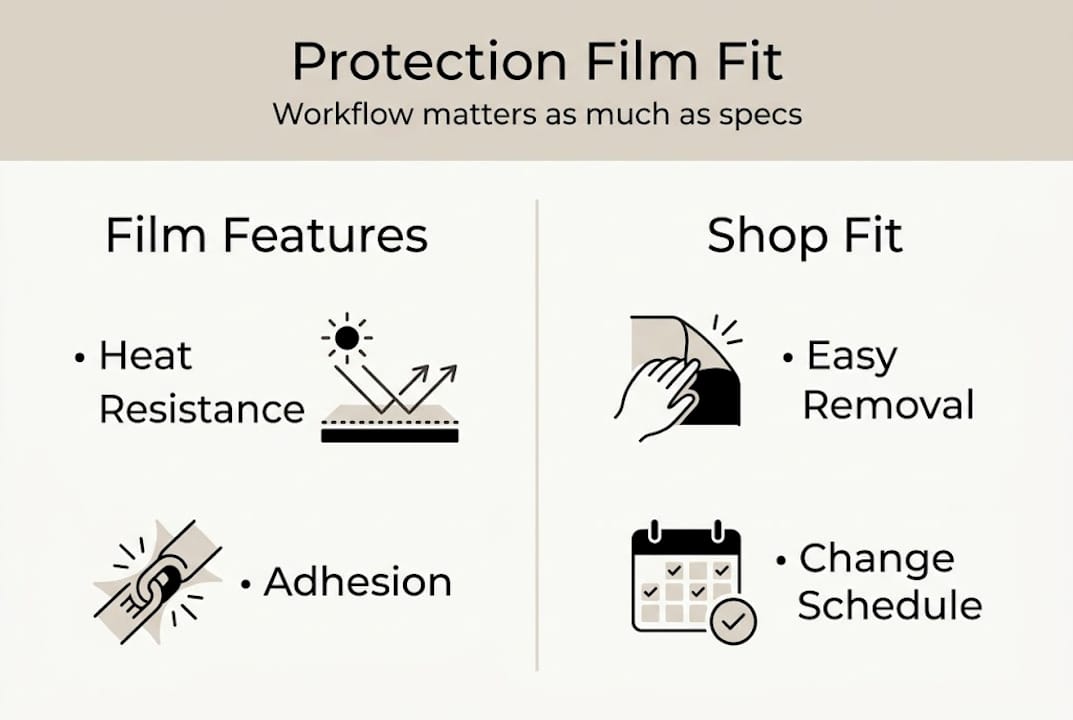
Pro tip: Keep a simple log, even a paper sheet on the booth door, recording each replacement date, condition at removal, and any paint issues from that cycle. After a month, patterns emerge that tell you exactly how often your specific booth needs a change.
why the best protection film comes down to workflow fit, not just specs
Here is something most product guides will not tell you: the technically superior film does not always produce the best outcomes. We have seen shops invest in premium multi-layer systems and still struggle with contamination because their team was skipping the prep steps or delaying replacements by three days longer than they should. The film specs were excellent. The process discipline was not.
In contrast, shops running a mid-grade corona-treated film on a strict weekly replacement schedule, with a 10-minute inspection built into the morning routine, often outperform better-equipped competitors. The film fits their workflow. The team actually executes the process. That consistency is where quality comes from.
When you make dust protection choices, factor in how easy the product is for your team to apply and remove, how the replacement interval lines up with your paint job frequency, and whether the dispenser system or roll format suits your booth layout. A film your technicians resist using is worse than a simpler film they follow correctly every time.
upgrade your paint operations with proven protection solutions
If you are ready to put these strategies to work, the right tools and resources are available specifically for your booth’s needs. DustFreeFilm solutions cover the full range of booth protection requirements, from multi-layer wall systems to anti-static floor films, all manufactured to European industrial standards and designed for the demands of active automotive and industrial operations.
Explore the floor protection recommendations to find specific product comparisons and application guidance matched to real booth conditions. Whether you run a single-bay auto body shop or a high-volume industrial facility, the right film and process combination is available. Take the next step toward fewer paint defects, faster cycles, and a booth that consistently delivers the clean environment your finish quality demands.
frequently asked questions
What is corona treatment, and why is it important for protection films?
Corona treatment raises a film’s surface energy so it actively traps paint overspray and reduces surface contamination. Without it, airborne paint mist bounces off the film and settles on your work instead.
How often should protection films be replaced in a spray booth?
Replace films when you see peeling edges, residue buildup, or reduced overspray capture. High-use booths often need changes every week, while lower-volume operations may go two weeks, but clean removal matters every time.
Can I use general-purpose plastic sheeting instead of a specialized protection film?
General plastic sheeting lacks the heat resistance, balanced adhesion, and overspray retention that spray booth films are engineered to provide, raising your contamination risk substantially.
What are the common mistakes when choosing or applying protection films?
The most frequent errors are skipping thorough surface cleaning, selecting a film that is incompatible with paint chemistry, and letting replacement intervals slip past the point where the film is still performing reliably.