

TL;DR:
- Booth efficiency measures the output per shift, focusing on reducing rework, cleaning, and downtime. Improving efficiency relies on standardized procedures, controlled airflow, and layout that avoids bottlenecks. Maintaining discipline through daily checks and clear roles ensures sustained high throughput and finish quality.
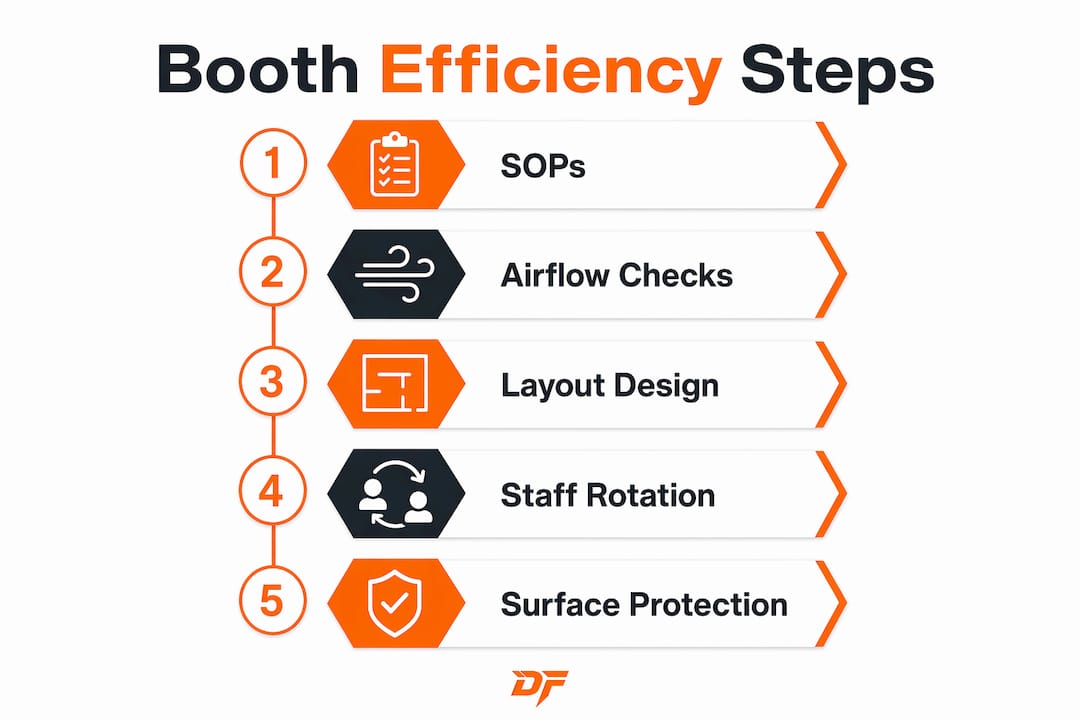
Booth efficiency is defined as the measurable output a spray booth delivers per shift, calculated against time lost to rework, cleaning, and unplanned downtime. Knowing how to improve booth efficiency requires three coordinated inputs: standardized operating procedures (SOPs), controlled airflow, and a layout that moves work forward without bottlenecks. Dustfreefilm has worked with auto body shops and industrial painting facilities since 2012, and the pattern is consistent. Facilities that treat efficiency as a system rather than a series of individual fixes see the greatest gains in throughput and finish quality.
How to improve booth efficiency with SOPs and airflow management
Improper SOP adherence and the absence of standardized maintenance routines cause most efficiency losses in spray booths. The result is avoidable: downtime from contamination, paint waste from overspray, and rework from inconsistent surface preparation. Implementing SOPs and regular airflow checks increases throughput and reduces rework without requiring costly equipment upgrades.
Airflow adjustment is a precise process. When airflow is calibrated correctly, overspray zones shrink, paint consumption drops, and cleaning time shortens. That directly extends operational uptime per shift. Facilities that treat airflow as a set-and-forget setting lose significant time to contamination events that proper calibration would have prevented. A detailed spray booth airflow guide covers the specific checks that make the biggest difference.
SOPs work best when they are short, visual, and posted at the point of use. A written procedure that lives in a binder does not change behavior. A laminated checklist mounted inside the booth door does. Effective SOPs cover four areas:
- Cleaning sequence: Define the order for wiping walls, floors, and fixtures to prevent cross-contamination between jobs.
- Airflow verification: Specify the pressure readings and filter condition checks required before each spray cycle begins.
- Part handling: Document how parts enter and exit the booth to avoid dragging in dust from adjacent work areas.
- End-of-shift inspection: Require a documented check of booth yield and workspace cleanliness before the next shift starts.
Daily repeatable checks by trained staff during shifts maintain higher booth yield by reducing downtime and catching problems before they escalate. That finding holds across facility sizes.
Pro Tip: Assign one staff member per shift as the “booth lead” responsible for completing the airflow and cleanliness checks. Rotating this role weekly builds facility-wide competency and prevents single points of failure.
What booth layout changes actually boost productivity?
Booth layout directly controls how fast work moves through the space. A layout that forces operators to backtrack, reach across parts, or wait for adjacent tasks to clear creates friction that compounds across every shift. Modular booth layouts aligned with operational workflows are the most reliable way to maintain pace and manage concurrent tasks without bottlenecks.
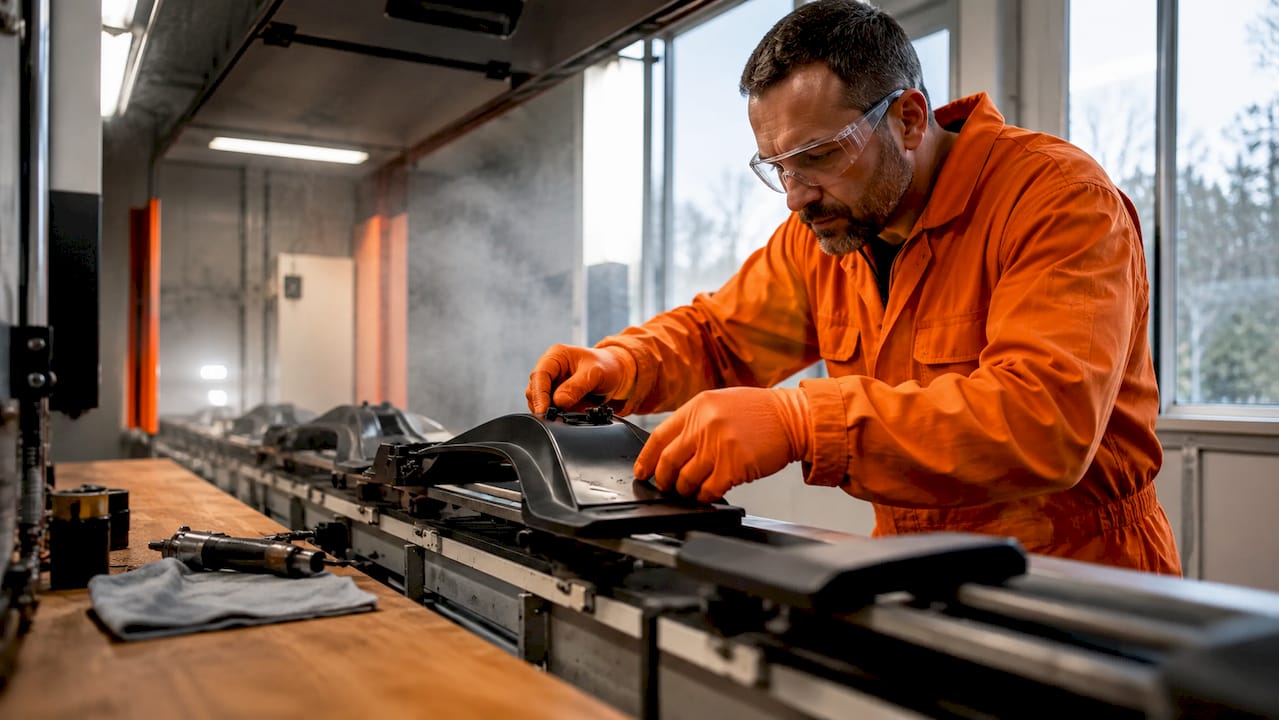
The core design principle is simple: work should flow in one direction. Parts enter at one end, move through prep, spray, and flash-off zones in sequence, and exit at the other end. Any layout that requires parts to reverse direction or cross paths with incoming work creates a collision point that slows throughput.
The table below compares the two most common layout approaches used in industrial spray facilities.
| Layout type | Primary benefit | Key limitation |
|---|---|---|
| Linear flow | Eliminates backtracking; clear stage separation | Requires longer floor space |
| Zone-based modular | Flexible for varying part sizes; scalable | Needs clear zone labeling to prevent confusion |
| Open perimeter | Maximum accessibility for large parts | Harder to control airflow and contamination |
| Dedicated prep bay | Keeps contamination out of spray zone | Increases total footprint requirement |
Ergonomics matter as much as traffic flow. Operators who spend a shift bending, reaching, or repositioning parts fatigue faster and make more errors. Adjustable work stands, proper lighting at spray height, and non-slip floor surfaces reduce physical strain and keep output consistent across a full shift. An industrial spray booth setup guide covers layout recommendations that apply directly to high-volume facilities.
One frequently overlooked layout factor is the transition zone between the prep area and the spray booth entrance. Dust and debris travel on clothing, carts, and parts. A defined transition zone with tack cloths, sticky mats, and a brief inspection step stops contamination before it enters the booth. That single addition reduces rework from surface defects more than most equipment changes.
Staff management strategies that prevent fatigue and protect throughput
Staffing is the variable most operations managers underestimate when they calculate booth capacity. Equipment sets the ceiling. People determine whether you reach it. Separating staff roles into greeters, demo specialists, and lead capturers prevents bottlenecks and keeps throughput stable during peak periods. The same principle applies directly to spray booth operations: when each person has a defined role, no task waits for someone to finish something else first.
Structured 90-minute staff rotations yield measurably better performance later in the shift. Mandatory off-floor time prevents fatigue from accumulating to the point where error rates climb. In a spray booth context, that means rotating operators between spray, prep, and inspection tasks rather than keeping one person in the booth for a full four-hour block.
Common staffing mistakes that reduce booth output:
- No defined roles: Everyone does everything, so critical tasks get delayed or skipped during busy periods.
- No scheduled breaks: Operators push through fatigue, which increases overspray, missed defects, and cleanup time.
- Peak hour understaffing: Scheduling the same headcount for slow and busy periods wastes capacity when it matters most.
- No cross-training: A single absent employee creates a gap that shuts down an entire workflow stage.
Pro Tip: Map your facility’s throughput by hour for two weeks. You will almost certainly find a predictable peak window. Schedule your most experienced operators and your highest-stakes jobs inside that window, not at the start of the shift when the booth is still warming up.
Demo length in customer-facing contexts follows the same logic as task duration in production. Demos longer than 8 minutes decrease throughput, with the optimal window sitting at 5–7 minutes for maintaining flow without sacrificing quality. In a production setting, that translates to defining maximum cycle times for each booth stage and holding operators accountable to them.
How technology and daily scheduling sustain high performance
Technology does not replace good procedures. It makes good procedures faster and more consistent. In spray booth operations, the highest-value technology investments are tracking systems that give supervisors real-time visibility into booth status, job progress, and filter condition.
Lead scanning devices integrated with CRM systems improve capture accuracy and speed in event settings. The operational equivalent in a spray facility is a digital job tracking board that shows every active job, its current stage, and its scheduled completion time. That visibility lets supervisors catch delays before they cascade into missed deadlines.
Scheduling based on predictable traffic patterns is the second lever. Most spray facilities have identifiable peak periods tied to customer drop-off patterns, shift changes, or production schedules. Building the daily job sequence around those patterns rather than processing jobs in arrival order reduces idle time and prevents the booth from becoming a bottleneck for the rest of the facility.
A pre-shift checklist that every supervisor runs before opening the booth:
- Verify airflow pressure readings against the calibrated baseline.
- Confirm filter condition and log replacement date if needed.
- Check booth wall and floor protection film for damage or contamination.
- Review the day’s job sequence and assign operators to specific roles.
- Confirm all consumables (tack cloths, masking materials, protective film) are stocked.
- Run a brief team briefing covering the day’s targets and any quality flags from the previous shift.
Pre-opening briefings and coordinated preparation are critical to sustaining smooth operations throughout the day. Facilities that skip the briefing consistently report more mid-shift interruptions and higher rework rates.
Key takeaways
Spray booth efficiency improves fastest when SOPs, airflow management, layout design, and staffing rotations are treated as one connected system rather than four separate problems.
| Point | Details |
|---|---|
| SOPs reduce rework | Written, posted procedures for cleaning, airflow, and part handling cut contamination and downtime. |
| Airflow calibration saves paint | Correct airflow settings shrink overspray zones and reduce cleaning time per shift. |
| Linear layout prevents bottlenecks | One-directional part flow eliminates backtracking and keeps throughput consistent. |
| Role specialization protects output | Defined operator roles prevent task collisions during peak production periods. |
| Pre-shift briefings reduce interruptions | A six-point checklist before each shift catches problems before they affect the job queue. |
What I’ve learned from watching facilities get this wrong
The most common mistake I see is treating booth efficiency as an equipment problem. Supervisors invest in new spray guns, upgraded filters, or a larger booth, and then watch throughput stay flat because the SOPs, layout, and staffing are still the same. The equipment was never the constraint.
The second pattern is equally predictable. Facilities that run well for two weeks after a process change often slide back within a month. The change was real, but it was not embedded. Nobody owns the checklist. The briefing gets skipped when things get busy. The rotation schedule gets abandoned when someone calls in sick. Efficiency is not a project you complete. It is a discipline you maintain.
The facilities I have seen sustain genuine gains share one habit: they measure something every day. It does not need to be complex. Tracking jobs completed per shift, rework events per week, and filter replacement frequency gives supervisors the data to catch drift before it becomes a problem. A spray booth maintenance checklist is the simplest starting point for building that measurement habit.
The ROI from disciplined workflow management is real and it compounds. Fewer rework events mean more jobs completed per shift. More jobs per shift mean better utilization of the facility’s fixed costs. That is not a theory. It is arithmetic.
— Dust
Dustfreefilm products that protect your booth between every job
Operational discipline gets you most of the way to peak booth efficiency. Surface protection closes the gap. Dustfreefilm manufactures multi-layer electrostatic booth wall and floor films designed specifically for spray booth environments. The films are heat-resistant, static-free, and built for high-traffic industrial settings where booth surfaces take daily punishment.

The patented dispenser system allows quick, bubble-free installation, which means your team spends less time on surface prep and more time on production. Facilities using Dustfreefilm report shorter cleanup cycles between jobs and better protection against overspray buildup on booth walls and floors. For operations managers focused on spray booth cleaning best practices, protective film is the lowest-effort, highest-impact addition to an existing maintenance program.
FAQ
What is the fastest way to reduce spray booth downtime?
Implementing a posted SOP for cleaning, airflow checks, and part handling reduces unplanned downtime faster than any equipment change. Daily staff-led maintenance checks catch problems before they shut down production.
How often should spray booth airflow be checked?
Airflow should be verified against a calibrated baseline at the start of every shift. Filter condition should be logged daily and replacement scheduled based on usage volume, not a fixed calendar interval.
What staff rotation schedule works best for spray booth operations?
A 90-minute rotation between spray, prep, and inspection tasks prevents fatigue-driven errors and keeps output consistent across a full shift. Supervisors should schedule the most experienced operators during the facility’s identified peak production window.
Does booth layout really affect throughput?
Yes. A linear, one-directional layout eliminates backtracking and prevents parts from crossing paths with incoming work. That single change reduces collision points and keeps the job queue moving without manual intervention.
How does protective film improve booth efficiency?
Booth wall and floor protection film reduces the time required to clean overspray between jobs. Less cleanup time per job means more jobs completed per shift, which directly increases facility throughput.