

Industrial painting best practices cover a set of proven methods and protocols that maximize coating performance, asset protection, and worker safety in demanding environments. Get them right, and a coating system can protect structural steel or process equipment for decades. Cut corners, and you’re looking at adhesion failure, premature corrosion, and costly recoating within a few years. The core practices every facility manager and industrial painting professional should follow include:
- Surface preparation to recognized standards (SSPC-SP 6 or SSPC-SP 10 for most steel substrates)
- Selecting the right coating system based on substrate, service environment, and chemical exposure
- Applying primers, intermediate coats, and topcoats in the correct sequence with proper dry film thickness (DFT) monitoring
- Controlling environmental conditions during application: temperature, humidity, and dew point
- Following OSHA and EPA safety protocols for respiratory protection, ventilation, and VOC compliance
- Managing dust contamination in spray booths and painting facilities with multilayer protective films
- Conducting proactive inspections and maintenance to catch coating breakdown before corrosion spreads
Dustfreefilm’s multilayer electrostatic booth protection films address one of the most overlooked failure points in industrial coating operations: airborne dust contamination during application. The sections below break down each of these areas in full technical detail.
1. Common industrial painting methods and techniques
Industrial painting techniques range from simple brush application to highly automated electrophoretic deposition, and the right choice depends on substrate geometry, production volume, coating chemistry, and the service environment the finished part will face.
The primary application methods used in industrial settings:
- Airless spray: The dominant method for large steel structures, tanks, and vessel exteriors. It atomizes coating material using hydraulic pressure rather than compressed air, delivering high film build and consistent coverage at production rates that brush or roller work cannot match.
- Air-assisted airless and conventional air spray: Better atomization for finish-critical applications, though transfer efficiency drops compared to airless. Common in automotive refinishing and precision industrial work.
- Brush and roller: Practical for maintenance painting, stripe coats on edges and welds, and areas where spray application is impractical. Per SSPC PA 1, round or oval brushes suit rivets and irregular surfaces, while flat brushes work on large flat areas up to five inches wide.
- Dip coating: Parts are immersed in a coating bath and withdrawn at a controlled rate. Dip coating delivers uniform finishes on complex geometries and is widely used for primers on small fabricated components.
- E-Coat (electrocoating): An electrochemical process that deposits coating uniformly across all surfaces, including recessed areas and blind holes. It delivers superior corrosion protection and consistent film thickness, making it well-suited for mass production runs with high repeatability.
- Powder coating: Electrostatic application of dry powder followed by oven curing. No solvents, minimal waste, and excellent mechanical and corrosion resistance. Best suited for substrates that can tolerate the thermal cycle required for polymerization.
- Thermal spray: Molten or semi-molten material is sprayed onto a surface to build up a coating. Used for high-temperature applications and wear-resistant surfaces in petrochemical and aerospace settings.
- Flow coating and slot die coating: Automated liquid application methods used in high-volume manufacturing lines where precise thickness control and minimal waste matter.
- Plural component spray: Two-component coatings (epoxy, polyurethane) are mixed at the gun, eliminating pot life concerns and allowing application of fast-cure systems in the field.
Selecting the right method comes down to four variables: substrate complexity, required film build, production throughput, and coating chemistry. A zinc-rich inorganic primer on structural steel calls for airless spray. A high-gloss polyurethane topcoat on a precision component may warrant air-assisted airless for better atomization. E-Coat makes sense when complete coverage of complex assemblies is non-negotiable.
Pro Tip: For stripe coating edges, welds, and bolt heads before the full prime coat, use a brush rather than spray. Edges thin out under spray application, and a brush stripe coat adds the extra film build those high-risk areas need before the full system goes on.
2. Surface preparation best practices for industrial painting
Surface preparation is the most critical step in any industrial coating project. The coating is only as good as the surface beneath it. Poor prep leads to adhesion failure, blistering, and corrosion undercutting that can force complete recoating within just a few years.
Abrasive blast cleaning
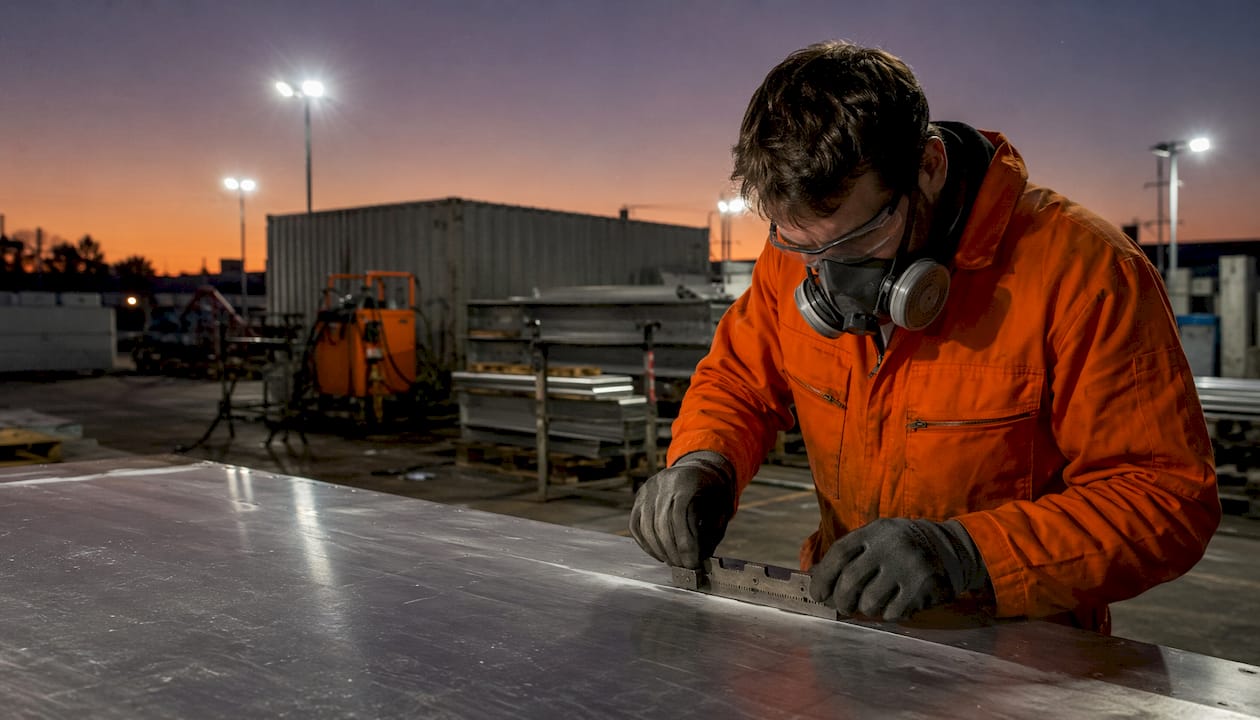
For most industrial steel painting projects, abrasive blast cleaning to at minimum SSPC-SP 6 (Commercial Blast) or SSPC-SP 10 (Near-White Metal Blast) is specified, particularly when applying high-performance epoxy or polyurethane systems. Abrasive blasting removes mill scale, rust, old coatings, and contaminants while simultaneously creating a surface profile measured in mils. That profile is what gives the coating its mechanical grip. Materials like steel shot, steel grit, aluminum oxide, and garnet are all used depending on the substrate and the profile depth required.
SSPC-SP 5 (White Metal Blast) is the most thorough standard and is reserved for immersion service and highly corrosive environments. For localized maintenance work, SSPC-SP 11 power tool cleaning using grinding and needle gun equipment can achieve a bare metal surface, though it does not match blast cleaning for anchor profile depth.
Water jetting and hydroblasting
Ultra-high-pressure water jetting removes corrosion and contamination without introducing abrasive waste into the environment. It is increasingly used where abrasive blasting is impractical or environmentally restricted, such as in confined spaces or near sensitive equipment. The limitation is that water jetting does not create a new surface profile; it restores the existing one.
Chemical cleaning methods
- Solvent degreasing and vapor degreasing: Oils and greases are not reliably removed by mechanical action alone. Vapor degreasing uses a solvent at its boiling point to condense clean vapor onto the part, continuously filtering removed contaminants. Common solvents include trichloroethylene and perchloroethylene. Solvent cleaning must be conducted in a confined space to contain vapors, and flammable solvents should never be used.
- Acid cleaning (pickling): Hydrochloric and sulfuric acid remove rust, scale, and oxides from steel. Nitric acid solutions are used for aluminum. One important caution: acid cleaning can cause hydrogen embrittlement, where hydrogen gas penetrates the metal and reduces tensile strength.
- Alkaline cleaning: Strong aqueous alkali removes oxides from steel without the hydrogen embrittlement risk. Thorough rinsing after alkaline cleaning is critical; residual cleaner interferes with coating adhesion. A double wash-rinse sequence (wash-rinse-wash-rinse) produces better results than a single cycle.
- Conversion coatings: After cleaning, most metal substrates receive a phosphate or chromate conversion coating that increases corrosion resistance and provides a roughened surface to improve paint adhesion.
Profile measurement and primer timing
After blasting, measure the surface profile using replica tape (Testex) or a digital gauge. Apply primer as soon as possible after the surface reaches the required cleanliness level. Steel begins to flash-rust within hours in humid conditions, and any delay compromises the adhesion the blast profile was created to deliver.
Pro Tip: Check the dew point before every coat, not just at the start of the shift. Per SSPC PA 1, coating shall not be applied when the steel surface temperature is less than 5°F above the dew point. Conditions change during the day, and a surface that was fine at 7:00 AM may be at risk by mid-afternoon.
3. Safety protocols and hazard management in industrial painting
Industrial painting involves respiratory hazards, fall risks, confined space entry, and chemical exposure that require structured safety programs, not just general awareness. OSHA and EPA set the regulatory floor; a well-run facility goes further.
Core safety requirements:
- Respiratory protection: Solvent vapors, isocyanate fumes from polyurethane coatings, and airborne abrasive dust all require appropriate respirator selection. Air-purifying respirators work for many solvent-based coatings, but supplied-air respirators are required when applying two-component polyurethane or isocyanate-containing systems.
- Ventilation: Proper ventilation and hazard communication programs minimize exposure to hazardous fumes and dust. Spray booths must maintain adequate airflow to keep solvent vapor concentrations below the lower explosive limit (LEL) and below OSHA permissible exposure limits (PELs).
- Fall protection: Elevated work on tanks, structures, and vessels requires fall arrest systems, scaffolding, or aerial work platforms that comply with OSHA 29 CFR 1926 Subpart M. Abrasive blasting on elevated surfaces adds the complication of reduced visibility and footing hazards from spent abrasive.
- Confined space entry: Painting inside tanks, vessels, and enclosed structures triggers OSHA’s permit-required confined space standard (29 CFR 1910.146). Atmospheric testing for oxygen content, flammable vapors, and toxic gases must occur before entry and continuously during work.
- Chemical handling and hazard communication: OSHA’s Hazard Communication Standard (HazCom, 29 CFR 1910.1200) requires Safety Data Sheets (SDS) for all coating materials, proper labeling, and worker training on chemical hazards. Two-component coatings, thinners, and cleaning solvents all carry specific handling requirements.
- VOC compliance: EPA regulations set VOC emission limits that require low-emission or waterborne coatings in many applications. Waste coating materials, spent solvents, and abrasive blast media may qualify as hazardous waste under RCRA and require proper disposal through licensed waste handlers.
- Emergency response plans: Facilities must maintain spill response procedures, fire suppression systems appropriate for flammable coating materials, and evacuation plans specific to painting operations.
Industry data consistently shows that facilities with documented safety programs and regular training see fewer recordable incidents than those relying on informal practices. The investment in a written respiratory protection program, confined space procedures, and fall protection planning pays back in avoided injuries, OSHA citations, and project delays.
4. Tips to achieve high-quality, durable industrial paint finishes
A high-quality industrial finish is not just about appearance. It is about barrier performance, adhesion strength, and resistance to the specific chemical and mechanical stresses the coated asset will face. The coating system you specify and how you apply it determines how long the asset stays protected.
Build the coating system in layers
The standard industrial coating system runs three layers: primer, intermediate (build) coat, and topcoat. Each plays a distinct role.
- Primer: Applied directly to the prepared substrate, the primer’s job is adhesion and corrosion protection. Zinc-rich primers provide galvanic (sacrificial) protection to steel, meaning the zinc corrodes preferentially to protect the underlying metal. Both organic (epoxy-based) and inorganic (silicate-based) zinc-rich formulations are widely used. Inorganic zinc silicate is particularly valued for elevated temperature resistance and use in offshore and petrochemical environments.
- Intermediate coat: Adds dry film thickness to the system. Greater DFT enhances barrier protection, improves resistance to moisture vapor transmission, and gives the overall system structural integrity. Epoxy intermediate coats are the standard choice for most industrial applications.
- Topcoat: The outermost layer, directly exposed to the service environment. Aliphatic polyurethane topcoats dominate exterior industrial applications for their UV stability, color retention, and gloss maintenance. Polysiloxane topcoats offer extended service life and exceptional weathering resistance at higher cost. Acrylic, fluoropolymer, and silicone-based coatings serve specialized roles in demanding settings.
For high-corrosivity environments (ISO 12944 categories C4, C5, and CX), thicker total dry film thickness coatings are typically required across the full system.
Monitor film thickness and environmental conditions
Consistent monitoring of temperature, humidity, and dust levels is the difference between a coating that performs to spec and one that fails early. Check wet film thickness (WFT) during application using a wet film gauge. After curing, measure dry film thickness with calibrated magnetic pull-off or electronic DFT gauges. Adhesion testing per ASTM D4541 (pull-off adhesion) on completed systems confirms the coating has bonded properly.
Per SSPC PA 1, coating shall not be applied when air temperature, substrate temperature, or humidity falls outside the manufacturer’s written specifications. Some inorganic zinc and polyurethane coatings cure by reacting with atmospheric moisture, so they require a minimum humidity level for complete curing. High humidity, on the other hand, can cause blushing and other film defects in moisture-sensitive systems.
Curing and inspection
Recoat times matter. Applying the next coat before the previous one has cured to the required state causes intercoat adhesion failures that show up as delamination months later. Follow the manufacturer’s recoat window, not just the touch-dry time. For powder coating and baked liquid systems, the substrate temperature, not just the oven temperature, must reach the specified cure temperature for the required time. Part thickness and geometry affect heat-up time significantly.
After the full system is applied, conduct holiday detection on tank linings and immersion service coatings using holiday detectors. Document all inspection results. Thorough QC records are required for warranty compliance on major industrial projects.
Pro Tip: Apply a stripe coat by brush to all edges, welds, bolts, and sharp corners before the full prime coat goes on by spray. Spray application thins out at edges, and those are exactly the spots where corrosion starts. The brush stripe coat adds the film build those areas need.
5. The importance of dust control and protection in industrial painting facilities
Dust contamination is one of the most common causes of coating defects in industrial painting, and one of the most preventable. Dust particles cause pinholes, fisheyes, and premature paint failure when they land on a freshly applied wet film. The result is adhesion failure, blistering, and finish inconsistencies that require costly rework or full recoating.
How dust undermines coating quality:
- Airborne particles settle into the wet film before it cures, creating surface defects that break the coating’s barrier function
- Contaminated surfaces prevent proper mechanical and chemical bonding between the coating and the substrate
- Dust from abrasive blasting, grinding, or nearby production activity can recontaminate a prepared surface before primer is applied
- In spray booths, inadequate wall and floor protection allows accumulated dust to become airborne again during application
Dust protection films for spray booths and manufacturing floors
Specialized multilayer dust protection films applied to spray booth walls and floors create a clean, contained environment that directly reduces contamination during coating application. The benefits go beyond cleanliness. When booth surfaces are protected, maintenance time drops, booth changeover between jobs is faster, and the risk of cross-contamination between batches is eliminated.
Dustfreefilm’s multilayer electrostatic booth wall and floor protectors are designed specifically for this application. The films are heat-resistant, static-free, and built for high-traffic industrial settings. The patented dispenser system allows quick, bubble-free installation, which matters in production environments where booth downtime costs money. When a layer becomes contaminated, it peels away to reveal a clean surface underneath, without the need to shut down and deep-clean the booth.
Why multilayer film protection outperforms periodic cleaning
Periodic booth cleaning removes accumulated contamination, but it does not prevent new contamination from settling during the application window. Multilayer films maintain a consistently clean surface throughout the job. For facilities running multiple shifts or high-volume production, the ability to peel a contaminated layer and immediately resume work without a full cleaning cycle is a genuine operational advantage.
The dust control solutions Dustfreefilm provides are used in auto body shops, industrial spray painting facilities, and manufacturing plants across multiple countries. The underlying principle applies equally to any operation where finish quality and coating durability are non-negotiable.
6. How to choose the right industrial paint and coating system
Choosing the right coating starts with understanding the service environment the asset will face. A structural steel bridge in a coastal environment faces very different stresses than a concrete floor in a food processing plant or a tank lining in a chemical facility.
Key selection criteria:
- Substrate type: Steel, aluminum, galvanized steel, concrete, and composite materials each require different primers and surface treatments. Galvanized steel, for example, needs an acid etch or wash primer before epoxy application to achieve adhesion.
- Service environment: Corrosivity categories (ISO 12944 C1 through CX) define the aggressiveness of the environment. Offshore, petrochemical, and immersion service environments demand high-performance multi-coat systems with zinc-rich primers and polyurethane or polysiloxane topcoats.
- Chemical resistance requirements: Epoxy coatings offer outstanding chemical resistance and hardness. Two-component (2K) epoxy systems cure through a chemical reaction between resin and hardener, producing a thermoset film with superior durability. Polyurethane systems add UV stability and abrasion resistance. For specific chemical exposures, consult the coating manufacturer’s chemical resistance guide.
- Temperature resistance: Standard epoxy and polyurethane systems have temperature limits. High-temperature environments near furnaces or exhaust systems require silicone-based or inorganic zinc coatings rated for the operating temperature.
- Regulatory and industry-specific requirements: Food processing facilities may require FDA-compliant coatings. Pharmaceutical plants follow cGMP requirements. Electronics manufacturing may need static-dissipative systems. Petrochemical facilities reference API standards.
- VOC content and environmental compliance: Many jurisdictions restrict VOC content in industrial coatings. Waterborne epoxy and waterborne polyurethane systems have improved significantly and now meet performance requirements in many applications where solvent-based systems were previously the only option.
- Lifecycle cost: A premium polysiloxane topcoat costs more upfront than a standard polyurethane, but its extended service life reduces maintenance painting frequency and delivers a lower total cost over the asset’s life.
Pro Tip: Always request the coating manufacturer’s product data sheet (PDS) and the system recommendation for your specific substrate and environment before specifying. Generic coating selections based on product category alone miss the compatibility requirements between primer, intermediate coat, and topcoat that determine long-term system performance.
7. Equipment selection and maintenance for industrial painting
The application equipment you use affects film build, uniformity, transfer efficiency, and finish quality as much as the coating itself. A well-maintained airless sprayer applying the right tip size for the coating viscosity will outperform a poorly maintained unit every time.
Airless spray equipment:
Select the tip orifice size and fan width based on the coating’s viscosity and the required film build. High-build epoxy coatings typically require larger orifice tips than thin-film polyurethane topcoats. Worn tips produce irregular spray patterns and inconsistent film thickness. Replace tips when the fan pattern shows tailing or the orifice has worn oval.
Maintain pump seals, clean filters regularly, and flush air lines before each use. Dirty filters and worn seals cause pressure fluctuations that translate directly into film thickness variation. For plural component systems, verify the mix ratio at the gun before starting each application session.
Spray booth equipment:
Booth airflow and filtration directly affect finish quality. Intake filters must be clean to maintain the designed air velocity across the work surface. Exhaust filters capture overspray and prevent it from recirculating. Check and replace filters on the schedule the booth manufacturer specifies, not just when airflow visibly drops.
Blast equipment:
For abrasive blasting, maintain the blast pot, hoses, and nozzles in good condition. A worn nozzle reduces blast pressure and slows production. Check nozzle diameter regularly and replace when it has worn beyond the manufacturer’s tolerance. Contaminated abrasive media carries oils and moisture onto the blasted surface, undermining the preparation work. Use clean, dry abrasive and check for contamination before loading the pot.
Measuring instruments:
Calibrate DFT gauges, wet film gauges, and dew point meters regularly. An uncalibrated DFT gauge can give readings that appear to meet specification while the actual film thickness is below the minimum required. SSPC PA 2 governs dry film thickness measurement procedures for industrial painting projects.
8. Maintenance and inspection best practices for industrial coatings
Even the best coating system has a finite service life. A proactive maintenance painting program is the most cost-effective approach to long-term asset protection. Allowing corrosion to progress before repainting dramatically increases costs. Maintenance painting at the right time, when coating breakdown is still limited, costs far less than waiting until corrosion has spread and full blast cleaning and recoating are required.
A sound maintenance painting program includes:
- Annual inspections to assess coating condition and corrosion levels, using the SSPC Vis 2 rust grade scale or photographic records for consistent condition documentation
- Spot repair and touch-up of localized coating failures before corrosion spreads to adjacent areas
- Scheduled overcoating cycles based on the coating system’s expected service life in the specific environment
- Updated coating specifications that incorporate advances in coating technology as systems are respecified
- Holiday and pinhole detection on tank linings and immersion service coatings at each inspection interval
Surface cleanliness verification at inspection uses SSPC visual standards and comparators. Profile measurement confirms whether the existing surface still provides adequate anchor for overcoating or whether blast cleaning is required. Document every inspection with photographs, DFT readings, and condition ratings. Those records support warranty claims, regulatory compliance, and budget planning for future maintenance cycles.
Pro Tip: Schedule coating inspections to coincide with planned equipment shutdowns or maintenance windows. Inspecting a coating while the asset is in service is far less disruptive than discovering a failure that forces an unplanned shutdown.
9. Environmental considerations and compliance in industrial painting
Environmental compliance in industrial painting covers VOC emissions, waste disposal, air quality monitoring, and the selection of coating materials that meet regulatory requirements without sacrificing performance.
VOC emissions: EPA regulations set VOC content limits for architectural and industrial maintenance coatings. Many states enforce limits stricter than the federal baseline. Waterborne epoxy, waterborne polyurethane, and high-solids solvent-based coatings all reduce VOC emissions compared to conventional solvent-based systems. Powder coating eliminates solvent emissions entirely.
Waste disposal: Spent coating materials, used solvents, and abrasive blast media may qualify as hazardous waste under the Resource Conservation and Recovery Act (RCRA). Facilities must characterize their waste streams, store hazardous waste properly, and use licensed waste disposal contractors. Improper disposal of coating waste is one of the more common EPA enforcement actions against industrial facilities.
Air quality monitoring: During application of solvent-based coatings in enclosed spaces, continuous air monitoring for flammable vapor concentrations is required. Portable photoionization detectors (PIDs) and catalytic bead sensors are standard tools for this purpose.
Environmentally preferable alternatives: Water jetting for surface preparation eliminates abrasive waste. Waterborne coatings reduce solvent emissions. Powder coating produces no VOC emissions and allows overspray recovery and reuse. These alternatives are not always technically feasible for every application, but where they are, they reduce both environmental impact and regulatory burden.
Regulatory awareness: OSHA, EPA, and state environmental agencies all have jurisdiction over aspects of industrial painting operations. Staying current with regulatory changes, particularly VOC content rules and hazardous waste requirements, is part of running a compliant industrial painting program.
How Dustfreefilm helps you achieve cleaner, higher-quality finishes
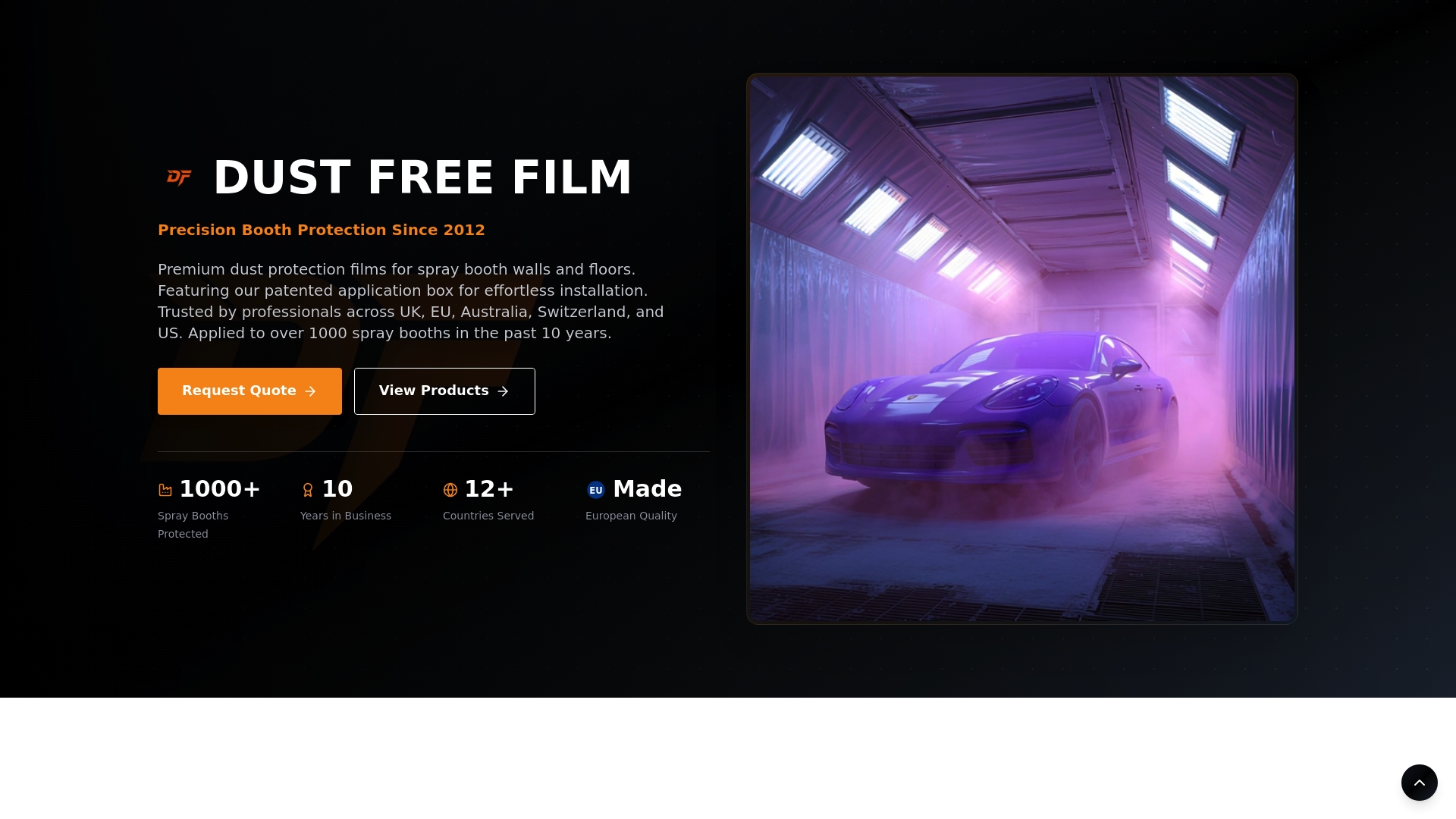
Dustfreefilm has been manufacturing premium dust protection films for spray booths and industrial painting facilities since 2012. The multilayer electrostatic wall and floor protectors are built specifically for the demands of industrial coating environments: heat-resistant, static-free, and designed to handle high-traffic production settings without tearing or delaminating.
The patented dispenser system makes installation fast and bubble-free, which matters when booth downtime directly affects production throughput. When a layer becomes contaminated, it peels away cleanly to reveal a fresh surface underneath. No shutdown. No deep-cleaning cycle. Just a clean booth ready for the next application.
For facilities where paint finish quality is a production standard rather than an aspiration, controlling the booth environment is the step that ties everything else together. Surface prep, coating selection, and application technique all contribute to a durable finish. Dust contamination can undermine all of them in a single application session.
Explore Dustfreefilm’s full range of spray booth protection solutions and find the configuration that fits your facility’s production volume and quality requirements.
Key Takeaways
Consistent surface preparation, correct coating system selection, and active dust control are the three factors that most reliably determine whether an industrial coating achieves its designed service life.
| Point | Details |
|---|---|
| Surface prep sets the ceiling | Abrasive blast cleaning to SSPC-SP 6 or SSPC-SP 10 is the minimum standard for most high-performance industrial coating systems. |
| Layer the coating system correctly | Zinc-rich primer, epoxy intermediate coat, and polyurethane or polysiloxane topcoat is the proven sequence for corrosive environments. |
| Control environmental conditions | Apply coatings only when substrate temperature is at least 5°F above the dew point and humidity is within the manufacturer’s specified range. |
| Dust contamination causes coating failure | Dust particles cause pinholes, fisheyes, and adhesion failure; multilayer booth protection films prevent contamination during application. |
| Proactive maintenance reduces lifecycle costs | Annual inspections and spot repairs prevent corrosion spread and avoid the far higher cost of full blast cleaning and recoating. |