

Dust settling on freshly painted surfaces is every facility manager’s headache during busy production cycles. Achieving consistently flawless finishes depends on controlling contaminants long before spraying begins. Facility managers in automotive and industrial painting know that meeting European standards requires more than routine cleanup. This guide walks you through the proven steps of preparation, film application, system setup, and verification, ensuring your dust control strategy delivers results and keeps your booths operating at peak efficiency.
Table of Contents
- Step 1: Prepare Booth Surfaces For Protection Film Application
- Step 2: Install Premium Dust Protection Films On Walls And Floors
- Step 3: Configure Electrostatic Dispenser System For Efficiency
- Step 4: Seal Critical Areas To Maximize Dust Containment
- Step 5: Verify Dust-Free Conditions And Superior Finish Quality
Quick Summary
| Key Insight | Explanation |
|---|---|
| 1. Thoroughly clean surfaces before film application | Removing dust and debris ensures proper film adhesion and prevents contamination of finishes. Prioritize cleanliness for durability. |
| 2. Apply films methodically for optimal adhesion | Use controlled pressure and overlap seams during installation to avoid bubbles and ensure a continuous protective barrier. |
| 3. Properly configure the electrostatic system | Ensure grounding and adjust air settings to improve transfer efficiency and finish quality. Regularly check resistivity for optimal performance. |
| 4. Seal all potential leak points | Inspect and seal gaps in doors, windows, and fixtures to prevent external contamination. Use industrial-grade materials for durability. |
| 5. Conduct routine verification of conditions | Perform visual inspections, airflow checks, and test sprays regularly to maintain dust-free environments and high finish quality. |
Step 1: Prepare booth surfaces for protection film application
Getting your spray booth surfaces ready for protection film application is the foundation of achieving dust-free, high-quality finishes. This step determines whether your film adheres properly, lasts through heavy use, and actually prevents contamination from ruining your work. Skip proper preparation, and you’ll watch dust particles embed themselves in freshly applied coatings. Do it right, and your protective film becomes an invisible barrier that keeps your finishes flawless.
Start by removing everything loose from your booth surfaces. Dust, loose paint chips, grease residue, and debris are your enemies here. Use a vacuum with a fine filter first to capture larger particles, then follow up with clean rags or microfiber cloths to wipe down walls and floors. Pay special attention to corners, ledges, and any textured areas where dust loves to hide. The surfaces must be clean and dry before application to ensure proper adhesion and prolong the film’s durability, so don’t rush this phase. If you find grease buildup or stubborn residue, use a degreasing solution appropriate for your booth construction, but rinse thoroughly and allow everything to dry completely before moving forward.
Next, inspect your booth surfaces carefully for damage that needs attention. Look for rough spots, gouges, or areas where previous coatings have started peeling. Smooth surfaces ensure your protective film sits flush against the substrate, creating a uniform barrier. If you spot imperfections, sand them lightly or patch them with appropriate filler material, then allow adequate curing time. Pay particular attention to floor transitions, wall seams, and anywhere water or overspray tends to collect. When conducting a thorough booth inspection, remember that removing solvents and contaminants beforehand is key for best results. Once surfaces are smooth and completely clean, you’re ready to apply your protection film. The better your preparation work now, the more effective your dust control becomes and the longer your protective film performs under real production conditions.
Pro tip: Run your booth’s ventilation system at full capacity for 15 minutes after cleaning to eliminate any lingering airborne dust particles before you begin film application, ensuring maximum adhesion and zero contamination trapped between the film and surface.
Step 2: Install premium dust protection films on walls and floors
This is where your preparation work pays off. Installing your protective films correctly transforms your spray booth into a contamination-free zone that maintains consistent, high-quality finishes. The installation process is straightforward when you have clean surfaces and follow a methodical approach, but rushing this step or skipping details will result in bubbles, wrinkles, and weak adhesion that compromises your entire dust control system.
Begin with your walls, starting at the top and working downward. Unroll your self-adhesive protective film and position it along the upper edge of your booth wall. Most premium films come with a dispenser system that makes application nearly effortless, so use it as designed. Press the film firmly into place as you move down the wall, smoothing out any air pockets with a plastic squeegee or your gloved hand. Work in overlapping sections if your booth is wide, making sure each section bonds firmly before moving to the next. Pay special attention to corners and edges where film tends to lift. The key is applying consistent pressure without rushing. Your movements should be deliberate and controlled. Once you’ve covered all walls, move to the floor. Floor protection requires the same attention to detail as walls. Start in one corner and work systematically across the floor, pressing the film down firmly as you go. Overlap seams by at least two inches to prevent debris from sneaking underneath. If you’re protecting a large floor area, enlist another person to help hold and position the film while you apply it. This prevents wrinkles and ensures everything stays aligned as you work across the space.
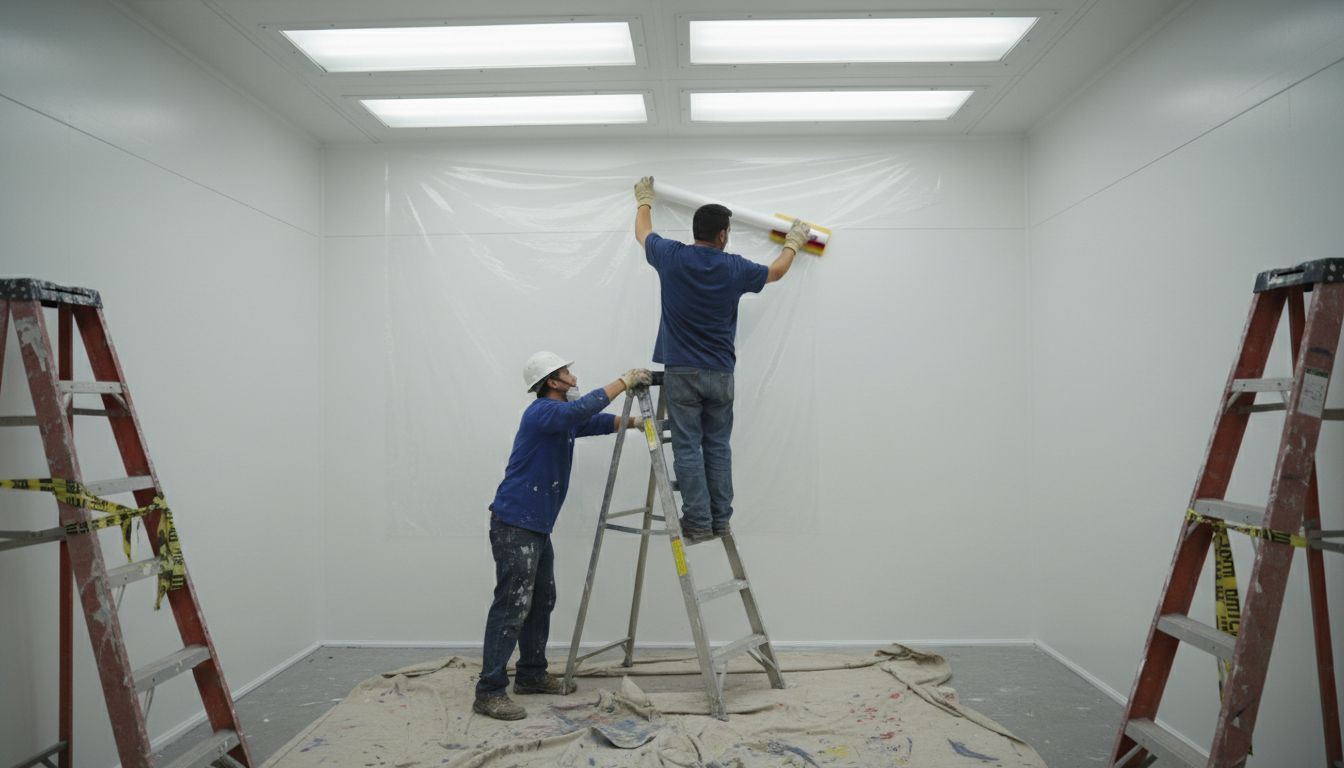
After installation is complete, inspect your entire booth for any loose edges, bubbles, or areas where the film hasn’t fully adhered. A properly installed protective film creates a continuous barrier with no gaps or weak spots. The beauty of a quality installation is that your film stays in place for months of heavy use without requiring constant maintenance or reapplication. Once your dust protection system is fully installed, your booth operates at maximum efficiency, and your finishes reflect the flawless work your team produces.
Pro tip: Apply film during the coolest part of your day to minimize heat-related expansion, ensuring tighter adhesion and preventing edge lifting once your booth heats up during production.
Step 3: Configure electrostatic dispenser system for efficiency
Your electrostatic dispenser system is the heart of your dust-free spray booth operation. Getting this right means you’ll achieve superior transfer efficiency, minimize material waste, and deliver finishes that meet European manufacturing standards. When configured properly, your electrostatic system charges coating particles as they leave the spray gun, causing them to wrap around your workpiece like a magnetic force, rather than floating around your booth as overspray and dust.
Start by understanding your system’s voltage capabilities and grounding setup. Most professional electrostatic systems operate at high voltage, and proper grounding is absolutely critical for safe, efficient operation. Verify that your booth, spray gun, and workpiece are all properly grounded according to your equipment manufacturer’s specifications. Never skip this step or assume grounding is already in place. Next, optimize your air and fluid pressure settings to balance atomization quality with transfer efficiency. Air pressure controls how finely your coating atomizes, while fluid pressure determines flow rate. Too much air pressure creates excessive overspray and fog, defeating the purpose of your electrostatic system. Too little air pressure produces poor atomization and uneven finishes. The sweet spot depends on your specific coating viscosity and application, so start with your manufacturer’s recommended baseline and adjust from there. As you fine-tune these settings, monitor coating resistivity measurements to ensure optimal electrostatic charge. Coating resistivity directly affects how well particles charge and transfer to your workpiece. If resistivity is too low, particles won’t charge adequately. If it’s too high, you risk arcing and system shutdown. You’ll also want to configure your automatic current limiting features if your system includes them. This protects your equipment by preventing dangerous voltage spikes while maintaining consistent charging across varying coating conditions. Check your fluid tip and air cap configuration as well. Different combinations provide optimized atomization for different coating types and application techniques. Your equipment supplier can guide you on which combination works best for your specific coatings and production requirements.
Environmental conditions inside your booth matter more than most facility managers realize. Temperature, humidity, and air movement all impact how your electrostatic system performs. Maintain consistent booth conditions by managing your ventilation system carefully. Operator technique also plays a significant role in system efficiency. Train your spray technicians on proper gun distance, angle, and speed to maximize transfer efficiency and minimize material waste. Once your system is configured and your team is trained, you’ll notice dramatic improvements in booth cleanliness, finish quality, and material efficiency compared to conventional spray systems.
Pro tip: Schedule weekly resistivity checks and document your results to track coating batch consistency and catch subtle changes before they impact your finish quality or create safety issues.
Step 4: Seal critical areas to maximize dust containment
Sealing your spray booth properly is what separates a mediocre dust control system from one that actually delivers professional results. Every gap, crack, and unsealed entry point becomes a pathway for external contamination to invade your booth and settle on freshly painted surfaces. This step transforms your booth from a porous box into a controlled environment that maintains the dust-free conditions your coating operations demand.
Begin by identifying all potential leak points in your booth. Walk around the entire perimeter and pay close attention to doors, windows, access panels, cable penetrations, and any gaps where utilities pass through walls or ceilings. Look for obvious gaps that you can see daylight through, but also check for smaller cracks that might seem insignificant until dust particles start finding their way inside. Doors and access points require the most attention because they experience repeated opening and closing that can wear seals over time. Install or upgrade door gaskets and weather stripping to create an airtight seal when doors are closed. Many facility managers underestimate the importance of proper spray booth door seals and loose seals that allow air leakage. Next, address all utility penetrations and cable entries. Use high quality caulking or sealants specifically rated for industrial spray booth environments. Standard caulk won’t withstand the temperature fluctuations and chemical exposure your booth experiences. Apply sealant around all electrical conduits, air supply lines, drainage pipes, and any other items passing through your booth walls. Don’t skimp on this work. A tube of proper industrial sealant costs pennies compared to the cost of a single contaminated paint job.
Once you’ve sealed the structural gaps, manage your booth access points strategically. Implement contamination control mats at entry doors that trap particles from foot traffic before they spread across your booth floor. Consider setting up a formal entry procedure where personnel use these mats and perhaps even change into dedicated booth clothing to minimize contamination introduction. Limit foot traffic during actual spraying operations whenever possible. Every person entering the booth adds risk of dust and debris disturbance. If someone must enter during operations, they should move deliberately and avoid unnecessary activity. Additionally, maintain positive air pressure inside your booth by ensuring your intake filtration system pulls slightly more air than your extraction system removes. This subtle pressure differential forces air outward when doors open, preventing external air from rushing in and carrying dust with it. Your intake and extraction filters require regular maintenance to function effectively, so establish a cleaning or replacement schedule based on your booth’s usage intensity. Clean filters regularly to maintain airflow and dust capture efficiency. A partially clogged filter works harder, restricts airflow, and compromises your entire dust containment strategy.
Pro tip: Mark your filtration system maintenance dates on a wall calendar visible to all booth operators, and assign one person responsibility for filter inspection weekly to catch clogs before they impact your booth’s dust containment performance.
Compare common spray booth sealing materials and their advantages:
| Material Type | Durability | Resistance to Chemicals | Typical Usage |
|---|---|---|---|
| Industrial-grade sealant | High | Excellent | Utility penetrations, cable entries |
| Premium door gasket | Medium | Good | Doors, access points |
| Weather stripping | Medium | Moderate | Windows, small panel gaps |
| Standard caulk | Low | Poor | Temporary fixes only |
| Contamination control mats | High | Not applicable | Entryways to trap dust |
Step 5: Verify dust-free conditions and superior finish quality
This final verification step separates facilities that simply installed a spray booth from those that truly understand dust control excellence. You’ve prepared surfaces, installed protection film, configured your electrostatic system, and sealed critical areas. Now you need to confirm that all your work actually delivers the dust-free environment and finish quality your operation demands. This is where you measure success and identify any remaining weak points before they compromise your production.
Start by conducting a visual inspection of your booth interior for any obvious dust, debris, or contamination sources. Walk through the booth slowly and deliberately, looking at walls, floors, corners, and all surfaces where your protective film is installed. Check for any tears, lifting edges, or damage to the film that could allow contaminants through. Examine your filter status carefully. Even new filters can have defects, and older filters lose effectiveness gradually. Look for discoloration, clogging, or visible dust buildup on filter surfaces. If your filters appear dirty or compromised, replace them immediately. Next, measure your booth’s air velocity and filtration performance using appropriate instrumentation. Air velocity measurements directly indicate whether your booth is operating within specification and maintaining proper airflow patterns. Most spray booths require minimum air velocities at work surfaces, typically measured in feet per minute. If your airflow is below specification, you’re not capturing overspray and dust particles efficiently, defeating your entire dust control strategy. Use calibrated anemometers or other appropriate equipment to verify performance. Document these measurements and maintain records over time to spot trends before they become problems.
Conduct test spray operations to evaluate actual finish quality under real production conditions. Spray a test panel or sample part using your standard coating and observe the results carefully. Look for the absence of dust specs, orange peel texture, or other defects that indicate contamination or improper spray technique. The finish should appear smooth, uniform, and free of embedded particles. If you notice any defects, investigate the source. Is it dust in the booth, improper film application creating texture, inadequate sealing allowing external contamination, or operator technique issues? Once you identify the cause, correct it before resuming full production. Establish a routine quality verification schedule that includes regular visual inspections, filter status checks, airflow measurements, and periodic test sprays. This proactive approach catches problems early when they’re easiest and least expensive to fix. High-quality finishes require consistent conditions, and consistency only comes from systematic verification and maintenance. Your European manufacturing standards compliance depends on documenting these verification procedures and maintaining records that demonstrate your facility maintains dust-free conditions throughout production.
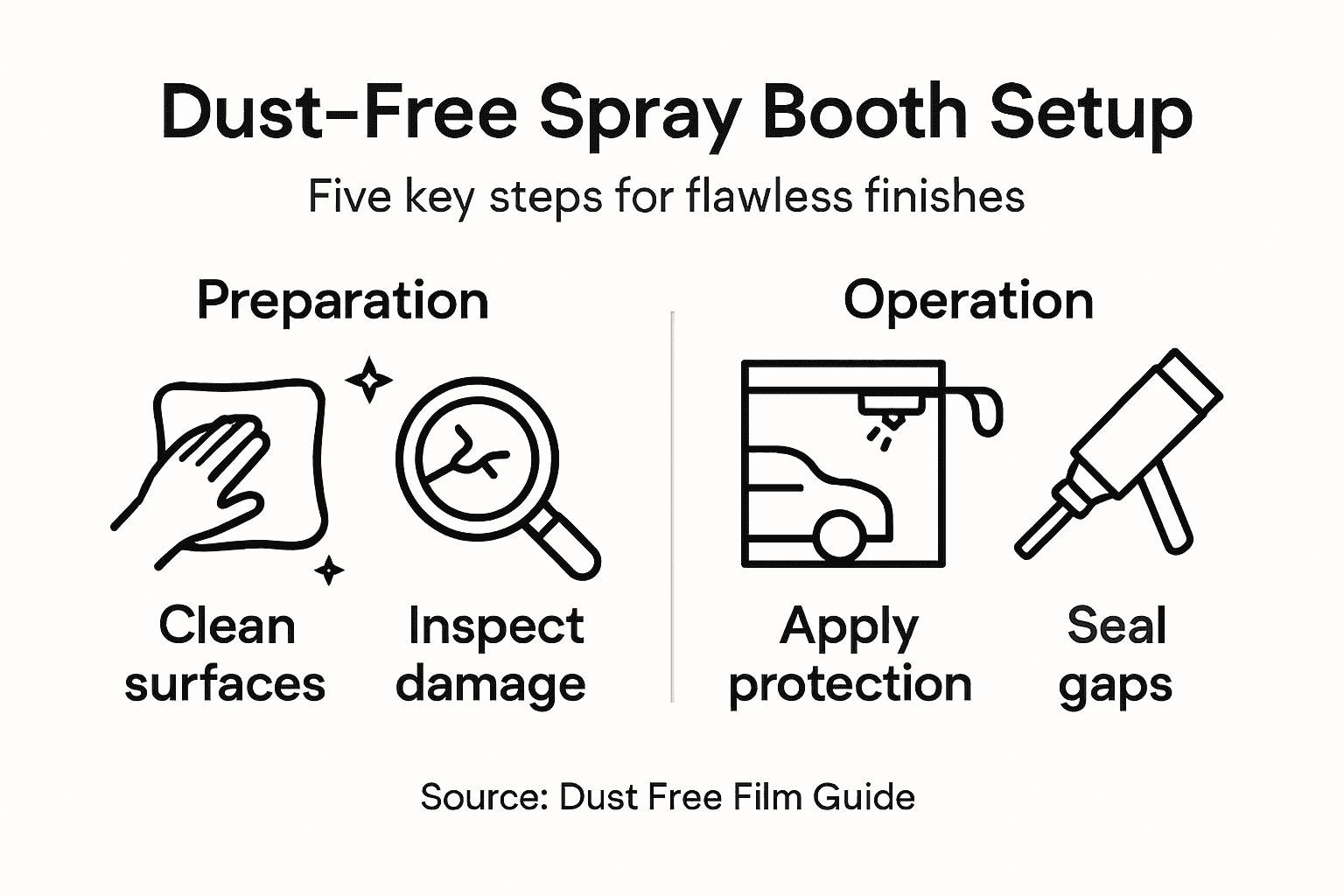
Pro tip: Create a simple verification checklist posted near your booth entrance that operators complete daily before production starts, recording filter condition, visual cleanliness, and any maintenance notes to build a performance history that protects your quality standards.
Here’s a summary of each spray booth dust control step and its purpose:
| Step | Purpose | Key Benefit |
|---|---|---|
| 1. Surface Preparation | Remove contaminants before film application | Maximizes film adhesion and durability |
| 2. Film Installation | Apply dust protection films to booth | Maintains consistently clean surfaces |
| 3. Electrostatic System Setup | Optimize dispenser for coating transfer | Reduces overspray, improves finish quality |
| 4. Sealing Critical Areas | Eliminate all booth leak points | Prevents external contamination entry |
| 5. Verification | Inspect, measure, and test booth conditions | Ensures dust-free environment, superior finishes |
Achieve Truly Dust-Free Spray Booths with Premium Protection Films
The challenge of maintaining dust-free conditions in industrial spray booth setups is real and costly. From preparing surfaces and applying protective films to sealing critical gaps and verifying air quality every detail matters. If air leaks, debris, or poor adhesion compromise your booth environment you risk ruined finishes and wasted materials. That is why choosing high-quality solutions designed specifically for these pain points is essential.
At Dust Free Film, we specialize in premium dust protection films engineered for industries like automotive refinishing and industrial painting. Our heat-resistant, static-free multi-layer films deliver superior adhesion and durability that perfectly aligns with the preparation and application steps outlined in your spray booth setup guide. Designed for easy installation with our patented dispenser system, our films create a consistent barrier against contamination that supports the optimized electrostatic discharge and filtered airflows critical to your booth’s performance.
Explore our advanced dust protection solutions and experience the difference our expertly engineered products make in maintaining cleaner, safer spray booths. Don’t let hidden dust risks sabotage your finish quality. Invest now in the trusted film systems that help you meet high European manufacturing standards and increase operational efficiency with confidence.
Discover Dust Free Film’s protection technology today and secure flawless finishes tomorrow.

Frequently Asked Questions
How do I prepare my spray booth surfaces for protection film application?
To prepare your spray booth surfaces, start by removing all loose debris, dust, and grease. Use a vacuum with a fine filter followed by clean rags or microfiber cloths to ensure surfaces are clean and dry before applying the protective film.
What is the best way to install dust protection films on booth walls and floors?
Begin installing dust protection films on the walls from the top down, pressing firmly to eliminate air pockets. When applying to the floor, overlap seams by at least two inches to prevent debris from getting underneath; ensure you work systematically to maintain alignment and prevent wrinkles.
How can I optimize my electrostatic dispenser system for better dust control?
To optimize your electrostatic dispenser system, ensure all components are properly grounded and adjust air and fluid pressure settings for balanced atomization. Regularly check coating resistivity measurements to maintain optimal particle charging and transfer efficiency.
What should I look for when sealing critical areas in my spray booth?
Inspect all potential leak points, focusing on doors, windows, and utility penetrations. Use industrial-grade sealants to fill gaps and prevent contamination, and install contamination control mats at entry points to further reduce dust exposure.
How can I verify that my spray booth maintains dust-free conditions?
Conduct regular visual inspections for dust and debris, check filter conditions, and measure air velocity to ensure optimal airflow. Perform test spray operations to detect any finish defects caused by contamination, making adjustments as needed to maintain high standards.
What routine maintenance should I implement for my dust control system?
Establish a regular maintenance schedule that includes weekly filter inspections, airflow measurements, and daily cleanliness checks before production. Documenting these procedures will help catch issues early and ensure your dust control system remains effective.
Recommended
- Dust Free Film for Spray Booth Protection | Wall and Floor
- Dust Free Film for Spray Booth Protection | Wall and Floor
- Dust Free Film for Spray Booth Protection | Wall and Floor
- Dust Free Film for Spray Booth Protection | Wall and Floor
- Understanding Improving Indoor Air Quality for Healthier Spaces – Mats4U USA