

TL;DR:
- Dust-free painting environments significantly reduce paint defects by up to 90 percent.
- Investing in proper booths and protocols improves finish quality, customer trust, and shop profitability.
- Managing internal contamination sources and static electricity is crucial for achieving flawless automotive finishes.
Even in tightly controlled factory environments, new vehicles often require buffing 25–30 dust nibs per car before they leave the line. If that’s the reality for major manufacturers with million-dollar equipment, imagine what smaller shops face without dedicated dust control. Dust contamination doesn’t just hurt the look of a finish. It drives up labor costs, eats into your profit margins, and chips away at customer trust. This article breaks down what dust-free painting actually means, the real benefits it delivers, how to compare your options, and how to handle the practical challenges every shop runs into.
Table of Contents
- What is dust-free painting in automotive repair?
- Top benefits of dust-free painting for auto repair shops
- Dust control solutions: Comparing booth types and workflow upgrades
- Handling edge cases and taking your shop dust-free
- Why most shops underestimate the value of going dust-free
- Protect your finishes with smart dust-free solutions
- Frequently asked questions
Key Takeaways
| Point | Details |
|---|---|
| Flawless paint finishes | Dust-free painting delivers truly smooth, showroom-quality results with fewer defects. |
| Lower rework costs | Cut labor and material expenses by drastically reducing time spent fixing imperfections. |
| Compliance and reputation | Modern dust control makes it easier to meet safety standards and win customer trust. |
| Actionable upgrades | Success comes from combining booth investment, proper workflow, and painter preparation. |
What is dust-free painting in automotive repair?
Dust-free painting means creating and maintaining a controlled environment where airborne particles are prevented from settling on freshly applied paint. In practice, it combines equipment, workflow habits, and surface preparation to minimize contamination at every stage of the painting process.
The sources of dust during painting are more varied than most people expect:
- The painter: Skin cells, clothing fibers, and hair are constant sources of contamination.
- The vehicle: Sanding residue, old paint flakes, and debris trapped in panel gaps release particles during prep.
- The air: Even filtered air carries microscopic particles that can ruin a clear coat.
- The booth itself: Dirty walls, floors, and fixtures shed particles into the spray zone.
Professional shops tackle these sources using a layered approach. Downdraft booths and advanced filtration systems are the industry standards for preventing dust-related paint defects. These systems push clean, filtered air from ceiling to floor, carrying particles away from the painted surface before they can settle.
Beyond equipment, dust-free environments require strict protocols. Painters wear full spray suits and head covers. Vehicles are tack-wiped immediately before spraying. Booth walls and floors are lined with protective films that trap dust and can be peeled away between jobs.
“Even the most advanced automotive factories cannot achieve zero dust. Controlled environments reduce contamination dramatically, but some level of post-paint correction remains a reality for every professional operation.”
The advantages of dust-free booths go far beyond cleaner finishes. They create a repeatable, predictable process that reduces variables and makes quality control far easier to manage.
Pro Tip: Before relying entirely on your booth’s filtration, address static electricity. Static charges on freshly sanded panels attract dust like a magnet. Use an anti-static spray or grounding strap on both the vehicle and the painter to cut contamination at the source.
Top benefits of dust-free painting for auto repair shops
The case for investing in dust-free painting goes well beyond aesthetics. Here’s what shops consistently report after upgrading their dust control:
- Fewer defects, less rework: Dust-free booths reduce paint defects by up to 90%, which means dramatically less time spent buffing, re-spraying, and correcting jobs.
- Higher customer satisfaction: Flawless finishes build trust. Customers who pick up a car with a perfect paint job come back and refer others.
- Lower material costs: Every re-spray wastes primer, paint, and clear coat. Cutting defect rates directly cuts material spend.
- Reduced labor costs: Buffing and correction work is skilled, time-consuming labor. Reducing it frees your technicians for revenue-generating jobs.
- Easier compliance: Clean booth environments make it simpler to meet OSHA, EPA, and NFPA standards for air quality and fire safety.
- Stronger shop reputation: Shops known for flawless finishes command higher prices and attract more complex, profitable jobs.
These benefits compound over time. A shop that cuts rework by even 30% recovers significant labor hours every month. Multiply that across a year and the numbers become hard to ignore.
The need for professional spray booths is well established in the industry, but many shop owners still treat booth upgrades as optional. The data says otherwise. Effective dust control methods don’t just improve quality. They change the economics of your operation.
Shops that invest in improving paint finish quality also report faster cycle times. When you’re not stopping to correct defects mid-job, vehicles move through the booth faster, increasing throughput without adding staff.
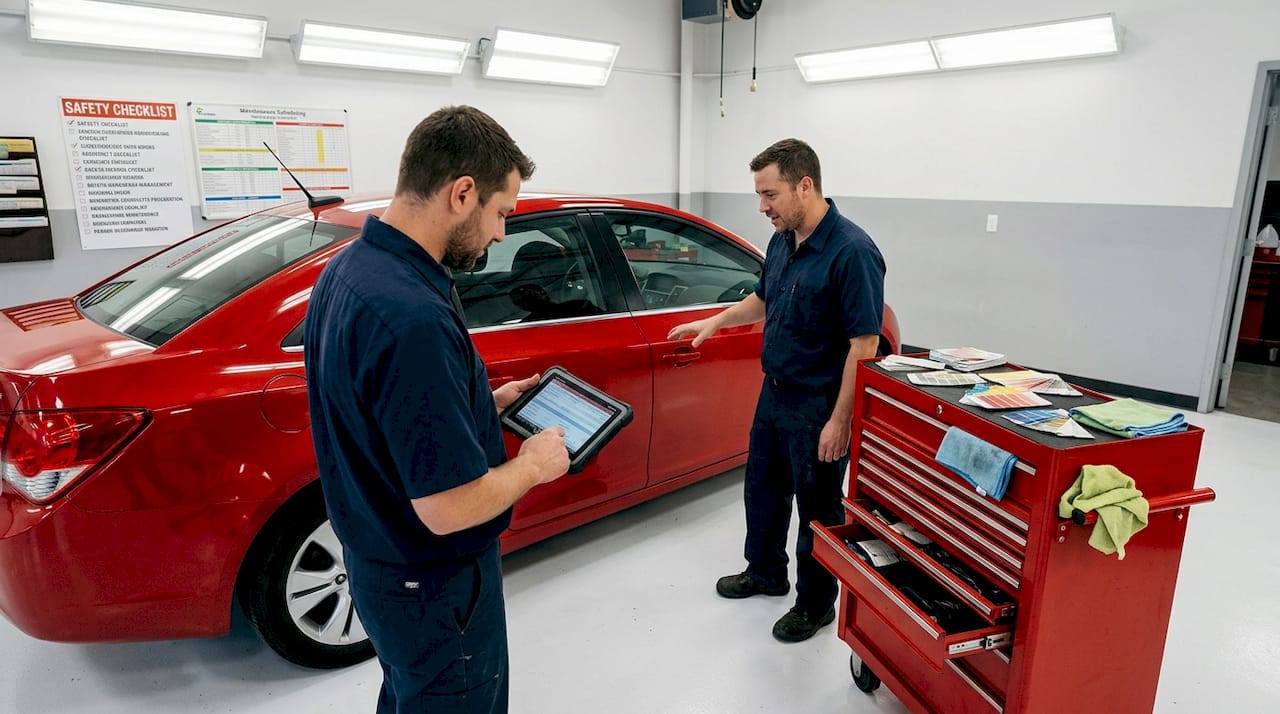
Statistic callout: Dust-free booths can reduce paint defects by up to 90%, turning rework from a daily frustration into a rare exception.
Dust control solutions: Comparing booth types and workflow upgrades
Choosing the right dust control setup means weighing booth type, workflow changes, and budget. Here’s a side-by-side look at the main options:
| Booth type | Airflow direction | Dust control performance | Relative cost | Best for |
|---|---|---|---|---|
| Downdraft | Ceiling to floor | Excellent | High | High-volume, professional shops |
| Crossdraft | Side to side | Good | Moderate | Mid-size operations |
| Semi-downdraft | Angled ceiling/side | Good | Moderate | Space-limited shops |
| Open-face | Minimal control | Poor | Low | Light-duty or DIY use |
Downdraft booths outperform crossdraft and open-face booths in achieving dust-free finishes, but they require greater investment in both installation and ongoing filter maintenance. For shops serious about quality, that investment pays back quickly through reduced rework. A detailed comparison of booth types can help you match the right system to your volume and space.
Beyond booth selection, workflow upgrades make a measurable difference. Here’s how to integrate dust-free improvements in stages:
- Start with prep protocols: Implement tack wiping, spray suits, and panel cleaning as non-negotiable steps before any paint job.
- Upgrade filtration: Replace intake and exhaust filters on a fixed schedule. Clogged filters are a major source of contamination.
- Add booth wall and floor protection films: Multi-layer films trap dust on booth surfaces and peel away cleanly between jobs, keeping your booth fresh without lengthy cleaning cycles.
- Install static control measures: Anti-static guns and grounding systems reduce particle attraction on vehicle surfaces.
- Evaluate booth type: Once protocols are solid, assess whether your current booth type supports your quality targets or whether an upgrade is justified.
A solid paint booth setup guide can walk you through each stage in detail. Optimizing your spray booth workflow before investing in new equipment often delivers faster returns than jumping straight to a booth replacement.
Handling edge cases and taking your shop dust-free
No booth eliminates every particle. Understanding realistic expectations helps you budget correctly and avoid frustration when a few nibs still appear after your best efforts.
| Booth type / setup | Avg. dust nibs per vehicle | Post-paint buffing time |
|---|---|---|
| Open-face or no booth | 50 or more | 60 to 90 minutes |
| Crossdraft booth | 15 to 30 | 30 to 45 minutes |
| Downdraft booth (standard) | 5 to 15 | 15 to 30 minutes |
| Downdraft with full dust control protocols | 1 to 5 | 5 to 15 minutes |
Most dust comes from internal sources like the painter, the vehicle, and shop processes rather than ambient air. Even advanced shops still allocate 5 to 10% of job time for post-paint buffing. That’s not a failure. It’s a realistic part of professional painting that should be built into your pricing and scheduling.
Humidity and static are two variables that shops often overlook. High humidity causes dust particles to clump and settle faster. Low humidity increases static charges that attract fine particles to panel surfaces. Managing static control in booths is one of the most cost-effective ways to reduce contamination without changing your booth setup.
For contamination prevention steps that address humidity, static, and surface prep together, a systematic checklist approach works better than ad hoc fixes. Build the checklist into your standard operating procedure so every painter follows the same steps every time.
Additional dust reduction tips worth adopting include wetting the booth floor before painting to trap falling particles, scheduling paint jobs away from high-traffic periods in the shop, and using dedicated painter gear that never leaves the spray area.
Pro Tip: Focus 70% of your anti-dust effort on upfront preparation, not just booth upgrades. The best booth in the world can’t compensate for a dirty vehicle, an unprepared painter, or a contaminated surface.
Why most shops underestimate the value of going dust-free
Here’s an honest take: most auto shops treat dust control as a maintenance issue rather than a profit strategy. They budget for booth filters and tack cloths, but they rarely track how many labor hours disappear into buffing, re-spraying, and customer callbacks caused by dust defects.
The hidden cost of dust is almost always larger than it looks. A single re-spray on a full panel can cost two to four hours of skilled labor plus materials. Do that three times a week and you’re losing significant revenue every month without it ever showing up as a line item.
Dust-free painting also shapes customer perception in ways that are hard to measure but easy to feel. A customer who picks up a car with a flawless finish doesn’t just come back. They tell people. Referral business built on quality reputation is the most cost-effective marketing a shop can have.
Clean booths improve finishes in ways that show up in your reviews, your repeat business, and your ability to charge premium rates. Shops that see dust control as an investment rather than a cost tend to grow faster, retain better technicians, and win more complex jobs. The shops that treat it as an afterthought keep fighting the same rework battles year after year.
Protect your finishes with smart dust-free solutions
The benefits covered in this article are real and measurable, but they only materialize when you have the right tools in place. Booth wall and floor protection films are one of the most practical, cost-effective upgrades any shop can make right now, without waiting for a full booth replacement.
At Dust Free Film, our multi-layer electrostatic protection films are designed specifically for the demands of professional spray booths. They install quickly, trap dust on contact, and peel away cleanly between jobs. If you’re ready to cut rework and protect your finishes, explore our spray booth protection solutions or request a quote tailored to your shop’s needs.
Frequently asked questions
How much can dust-free painting reduce defects?
Dust-free booths cut defects by up to 90%, which dramatically reduces the time and cost spent on buffing and rework. That’s a direct improvement to your shop’s throughput and profitability.
What is the main source of dust during painting?
Most paint dust comes from internal sources like the painter, the vehicle being sprayed, and debris within the shop itself, not from outside air. Controlling these internal sources is where the biggest gains are made.
Can small shops achieve dust-free painting without a booth?
Small or DIY shops can improve results with HVLP sprayers, tack cloths, and temporary barriers, but booths are essential for pros handling high-volume or high-quality work. Without a booth, consistent professional results are very difficult to achieve.
How should a shop budget for post-paint dust correction?
Even in well-equipped shops, plan on 5 to 10% additional job time for post-paint buffing to address remaining dust nibs. Build this into your labor estimates so it doesn’t eat into your margins unexpectedly.