Dust Free Film
Back to Blog

Master Paint Booth Contamination Prevention in Easy Steps

By Dust Free - Spray Booth FilmJanuary 28, 202610 min read
Master Paint Booth Contamination Prevention in Easy Steps

Dust particles often threaten the finish of even the most meticulous paint jobs, turning routine spray booth operations into a challenge for every European facility manager. Addressing these risks is vital not only for maintaining compliance but also for protecting the reputation of your shop’s craftsmanship. Discover how a strategic combination of comprehensive booth assessment and premium multi-layer protection films can create a contamination free environment that keeps every painted surface flawless and every project running smoothly.

Table of Contents

Quick Summary

Key Point Explanation
1. Conduct Thorough Environmental Assessment Assess visual and environmental factors to identify potential dust and contamination sources before painting.
2. Utilize Premium Dust Protection Films Install multi-layer booth protection films on surfaces to create effective barriers against contamination.
3. Implement Regular Inspection Protocols Establish a systematic routine for inspecting filters and protective films to maintain optimal conditions.
4. Optimize Ventilation System Performance Ensure that your ventilation maintains proper air pressure and filtration to prevent contaminant entry.
5. Maintain Detailed Maintenance Logs Keep records of inspections, filter replacements, and cleaning to track performance and identify improvements.

Step 1: Assess and Prepare the Booth Environment

Creating a contamination free paint booth environment starts with a comprehensive assessment and strategic preparation. Indoor air quality assessment represents the critical first phase in preventing unwanted particulate interference during painting operations.

Begin by conducting a meticulous visual and environmental evaluation of your spray booth. Check for dust sources including unsealed walls, floor imperfections, ventilation system gaps, and potential entry points for external contaminants. Measure existing air quality using specialized particulate monitoring equipment to establish baseline contamination levels. Focus on identifying potential particle generation zones like worn floor coatings, damaged wall surfaces, or inadequate sealing around equipment connections.

A thorough preparation involves multiple strategic steps. Remove all unnecessary equipment and materials from the booth space. Clean surfaces systematically using lint-free cloths and approved industrial cleaning solutions. Seal any visible cracks or gaps in walls, floors, and entry points using appropriate industrial sealants. Verify that your ventilation system operates at optimal efficiency, maintaining proper air pressure differential and filtration capabilities.

Pro tip: Invest in disposable floor coverings and wall protection films to create an immediate barrier against potential contamination sources during your painting process.

Here’s a summary of potential contamination sources and prevention strategies for paint booths:

Contamination Source Example Location Primary Prevention Action
Unsealed walls Wall joints/edges Seal with industrial sealant
Floor imperfections Cracked booth flooring Apply protective floor film
Ventilation gaps Fan/exhaust inlets Maintain filter and pressure seals
Unnecessary materials Tools, equipment inside Remove before operations
Damaged surfaces Worn coatings Repair prior to film installation

Step 2: Install Premium Dust Protection Films

Installing premium dust protection films represents a critical defense mechanism against paint booth contamination. Multi-layer booth protection films provide an advanced solution for maintaining pristine painting environments by creating comprehensive surface barriers.

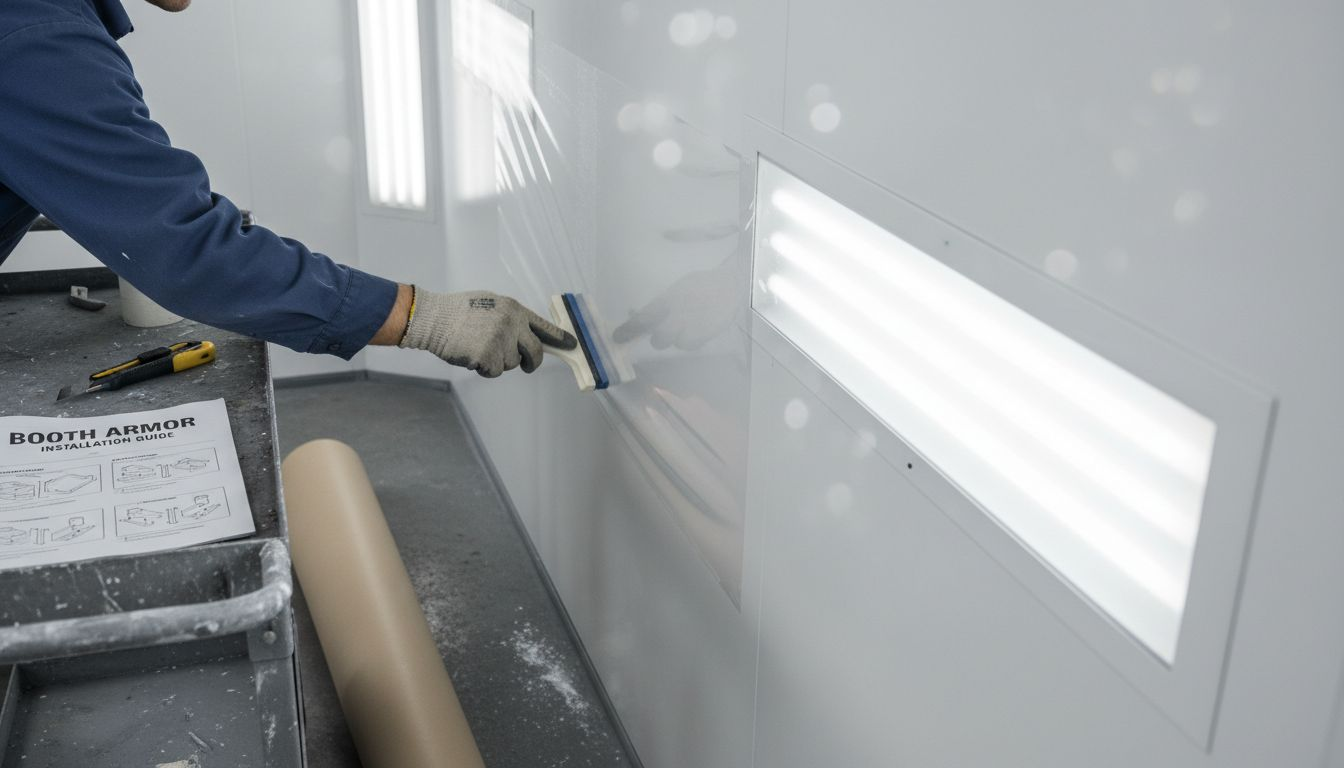
Begin the installation process by carefully examining your booth surfaces. Ensure walls and floors are completely clean and dry before application. Start with the walls first trim the film to match exact wall dimensions allowing slight overlap for complete coverage. Carefully peel back the protective backing and apply the film from top to bottom using smooth horizontal strokes to eliminate air bubbles. Apply consistent pressure using a specialized squeegee to guarantee uniform adhesion and prevent potential lifting or separation.

Worker installing dust protection film on wall

When covering floor surfaces pay extra attention to creating seamless connections between film sections. Overlap edges slightly and press firmly to create a continuous protective barrier. Verify that all edges are securely fastened and no gaps exist that could potentially allow dust or contaminant penetration. Take your time during installation to guarantee maximum protection and minimize potential painting interference.

Pro tip: Work in a temperature controlled environment between 60 and 75 degrees Fahrenheit to ensure optimal film adhesion and minimize potential installation challenges.

Step 3: Apply Protective Floor and Wall Systems

Applying comprehensive protective floor and wall systems is crucial for maintaining a dust free painting environment. Floor protection film serves as a critical barrier against potential contamination sources and helps preserve your booth’s operational integrity.

Start by thoroughly preparing your floor surface. Remove all debris and ensure the area is completely clean and dry. Measure the floor area precisely and cut your protective film to match the exact dimensions. Begin installation from one corner of the booth working methodically across the surface. Unroll the film carefully maintaining consistent tension and using a specialized squeegee to eliminate air bubbles. Press firmly along each section to guarantee complete adhesion and prevent potential lifting or movement during painting operations.

When applying wall protection follow a similar systematic approach. Work vertically from top to bottom ensuring each film section overlaps slightly to create a continuous protective barrier. Use smooth consistent motions to eliminate wrinkles or air pockets. Pay special attention to corners and edges where potential contamination can easily accumulate. Double check that all protective film sections are securely fastened and create a seamless protective environment.

Pro tip: Use a heat gun on low settings to help activate adhesive properties and improve film conformity during installation.

Step 4: Utilize Patented Dispenser for Smooth Application

Patented dispenser systems revolutionize the application process for protective films in paint booths. These innovative tools ensure precise and efficient coverage while minimizing potential installation errors that could compromise your contamination prevention strategy.

Begin by familiarizing yourself with the dispenser mechanism. Most patented systems feature an adjustable mounting platform that allows smooth unrolling of protective films with consistent tension. Position the dispenser at a comfortable working height aligned with the surface you will be covering. Slowly unroll the film while maintaining steady pressure using the integrated squeegee mechanism. This approach helps eliminate air bubbles and ensures uniform adhesion across the entire surface.

As you progress through the application process pay close attention to alignment and overlap. The dispenser design typically includes measurement guides to help you create precise film sections. Work systematically from one end of the surface to the other maintaining consistent speed and pressure. Watch for any potential wrinkles or air pockets and address them immediately using the squeegee tool provided with the dispenser system.

Pro tip: Practice your film application technique on a small test section before covering the entire surface to build muscle memory and improve your overall installation precision.

This table compares manual and dispenser-assisted film application in spray booths:

Installation Method Error Risk Labor Intensity Film Consistency
Manual Application Higher (misalignment) More physically taxing May be uneven in spots
Dispenser System Lower (exact guides) Less effort needed Uniform across surfaces

Step 5: Inspect and Maintain Dust-Free Conditions

Maintaining pristine dust-free conditions requires a systematic and proactive approach to spray booth maintenance workflow. Regular inspections and targeted maintenance strategies are essential for preventing contamination and ensuring optimal painting performance.

Develop a comprehensive inspection routine that covers multiple critical areas. Start by examining air intake and exhaust filters for signs of clogging or damage. Check filter integrity thoroughly and replace elements showing wear or reduced airflow efficiency. Inspect protective film surfaces for any tears punctures or lifting edges that could compromise your contamination barrier. Verify that all booth seals remain intact and that no gaps exist which might allow dust particles to enter the painting environment.

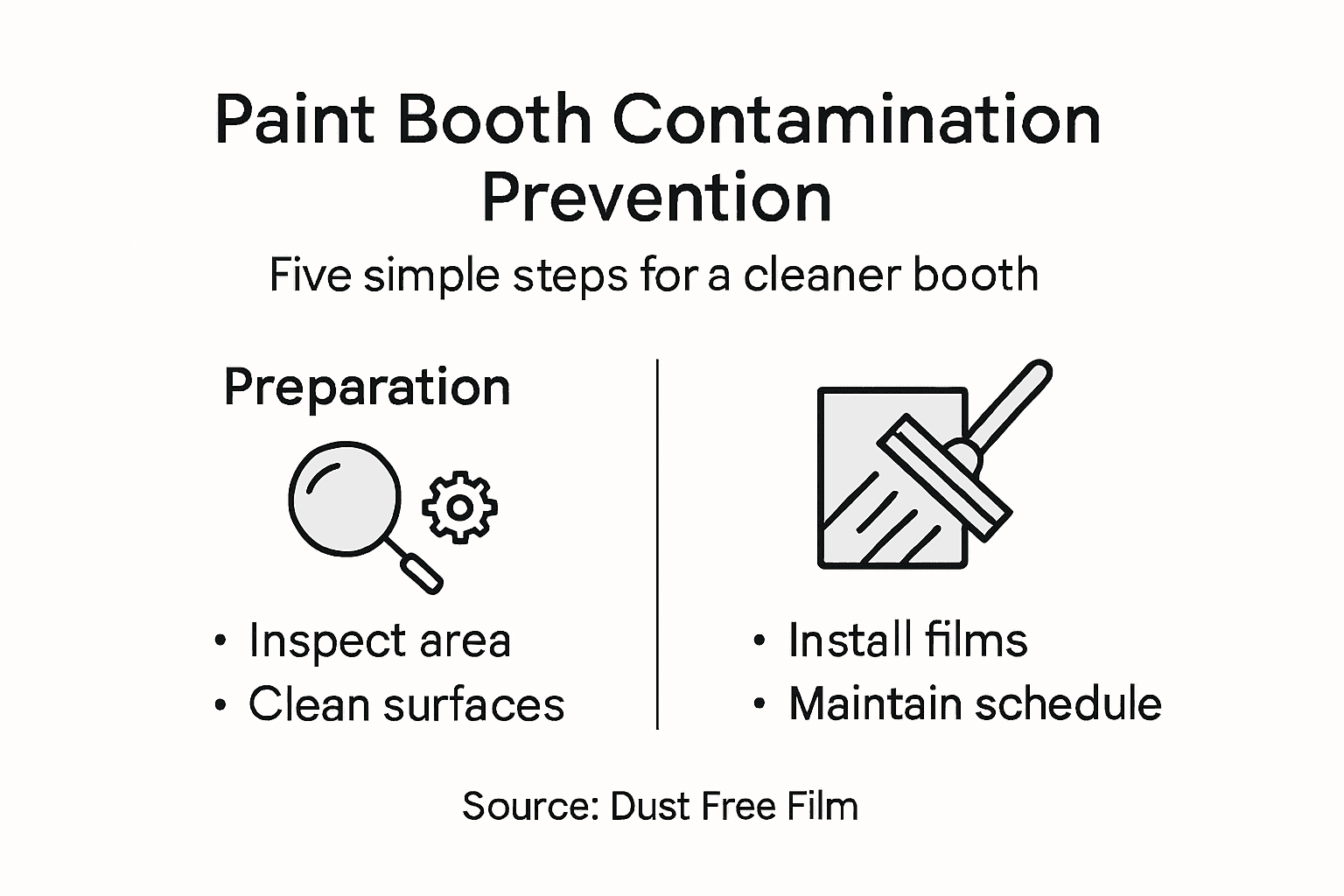
Infographic showing prevention process in paint booth

Implement a structured maintenance schedule that includes daily surface cleaning specialized equipment checks and periodic deep cleaning processes. Remove loose particles using lint-free cloths and approved cleaning solutions. Pay special attention to corners floor edges and hard to reach areas where dust tends to accumulate. Regularly calibrate ventilation systems to maintain proper air pressure differentials and ensure continuous filtration of potential contaminants.

Pro tip: Keep a detailed maintenance log documenting each inspection filter replacement and cleaning activity to track booth performance and identify potential improvement areas.

Achieve True Dust-Free Paint Booth Environments with Proven Protection Solutions

The article reveals the critical challenges spray booth operators face in preventing contamination and securing a pristine painting environment. From sealing unprotected gaps and cracks to ensuring flawless installation of protective films, the struggle to maintain dust-free conditions can be overwhelming. Key pain points include eliminating airborne particulates, applying multi-layer dust protection films smoothly, and maintaining these barriers against daily wear and tear.

At Dust Free Film, we understand these challenges deeply. Our premium range of heat-resistant and static-free multi-layer booth protection films deliver the exact solutions to create secure, contaminant-free barriers tailored for high-traffic industrial paint booths. Featuring patented dispenser systems, our products guarantee quick, bubble-free installation so you can focus on perfect finishes instead of worrying about dust. Explore how our innovative floor protection film and wall protectors combine durability with easy maintenance to extend the life and cleanliness of your booth.

Ready to transform your spray booth into a consistently dust-free zone that enhances paint quality?

https://www.dustfreefilm.com

Visit Dust Free Film now to discover advanced dust protection solutions designed specifically for automotive refinishing and industrial painting. Don’t settle for compromised paint jobs. Act today for performance you can trust and results you will see instantly.

Frequently Asked Questions

How can I assess the paint booth environment for contamination?

To assess your paint booth environment, start with a thorough visual and environmental evaluation. Look for dust sources, measure air quality, and identify areas that may generate particles, such as worn surfaces or gaps around equipment.

What steps should I take to prepare the paint booth for painting?

Prepare the paint booth by removing unnecessary equipment, cleaning surfaces with lint-free cloths, and sealing any visible cracks or gaps. Ensure that your ventilation system is functioning efficiently and maintains proper air pressure differential to prevent contamination.

How do I install protective films in my paint booth?

To install protective films, ensure surfaces are clean and dry before applying the film. Start by trimming the film to match the surface dimensions and applying it from top to bottom while using a squeegee to eliminate air bubbles, ensuring a seamless barrier against dust.

What maintenance should I perform to keep the paint booth dust-free?

Regular maintenance includes inspecting filters for clogs, checking protective film for tears, and maintaining booth seals. Implement a cleaning routine that targets corners and edges, and calibrate the ventilation system to ensure effective airflow and dust filtration regularly.

How often should I inspect the paint booth for potential contamination?

Inspect your paint booth weekly for signs of contamination, such as clogged filters or damaged films. Conduct comprehensive checks every month to maintain optimal painting conditions and prevent the buildup of dust and other particles.

Enjoyed this article? Share it with your network!

Read More Articles

Powered by marsoft.ai