
TL;DR:
- Multi-layer protective films trap dust longer, reducing defects and rework in spray booths. Switching to peelable layers improves efficiency, lowers costs, and enhances finish quality. Proper application and scheduling maximize benefits, delivering quick ROI and more productive shop operations.
Dust in a spray booth is never just a nuisance. Even in a facility that looks spotless, microscopic particles settle on freshly painted surfaces within seconds, creating defects that cost time, materials, and client trust. Many shops still rely on single-layer films or basic cleaning routines, assuming that’s enough to stay competitive. It isn’t. Multi-layer protection changes the equation entirely, giving automotive and industrial facilities a smarter, more durable way to control contamination, reduce rework, and deliver the kind of finish quality that builds a real reputation.
Table of Contents
- How dust and contaminants impact shop operations
- What makes multi-layer protection different?
- Key benefits of multi-layer protection in real-world settings
- How to implement multi-layer protection in your facility
- Why most shops underestimate the payback of multi-layer protection
- Ready for better protection and cleaner finish results?
- Frequently asked questions
Key Takeaways
| Point | Details |
|---|---|
| Superior dust control | Multi-layer protection traps more dust and contaminants, enabling cleaner work and better finishes. |
| Reduced maintenance time | Peel-away layers slash cleaning time and labor, increasing shop efficiency. |
| Cost-effective and eco-friendly | Longer intervals between replacements cut both costs and waste compared to single-use solutions. |
| Simple implementation | Installing and maintaining multi-layer film is straightforward with immediate, noticeable benefits. |
How dust and contaminants impact shop operations
The real cost of dust in a spray booth goes far beyond a few specks on a panel. Paint defects triggered by airborne particles force costly rework cycles, delay vehicle turnaround, and quietly drain profitability. A single contaminated job can mean hours of sanding, recoating, and re-curing time that nobody budgeted for. Multiply that across a busy week, and the numbers get uncomfortable fast.
What makes this especially frustrating is that many contaminants are invisible to the naked eye. Overspray residue, fine sanding dust, and microscopic fibers from shop clothing or filters all float in the air long after visible debris settles. Dust particles are a leading cause of paint defects in spray booth operations, and most of them are too small to see until the damage is already done.
Here’s what contamination actually costs a typical shop:
- Rework labor: Technicians spend hours correcting defects that should never have appeared
- Material waste: Additional paint, primer, and clear coat used in re-dos add up quickly
- Downtime: Bays tied up with rework can’t process new jobs
- Client trust: Repeat defects damage your shop’s reputation and referral rate
- Energy costs: Extra bake cycles for reworked panels increase utility bills
Single-layer spray booth films for dust control do provide a baseline of protection, but they reach their limit quickly in high-traffic operations. Once a single-layer film is saturated with overspray and dust, the only option is full replacement, which means downtime and labor. In a shop running multiple bays and dozens of jobs per week, that replacement cycle becomes a recurring operational headache.
The connection between dust control and efficiency in spray booths is direct and measurable. Cleaner surfaces mean fewer defects. Fewer defects mean faster throughput. Faster throughput means more revenue per bay per week. Investing in better contamination control isn’t just about finish quality. It’s a core operational decision.
What makes multi-layer protection different?
Understanding the problem leads naturally to examining the solution. Multi-layer protection is not simply a thicker version of standard film. It’s an engineered system where multiple peelable surfaces are bonded together, each ready to be removed when the top layer becomes contaminated. Instead of replacing the entire film installation, you simply peel away the compromised top layer and expose a fresh, clean surface underneath. It takes minutes, not hours.
Multi-layer films are designed to capture and lock away particulates for longer-lasting cleanliness, which means each layer actively traps dust and overspray rather than just deflecting it. Advanced adhesive technology and specialized film formulations work together to prevent particles from migrating between layers, ensuring that each fresh surface is genuinely clean.
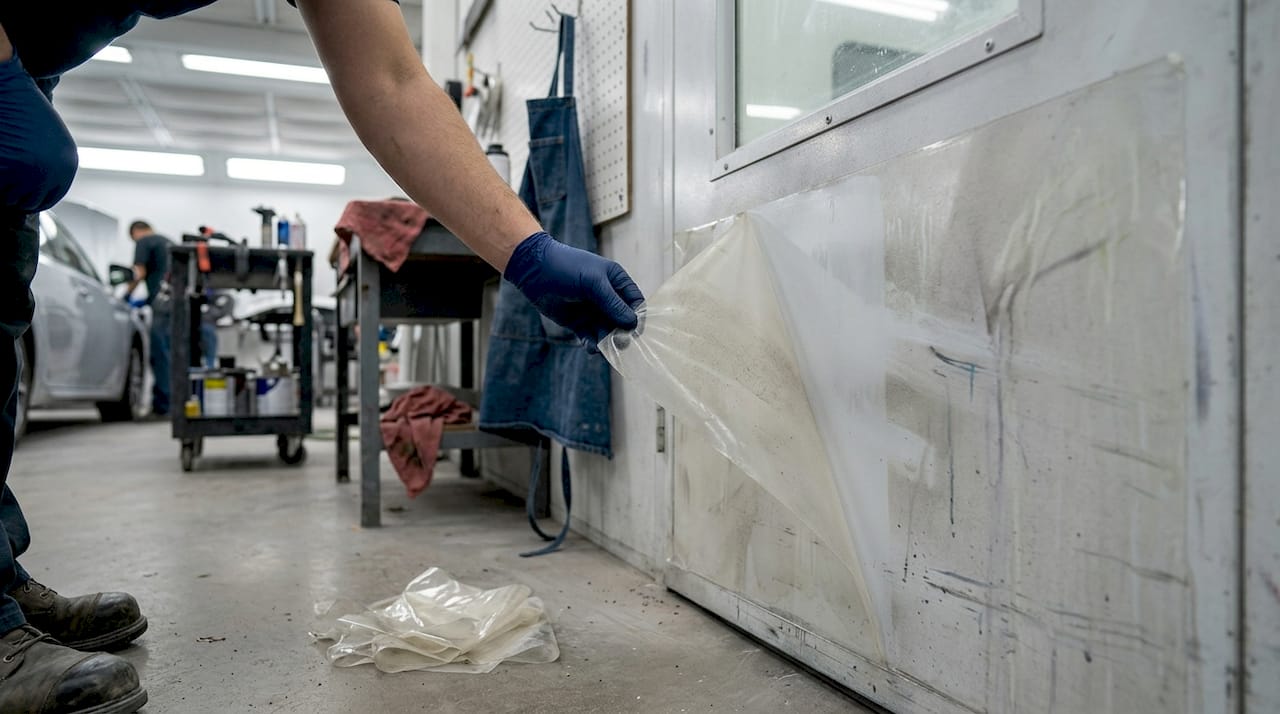
The difference between traditional and multi-layer protection is significant:
| Feature | Single-layer film | Multi-layer film |
|---|---|---|
| Lifespan per installation | Short, replaced frequently | Extended, peel by peel |
| Replacement downtime | High | Minimal |
| Dust capture effectiveness | Surface level | Deep, locked-in trapping |
| Labor per maintenance cycle | High | Very low |
| Long-term cost per bay | Higher | Lower |
| Environmental waste | More plastic over time | Less total plastic used |
The multi-layer film benefits extend beyond convenience. Because each layer is engineered to maintain a static-free, heat-resistant surface, the film performs consistently through bake cycles and heavy use without degrading or releasing trapped particles back into the booth environment. That consistency is what separates a reliable system from one that just looks good on paper.
To maximize paint quality, the film system needs to perform at every stage of the process, from prep through final cure. Multi-layer protection delivers that continuity in a way that single-layer solutions simply cannot match.
Pro Tip: Schedule layer peels at the end of each shift or after high-volume paint days. Building this into your standard operating procedure keeps surfaces consistently clean without disrupting workflow.
Key benefits of multi-layer protection in real-world settings
With the engineering details clear, it’s time to see how these benefits show up on the shop floor. The advantages of multi-layer protection aren’t theoretical. Shops that make the switch report measurable improvements across several areas that matter to both managers and technicians.
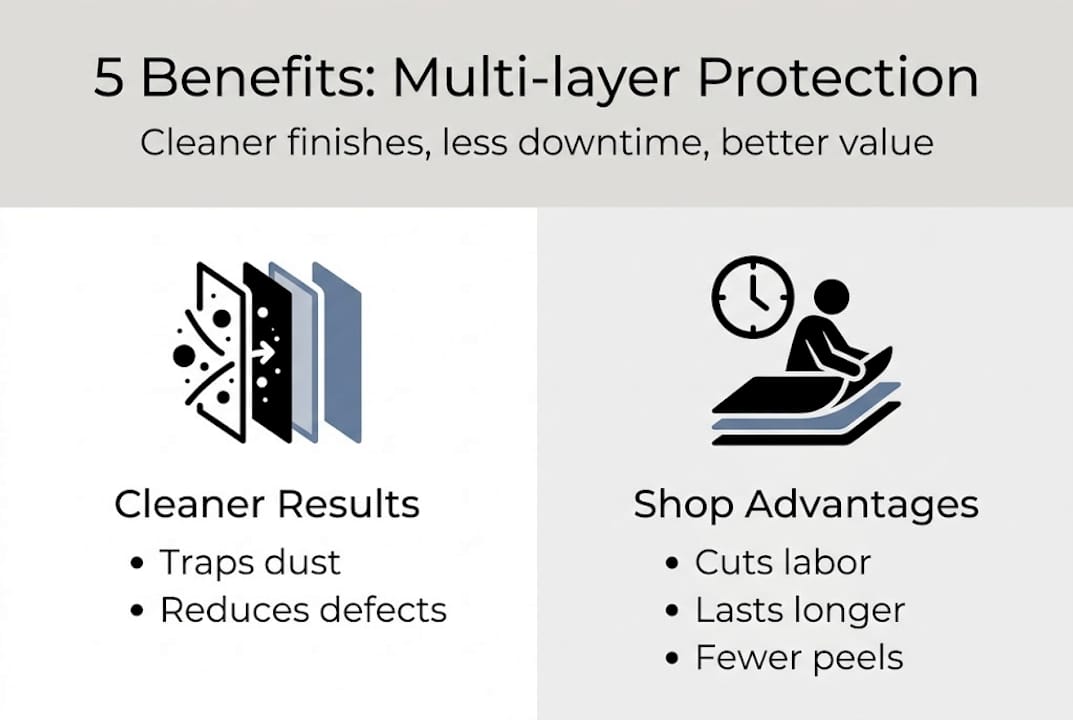
- Cleaner finishes with fewer defects: Fresh peelable surfaces mean particles have nowhere to hide. Technicians work in a consistently clean environment, and finish quality improves noticeably within the first week of use.
- Less labor for cleaning and maintenance: Instead of scrubbing walls and floors between jobs, staff simply peel a layer. What used to take an hour can take five minutes.
- Reduced material waste: Fewer rework cycles mean less paint, primer, and clear coat consumed per job. Over a month, that reduction is significant.
- Lower long-term film costs: Although multi-layer film has a higher upfront cost than basic film, the reduced replacement frequency makes it cheaper per usable surface over time.
- Smaller environmental footprint: Using fewer total layers of plastic over a year compared to repeated single-layer replacements reduces your facility’s plastic waste output.
Shops using multi-layer films report notable reductions in cleaning time and fewer paintwork re-dos, which translates directly into recaptured labor hours and higher bay utilization.
“Switching to multi-layer protection was the single biggest operational change we made last year. The time savings alone paid for the investment within two months.”
The benefits of spray booth films compound over time. A shop saving two hours of cleaning labor per bay per week, across three bays, recovers over 300 labor hours annually. That’s real capacity returned to productive work. The film durability advantages also mean fewer emergency replacements and more predictable maintenance scheduling, which makes operations easier to manage at scale.
How to implement multi-layer protection in your facility
To achieve these results, you need a practical roadmap for rolling out multi-layer solutions. The good news is that implementation is straightforward when you follow a structured approach.
Application techniques and product selection play a major role in maximizing film effectiveness, so starting with the right product for each surface is essential.
Choosing the right film for walls vs. floors:
| Surface | Film characteristics needed | Key consideration |
|---|---|---|
| Booth walls | Lightweight, static-free, heat-resistant | Must not interfere with airflow or lighting |
| Booth floors | Heavy-duty, anti-slip, high durability | Must withstand foot traffic and rolling equipment |
| Ceiling areas | Thin, transparent, easy peel | Visibility and safety are priorities |
Here’s a practical installation overview to get your team started:
- Clean the surface first: Any dust or grease under the film will compromise adhesion and reduce effectiveness
- Use a patented dispenser system: This eliminates bubbles and ensures even application without wrinkles
- Start from the top: Apply wall films from ceiling to floor to prevent overlap issues
- Overlap seams by at least 2 inches: This prevents gaps where dust can enter between panels
- Label each installation date: Tracking when film was applied helps you manage peel schedules accurately
For floor protection strategies in high-traffic bays, heavier-duty multi-layer films are the right call. Floor films face more mechanical stress than wall films, so durability and anti-slip properties matter as much as dust capture.
The best multi-layer protectors for 2026 come with clear manufacturer guidance on peel frequency. Most operations find that peeling once a week in standard conditions, or after any particularly dusty project, keeps performance at its peak. Avoid waiting until a layer looks heavily contaminated before peeling. By that point, particles may already be affecting finish quality.
Common pitfalls to avoid include applying film over contaminated surfaces, skipping seam overlaps, and using the wrong film weight for floor applications. Each of these mistakes shortens film life and reduces the protection you’re paying for.
Why most shops underestimate the payback of multi-layer protection
Here’s an uncomfortable truth most industry conversations avoid: shops that hesitate on multi-layer protection are almost always looking at the wrong number. They see the upfront film cost and compare it directly to the cheapest single-layer option on the market. That comparison misses the actual financial picture entirely.
The real payback lives in labor hours recovered, rework jobs eliminated, and bay time freed up for productive work. When you track those numbers over a quarter, the multi-layer film ROI becomes obvious. Smart managers who run the full calculation consistently find that multi-layer protection pays for itself faster than almost any other operational upgrade they’ve made.
The counterintuitive reality is that spending a little more on better film protection is one of the lowest-risk investments a shop can make. The savings aren’t speculative. They show up in your labor logs, your material costs, and your throughput numbers within weeks. If you’re still measuring protection value by the price per roll, it’s time to change the metric.
Ready for better protection and cleaner finish results?
Multi-layer protection delivers real, measurable value for automotive and industrial facilities that take finish quality seriously. If you’ve been managing contamination with single-layer solutions and wondering why results aren’t consistent, the answer is usually the system, not the team.
At Dust Free Film, we’ve spent over a decade engineering multi-layer booth protection that works in the real conditions your shop faces every day. Whether you’re outfitting a single bay or a large industrial facility, we have the right film configuration for your operation. Visit our website to explore our full product range, or request a quote and connect with our team to find the best fit for your specific setup.
Frequently asked questions
How many layers should I expect in a multi-layer booth protection film?
Most multi-layer films offer 3 to 6 layers, allowing you to peel away contaminated surfaces several times before total replacement is needed.
Will multi-layer protection reduce my shop’s cleaning time?
Yes. Multi-layer protection reduces cleaning labor and downtime significantly, since top layers peel away in minutes to reveal a fresh, clean surface.
Can I use the same film for both spray booth walls and floors?
Some films work across both surfaces, but selecting the right type for each application ensures optimal durability and performance where it matters most.
How often should I replace or peel a layer in a busy shop?
Most shops follow a weekly peel schedule or peel after high-dust projects, adjusting frequency based on workload and observed surface condition.