
TL;DR:
- The paint booth permitting process involves approval from multiple agencies to ensure safety and environmental compliance before operation. Proper documentation and early coordination with building, air quality, and fire agencies prevent delays, fines, and shutdowns. Ongoing compliance requires regular inspections and record-keeping to maintain valid permits and insurance coverage.
The paint booth permitting process is a multi-agency regulatory approval system that confirms your spray booth installation meets local, state, and federal safety and environmental standards. Formally called spray booth permitting or air quality permitting, this process involves building departments, air quality management districts, and fire marshals, each reviewing separate aspects of your installation. Getting it right from the start protects your business from fines, shutdowns, and costly rework. Skipping or rushing any part of the process puts your operation, your workers, and your insurance coverage at risk.
What are the required permits and which agencies are involved?
Paint booth permitting is a multi-jurisdictional compliance project involving at least three distinct agencies, and approval from one does not guarantee compliance with the others. Each agency reviews a different aspect of your installation, and their requirements do not overlap cleanly.
Building permits cover the structural, electrical, and mechanical installation of the booth itself. Your local building department reviews booth dimensions, foundation requirements, utility connections, and ventilation ductwork. These permits apply to the physical structure, not to what happens inside it.
Air quality permits address emissions from spray operations. These permits are issued by your regional air quality management district and are governed by EPA NESHAP 6H, which regulates volatile organic compounds (VOCs) and hazardous air pollutants (HAPs) from surface coating operations. State and local codes often add requirements on top of federal minimums. This is typically the most complex permit to obtain.
Fire department approvals confirm that your fire suppression system and electrical equipment meet NFPA 33 standards. The fire marshal reviews explosion-proof electrical components, sprinkler or dry chemical suppression systems, and emergency shutoff configurations. Fire suppression approval by the fire marshal is a prerequisite before you can operate.
- Contact all three agencies before finalizing your booth design, not after.
- Requirements vary significantly by city, county, and state.
- Some districts require pre-application meetings before accepting formal submissions.
- Zoning approval may be a separate fourth step in certain jurisdictions.
Pro Tip: Request a pre-application conference with your local air quality district. Many districts offer this at no charge, and it can reveal documentation gaps before you spend money on engineering drawings.
What technical documentation is required for permit submission?
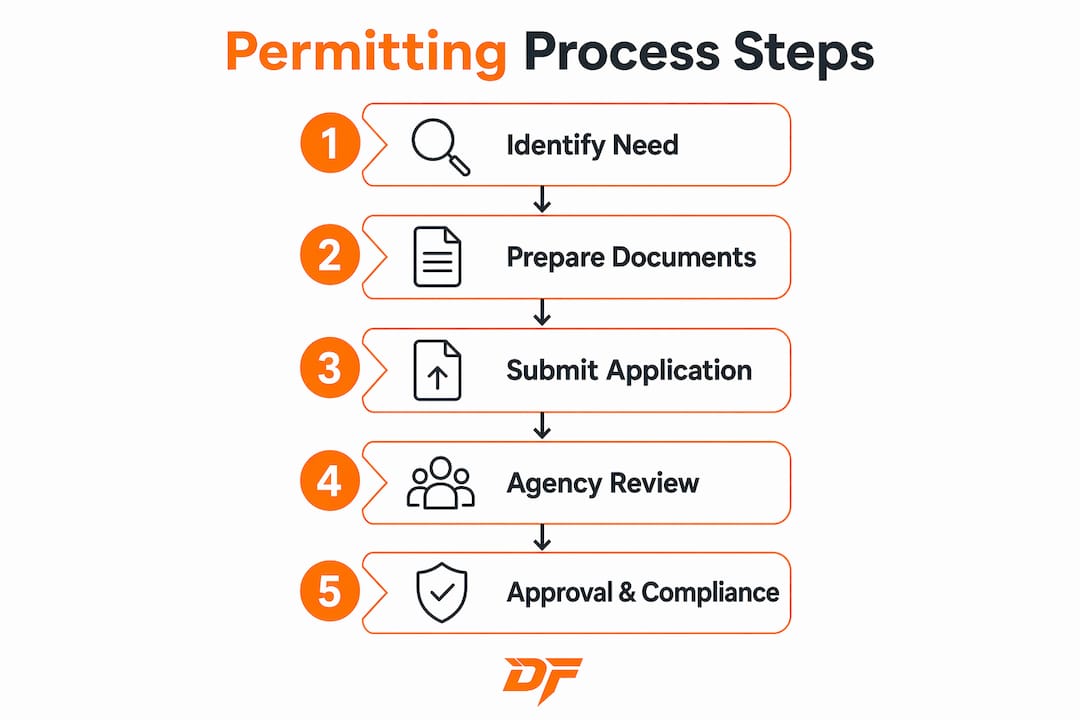
Permit applications require detailed technical documentation, and incomplete submissions are the single most common cause of delays. Regulators will not approve what they cannot verify.
The core submission package for an air quality permit includes:
- Booth layout and dimensions. Regulators need exact interior measurements to calculate air volume and verify that ventilation design meets minimum standards.
- Engineered ventilation flow rates. Your mechanical engineer must document airflow calculations. Spray booths must maintain a minimum average air face velocity of 100 linear feet per minute per OSHA 29 CFR 1910.94© and NFPA 33. That minimum exists because slower airflow allows flammable vapor concentrations to build to dangerous levels.
- Emissions control system specifications. This includes filter type, filter efficiency ratings, and any add-on controls such as carbon adsorbers or afterburners. VOC and HAP emission calculations must be submitted alongside these specs.
- Environmental impact data. You must document the types and quantities of coatings, solvents, and thinners used annually. This data feeds directly into your air quality permit conditions and may determine whether you fall under a minor or major source threshold.
- Electrical equipment certifications. All electrical components inside the spray area must be explosion-proof and listed for use in Class I, Division 1 or Division 2 locations per NFPA 33.
| Document | Governing Standard | Reviewing Agency |
|---|---|---|
| Ventilation flow calculations | OSHA 29 CFR 1910.94© | Building / Fire |
| VOC and HAP emission data | EPA NESHAP 6H | Air quality district |
| Fire suppression system specs | NFPA 33 | Fire marshal |
| Explosion-proof electrical certs | NFPA 33 | Building / Fire |
| Booth layout drawings | Local building code | Building department |
Ongoing documentation matters just as much as the initial submission. Maintenance logs, filter change records, and airflow verification reports are critical compliance records that inspectors review first during audits.
Pro Tip: Build a compliance binder from day one. Organize it by agency, with tabs for air quality, building, and fire. Auditors who find organized records tend to move through inspections faster.
How long does the paint booth permitting process take?
Timeline expectations vary widely, and underestimating them is one of the most expensive mistakes a business owner can make. Air quality permits typically take 8–16 weeks to process. California air districts often run longer due to more rigorous review cycles.

That 8–16 week window covers only the air quality permit. Building permits and fire department approvals run on separate tracks and may add weeks to the overall timeline. Multi-agency coordination is the primary source of delay, because each agency operates on its own schedule and does not wait for the others.
Key factors that extend timelines include:
- Incomplete or incorrect documentation at the time of submission
- Jurisdictions with high permit volume and limited staff
- Sites requiring environmental impact assessments beyond standard VOC calculations
- Booths installed in locations with pre-existing zoning complications
- On-site inspections required by some air quality districts after installation before issuing final approval
The practical implication is clear. If you plan to open or expand a spray operation, start the permitting process during the facility design phase, not after you have signed a booth purchase order. Integrating permitting into initial planning lets you identify site constraints, utility requirements, and regulatory conditions before they become expensive surprises. Reviewing paint booth setup steps early in your planning process helps align physical installation with permit requirements from the start.
What are the common mistakes businesses make during permitting?
Most permitting failures trace back to the same avoidable errors. Recognizing them in advance saves time, money, and operational downtime.
- Treating permitting as an afterthought. Installing the booth first and applying for permits second forces expensive redesigns. Permitting integrated into the design phase prevents post-installation changes that can cost as much as the booth itself.
- Submitting incomplete technical documentation. Missing ventilation calculations or unsigned engineering drawings trigger automatic review holds. Regulators do not follow up to request missing items; they simply pause the review.
- Underestimating multi-jurisdictional complexity. Businesses often assume one approval covers everything. It does not. Each agency has its own checklist, and a gap with one agency can hold up the entire project.
- Ignoring site-specific utility and fire suppression needs. Booths that require gas-fired heating, high-amperage electrical service, or dedicated water supply for wet suppression systems need those utilities confirmed and permitted separately.
- Neglecting ongoing NFPA 33 documentation. Many operators treat permitting as a one-time event. Regulators treat it as the beginning of an ongoing compliance relationship. Missing maintenance logs or lapsed certifications create violations even when the equipment itself is in good condition.
Understanding spray booth hazards before you begin the permitting process gives you a clearer picture of why each regulatory requirement exists, which makes documentation easier to prepare accurately.
What does ongoing compliance look like after permitting?
Receiving your permits does not end your regulatory obligations. Ongoing compliance is what keeps your permits valid, your insurance active, and your operation running without interruption.
- Airflow velocity testing. Verify that booth airflow meets the minimum 100 linear feet per minute standard on a scheduled basis. Document every test with date, technician name, and measured readings. Air velocity testing is a core element of continuous compliance documentation.
- Filter inspection and replacement. Intake and exhaust filters must be inspected regularly and replaced before they reach their rated capacity. Clogged filters reduce airflow and increase fire risk simultaneously.
- Fire suppression system inspections. NFPA 33 compliance is mandatory for insurance and operational safety, often requiring annual third-party reviews. Your suppression system must be tested and certified by a licensed contractor on a schedule your insurer and fire marshal both accept.
- Painter certification renewals. Operators who apply coatings must hold current certifications where required by state or local regulation. Lapsed certifications are a common audit finding.
- Third-party audits. Insurance companies may require demonstrations of NFPA 33 compliance that go beyond what local inspectors check. Scheduling voluntary third-party audits annually keeps you ahead of both regulatory and insurance requirements.
Maintaining an automotive spray booth maintenance schedule that aligns with your permit conditions is the most reliable way to stay compliant between formal inspections.
Key Takeaways
The paint booth permitting process requires coordinated approvals from building, air quality, and fire agencies before a spray booth can legally operate.
| Point | Details |
|---|---|
| Three agencies, three permits | Building, air quality, and fire departments each issue separate approvals with distinct requirements. |
| Start permitting in the design phase | Integrating permits into early planning prevents costly post-installation changes and delays. |
| Air quality permits take 8–16 weeks | Budget this timeline minimum; California and other strict districts often run longer. |
| Documentation drives audits | Inspectors review maintenance logs and airflow records first; missing paperwork creates violations. |
| NFPA 33 compliance is ongoing | Annual third-party reviews and suppression system inspections keep insurance and permits valid. |
Why I think most businesses get permitting backwards
The conventional advice is to hire a permit expediter and let them handle it. That works, but it misses the deeper problem. Most businesses treat permitting as a bureaucratic hurdle to clear before they can get to the real work. That framing is exactly what causes the delays and rework they are trying to avoid.
Permitting is not a checkpoint. It is a design constraint. The moment you know you need a spray booth, the regulatory requirements for that booth should be shaping your facility layout, your utility planning, and your equipment selection. I have seen operations spend months waiting for permits on booths that were installed in locations that could never fully comply with local air quality conditions. The booth was real. The permits were not coming.
The other thing that surprises operators is how much ongoing compliance resembles the initial permitting process. The documentation burden does not end at approval. Inspectors who find a well-maintained compliance binder with current airflow records, signed filter logs, and up-to-date certifications move through audits quickly. Inspectors who find gaps go looking for more gaps. The businesses that stay out of trouble are the ones that treat their compliance records as a living document, not a filing cabinet they open once a year.
Dust control inside the booth is part of that picture too. Contamination from dust and particulate affects finish quality and can complicate airflow readings if filters are overwhelmed. Dustfreefilm’s multi-layer protective films for booth walls and floors help maintain the clean environment that both regulators and quality standards require.
— Dust
How Dustfreefilm supports your booth compliance goals
Maintaining a compliant spray booth goes beyond permits. The physical condition of your booth directly affects airflow performance, filter life, and finish quality.
Dustfreefilm manufactures multi-layer electrostatic protective films for spray booth walls and floors, designed to keep booth interiors free of dust, overspray buildup, and contamination between jobs. The patented dispenser system allows quick, bubble-free installation, so your booth stays in compliance-ready condition without extended downtime. For auto body shops, industrial painting facilities, and manufacturing plants that need to meet strict air quality and cleanliness standards, Dustfreefilm’s booth protection solutions are built to support both operational efficiency and regulatory readiness. Contact Dustfreefilm to find the right configuration for your facility size and production volume.
FAQ
What is the paint booth permitting process?
The paint booth permitting process is a multi-agency regulatory approval sequence covering building, air quality, and fire safety requirements. Businesses must obtain separate approvals from each agency before legally operating a spray booth.
How long does it take to get a paint booth permit?
Air quality permits typically take 8–16 weeks, with longer timelines in states like California. Building and fire permits run on separate schedules and can add additional weeks to the total timeline.
What documents are needed for a paint booth permit application?
Required documents include booth layout drawings, engineered ventilation flow calculations, VOC and HAP emission data, fire suppression system specifications, and explosion-proof electrical certifications per NFPA 33.
What is NFPA 33 and why does it matter for paint booths?
NFPA 33 is the National Fire Protection Association standard governing spray application of flammable and combustible materials. It sets requirements for electrical equipment, ventilation, and fire suppression systems, and ongoing compliance is required for both insurance coverage and legal operation.
What happens if I skip the paint booth permitting process?
Operating without required permits exposes your business to fines, forced shutdowns, and voided insurance coverage. Some jurisdictions also require removal of unpermitted equipment at the owner’s expense.