
Most peelable coating problems trace back to four failures: edge lift, tearing, haze, and adhesive transfer left behind on the substrate. Before you diagnose anything further, run a quick peel-sample test on one panel. Check the edges for contamination or gaps, note the booth temperature, and confirm the surface was clean before application. This guide covers multi-layer peelable spray-booth films, the kind Dust Free Film builds for automotive and industrial finishing, not liquid or gel peelable coatings. NFPA 33 guidance on booth cleanliness makes this more than a cosmetic issue.
TL;DR:
- Edge lift often results from contamination, application rushing, or high humidity, requiring proper surface cleaning and controlled environmental conditions.
- Tearing typically indicates expired or improperly stored film, or the use of a carrier material incompatible with the booth’s contours.
- Bubble formation during application generally stems from trapped air and usually resolves within a few hours, not indicating a material defect.
- Storage and handling practices, including maintaining moderate temperature and correct roll orientation, are critical to prevent premature film degradation.
- Pre-purchase testing on-site with actual booth conditions and detailed supplier documentation can significantly reduce the risk of failure and ensure material suitability.
Table of Contents
- How Peelable Coating Problems Show Up on the Floor
- Root Causes and the Fastest Way to Troubleshoot Them
- Preventing Peelable Coating Issues Before They Start
- What to Specify and Test Before You Buy
- Balancing Refresh Frequency, Safety, and Uptime
- How Dust Free Film Addresses These Failures Directly
- Sources
- FAQ
How Peelable Coating Problems Show Up on the Floor
Edge lift is the most common complaint, and it splits into two distinct patterns worth telling apart. Top-edge lift, where only the upper strip pulls away, usually points to poor initial contact during application or a slightly under-tacked roll. All-edge lift, where the entire perimeter curls, tends to mean moisture got between the film and substrate, or the humidity in the booth was too high when it went up.
Tearing tells its own story depending on how it happens. A film that shreds or crumbles when you try to peel it has likely aged past its service window or sat in a cold booth long enough to lose flexibility. Tearing that happens during application, rather than removal, usually means the wrong carrier material was chosen for a contoured wall.
Haze and clouding confuse a lot of operators because they assume it is always a film defect. Sometimes it is. Sometimes the haze sits on the substrate side, not the film, which means old adhesive residue or overspray buildup is the real culprit. A simple way to isolate it: peel a corner back and look at both surfaces separately under booth lighting.
Bubbles under the surface almost always come from trapped air during application, not a material defect, and they rarely spread once the film has set for a few hours.
Run your visual check on a schedule instead of waiting for a complaint:
- At 24 hours: confirm edges are flat and no bubbling has appeared.
- At 72 hours: check for early haze or adhesive bleed at seams.
- At 7 days: do a pull test on a sample corner to gauge removal force and residue.
Root Causes and the Fastest Way to Troubleshoot Them
Each failure pattern usually has one or two dominant causes, and matching the symptom to the cause saves you from guessing.
- Top-edge lift almost always comes from surface contamination or a rushed application that didn’t press the top strip fully flat. Wipe the substrate again and reapply a fresh sample section using firm, even pressure.
- All-edge lift points to humidity or a tack level mismatched to the substrate. Check booth humidity logs and consider a higher-tack grade if the environment runs damp.
- Tearing on removal signals the film sat too long past its rated dwell time, or the wrong carrier was used. Carrier stiffness matters here: BOPP carriers can be too rigid for rounded corners, while LDPE flexes better around bends and contoured panels.
- Adhesive transfer shows up when film has exceeded its recommended service interval. Manufacturer guidance on adhesive-backed booth protection consistently warns that leaving film on past its window raises residue risk.
Before you swap materials entirely, run a structured troubleshooting pass: pull a sample panel, inspect how the roll was stored (heat and moisture both degrade adhesive over time), confirm the application sequence matched the manufacturer’s instructions, and log the booth’s temperature and humidity during cure. Installation guides for spray booth window film recommend a staged 24-hour, 72-hour, and full-dwell test on the actual substrate before you approve any film change across the whole booth.
Pro Tip: Document every 24/72/7-day check in a simple log, even a shared spreadsheet. One bad batch or one humid week can look like a material failure when it’s really an environmental blip, and the log is what proves the difference before you switch suppliers.
Preventing Peelable Coating Issues Before They Start
Most peelable coating problems are preventable with three routines: clean surface prep, consistent application technique, and correct storage.
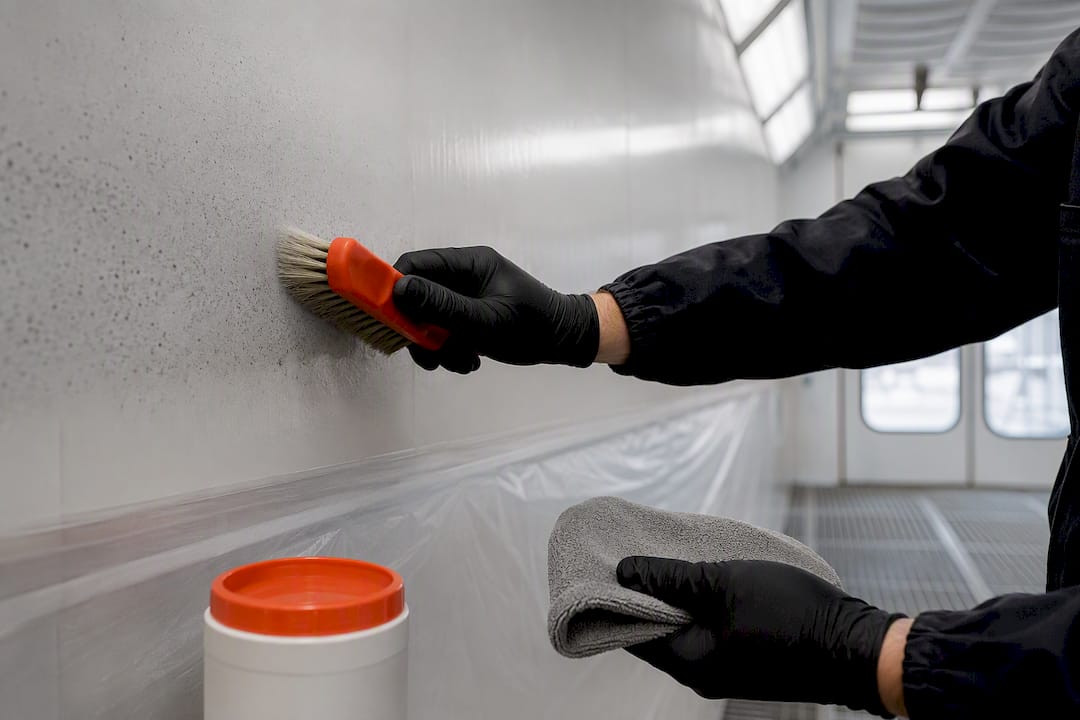
Start with the substrate. Remove loose overspray with a dry brush first, then wipe with an approved cleaner and let the surface dry fully. Any old adhesive residue left behind becomes the seed for the next round of adhesion failure.
Application technique matters more than most crews assume. Align the film without stretching it, press the top edge and corners in a fixed sequence every time, and use pull-tabs so removal doesn’t turn into a fight later. A dispenser built for straight, controlled unrolling removes most of the wrinkle and edge-contact errors that come from hand-applying a heavy roll.
Storage deserves its own checklist:
- Keep rolls at moderate room temperature, away from direct heat sources or freezing docks.
- Rotate stock first-in-first-out so older rolls get used before adhesive tack starts to drift.
- Protect cut edges from dust and debris between uses.
- Store rolls upright rather than stacked flat to avoid uneven pressure on the core.
Replacing film purely by calendar date is a common mistake. Service intervals should follow spray volume and visible condition, not just a fixed number of weeks. Peeling away a contaminated layer takes minutes and saves hours of manual cleaning compared to scrubbing overspray off bare walls with solvents, which is the entire point of running a peelable system in the first place.
What to Specify and Test Before You Buy
Procurement conversations go faster when you walk in with a checklist instead of a vague request for “protective film.”
Ask suppliers to confirm:
- Tack level appropriate for your substrate and paint chemistry
- Number of removable layers and how layer numbering is marked
- Carrier material (BOPP vs LDPE) and its flexibility around your booth’s contours
- Temperature rating, since booths running hot lamps or high-solvent processes need higher tolerance
- Dispenser compatibility for single-installer application
- Integrated length markings so crews can cut accurately without guesswork
Before committing to a full booth changeover, run a sample-testing protocol on one wall section. Prepare a clean test panel, apply the film using your normal crew and technique, and check it at 24 hours, 72 hours, and after a full dwell cycle that matches your actual production schedule. Use the same paint chemistry and cleaning solvents your booth runs daily, and record removal force along with any adhesive transfer.
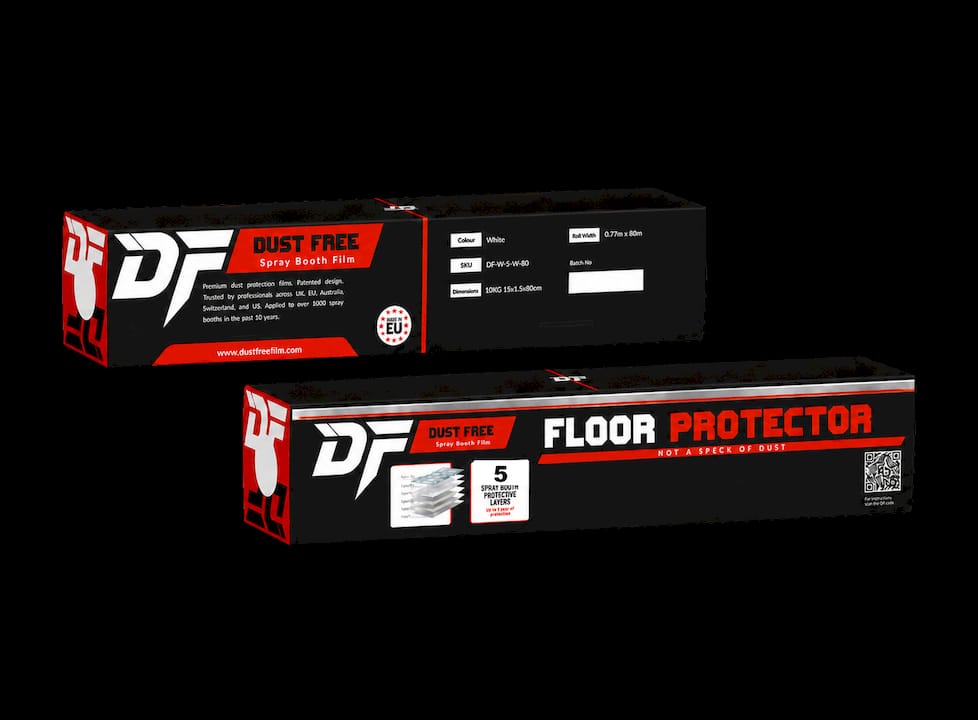
Ask for documentation, not just marketing claims. A legitimate supplier should be able to show solvent-resistance testing, including MEK exposure results, a stated temperature rating, and installation tooling options. Dust Free Film publishes this kind of testing data specifically so buyers can compare claims against real results before a bulk order.
Balancing Refresh Frequency, Safety, and Uptime
Replacing film too often burns through budget for no real gain. Replacing it too rarely creates the exact overspray buildup NFPA 33 guidance warns against, since accumulated combustible residue affects both fire risk and booth lighting quality.
The simplest rule of thumb ties refresh cycles to spray volume rather than the calendar: high-volume booths running multiple vehicles a day need shorter intervals than a low-volume industrial line. A condition-and-time hybrid approach, checking visible saturation alongside a rough time window, tends to outperform either extreme. Faster cycles cost more in material but cut rework and cleaning outages, which is usually the better trade for shops running tight production schedules.
— Pavlos - Angelos Filippakis
How Dust Free Film Addresses These Failures Directly
Every failure pattern covered above traces back to a design gap: weak edge contact, mismatched tack, or hard-to-track service life. Electrostatically charged film surfaces pull contamination onto the film instead of letting it drift onto walls, while visible layer numbering removes the guesswork about which layer is next and when it’s time to reorder. Some films resist operating temperatures up to 80°C, tape-free overlapping edges cut down on the seam gaps that cause early lift, and certain dispenser boxes enable one installer to run a straight, tight application without the wrinkling that leads to edge failure later.
If your booth is cycling through problems faster than it should, the fix usually starts with better application tools and a film built for the conditions you’re actually running. Request a sample or a quote through Dust Free Film’s team and compare the difference on your next changeover.
Sources
For deeper detail on the routines mentioned above, check NFPA-aligned booth maintenance guidance, the carrier flexibility notes on contoured walls, and Dust Free Film’s own maintenance workflow guide for a step-by-step booth routine.
- Paint Booth Protective Film: Why It’s Essential For Your Floor And Walls - The DailyMoss
- Protective Film for Spray Booth Viewing Windows: Installation and Replacement Guide
- ProTect Spray Booth Liner: Paint Perfection & Protection Solutions | DRYTAC
- Paint Booth Protection with Dirt Trap | 3M United Arab Emirates
FAQ
Why Is My Peelable Coating Peeling Too Early?
Early peeling usually means the surface wasn’t fully clean before application, the tack level was too light for the substrate, or humidity was high enough to weaken adhesion during cure.
What Causes Adhesive Transfer on Removal?
Adhesive transfer happens when film sits past its recommended service interval or gets exposed to heat beyond its temperature rating, causing the adhesive layer to break down and stick to the substrate.
How Often Should I Replace Peelable Booth Film?
Base replacement on spray volume and visible condition rather than a fixed calendar date, since high-volume booths saturate layers faster than low-volume ones.
Does Carrier Material Actually Affect Failure Rates?
Yes. Stiffer carriers like BOPP can crack or tear around contoured corners, while more flexible carriers like LDPE handle bends without the same stress failures.
What Should I Ask Suppliers Before a Bulk Order?
Request solvent-resistance test results, a stated temperature rating, dispenser compatibility, and documented sample-testing results at 24 hours, 72 hours, and full dwell before committing to a full booth changeover.