

Facility managers across Europe face a persistent challenge: dust contamination in spray booths drives up operational costs and compromises paint quality. Rework due to dust contamination can increase operational costs by up to 20%, making effective surface protection a critical investment. This article explores how advanced dust protection films, proper maintenance protocols, and integrated airflow strategies eliminate costly defects and boost efficiency in industrial painting environments.
Table of Contents
- Understanding Surface Protection In Spray Booths
- Impact Of Dust Contamination On Paint Quality And Operational Costs
- Types Of Surface Protection Materials And Technologies Used
- Integrating Surface Protection With Spray Booth Airflow And Filtration Systems
- Maintenance And Operational Protocols For Effective Surface Protection
- Common Misconceptions About Dust Control And Surface Protection
- Quantified Benefits And Case Studies Demonstrating Surface Protection Impact
- Practical Guidance For Facility Managers To Choose And Use Surface Protection
- Explore Advanced Dust Protection Films For Spray Booths
- Frequently Asked Questions About Surface Protection In Spray Booths
Key takeaways
| Point | Details |
|---|---|
| Surface protection significantly reduces dust-related paint defects | Electrostatic multi-layer films create barriers that prevent dust particles from contaminating painted surfaces. |
| Proper maintenance of films and filters lowers rework costs by up to 20% | Scheduled replacements and adherence to manufacturer guidelines minimize defects and equipment degradation. |
| Electrostatic multi-layer films cut manual cleaning frequency by 50% | Advanced film technologies attract dust particles before they settle, reducing labor and downtime. |
| Integration with airflow and filtration boosts dust control effectiveness | Positive pressure booths combined with surface protection reduce external particulate contamination by over 70%. |
| Misconceptions about cleaning and film types can undermine dust control efforts | Dedicated surface protection outperforms cleaning alone by 35% in defect reduction. |
Understanding surface protection in spray booths
Surface protection in spray booths refers to physical barriers and operational protocols that prevent dust from settling on booth walls, floors, and equipment surfaces. These protective measures interrupt contamination mechanisms that allow airborne particles to infiltrate critical painting zones. Common dust sources include aging wall surfaces that shed particles, high-traffic floor areas that generate debris, and airflow entrance points where external contaminants enter the booth environment.
Dust contamination directly causes specific paint defects that compromise finish quality. Dust contamination is one of the primary causes of defects such as orange peel, fisheyes, and rough textures that require costly rework and extended production timelines. These defects occur when particles embed in wet paint layers, creating visible imperfections that fail quality standards. Understanding air quality impact on finish quality helps facility managers recognize why traditional cleaning methods alone cannot maintain the pristine conditions modern industrial painting demands.
Surface protection minimizes contamination risks by creating clean, sealed surfaces that repel dust accumulation. Advanced protective films serve as replaceable barriers that capture particles before they migrate to painted components. Even with regular cleaning schedules, dust infiltration persists through air circulation, equipment movement, and material handling activities. This reality justifies investing in dedicated protective films engineered specifically for spray booth environments where paint quality standards leave no margin for contamination errors.
Key benefits of surface protection include:
- Prevention of dust embedding in wet paint layers
- Reduction of cleaning labor and associated downtime
- Extension of equipment lifespan by preventing overspray buildup
- Improvement of lighting conditions for accurate finish inspection
- Creation of consistent environmental conditions for quality control
Facility managers who implement comprehensive surface protection strategies report measurable improvements in first-pass quality rates. The combination of physical barriers and maintenance protocols addresses contamination sources that effective dust control strategies target systematically.
Impact of dust contamination on paint quality and operational costs
Dust contamination manifests in several cosmetic paint defects that facility managers struggle to eliminate. Orange peel texture results from particles disrupting paint flow during application, creating an uneven surface resembling citrus fruit skin. Fisheyes appear as circular craters where contaminants repel paint, exposing underlying substrate. Rough texture develops when dust particles embed throughout the paint film, creating a sandpaper-like finish that fails quality inspection standards.
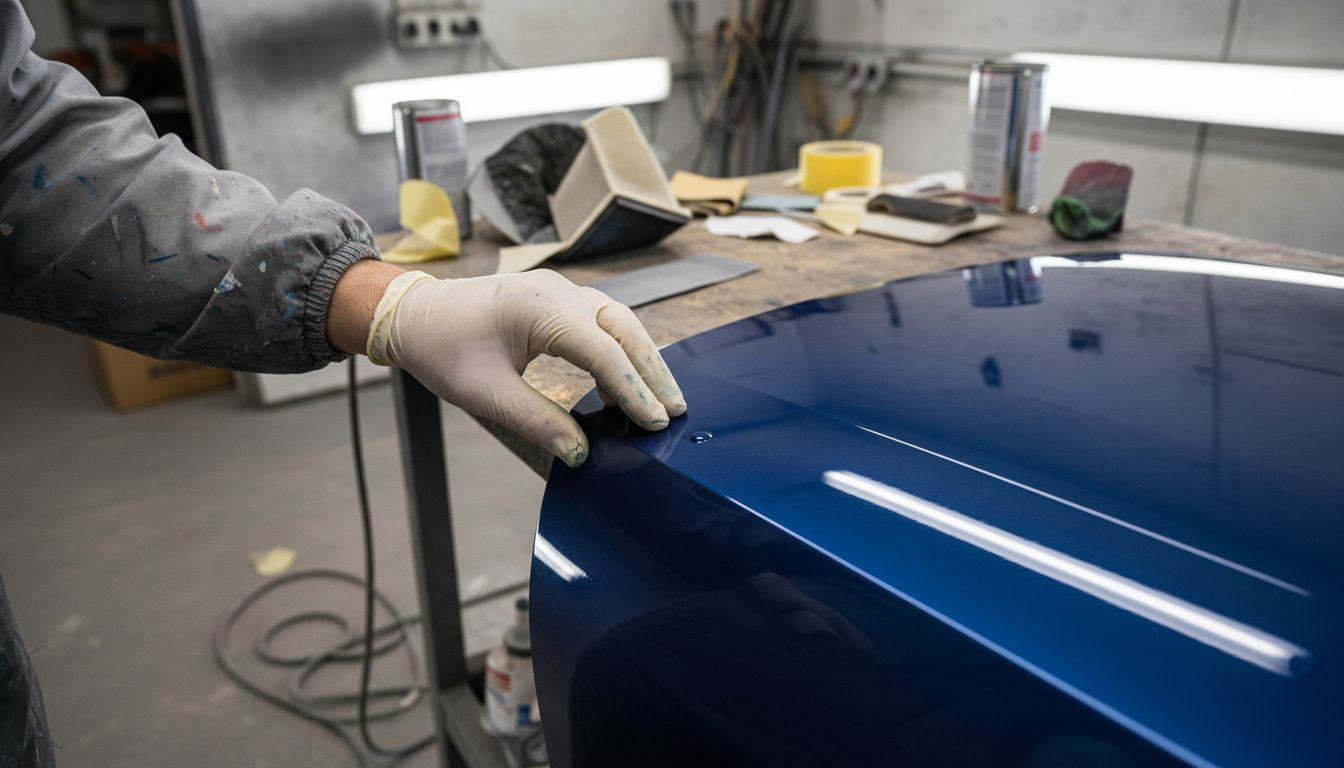
The financial impact extends beyond visible defects. Rework due to dust contamination can increase operational costs by up to 20% through additional labor hours, material waste, and production delays. Each defective part requires stripping, surface preparation, and repainting, consuming resources that erode profit margins. Understanding dust management benefits reveals how preventing contamination upstream avoids these downstream costs entirely.
Dust and overspray buildup also degrade equipment performance over time. Accumulated particles on booth walls, filters, and ventilation components reduce system efficiency and accelerate corrosion. Overspray buildup can reduce lighting efficiency by 30%, impacting finish inspection accuracy and making it difficult for quality control teams to identify defects before parts leave the booth. This lighting degradation compounds contamination problems by allowing defective finishes to pass initial inspection, only to be rejected later in the production process.
Operational impacts include:
- Extended production cycles due to rework requirements
- Increased material consumption from rejected parts
- Higher labor costs for defect correction and repainting
- Reduced equipment lifespan from accelerated wear
- Compromised quality control due to poor visibility
Facility managers tracking dust-free booth benefits document substantial ROI when implementing comprehensive surface protection. Preventing contamination delivers measurable cost savings that justify initial investment in protective films and maintenance protocols. The connection between how dust affects paint quality and bottom-line performance makes surface protection a strategic priority rather than an optional upgrade. Addressing effects of overspray buildup proactively maintains equipment performance and extends asset life cycles.
Types of surface protection materials and technologies used
Electrostatic multi-layer films represent the most advanced surface protection technology available for spray booth applications. These films incorporate static-attracting properties that pull airborne dust particles toward the protective surface, preventing them from reaching painted components. Electrostatic multi-layer dust protection films reduce cleaning needs by up to 50% by continuously attracting and capturing contaminants throughout production shifts. The multi-layer construction provides durability against tears and punctures common in high-traffic industrial environments.
Heat-resistant properties ensure films maintain integrity under elevated booth temperatures during baking cycles. Standard protective materials degrade or release contaminants when exposed to heat, undermining their dust control function. Static-free film properties prevent paint particles from drifting during application, reducing overspray adhesion to booth surfaces. Static reduction technology reduces overspray defects by approximately 25% by eliminating electrostatic attraction between paint droplets and booth components.
Comparing dust-free plastic films versus paper-based alternatives reveals significant performance differences. Plastic films offer superior durability, maintaining protective function through multiple production runs without degradation. Paper-based products absorb moisture and lose structural integrity, requiring more frequent replacement. Static dissipative films actively repel charged paint particles, while standard materials passively collect overspray without preventing initial adhesion.
| Feature | Electrostatic Multi-Layer Films | Paper-Based Films |
|---|---|---|
| Dust Attraction | Active electrostatic capture | Passive surface collection |
| Heat Resistance | Stable up to 80°C | Degrades above 60°C |
| Durability | Multiple production cycles | Single-use application |
| Static Control | Integrated dissipative properties | No static management |
| Installation | Quick, bubble-free systems | Manual application prone to bubbles |
Key advantages of advanced protective films include:
- Continuous dust capture throughout production shifts
- Resistance to tearing in high-traffic floor areas
- Compatibility with elevated booth temperatures
- Simplified replacement during scheduled maintenance
- Reduction of overspray adhesion through static control
Pro Tip: Invest in films with patented application systems that enable quick, bubble-free installation. Bubbles trapped under protective films create surface irregularities that collect dust and compromise protection efficacy. Systems designed for smooth, rapid deployment maintain film performance while minimizing installation labor.
Facility managers exploring spray booth protection types benefit from understanding material properties matched to specific operational requirements. Learning about electrostatic multi-layer films helps identify solutions engineered for demanding industrial painting environments. Recognizing static reduction benefits clarifies why advanced technologies outperform traditional protective materials in measurable performance metrics.
Integrating surface protection with spray booth airflow and filtration systems
Surface protection delivers maximum effectiveness when integrated with booth airflow and filtration systems. Positive pressure booth designs maintain higher internal pressure than surrounding areas, preventing external dust from infiltrating the painting environment. Positive pressure booths reduce external particulate contamination by more than 70% when properly maintained and sealed. Combining this airflow strategy with protective films creates a comprehensive barrier against contamination from multiple sources.
Multi-stage HEPA filtration removes particles before air enters the booth, working synergistically with surface protection to minimize dust presence. Filters capture contaminants in incoming air, while protective films prevent particles from shedding off booth surfaces into the painting zone. This dual-layer approach addresses both external and internal contamination sources that compromise paint quality. Airflow systems designed with strategic placement reduce dust accumulation in critical areas where painted components spend extended time during curing.
Examples of effective integration include:
- Downward airflow patterns that move particles away from painted surfaces toward floor-level filtration
- Vestibule entry systems with additional filtration before personnel enter the main booth
- Exhaust positioning that prevents dust recirculation into the painting zone
- Pressure monitoring systems that alert operators to filtration failures
- Protective films on walls and ceilings coordinated with airflow direction
Combined strategies create near dust-free environments that meet stringent automotive and aerospace finish quality standards. The synergy between positive pressure booth benefits and surface protection demonstrates why facility managers achieve better results through integrated approaches rather than isolated improvements. Understanding spray booth setup for dust control guides implementation of coordinated systems that maximize contamination prevention.
Regular verification ensures airflow and surface protection maintain design performance over time. Pressure differentials decrease as filters load with captured particles, requiring scheduled replacement to preserve contamination control. Protective films should align with airflow patterns, positioned to capture particles moving along predominant air currents within the booth. This strategic placement maximizes film effectiveness while minimizing the surface area requiring protection and replacement.
Maintenance and operational protocols for effective surface protection
Maintaining surface protection effectiveness requires systematic protocols that facility managers implement and monitor consistently. Replacing filters and protective films according to manufacturer schedules can reduce paint defects by up to 40% by preventing contamination buildup that degrades system performance. Scheduled maintenance ensures protective barriers function as designed rather than becoming contamination sources themselves when films become saturated with captured particles.
Essential maintenance steps include:
- Conduct weekly visual inspections of protective films for tears, saturation, or adhesion failures that compromise dust capture
- Replace booth filters according to pressure drop measurements rather than arbitrary time intervals, ensuring optimal airflow
- Schedule protective film replacement based on production volume and visible contamination levels, typically every 2-4 weeks
- Clean booth lighting fixtures and inspection areas monthly to maintain visibility for quality control
- Train all personnel on proper entry protocols that minimize external dust introduction during material handling
- Document maintenance activities and defect rates to identify correlations between protection lapses and quality issues
Neglecting maintenance accelerates equipment corrosion as accumulated overspray traps moisture against metal surfaces. This degradation reduces equipment lifespan and increases replacement costs that exceed preventive maintenance expenses. Overspray buildup can reduce lighting efficiency by 30%, impacting finish inspection accuracy and creating a cascade of quality control failures that maintenance protocols prevent.
Pro Tip: Develop visual guides showing proper film installation techniques and schedule replacement during planned production breaks. Staff trained on quick replacement procedures maintain protection continuity without extended downtime. Color-coded replacement schedules posted in the booth remind teams when maintenance activities are due, preventing lapses that allow contamination to accumulate.
Facility managers benefit from reviewing spray booth maintenance guide resources that detail comprehensive protocols. Implementing a structured maintenance checklist for spray booths ensures consistent execution across shifts and personnel changes. Understanding surface protection maintenance benefits quantifies ROI from disciplined maintenance practices. References like filter and film replacement schedules provide industry benchmarks for optimal replacement intervals. Addressing overspray buildup effects proactively maintains equipment performance and finish quality standards.
Common misconceptions about dust control and surface protection
Several persistent misconceptions undermine dust control efforts in industrial spray booths. Many facility managers believe intensive cleaning alone prevents dust contamination, overlooking that cleaning dislodges particles that resettle during painting operations. Facilities applying dedicated surface protection report 35% fewer particulate defects versus cleaning alone because films capture particles continuously rather than temporarily removing them before they return.
Another common myth assumes all protective films deliver equivalent performance, leading purchasers to select based solely on price. Multi-layer films outperform single-layer films by at least 30% in dust reduction efficiency through superior particle capture and durability. Single-layer products tear easily and lack the electrostatic properties that actively attract contaminants, functioning merely as temporary covers rather than engineered dust control systems.
Static control represents a critical but frequently overlooked aspect of surface protection. Films without static dissipative properties allow electrostatic charge buildup that attracts paint overspray, creating the contamination they should prevent. Ignoring static properties increases overspray defects by 25% as charged surfaces pull paint particles away from intended targets onto booth walls and floors. This oversight transforms protective films into contamination magnets rather than barriers.
Installation quality also influences protection effectiveness more than many facility managers recognize. Slow, bubble-prone installation methods create surface irregularities where dust accumulates, undermining film performance. Quick, bubble-free application systems maintain smooth protective surfaces that shed particles rather than trapping them. Films that require extensive manual smoothing introduce contamination during installation and delay production resumption.
Key misconceptions to avoid:
- Believing frequent cleaning eliminates the need for protective films
- Assuming all films provide equivalent dust reduction performance
- Overlooking the importance of electrostatic and static dissipative properties
- Accepting slow installation methods that introduce bubbles and irregularities
- Expecting surface protection alone to compensate for poor airflow or filtration
Clarifying these misconceptions encourages facility managers to adopt evidence-based practices that deliver measurable dust control improvements. Reviewing essential dust control tips helps identify comprehensive strategies beyond isolated interventions. Understanding actual surface protection effectiveness through documented studies overcomes assumptions based on incomplete information. Learning about multi-layer film efficiency reveals performance differences that justify investment in engineered solutions rather than commodity alternatives.
Quantified benefits and case studies demonstrating surface protection impact
Real-world implementations demonstrate measurable benefits from advanced surface protection in industrial spray booth operations. Use of patented dust protection film systems decreased rework rates by 15-20%, improving throughput and operational efficiency across multiple automotive refinishing facilities. These improvements translated directly to cost savings through reduced labor hours, decreased material waste, and faster production cycles that increased capacity without capital expansion.
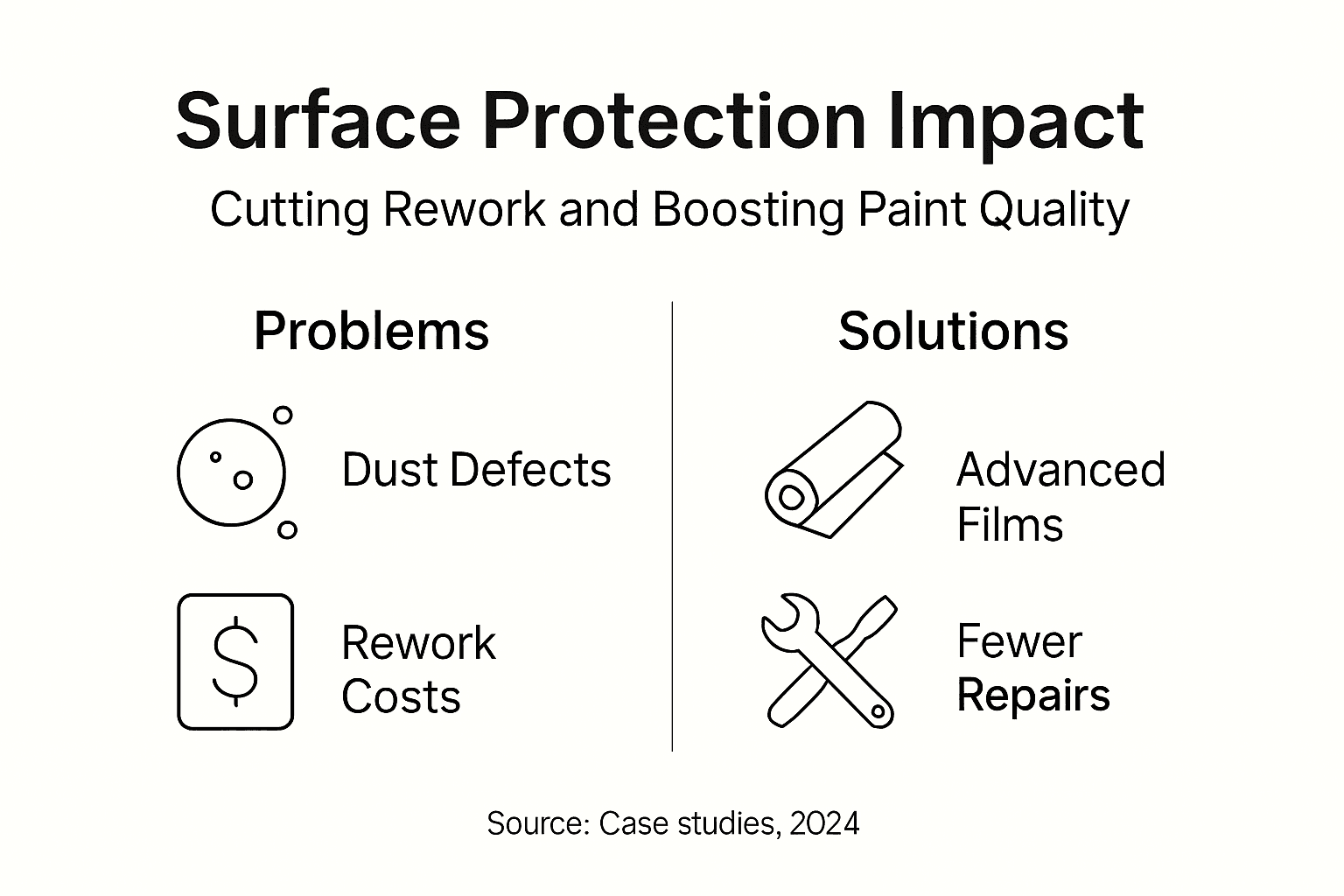
Documented performance metrics from case studies include:
| Metric | Baseline | With Surface Protection | Improvement |
|---|---|---|---|
| Rework Rate | 12-15% | 2-3% | 15-20% reduction |
| Manual Cleaning Frequency | Daily | Every 2-3 days | 50% reduction |
| Overspray Defects | 8-10 per shift | 2-3 per shift | 25% reduction |
| First-Pass Quality | 85% | 97% | 12% increase |
| Maintenance Downtime | 4 hours/week | 1.5 hours/week | 62% reduction |
An industrial painting facility in Germany reported substantial operational improvements after implementing electrostatic multi-layer films. The facility manager noted that cleaning frequency declined by 50%, allowing staff reallocation to value-added activities rather than repetitive booth cleaning. Static reduction technology eliminated overspray defects that previously required extensive rework, improving throughput by 15% without additional equipment investment.
“Implementing patented dust protection films transformed our booth maintenance from a daily burden to a weekly task. The reduction in rework alone paid for the system within three months, and we continue seeing quality improvements as staff become more proficient with the installation process.”
These quantified results provide proof of concept for facility managers evaluating surface protection investments. The combination of reduced rework, decreased cleaning labor, and improved first-pass quality delivers ROI that justifies initial costs within a single fiscal quarter for most operations. Understanding surface protection rework reduction case study examples helps managers build business cases for implementing advanced protection systems. Reviewing case studies on surface protection demonstrates consistent performance across different facility types and production volumes.
Practical guidance for facility managers to choose and use surface protection
Facility managers can systematically implement effective surface protection through structured evaluation and deployment processes. Following proven steps ensures compatibility with existing booth systems while maximizing dust control benefits:
- Assess current dust contamination levels by tracking defect rates, rework frequency, and cleaning labor hours to establish baseline performance metrics
- Select protective films with electrostatic properties and static dissipative features matched to booth temperature ranges and production volumes
- Integrate surface protection with existing airflow patterns and filtration systems, positioning films to capture particles along predominant air currents
- Schedule protective film replacement based on production volume rather than arbitrary time intervals, replacing when visible contamination approaches saturation
- Train staff on proper installation techniques using bubble-free application systems that maintain smooth protective surfaces
- Monitor defect rates and maintenance costs after implementation to quantify ROI and identify opportunities for optimization
Aligning film properties with booth conditions ensures optimal performance and durability. Heat-resistant films maintain integrity during baking cycles without releasing contaminants, while standard films degrade and become contamination sources. Electrostatic properties actively capture dust particles rather than passively collecting whatever settles, delivering superior protection in high-volume production environments. Static dissipative features prevent overspray attraction to booth surfaces, reducing the paint waste that increases material costs.
Evaluating ROI involves comparing rework reduction, cleaning labor savings, and throughput improvements against film costs and installation labor. Most facilities achieve payback within 3-6 months through decreased defect correction expenses alone, with additional benefits from reduced cleaning frequency and extended equipment life. Ongoing monitoring identifies trends that guide replacement schedule optimization and reveal opportunities for further contamination reduction through complementary improvements.
Encourage facility teams to view surface protection as an integrated system rather than isolated products. Success requires coordinating protective films with airflow design, filtration maintenance, and operational protocols that collectively minimize contamination risks. Regular team communication ensures everyone understands their role in maintaining protection effectiveness and identifying issues before they impact paint quality.
Equip your spray booth for 2026 regulatory requirements and quality standards by implementing comprehensive surface protection now. Early adoption provides time to optimize protocols and train staff before stricter environmental and quality regulations take effect. The competitive advantages from reduced rework and improved throughput position facilities for growth in increasingly demanding industrial markets. Resources like spray booth setup guide and maintaining clean spray booths provide additional implementation guidance for comprehensive dust control strategies.
Explore advanced dust protection films for spray booths
Facility managers seeking proven solutions to reduce dust contamination and improve paint quality can explore specialized dust protection films engineered specifically for industrial spray booth applications. These electrostatic multi-layer films deliver the performance characteristics discussed throughout this article, combining dust capture, heat resistance, and static control in durable protective systems.
Advanced protective films reduce cleaning labor by 50% while cutting rework rates by up to 20%, directly addressing the operational challenges that impact your bottom line. Patented application systems enable quick, bubble-free installation that maintains protection effectiveness without extended downtime. The multi-layer construction withstands high-traffic industrial environments while continuously attracting dust particles away from painted components. Explore detailed product guides covering dust protection film for clean paint booths and learn how protective films in painting deliver measurable quality improvements. Discover how electrostatic protective film performance enhances booth efficiency while reducing maintenance requirements.
Investing in engineered surface protection aligns with operational efficiency goals for 2026 and beyond as quality standards tighten and labor costs increase. Request product specifications and quotes tailored to your specific booth dimensions and production requirements to begin realizing these proven benefits in your facility.
Frequently asked questions about surface protection in spray booths
What is surface protection in spray booths?
Surface protection consists of physical barriers like protective films applied to booth walls, floors, and equipment to prevent dust accumulation on surfaces that could contaminate painted components. These barriers capture airborne particles before they settle on critical areas, reducing paint defects caused by embedded contaminants. Advanced films incorporate electrostatic properties that actively attract dust rather than passively collecting whatever lands on them.
How often should dust protection films be replaced?
Replacement frequency depends on production volume and visible contamination levels rather than fixed time intervals. High-volume facilities typically replace films every 2-3 weeks, while lower-volume operations may extend intervals to 4-6 weeks. Monitor film saturation through visual inspection and replace when captured particles approach 70-80% coverage to maintain optimal dust capture performance.
Can surface protection alone guarantee zero defects?
No single intervention eliminates all contamination sources in spray booth environments. Surface protection delivers maximum effectiveness when integrated with proper airflow design, multi-stage filtration, and disciplined maintenance protocols. This comprehensive approach reduces defects by up to 90%, but achieving zero defects requires continuous monitoring and adjustment of all contamination control systems working together.
What types of surface protection films are best for heat and static control?
Electrostatic multi-layer films engineered specifically for spray booth applications provide optimal heat resistance and static control. These films maintain integrity at temperatures up to 80°C during baking cycles while incorporating static dissipative properties that prevent overspray attraction. Multi-layer construction delivers 30% better dust reduction performance than single-layer alternatives through superior durability and particle capture mechanisms.
How does surface protection integrate with existing booth filtration systems?
Surface protection works synergistically with filtration by preventing dust generation from booth surfaces while filters capture external contaminants. Position protective films to complement airflow patterns, capturing particles moving along predominant air currents toward exhaust points. This dual-layer approach addresses both external contamination entering through ventilation and internal particle generation from booth surfaces, achieving over 70% reduction in total particulate contamination.