

Spray booth contamination remains one of the most overlooked threats to paint finish quality across European auto body shops. Even a single airborne particle can cause costly defects and operational delays. American research shows that over 85 percent of paint rework stems from preventable contamination issues. For facility managers striving to maintain pristine painting environments, understanding how different contaminants infiltrate spray booths is key. This guide explains the risks and reveals practical steps to minimize contamination, ensuring smooth workflow and consistent high-quality results.
Table of Contents
- Spray Booth Contamination Defined And Explained
- Major Sources And Types Of Contamination
- Effects On Paint Quality And Operational Safety
- Prevention Methods And Protection Solutions
- Legal Compliance And Regulatory Standards
Key Takeaways
| Point | Details |
|---|---|
| Contamination Sources | Spray booth contamination arises from airborne particles, human movement, equipment residue, and environmental factors, impacting both paint quality and safety. |
| Health and Safety Risks | Contamination poses serious threats, including respiratory hazards from VOCs and potential fire risks due to solvent vapors and chemical residues. |
| Preventative Measures | Implementing HEPA filtration, controlled entry zones, and specialized protective clothing can significantly reduce contamination risks and protect paint quality. |
| Regulatory Compliance | Adhering to regulations from the NFPA, OSHA, and EPA is essential for maintaining workplace safety and avoiding legal repercussions. |
Spray booth contamination defined and explained
Spray booth contamination represents a complex technical challenge that directly impacts paint quality and workplace safety. At its core, contamination involves the uncontrolled accumulation of particulate matter, vapors, and residual substances that can compromise the painting environment. Specific contaminant buildup occurs through multiple mechanisms, ranging from dust infiltration to improper ventilation systems.
The primary sources of spray booth contamination include airborne particles, human movement, equipment residue, and external environmental factors. Dust, lint, hair, skin cells, and microscopic debris can enter the painting zone through open doors, inadequate air filtration, or personnel movement. Industrial environments like auto body shops are particularly susceptible due to high-traffic areas and multiple operational processes occurring simultaneously.
Understanding contamination requires recognizing its multilayered nature. Contaminants are not just visual imperfections but potentially dangerous substances that can create combustible atmospheres if ventilation systems fail. Solvent vapors, overspray particles, and chemical residues represent significant risks beyond aesthetic paint defects. Proper extraction and filtration systems become critical in managing these complex environmental challenges.
Pro tip: Implement a strict pre painting workspace cleaning protocol that includes vacuuming with HEPA filters, wearing lint-free clothing, and establishing controlled entry points to minimize external contamination sources.
Major sources and types of contamination
Spray booth contamination manifests through multiple complex sources, creating significant challenges for industrial painting environments. Emissions and pollutant generation represent critical factors that directly impact paint quality and workspace safety. These contaminant sources can be broadly categorized into environmental, human-generated, and equipment-related pathways.
Environmental contaminants include airborne dust, moisture, and external particulate matter that infiltrate the spray booth through ventilation systems, doorways, and microscopic entry points. Human-generated contamination stems from personnel movement, clothing fibers, skin cells, and hair that can introduce unwanted particles into the painting zone. Equipment-related sources involve overspray residue, mechanical particle shedding, and chemical vapor emissions from painting tools and surrounding machinery.
The specific types of contamination are diverse and potentially hazardous. Volatile organic compounds (VOCs), particulate matter, semi-solid residues, and chemical emissions represent the primary categories of spray booth pollutants. These substances not only compromise paint finish quality but also create potential health and safety risks. Industrial environments must implement sophisticated filtration and extraction systems to manage these complex contamination pathways effectively.
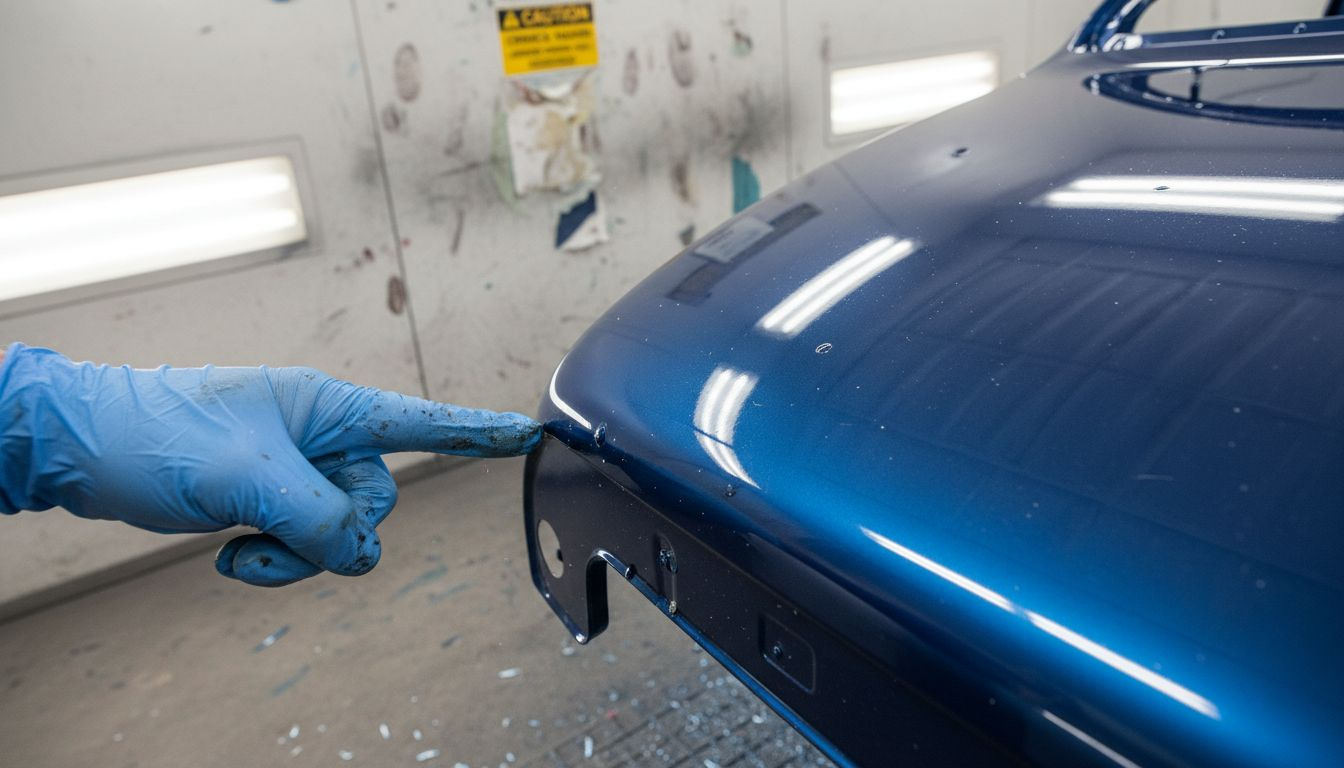
The following table summarizes the main types of spray booth contamination and their impact:
| Contaminant Type | Typical Source | Effect on Paint Quality | Safety Consideration |
|---|---|---|---|
| Particulate Matter | Airborne dust, skin cells | Surface imperfections, mottling | Respiratory hazard |
| Chemical Residues | Painting equipment | Blistering, adhesion failure | Toxic exposure |
| Solvent Vapors | Paint overspray | Uneven coating, defects | Fire/explosion risk |
| Moisture | Environmental humidity | Bubbling, poor finish | Corrosion, slip risk |
Pro tip: Develop a comprehensive contamination control protocol that includes regular equipment maintenance, personnel protective gear, and advanced air filtration systems to minimize particulate introduction and maintain optimal painting conditions.
Effects on paint quality and operational safety
Contamination within spray booths creates profound consequences for both paint quality and workplace safety. Safety hazards from spray booth contamination encompass multiple critical risks that extend far beyond aesthetic imperfections. The potential for fire and explosion represents the most immediate threat, with flammable vapor accumulation creating a volatile environment that endangers personnel and facility infrastructure.
Paint quality suffers dramatically from contamination, manifesting through various defect mechanisms. Particulate intrusion can cause surface irregularities like mottling, blistering, and uneven coating texture. Dust particles, skin cells, and airborne debris interrupt the smooth paint application process, resulting in compromised finish aesthetics. These imperfections not only diminish visual appeal but also reduce the protective capabilities of the paint coating, potentially accelerating substrate degradation and reducing overall product durability.
Operational safety risks include respiratory hazards from volatile organic compounds (VOCs) and potential environmental compliance violations. Uncontrolled emissions can expose workers to toxic substances, creating long-term health risks and potential regulatory penalties. The economic implications are substantial, with contamination-related issues potentially leading to increased rework, extended production times, material waste, and significant operational inefficiencies that directly impact a facility’s bottom line.
Pro tip: Implement a comprehensive air quality monitoring system with real-time particulate detection and invest in advanced personal protective equipment to mitigate both safety and paint quality risks in spray booth environments.
Prevention methods and protection solutions
Comprehensive contamination prevention begins with strategic environmental controls and systematic workspace management. Effective spray booth contamination prevention requires a multifaceted approach addressing airflow, filtration, personnel practices, and equipment maintenance. Critical strategies focus on creating barriers that minimize particulate introduction and maintain optimal painting conditions.
Key protection solutions involve implementing advanced filtration technologies and strict procedural protocols. High-efficiency particulate air (HEPA) filters capturing over 99.97% of airborne particles represent a fundamental defense mechanism. Complementary strategies include establishing dedicated entry zones with sticky mats, mandating specialized low-lint protective clothing, and implementing rigorous cleaning protocols for both personnel and equipment. These preventative measures significantly reduce the potential for contaminant infiltration and subsequent paint quality degradation.
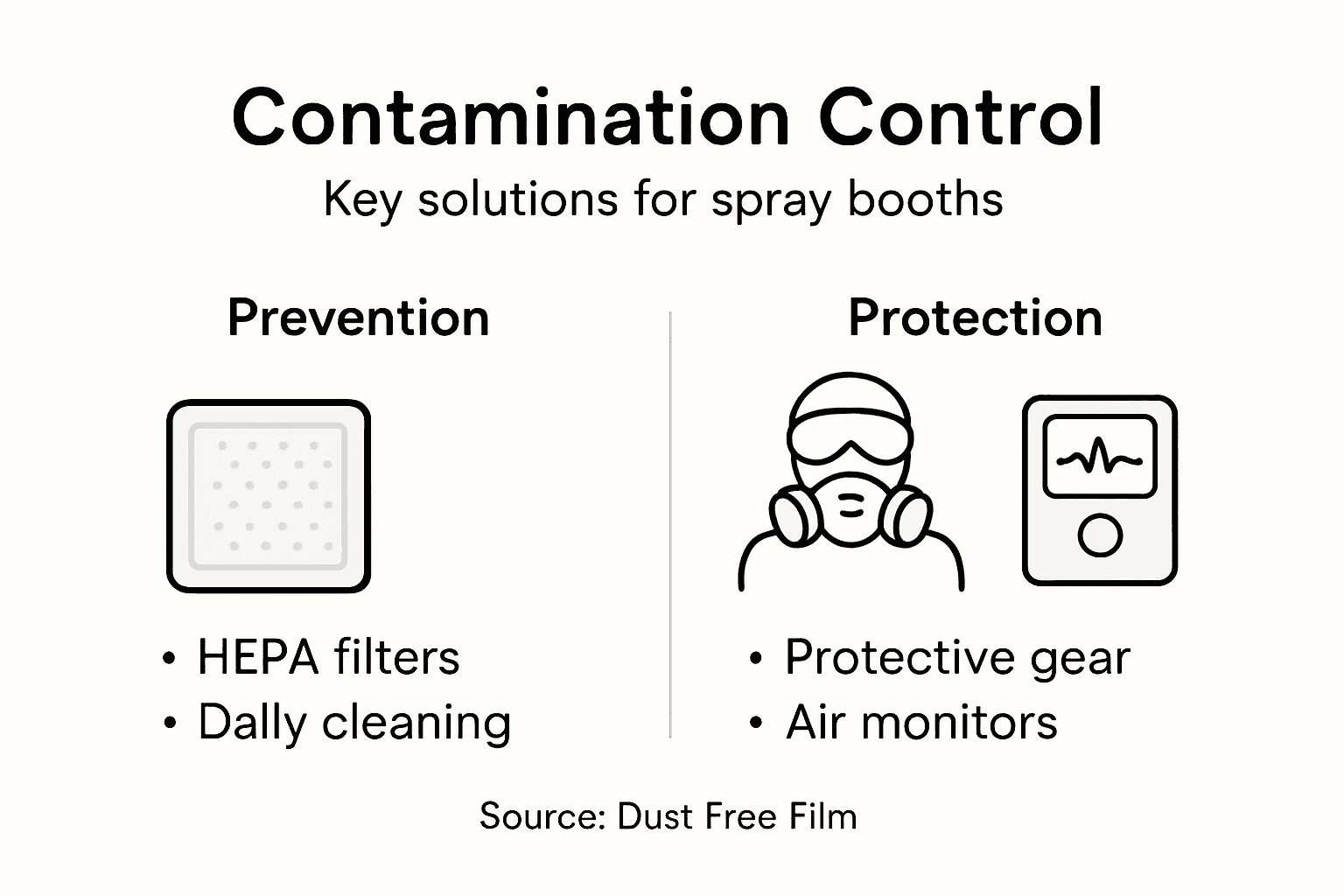
Technical prevention methods extend beyond physical barriers to include sophisticated environmental management techniques. Balanced air pressure systems, proper electrical grounding to prevent static electricity buildup, and routine filter replacement schedules are essential components of a comprehensive contamination control strategy. By creating a controlled, clean environment with minimal external particle introduction, facilities can dramatically reduce the risks associated with spray booth contamination and maintain superior paint application standards.
Here is a comparison of key prevention strategies for controlling spray booth contamination:
| Prevention Strategy | Description | Benefit | Implementation Tip |
|---|---|---|---|
| HEPA Filtration | Captures over 99.97% of particles | Improved air quality | Schedule routine filter changes |
| Controlled Entry Zones | Sticky mats, dedicated areas | Limits particulate introduction | Install at all access points |
| Specialized Protective Clothing | Low-lint garments for staff | Reduces fiber contamination | Mandatory use during operations |
| Balanced Air Pressure | Maintains airflow, prevents infiltration | Stable, clean environment | Monitor with air pressure gauges |
Pro tip: Develop a detailed contamination control checklist that includes daily equipment inspection, filter replacement schedules, and personnel training protocols to systematically minimize contamination risks.
Legal compliance and regulatory standards
Navigating the complex landscape of regulatory requirements is crucial for spray booth operations, with multiple agencies establishing stringent standards to ensure workplace safety and environmental protection. Comprehensive spray booth compliance standards involve intricate regulations from the National Fire Protection Association (NFPA), Occupational Safety and Health Administration (OSHA), and Environmental Protection Agency (EPA).
The NFPA 33 standard serves as a critical framework for spray booth design and operational protocols. These regulations mandate specific requirements for ventilation systems, fire suppression mechanisms, and electrical equipment specifications. Key compliance elements include maintaining precise airflow rates, installing explosion relief panels, utilizing explosion-proof electrical components, and establishing comprehensive maintenance documentation. Facilities must demonstrate systematic approaches to mitigating fire risks and controlling volatile organic compound (VOC) emissions.
Legal compliance extends beyond equipment specifications to encompass broader worker safety and environmental protection mandates. Employers must implement rigorous training programs, maintain detailed inspection logs, and ensure continuous monitoring of atmospheric conditions within spray booth environments. Potential consequences of non-compliance include substantial financial penalties, operational shutdowns, increased liability risks, and potential criminal charges in cases of repeated or egregious violations.
Pro tip: Develop a comprehensive compliance management system that includes regular third-party audits, detailed documentation protocols, and ongoing staff training to proactively address potential regulatory gaps.
Protect Your Spray Booth from Contamination to Ensure Top Paint Quality
Spray booth contamination poses serious challenges that affect paint quality and workplace safety. The accumulation of dust, chemical residues, and airborne particles can cause surface imperfections, adhesion failures, and costly rework. To combat these issues, it is essential to create a controlled environment with effective dust protection measures tailored for high-traffic industrial settings.
At Dust Free Film, we specialize in innovative dust protection films designed specifically for spray booths used in automotive refinishing and industrial painting. Our multi-layer electrostatic wall and floor protectors provide a durable, heat-resistant barrier that minimizes particulate introduction and maintains a clean workspace. Our patented application systems guarantee quick, bubble-free installation so your team can focus on flawless paint finishes without delays.

Ready to elevate your spray booth contamination control and protect your paint jobs from costly defects? Explore the benefits of using advanced protective films and learn how to maintain a dust-free environment with Dust Free Film. Take the first step toward safer, more efficient spray booth operations by visiting us now and discovering tailored solutions built to enhance your paint quality and operational safety.
Frequently Asked Questions
What is spray booth contamination?
Spray booth contamination refers to the uncontrolled accumulation of particulate matter, vapors, and residual substances that can compromise the painting environment, affecting both paint quality and workplace safety.
What are the major sources of contamination in a spray booth?
The major sources of contamination include airborne particles (dust, lint, skin cells), human movement, equipment residue, and external environmental factors. Each of these can introduce unwanted contaminants into the painting zone.
How does contamination affect paint quality?
Contamination can lead to surface imperfections such as mottling, blistering, and uneven coatings. These issues not only diminish the visual appeal of the paint finish but also reduce its protective capabilities, potentially leading to accelerated substrate degradation.
What are some effective prevention methods for spray booth contamination?
Effective prevention methods include using HEPA filtration systems, establishing controlled entry zones, mandating specialized low-lint protective clothing for personnel, and implementing routine equipment maintenance to minimize contamination risks.