

Defects like fisheyes and uneven gloss often signal a bigger problem lurking in your spray booth environment. For quality control managers in automotive refinishing, the battle with airborne dust, overspray, and chemical vapors is relentless. These unwanted contaminants harm finish quality and expose workers to health hazards. By exploring the main sources and effects of spray booth contamination, you will discover actionable ways to protect both your production results and team safety.
Table of Contents
- What Is Spray Booth Contamination?
- Main Types And Key Sources
- How Contaminants Affect Paint Results
- Common Causes And Prevention Challenges
- Risks To Quality, Safety, And Compliance
Key Takeaways
| Point | Details |
|---|---|
| Contamination Sources | Spray booth contamination can arise from operator practices, environmental ingress, and inadequate ventilation, affecting both safety and quality. |
| Impact on Quality | Contaminants like dust and chemical vapors embed in wet paint, leading to defects, rework, and warranty claims, significantly harming profitability. |
| Health Risks | Exposure to airborne contaminants poses serious health risks to workers, including respiratory and skin issues, which can lead to regulatory penalties. |
| Prevention Strategies | Implementing daily inspections and strict entry protocols can mitigate contamination risks and significantly enhance paint quality and worker safety. |
What Is Spray Booth Contamination?
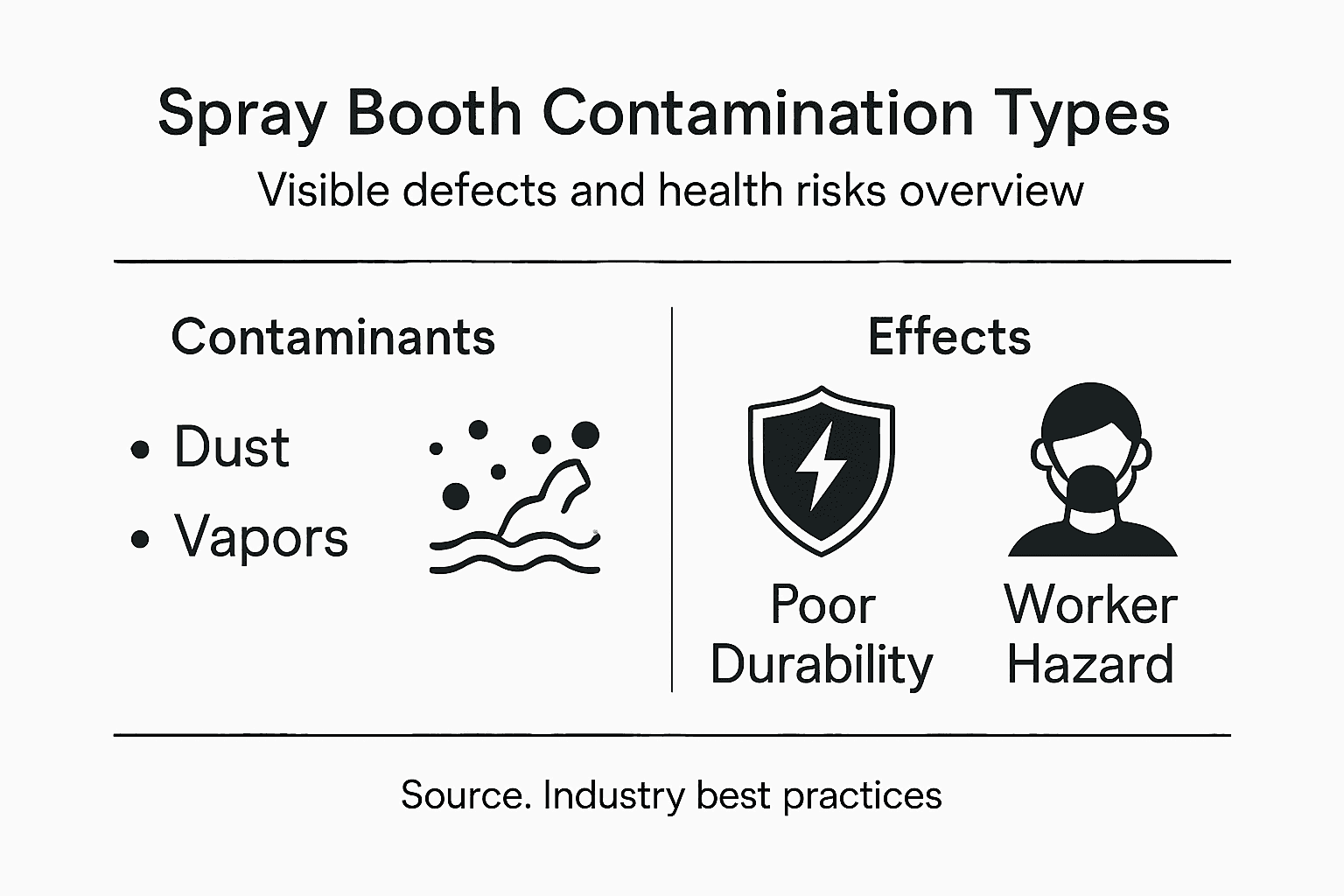
Spray booth contamination refers to the presence of unwanted particles and chemical residues that find their way into your spray booth environment during painting operations. These contaminants include dust, dirt, overspray particles, and airborne chemical vapors that can compromise both worker safety and paint quality. Unlike a clean, controlled space, a contaminated booth becomes a hostile environment for achieving flawless finishes.
The sources of contamination are surprisingly diverse. Your spray booth operators themselves can introduce particles from their clothing, skin, or equipment. The paint materials being applied shed chemical exposures through vapors and aerosols during the spraying process. External contaminants migrate inward when ventilation systems aren’t functioning properly. Even cured paint residue from previous applications can flake off and settle onto fresh coats.
What makes this problem critical for quality control managers is that contamination doesn’t just sit there—it actively embeds itself into wet paint. A single dust particle settling on a glossy finish creates a visible defect. Multiple particles across a panel force you to sand and refinish, adding days to your production schedule and eating directly into profit margins. A quality finish can transform into a warranty claim in seconds.
The scope extends beyond aesthetics. Controlling spray booth hazards also addresses worker exposure to harmful materials. When ventilation fails or contamination builds up, employees breathe in toxic vapors and particles. This creates liability issues, regulatory compliance problems, and turnover in your workforce.
Contamination levels vary based on booth maintenance, ventilation effectiveness, and how strictly your team follows protocols. Some facilities experience chronic contamination issues, while others maintain near-perfect conditions through disciplined practices. The difference often comes down to prevention strategies rather than luck.
Pro tip: Document your booth conditions daily by visually inspecting walls, floors, and filter conditions before each shift—catching contamination early prevents costly rework and protects your reputation.
Main Types and Key Sources
Spray booth contamination breaks down into distinct categories, each requiring different prevention strategies. Understanding what you’re fighting against makes it easier to target the root causes in your facility. The main types fall into three buckets: particulate matter, chemical vapors, and microbial growth.
Particulate contamination includes dust, overspray residue, and paint debris that become airborne or settle on surfaces. These visible particles are the most obvious problem. When you see orange peel texture or rough spots on a fresh coat, particles embedded during spraying are often the culprit. Overspray particles deserve special attention because they come directly from your spray guns. Even in a properly functioning booth, some overspray escapes the capture zone and lands on wet paint or booth surfaces.
Chemical vapors and residues from paint materials create a second contamination layer that many operators underestimate. These vapors don’t just affect air quality. They condense on surfaces, leaving sticky residues that trap dust and create adhesion problems for subsequent coats. Solvent fumes from lacquers and polyurethanes linger long after spraying stops, especially in booths with inadequate ventilation.
Microbial contamination represents the third type, though it receives less attention than it deserves. When moisture accumulates in your booth or ventilation ducts, bacteria and fungi can colonize filters and surfaces. This contamination gets sucked into the spray pattern, creating finish defects and health hazards for your team.
Here is a summary of the main contamination types and their typical effects on paint results:
| Contamination Type | Visual Defects | Impact on Durability | Worker Health Concerns |
|---|---|---|---|
| Particulate Matter | Rough spots, visible dust | Can cause peeling and poor adhesion | Minimal unless particles are hazardous |
| Chemical Vapors | Uneven gloss, surface haze | Leads to flaking and soft curing | Respiratory and skin irritation |
| Microbial Growth | Blistering, unusual imperfections | Accelerated degradation and mold | Increases risk of allergic reactions |
The key sources are predictable once you know where to look. Your paint materials themselves shed particles during application. Environmental dust enters through poorly sealed booth doors and intake vents. Overspray particles and deposits accumulate from spraying processes. Inadequate filtration allows particles to recirculate. Poor maintenance practices create a cascade effect where old contamination from yesterday combines with fresh contamination today.
Paint booth intake systems present another critical source. If your make-up air comes from dusty outdoor locations or unfiltered areas, you are essentially pumping contamination directly into your booth. Some facilities unknowingly draw air from loading docks or warehouse areas loaded with airborne particles.
Pro tip: Map your booth’s air intake and exhaust routes, then test these areas for dust sources—blocking or filtering intake points often eliminates 40 percent of booth contamination without expensive equipment upgrades.
How Contaminants Affect Paint Results
Contamination doesn’t just sit on your paint surface. It actively interferes with how paint bonds, cures, and looks when the job is finished. Understanding these effects helps you recognize problems early and prevent costly rejections.
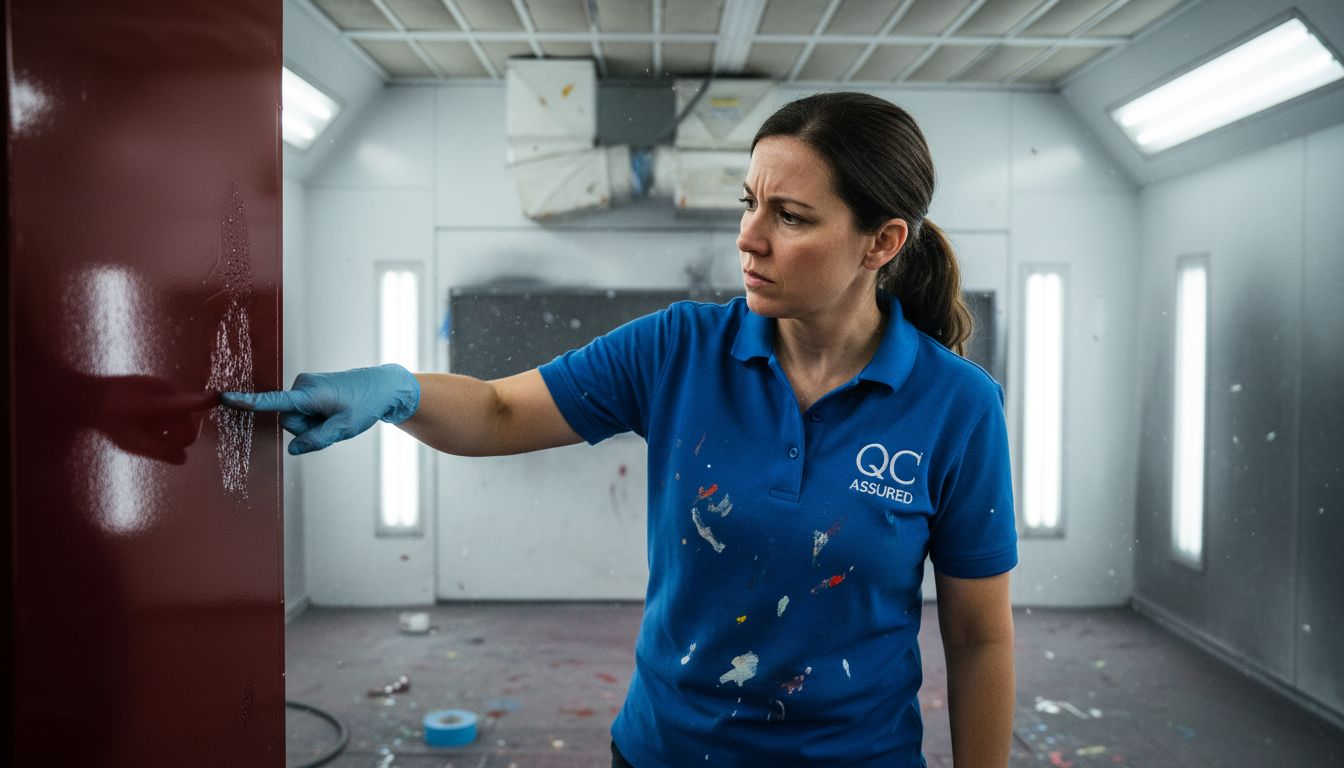
Particulate contamination creates immediately visible defects. Dust particles become embedded in wet paint, creating rough spots that catch light and look unprofessional. Defects like fisheyes, poor adhesion, and surface imperfections emerge when particles interfere with paint film formation. A single dust particle might seem insignificant, but multiply that across a hood or fender and you have a finish that fails inspection.
Chemical vapors create subtler but equally destructive problems. When solvent fumes or airborne chemical residues condense on surfaces, they create a barrier between new paint and the substrate. This prevents proper adhesion, causing peeling or flaking months after application. The paint might look perfect initially, then fail during curing when stress develops between layers.
Uneven gloss represents another common contamination effect that catches quality control managers off guard. When particulates settle unevenly across a panel, some areas dry to full gloss while others appear dull or matte. From certain angles under shop lights, the finish looks acceptable. But in daylight or when the customer inspects it outdoors, the defect becomes obvious. Rework becomes necessary, killing your production schedule.
Poor drying and curing occurs when chemical vapors interfere with solvent evaporation and cross linking. Paint stays tacky longer than it should, attracting more airborne particles. This creates a cascading problem where initial contamination leads to secondary contamination.
The financial impact cuts deep. Rejection rates spike. Rework hours multiply. Customer warranty claims increase. What started as a preventable contamination issue becomes expensive liability.
Pro tip: After identifying a contamination problem, inspect your filters and booth surfaces before the next spray day—most visible defects trace back to filter saturation or accumulated residue that could have been caught during morning maintenance.
Common Causes and Prevention Challenges
Spray booth contamination doesn’t happen by accident. It results from specific operational weaknesses that compound over time. Identifying these causes is the first step toward building a contamination prevention strategy that actually works.
Poor ventilation tops the list of common causes. When your booth’s exhaust system underperforms or intake airflow becomes unbalanced, contaminated air recirculates instead of being expelled. This creates a stagnant environment where particles settle and chemical vapors accumulate. Inadequate filtration makes the problem worse. Dirty filters reduce airflow, force air to bypass filter media, and allow particles to escape back into the booth.
Operator introduced contaminants represent a massive but often overlooked source. Your spray technicians bring dust from their clothing, skin cells, and equipment into the booth. Without strict entry protocols, this human contamination becomes embedded in every paint job. Environmental ingress through doors, windows, and gaps in booth construction adds outdoor dust and pollen to the mix.
Improperly maintained equipment and poor operator compliance create prevention challenges that go beyond simple equipment failures. Your spray guns themselves can become contamination sources when seals wear out or nozzles accumulate dried paint residue. Old overspray buildup on booth walls becomes airborne during subsequent spray sessions.
Prevention requires balancing multiple competing demands. You need sufficient airflow to evacuate contaminants, but excessive airflow wastes energy and creates turbulence that disturbs settled particles. Filter changes are necessary for maintaining capture efficiency, yet scheduling replacements without disrupting production feels impossible. Minimizing overspray re entrainment requires precise booth geometry and consistent operator technique, both difficult to maintain across shifts.
Training amplifies these challenges. Your team needs to understand contamination sources and consequences, not just follow checklists. Turnover in spray operations means constantly training new technicians on protocols they may not fully grasp.
Operational reality demands hard choices. Most facilities must balance cost, downtime, and quality standards knowing that perfect prevention remains elusive.
Pro tip: Implement a daily pre shift checklist that takes 15 minutes: inspect booth walls for residue, verify filter condition, confirm door seals are tight, and have operators perform a quick clean gown change before entering—these low cost actions prevent 60 percent of common contamination sources.
To better understand prevention, here’s a comparison of key strategies for minimizing spray booth contamination:
| Prevention Strategy | Typical Implementation | Relative Cost | Effectiveness |
|---|---|---|---|
| Daily visual inspections | Manual checks before shifts | Low | High |
| Upgraded air filtration | HEPA/advanced filter install | Medium | Very High |
| Strict operator protocols | Gowning, equipment cleaning | Low | Moderate |
| Regular equipment maintenance | Scheduled cleaning and part replacement | Medium | High |
Risks to Quality, Safety, and Compliance
Spray booth contamination creates a triple threat to your operation: quality suffers, workers face health risks, and you expose your business to regulatory penalties. Understanding these interconnected risks helps justify investment in contamination prevention.
Quality risks hit your bottom line immediately. Defective finishes force rework, which consumes labor hours and materials without generating revenue. Warranty claims multiply when contaminated paint fails prematurely. Customer dissatisfaction damages your reputation in an industry where word of mouth drives business. Lost contracts cost far more than preventive measures ever would.
Worker exposure to toxic vapors and particulates represents the most serious concern. Your spray technicians breathe in chemical fumes and suspended particles during every shift. Long term exposure causes respiratory damage, neurological effects, and skin conditions. High turnover rates often reflect poor working conditions created by contaminated booths. Beyond health consequences, your facility faces OSHA citations, fines, and potential litigation from affected employees.
Compliance violations create another layer of risk. Environmental regulations require maintaining clean spray booths to ensure compliance with environmental permits and OSHA standards. Overspray emissions that escape your booth create nuisances for neighboring facilities. Regulatory agencies respond to complaints with inspections, and inspections often uncover multiple violations beyond the initial complaint. Fines escalate quickly for repeat violations.
Your environmental permit can be revoked if contamination control failures become chronic. This shutdown would halt all operations until compliance is demonstrated. The financial impact extends beyond fines to include production losses, customer contract breaches, and legal expenses.
Business reputation suffers when contamination problems become known. Clients question your quality standards. Insurance carriers may adjust premiums or deny coverage for preventable incidents. Recruiting qualified technicians becomes harder when your facility develops a reputation for poor working conditions.
The interconnection of these risks means one failure cascades into multiple problems. A single contamination incident can trigger quality rejection, worker illness reports, and regulatory complaints simultaneously.
Pro tip: Document all booth maintenance, filter changes, and worker health reports in a centralized system—this creates the audit trail that demonstrates due diligence if a regulatory inspection occurs and protects your facility from liability.
Protect Your Spray Booth From Contamination and Achieve Flawless Paint Finishes
Spray booth contamination poses a serious challenge that can lead to rough spots, adhesion failure, and costly rework. If you are struggling with particulate matter, chemical vapors, or microbial growth embedding in your paint, it is time to take control with proven solutions. At Dust Free Film, we specialize in premium dust protection films designed specifically for spray booths in automotive refinishing and industrial painting environments. Our multi-layer electrostatic booth wall and floor protectors create a clean, controlled atmosphere that minimizes contamination sources discussed in the article such as overspray deposits and environmental dust.

Experience how our patented application systems enable quick, bubble-free installation while delivering heat-resistant, static-free durability that stands up to high-traffic conditions. Investing in Dust Free Film means reducing defect rates, safeguarding worker health, and ensuring compliance with safety standards referenced in the article. Prevent contamination before it embeds in your paint with innovative protection trusted by shops and plants worldwide. Explore our solutions today at Dust Free Film spray booth protectors and fortify your operations for consistent, superior quality results.
Frequently Asked Questions
What is spray booth contamination?
Spray booth contamination refers to unwanted particles and chemical residues in the spray booth environment during painting. These include dust, dirt, overspray particles, and chemical vapors that can compromise both worker safety and paint quality.
What are the main types of spray booth contamination?
The main types of spray booth contamination are particulate matter, chemical vapors, and microbial growth. Each type can negatively impact paint finishes and worker health in different ways.
How do contaminants affect paint quality?
Contaminants can create visible defects such as rough spots, uneven gloss, and peeling paint. They also interfere with paint bonding and curing, leading to premature failures and increased rework costs.
What strategies can be implemented to prevent spray booth contamination?
To prevent contamination, facilities should conduct daily visual inspections, maintain upgraded air filtration systems, enforce strict operator protocols, and schedule regular equipment maintenance to ensure a clean and controlled spray environment.