
Spray booth maintenance crews face daily battles with dust and overspray threatening every finish. In environments demanding flawless paintwork, even minor contaminants derail quality and slow production. Facility managers worldwide rely on protective films for spray booths to shield surfaces and drive operational consistency. This overview clears up common myths, outlines specialized film types, and shows how advanced dust protection can transform booth performance for any automotive or industrial painting operation.
Table of Contents
- Spray Booth Films Defined And Common Myths
- Types Of Spray Booth Films For Industry Needs
- How Protective Films Improve Paint Results
- Key Features For Effective Dust Protection
- Cost, Maintenance, And Long-Term Value
- Alternatives And Common Application Mistakes
Key Takeaways
| Point | Details |
|---|---|
| Importance of Protective Films | Spray booth protective films prevent dust and contaminants from undermining paint quality, significantly reducing rework rates and enhancing overall results. |
| Film Selection Criteria | Choose multi-layer films with strong adhesion, chemical resistance, and suitable adhesive types based on your specific operational needs and environmental conditions. |
| Maintenance Efficiency | Regularly replacing films instead of cleaning booth surfaces saves labor, maintains environmental stability, and improves paint consistency, ultimately enhancing productivity. |
| Cost-Benefit Perspective | While initial costs may seem high, the long-term savings in reduced maintenance, extended booth life, and improved paint quality justify the investment in protective films. |
Spray Booth Films Defined and Common Myths
Spray booth protective films are specialized barriers engineered to shield spray booth walls, floors, and interior surfaces from dust, overspray, and airborne contaminants. These films function as the frontline defense in your spray operation, protecting the structural integrity of your booth while maintaining the clean environment necessary for flawless paint application. Unlike generic plastic sheeting, protective films for spray booths are precision-engineered products designed specifically for automotive refinishing and industrial painting environments where overspray accumulation can compromise both surface quality and operator safety. They extend the lifespan of your booth infrastructure by absorbing the punishment that comes with daily spray operations, reducing costly repairs and downtime.
The construction of these films involves multiple layers working in concert. The base layer adheres to your booth surfaces, middle layers trap particles and provide structural integrity, and the outer layer resists adhesion from paint particles and overspray. Advanced formulations include static-dissipative properties to prevent dust attraction and heat-resistant materials that withstand the thermal conditions in active spray environments. When you’re applying multiple coats throughout the day, your booth experiences temperature fluctuations and humidity variations that standard protective materials simply cannot handle. Quality spray booth films remain flexible under these conditions rather than becoming brittle or warping, maintaining their protective barrier integrity throughout the shift.
Several persistent myths undermine the adoption of proper spray booth films in facilities that would benefit most from them. The first misconception suggests that these films add unnecessary complexity to booth maintenance or that basic plastic sheeting provides equivalent protection. The reality is fundamentally different: generic plastic sheeting tears easily, shifts during spray operations, and allows dust and contaminants to seep behind it, defeating the purpose entirely. A second myth claims that protective films reduce visibility or create handling difficulties during setup. Modern booth films, particularly those featuring patented dispenser systems, install bubble-free in minutes without the frustration of wrinkled or misaligned coverage. The third myth that circulates in some shops is that spray booth protective films are optional upgrades rather than essential components of quality control. Facilities that have eliminated proper film protection often discover this misconception the hard way when paint defects increase, booth maintenance accelerates, and rework costs spike. The truth is that every day without proper dust protection represents degraded paint finishes, compromised surface preparation, and accumulated contaminants that eventually require extensive booth cleaning and costly repairs.
Pro tip: When evaluating spray booth films for your operation, inspect the product specifications for multi-layer construction, electrostatic properties, and heat resistance ratings rather than selecting based on price alone, as these characteristics directly impact how long the film maintains protection during high-volume spray work.
Types of Spray Booth Films for Industry Needs
Spray booth films come in several distinct types, each engineered for specific operational demands and material compatibility. The primary distinction starts with the adhesive system. Pressure-sensitive films use a permanent or removable adhesive that sticks on contact, making them ideal for quick booth changes or temporary protection needs. Heat-activated adhesive films require application of heat to activate the bond, creating a more secure seal that resists peeling during vigorous spray operations. Your choice between these two depends largely on how frequently you change your booth configuration and whether your operation involves high-velocity spray patterns that could dislodge a pressure-sensitive film. Beyond adhesive types, films vary in material composition and filtration capabilities to match the specific demands of automotive refinishing versus industrial coating applications. Polyethylene-based films offer cost-effectiveness and basic dust protection, while polyester formulations provide superior durability and resistance to paint solvents and thinners that may come into contact with booth surfaces.
The thickness and layering structure of spray booth films directly impact their protective performance and service life. Standard films typically range from 2 to 4 mils in thickness, with thicker formulations available for high-traffic applications where booth maintenance crews move frequently across surfaces or where heavy overspray conditions exist. Multi-layer construction separates films into distinct performance tiers. Entry-level single-layer films handle basic dust protection for light-duty applications. Mid-range dual-layer films combine a base adhesive layer with a protective topcoat that resists paint particle adhesion. Premium multi-layer films incorporate electrostatic properties, heat resistance, and specialized inner layers designed to prevent bleed-through and maintain structural integrity even as the outer layer accumulates overspray. Different film types are selected based on specific protection needs during painting and coating processes, which means automotive body shops tackling solvent-based paint systems have different requirements than aerospace facilities applying specialized composite coatings. The application method also determines which film type suits your workflow. Roller application works well with adhesive films that need uniform pressure distribution, while spray application allows faster coverage on large vertical surfaces but requires films engineered to accept spray-applied adhesive without wrinkling.
Your facility’s environmental conditions and paint chemistry dictate the most appropriate film selection. Shops operating in humid climates may experience adhesion challenges with standard pressure-sensitive films, making heat-activated options more reliable. Similarly, facilities using aggressive solvents or high-temperature spray processes require heat-resistant formulations that maintain flexibility rather than becoming brittle or separating from booth surfaces. The thickness question becomes critical when you analyze your rework rates and paint defect patterns. If you’re discovering dust particles embedded in primer or topcoat regularly, upgrading to a thicker multi-layer film often resolves the issue more effectively than cleaning protocols alone. Automotive refinishers working with waterborne coatings have different film compatibility requirements than those using traditional lacquers, as waterborne systems can cause certain adhesive formulations to swell or lose grip over time. Additionally, consider whether your operation demands spray booth films with specific adhesive types and application methods that align with your current booth infrastructure and crew capabilities. Investing time in matching film specifications to your actual operational conditions prevents the false economy of purchasing inexpensive films that fail prematurely or deliver inadequate protection, ultimately costing more in booth maintenance, rework, and downtime.
Pro tip: Request sample installations of different film types in a test booth section before committing to a facility-wide changeover, as this allows your team to evaluate real-world performance with your specific paint systems and spray techniques without risking your entire operation.
How Protective Films Improve Paint Results
The difference between a mediocre paint finish and a showroom-quality result often comes down to one invisible variable: the cleanliness of your spray booth environment. Protective films eliminate the dust and contaminant sources that compromise paint adhesion and topcoat uniformity. When you spray paint in an unprotected booth, airborne particles settle continuously on freshly applied coatings. These particles become embedded in primer, creating a rough surface that reduces topcoat adhesion and causes visible blemishes that demand costly sanding and recoating. Protective films safeguard spray booth interiors from contaminants like dust and overspray, which directly prevents this degradation cycle. The films act as sacrificial barriers, absorbing the overspray mist and particulates that would otherwise accumulate on your booth walls and floors. By the end of your shift, your film has captured thousands of paint particles that would have compromised every vehicle that passed through your booth that day. Replace the film the next morning, and you start with a pristine environment again. No residual contamination. No accumulated overspray particles waiting to lodge in your next primer application.
Consider the actual mechanics of how this translates to superior paint results. Your surface preparation quality depends on a dust-free environment during both the sanding phase and the initial primer application. When protective films maintain booth cleanliness, primer coats spray uniformly across substrate surfaces without interruption from airborne particles. This uniform primer layer provides consistent adhesion for subsequent topcoats. The result is fewer edge lines, better gloss uniformity, and paint that flows out smoothly rather than showing orange peel texture caused by surface contamination. Experienced refinishers recognize that their rework rates correlate directly with booth environment control. A facility operating without proper film protection might experience 8 to 12 percent rework due to dust contamination, orange peel, and adhesion failures. The same facility with proper multi-layer protective films often reduces rework to 2 to 3 percent. That reduction directly impacts your profitability because rework consumes labor hours, materials, and energy without generating corresponding revenue. Additionally, protective films work as critical barriers that prevent dust and airborne pollutants from settling on surfaces, directly impacting coating adhesion, which means cleaner air circulation supports your booth’s filtration system efficiency and enables paint to cure uniformly.
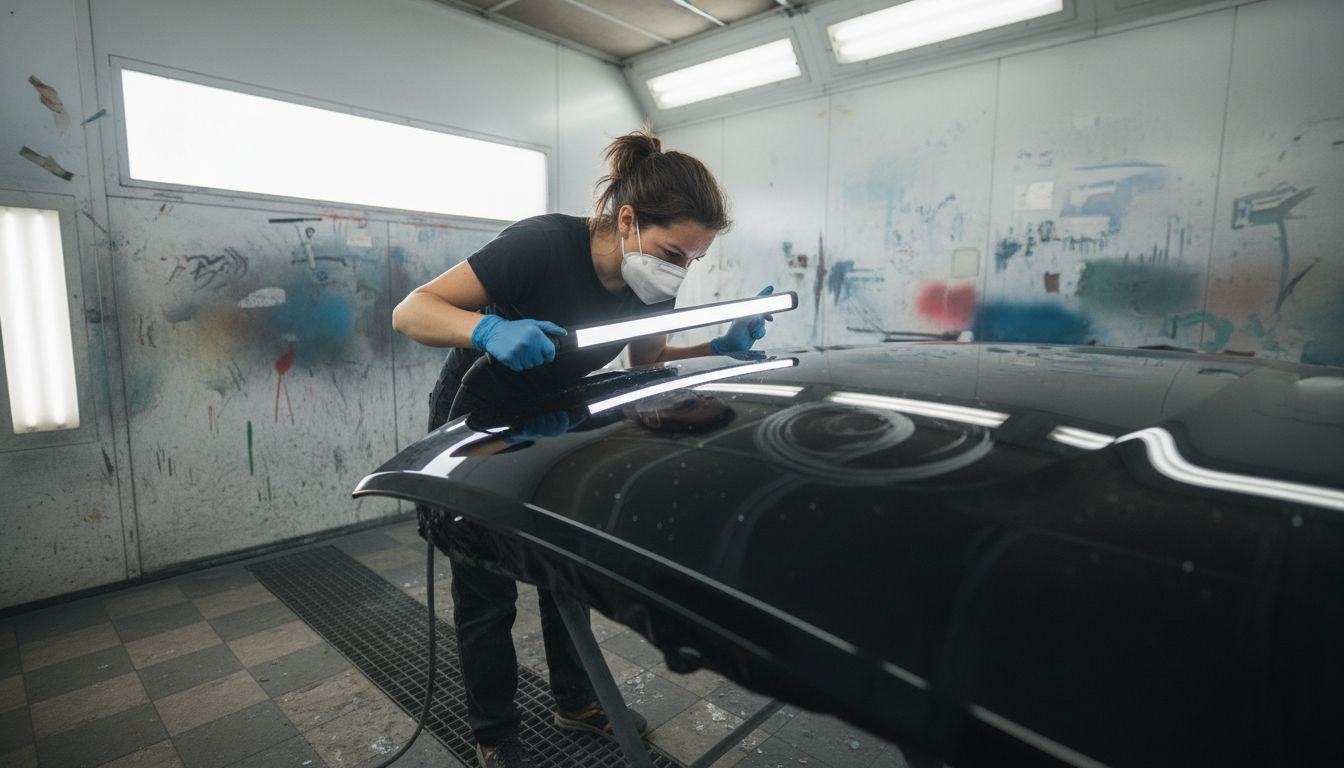
The operational efficiency gains multiply when you factor in the time your crew spends managing booth contamination. Without protective films, your maintenance team spends hours each week cleaning booth surfaces, wiping down walls and floors to remove accumulated overspray and dust. These cleaning sessions consume compressed air, cleaning solvents, and labor while the booth sits idle. With proper protective films, maintenance becomes a simple matter of stripping old film and applying new film, often completing in 15 to 30 minutes depending on booth size. Your booth returns to service faster, reducing downtime that cuts into production schedules. More critically, this efficiency directly improves paint consistency. When booth surfaces remain clean throughout your production day, every vehicle that enters receives identical environmental conditions. Your first job of the morning and your last job before closing spray in equivalent dust-free conditions. This environmental consistency becomes a competitive advantage because your paint finishes demonstrate predictable quality that customers recognize and trust. High-end auto body shops and fleet refinishers particularly value this consistency because their clients expect flawless finishes. When your booth environment remains stable through protective film management, your paint results reflect that stability, and your reputation for quality work strengthens.
Pro tip: Document your rework rates and booth maintenance hours before implementing protective films, then measure the same metrics 30 days after installation so you have concrete data showing your return on investment rather than relying on subjective impressions of quality improvement.
Key Features for Effective Dust Protection
Not all spray booth films perform equally when it comes to actual dust protection. The difference between a film that merely covers your booth and one that genuinely prevents contamination depends on specific engineered features that most facility managers rarely evaluate. Chemical resistance tops the list because your booth environment exposes films to aggressive solvents, thinners, and catalyzed paint systems that degrade lesser materials. A film lacking solvent resistance will soften, swell, or separate from booth surfaces within days of exposure, leaving gaps where contaminants infiltrate. Similarly, strong adhesion throughout the painting process determines whether your film stays fixed to walls and floors or peels away during vigorous spray operations. When you’re spraying at high pressure with multiple coats, the mechanical force from overspray and air movement tests the film’s grip constantly. Films with inadequate adhesion slip loose, fold, or bunch up, creating wrinkles that trap dust and undermine your protection entirely. Effective dust protection films possess key features such as high durability and strong adhesion to stay fixed throughout the painting process because these properties directly determine whether your investment in protection actually delivers results in your actual operating environment.
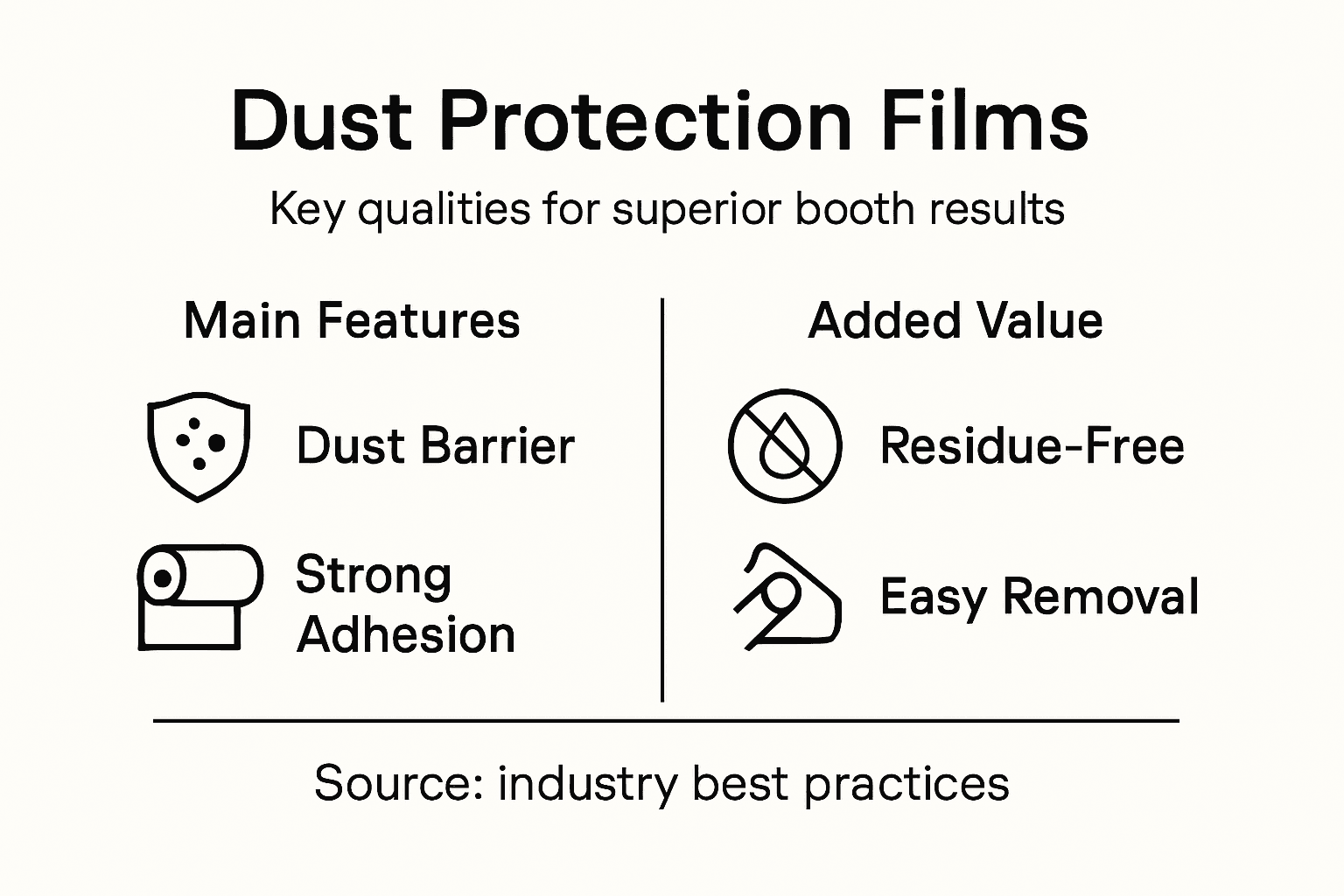
Beyond adhesion and chemical resistance, fine filtration capability separates premium protective films from standard products. Microscopic dust particles that measure just a few microns in diameter pass through films with coarse fiber construction, rendering the protection meaningless. Premium multi-layer films incorporate specialized inner layers engineered to trap particles at scales you cannot see with the naked eye. When air circulates through your booth during spray operations, these filtration layers capture contaminants that would otherwise settle on freshly applied coatings. This microscopic-level protection directly impacts your paint quality because even invisible dust particles cause surface defects that become apparent when topcoat begins to cure. Additionally, breathability allows your booth’s ventilation system to function efficiently while the film captures contaminants. A non-breathable film acts like a plastic bag, restricting air flow and creating pressure imbalances that compromise your booth’s environmental control. Quality protective films maintain porosity that permits air circulation while simultaneously trapping particulates. The balance between breathability and filtration capability represents a critical engineering consideration that distinguishes professional-grade films from consumer-grade alternatives. You can test breathability by observing whether your booth maintains consistent air velocity and temperature after film installation.
The ease of removal without residue deserves particular attention because adhesive residue left behind on booth surfaces creates new problems. Sticky residue attracts dust, interferes with subsequent film application, and requires aggressive cleaning that damages booth surfaces over time. Quality films release cleanly, leaving no adhesive traces that demand solvent cleaning or wire brushing. This feature matters more than many managers realize because accumulated adhesive buildup on booth walls eventually degrades your booth’s structural integrity and paint-holding capability. Furthermore, films should be compatible with existing ventilation and filtration systems within spray booths to maximize dust control efficiency, which means your film choice must integrate seamlessly with your booth’s current setup rather than requiring modifications or workarounds. Some films restrict airflow so severely that your ventilation system works harder, consuming excess energy and reducing equipment lifespan. Others create static electricity problems that attract dust rather than repel it. Genuine compatibility means the film enhances your booth’s filtration performance without creating unintended operational complications.
When evaluating protective films for your facility, create a simple assessment checklist covering these key features. Request product specifications documenting solvent resistance ratings, adhesion strength measurements, and filtration particle size capabilities. Ask the manufacturer for compatibility data showing how their film performs with your specific paint systems and ventilation equipment. Don’t rely on marketing claims alone. Request samples and conduct brief installation tests in a low-traffic booth area, observing adhesion, breathability, and cleanability over a few days of actual spray operations. This hands-on evaluation reveals performance realities that specifications alone cannot capture. The film that performs flawlessly in controlled testing may struggle under your specific operational conditions, so real-world trial data matters more than theoretical specifications.
Pro tip: Photograph your booth walls before and after 48 hours of operation with your test film installed, comparing dust accumulation patterns and adhesive failure points to objectively measure whether the film’s features deliver the protection you actually need.
Cost, Maintenance, and Long-Term Value
The upfront cost of spray booth protective films creates an initial sticker shock for many facility managers, but this perspective overlooks the actual economics operating in your business. A typical automotive refinishing booth might require 500 to 1,000 square feet of protective film coverage, translating to somewhere between $300 and $800 in material costs per installation depending on film quality and thickness. That expense happens every one to three weeks depending on your spray volume and film replacement schedule. The question isn’t whether this cost seems reasonable in isolation, but rather what you eliminate by paying it. The long-term value includes reduced maintenance costs, extended spray booth life, and fewer paint defects leading to lower rework rates that compound into substantial savings over months and years of operation. Consider what happens without protective films. Your booth walls accumulate paint overspray that hardens and builds up over weeks. Paint particles embed themselves into surface materials, creating a rough texture that itself becomes a dust and contamination source. Eventually, you face the choice of aggressive cleaning that takes the booth offline for hours, or accepting degraded paint quality. High-pressure washing damages some booth surfaces. Solvent scrubbing weakens certain material bonds. Wire brushing removes protective coatings. These cleaning interventions cost labor hours and supplies while your booth sits idle. A facility performing booth cleaning every two weeks loses roughly 100 hours annually to downtime and cleaning labor. At typical shop rates, that represents $3,000 to $5,000 in direct revenue loss alone, before accounting for materials.
The maintenance reality with protective films proves remarkably straightforward compared to unprotected booth management. Your routine involves inspecting film condition during regular spray operations, identifying areas where adhesion fails or buildup accumulates, and scheduling replacement during planned downtime windows. Most facilities incorporate film replacement into weekly or biweekly maintenance schedules, treating it as a predictable operational cost rather than an emergency repair situation. The actual replacement process takes 30 to 60 minutes for a standard booth, consuming minimal labor compared to traditional cleaning approaches. Maintaining spray booth films involves routine inspection and replacement to prevent buildup of contaminants that degrade paint quality, which means you’re performing preventative maintenance that stops problems before they damage your booth infrastructure or compromise paint results. This contrasts sharply with reactive booth maintenance where problems accumulate until they become severe enough to force corrective action. Your booth’s structural materials last significantly longer when protected from constant overspray bombardment. Booth walls, floors, and support structures endure less chemical and mechanical stress. Ventilation systems don’t get clogged with paint particles that reduce airflow efficiency. Your booth operates at optimal performance longer before major refurbishment becomes necessary. Major booth reconstruction or replacement can cost $15,000 to $50,000 or more depending on booth size and specifications. Extending your booth’s service life by even two to three years through protective film use easily justifies the ongoing film replacement investment.
The paint quality metrics tell the financial story most clearly. Facilities switching from unprotected to protected booth operations report rework rates dropping from 8 to 12 percent down to 2 to 3 percent. That improvement means fewer vehicles requiring resanding, respraying, and finishing work. In a medium-sized shop processing 150 vehicles monthly, reducing rework by 5 percentage points eliminates approximately 7 to 8 vehicles from the rework queue each month. At $400 to $600 in labor per rework job, that’s $2,800 to $4,800 monthly in eliminated waste. Annually, the math becomes compelling: $33,600 to $57,600 in recovered revenue from reduced rework alone. Subtract your annual protective film costs of roughly $2,000 to $4,000, and you’re realizing $30,000 to $55,000 in net value improvement each year. Beyond rework elimination, your first-time paint quality improves, enhancing your shop’s reputation and enabling price increases for premium finishing work. Customers recognize superior paint quality and willingly pay premium rates for shops demonstrating consistent, flawless results. This pricing power becomes another financial benefit that protected booth operations unlock.
When calculating whether protective films make financial sense for your operation, work backward from your current rework expenses and booth maintenance costs. Document actual hours spent cleaning your booth, multiply by your effective hourly cost including overhead, and compare to annual film replacement costs. Track your current rework percentage and estimate the revenue impact of improving it by just two to three percentage points. Most facilities discover that protective films pay for themselves within the first three to six months through rework reduction alone, with extended booth life and elimination of major cleaning operations representing additional savings afterward.
Pro tip: Implement protective films in one booth first, track your rework rates and maintenance hours for 60 days, then compare those metrics to your other booths to quantify your actual return on investment before expanding the program facility wide.
Alternatives and Common Application Mistakes
Facilities seeking dust control solutions sometimes explore alternative approaches before committing to protective films. Traditional cleaning methods represent the most common alternative, relying on regular manual cleaning, pressure washing, and solvent treatments to manage booth contamination. The reality is that cleaning works only after contamination has already accumulated and potentially compromised paint quality. You’re playing catch-up instead of prevention. Enhanced filtration systems offer another path, upgrading your booth’s air handling to capture more particles before they settle on surfaces. Quality filtration improvements help, but they don’t stop particles already floating in the booth atmosphere from settling during spray operations. Electrostatic precipitation attempts to charge particles so they attract to collection surfaces rather than fresh coatings. This technology works in laboratory conditions but struggles in real spray booths where paint chemicals and humidity interfere with electrostatic charge consistency. None of these alternatives match the straightforward effectiveness of protective films at preventing contamination before it happens. Alternatives to spray booth films include traditional cleaning methods, electrostatic precipitation, and enhanced filtration systems, however these may not offer the same efficiency at trapping overspray and dust, which explains why facilities investing in comprehensive dust control typically combine protective films with enhanced filtration rather than viewing them as competing options.
Here’s a quick look at how common alternatives to spray booth films stack up for dust control:
| Method | Prevents Dust Before Spraying | Maintenance Time | Impact on Paint Quality |
|---|---|---|---|
| Protective films | Yes, traps contaminants early | Low | Consistent, high quality |
| Manual cleaning | No, only removes afterward | High | Variable, often degraded |
| Enhanced filtration | Partial, filters some particles | Moderate | Better, but not flawless |
| Electrostatic systems | Limited, may miss fine dust | Moderate | Inconsistent results |
Application mistakes undermine protective film performance more often than product deficiencies do. Improper surface preparation tops the error list. Booth surfaces covered in dust, oil residue, or loose paint particles prevent adhesive contact, causing films to lift and peel within hours of installation. Your crew must clean booth surfaces thoroughly before film application, removing any contaminants that would interfere with adhesion. Uneven adhesion during installation happens when application pressure varies across the film surface. Wrinkled sections trap air pockets that become weak points where the film separates during spray operations. Quick, sloppy application always costs more in rework and reapplication than taking time to press the film smoothly and uniformly. Incorrect film type selection represents a subtle but costly mistake. Choosing a heat-activated film for a booth where temperature control is inconsistent means the adhesive never fully activates, resulting in poor hold. Selecting a pressure-sensitive film for high-velocity spray applications means peeling and displacement. Misapplication of spray booth films such as uneven adhesion, incorrect film type for the specific spray booth environment, and neglecting surface preparation before application are common errors that facility managers can avoid through simple pre-installation planning and crew training.
Failing to change films on schedule represents perhaps the most damaging mistake because it’s so preventable. Films that have absorbed overspray accumulate paint particles on their surface and lose their protective capability. A film that should be replaced weekly but runs for three weeks traps contaminants rather than repelling them. The degraded film becomes a dust source itself, actually worsening paint quality compared to operating without film. Your maintenance schedule must treat film replacement as non-negotiable, not something to defer when schedules get tight. Similarly, applying film to contaminated booth surfaces guarantees failure. If your booth walls carry residue from previous overspray or dust accumulation, the new film won’t adhere properly no matter how much pressure you apply. The contamination underneath creates a barrier between adhesive and substrate. Most application failures trace back to this single issue: inadequate surface preparation before film installation.
This table highlights typical application mistakes and their long-term effects on paint booth operations:
| Mistake | Root Cause | Negative Outcome |
|---|---|---|
| Poor surface preparation | Dust/oil left on surfaces | Film peeling, dust traps |
| Wrong film type selection | Misjudged environment needs | Adhesive failure, low protection |
| Infrequent film replacement | Ignored change schedule | Increased contamination, rework |
| Rushed application | Uneven pressure/wrinkles | Weak adhesion, visible defects |
When implementing protective films at your facility, establish clear protocols that prevent these common mistakes. Create a pre-installation checklist requiring verification that all booth surfaces are clean, dry, and free from contamination before any film goes on. Document your specific film type, adhesive temperature requirements if applicable, and application pressure specifications. Train your crew on proper installation technique, emphasizing the importance of uniform pressure and smooth application without wrinkles. Schedule film replacement on a fixed calendar basis rather than waiting until problems appear. Post visible reminders at your booth showing the installation date and scheduled replacement date so no one forgets. After installation, perform a quick adhesion test by gently attempting to lift film edges in low-traffic areas. Poor adhesion discovered immediately can be corrected before it becomes a widespread problem.
Pro tip: Document your first film installation with photographs showing surface preparation steps, adhesion verification, and final application, then use those photos as a training reference for crew members performing subsequent installations to ensure consistent quality and prevent repeating common mistakes.
Achieve Superior Dust Protection with Dust Free Film Solutions
Maintaining a pristine spray booth environment is vital to achieving flawless paint finishes and reducing costly rework. The article highlights the challenges of dust contamination, improper film adhesion, and the hidden costs of ineffective booth maintenance. If you are dealing with frequent film peeling, overspray buildup, or inconsistent paint quality, your operation needs protective films designed for durability, heat resistance, and seamless application. Dust Free Film specializes in premium multi-layer spray booth protective films featuring patented dispenser systems for quick, bubble-free installation that maintain booth cleanliness and optimize airflow. Our technology addresses common pain points such as chemical resistance and strong adhesion that keep your booth surfaces fully protected throughout busy spray cycles.
Take control of your spray booth environment today by exploring Dust Free Film’s advanced protective solutions. Visit our website at Dust Free Film to discover how our heat-resistant, electrostatic films reduce downtime, extend booth life, and dramatically improve paint quality. Don’t let improper dust protection undermine your results or inflate maintenance costs. Act now to make the smart investment in your shop’s future with reliable, European-standard spray booth films from Dust Free Film. Learn more and request your sample installation at Dust Free Film to experience the difference firsthand.
Frequently Asked Questions
What are spray booth protective films?
Spray booth protective films are specialized barriers designed to shield the walls, floors, and surfaces of spray booths from dust, overspray, and contaminants. They help maintain a clean environment for paint application, enhancing the overall finish quality.
How do spray booth films improve paint quality?
Protective films eliminate sources of dust and airborne contaminants in the spray booth, preventing them from embedding in the paint layers. This leads to improved adhesion and a more uniform finish, reducing the likelihood of defects such as orange peel and inadequate gloss.
What are the different types of spray booth films available?
Spray booth films can differ based on adhesive systems, including pressure-sensitive and heat-activated options. Other variations include material composition, thickness, and multi-layer structures tailored for specific applications, such as automotive refinishing or industrial coating.
How often should protective films be replaced in a spray booth?
The replacement frequency of protective films generally depends on your spray volume and operational conditions. Typically, films may need replacing every one to three weeks to maintain optimal dust protection and minimize maintenance challenges.