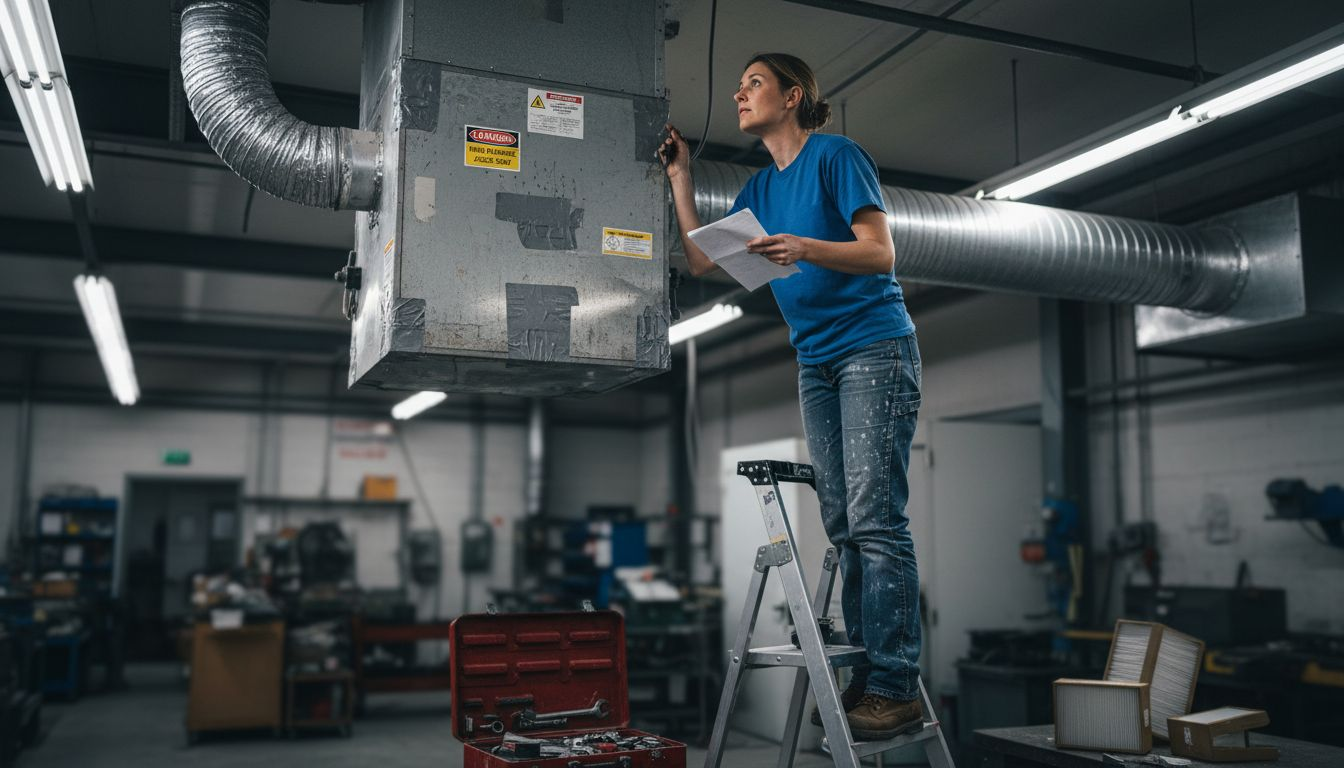
Quality paint jobs can quickly go wrong when dust settles on fresh finishes or equipment loses efficiency. Facility maintenance managers know the smallest oversight in spray booth upkeep leads to rejected work and higher costs. Understanding spray booth maintenance standards helps protect against dust contamination, supports consistent paint results, and ensures safety in automotive shops across the globe. This guide reveals what matters most for reliable operations and high-quality finishes in every facility.
Table of Contents
- Defining Spray Booth Maintenance Standards
- Types of Spray Booths and Key Components
- Essential Maintenance Tasks and Schedules
- Filter Management to Prevent Dust Contamination
- Critical Safety Risks and Costly Mistakes to Avoid
Key Takeaways
| Point | Details |
|---|---|
| Holistic Maintenance Approach | Spray booth maintenance requires a comprehensive strategy that includes cleaning, equipment functionality, and environmental control to enhance performance and safety. |
| Regular Inspections and Documentation | Implementing regular assessments and maintaining detailed records of maintenance activities ensures compliance and identifies potential issues before they escalate. |
| Effective Filter Management | Establish a proactive filter management strategy, utilizing pressure monitoring to determine replacement needs and preserve air quality while minimizing contamination risks. |
| Safety Protocol Implementation | Develop thorough safety protocols and training to mitigate risks such as fire hazards and equipment failures, fostering a culture of safety within spray booth operations. |
Defining Spray Booth Maintenance Standards
Spray booth maintenance represents a comprehensive system of protocols designed to ensure optimal performance, safety, and quality in industrial painting environments. Facility maintenance managers must understand that maintenance standards go far beyond simple cleaning procedures and encompass a holistic approach to controlling dust, managing environmental conditions, and maintaining equipment functionality.
The core of spray booth maintenance involves adhering to rigorous safety and performance guidelines that address multiple critical dimensions. These include ventilation management, material selection, contamination prevention, and systematic inspection protocols. Professional standards require regular assessment of booth components such as exhaust filters, air flow dynamics, electrical systems, and surface integrity to prevent potential operational failures.
Key maintenance standards typically mandate specific practices like scheduled filter replacements, comprehensive surface cleaning, regular calibration of airflow systems, and documentation of maintenance activities. Facility managers should implement a structured approach that includes quantitative measurements of air quality, particulate levels, and equipment performance metrics. This systematic approach ensures not just cleanliness, but also provides a framework for predictive maintenance that can significantly reduce unexpected downtime and potential quality issues in painting processes.
Pro tip: Develop a standardized maintenance checklist with precise intervals and measurable criteria to transform reactive maintenance into a proactive quality control strategy.
Types of Spray Booths and Key Components
Spray booths are specialized enclosures designed for painting and coating operations, with each type engineered to address specific industrial requirements. The primary categories include open front, semi-downdraft, downdraft, crossdraft, and side draft spray booths, each offering unique airflow management and contamination control strategies for different manufacturing environments.
OSHA regulations define several critical booth types, including waterwash and dry filter spray booths that utilize different dust and overspray management techniques. Waterwash booths use water filtration systems to capture paint particles, while dry filter booths employ advanced filtration media to trap overspray and maintain air quality. These design variations allow manufacturers to select booth configurations that best match their specific painting processes and environmental constraints.
Key components of spray booths are fundamental to their operational effectiveness. These include robust ventilation systems, high-efficiency particulate air (HEPA) filters, electrical systems rated for hazardous locations, noncombustible construction materials, and precise airflow control mechanisms. Facility managers must ensure these components are professionally engineered to create a controlled environment that minimizes dust contamination, supports worker safety, and maintains consistent paint application quality.

Pro tip: Conduct quarterly comprehensive inspections of spray booth components, focusing on filter integrity, electrical systems, and airflow dynamics to preemptively identify potential performance degradation.
Here’s a summary comparing common spray booth types and their typical applications:
| Booth Type | Airflow Pattern | Ideal Usage |
|---|---|---|
| Open Front | Inward, open sides | Small parts, touch-ups |
| Crossdraft | Horizontal airflow | General automotive, woodwork |
| Downdraft | Vertical airflow | High-quality finish, auto OEMs |
| Side Draft | Side-to-side flow | Large parts, dust control |
| Semi-Downdraft | Partial vertical | Versatile, medium-grade work |
Essential Maintenance Tasks and Schedules
Maintaining a spray booth requires a systematic approach that goes beyond routine cleaning, involving comprehensive and strategic maintenance protocols designed to ensure optimal performance, safety, and longevity of the equipment. Facility managers must develop a structured maintenance framework that addresses both preventative and predictive maintenance strategies to minimize operational disruptions and maintain consistent paint quality.
The National Fire Sprinkler Association recommends a rigorous maintenance schedule that includes critical inspection and cleaning protocols. These tasks encompass multiple critical dimensions, including regular filter replacement, thorough interior cleaning, ventilation system assessment, and comprehensive safety device evaluations. Maintenance frequency should be determined by factors such as booth usage intensity, painting materials utilized, and environmental conditions specific to each facility.
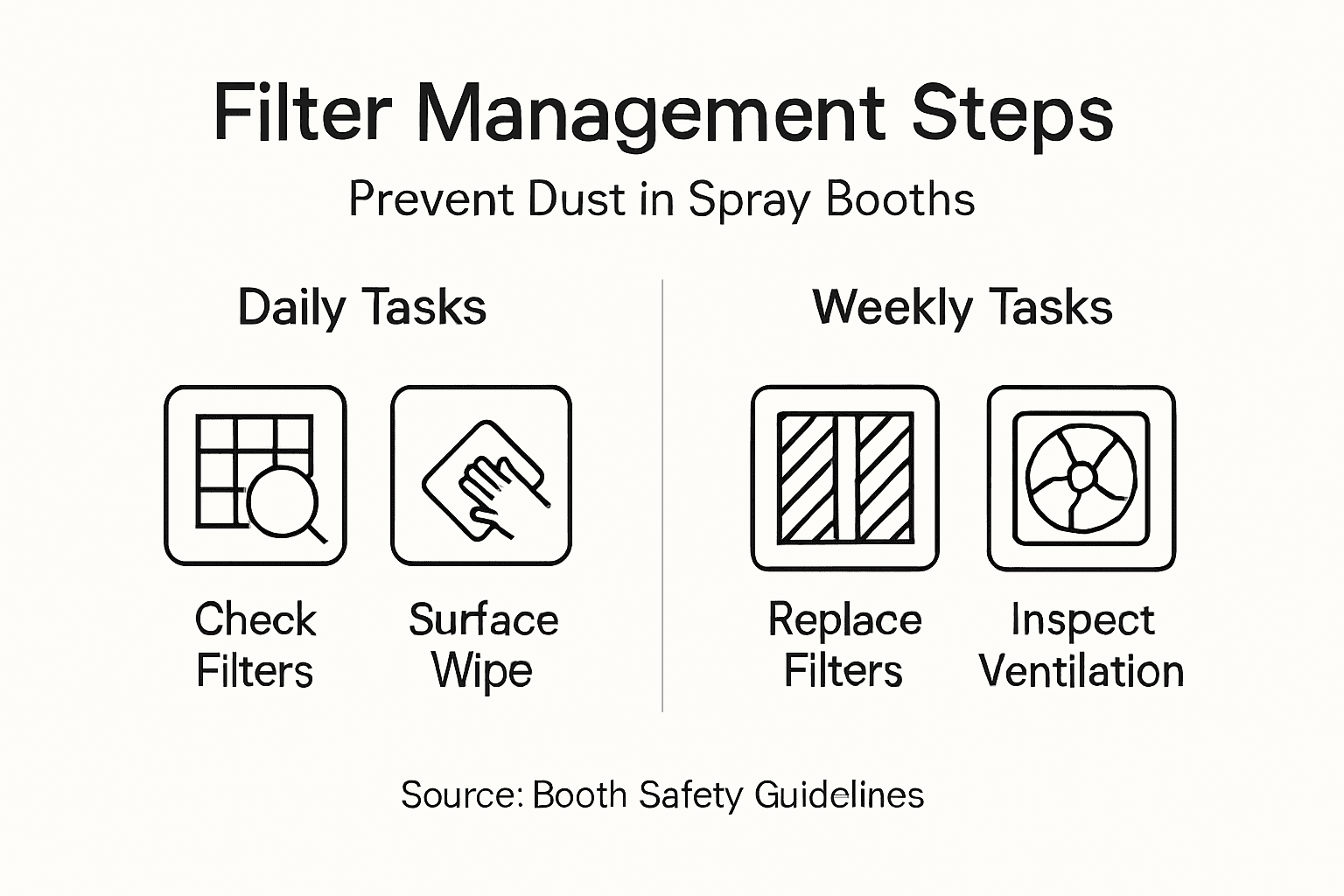
A comprehensive maintenance schedule typically involves several key tasks stratified by frequency. Daily tasks include surface wiping, filter preliminary checks, and immediate overspray cleanup. Weekly responsibilities involve more detailed filter inspections, electrical system assessments, and airflow measurements. Monthly and quarterly maintenance requires deeper interventions such as comprehensive system calibration, detailed component inspections, sprinkler head examinations, and potentially replacing critical filtration components. Annual maintenance should include professional-level system diagnostics, complete electrical system evaluations, and potential equipment recertification.
Pro tip: Develop a digital maintenance tracking system that logs every inspection, repair, and component replacement to create a comprehensive historical record and predictive maintenance strategy.
The following table highlights the business impact of key spray booth maintenance strategies:
| Maintenance Strategy | Business Impact |
|---|---|
| Predictive maintenance | Reduces downtime, improves uptime |
| Documented inspections | Supports compliance, averts violations |
| Real-time filter monitoring | Preserves paint quality, avoids defects |
| Scheduled equipment checks | Prevents major repairs, lowers costs |
Filter Management to Prevent Dust Contamination
Filter management represents a critical cornerstone of maintaining dust-free spray booth environments, serving as the primary defense mechanism against particulate contamination that can compromise paint finish quality and worker safety. Effective filter management goes beyond simple replacement, requiring a sophisticated approach that integrates systematic monitoring, performance tracking, and strategic intervention.

Research from Johns Hopkins University highlights the importance of precise filter monitoring techniques for preventing dust contamination. Critical parameters like pressure differential and airflow rates provide essential indicators of filter performance and replacement timing. Facility managers should establish quantitative thresholds that trigger filter changeout, typically when pressure drop exceeds manufacturer-recommended levels or when visual inspection reveals significant particulate accumulation.
A comprehensive filter management strategy involves multiple layers of intervention. This includes selecting high-efficiency filter media appropriate for specific painting processes, implementing regular visual and instrumental inspections, maintaining precise documentation of filter performance, and establishing proactive replacement schedules. Different spray booth configurations and painting materials require tailored filtration approaches, with some environments demanding more frequent filter changes to maintain optimal air quality and paint finish standards.
Pro tip: Invest in digital pressure monitoring devices that can provide real-time filter performance data and automatic alerts when replacement becomes necessary.
Critical Safety Risks and Costly Mistakes to Avoid
Spray booth operations involve numerous potential safety risks that can lead to catastrophic consequences if not properly managed, transforming what should be a controlled environment into a potential disaster zone. Understanding and proactively addressing these risks is not just a matter of compliance, but a fundamental requirement for maintaining operational integrity and worker safety.
The ASM International safety guidelines highlight critical safety risks in spray booth operations. The most significant hazards include fire risks from combustible overspray accumulation, electrical ignition sources, and inadequate ventilation systems. Common costly mistakes often stem from neglecting routine maintenance, improper electrical installations, and failing to implement comprehensive safety protocols. These oversights can result in equipment damage, potential worker injuries, regulatory violations, and substantial financial losses.
Mitigation strategies require a multilayered approach that addresses both immediate and long-term safety concerns. This includes implementing rigorous training programs for personnel, conducting regular safety audits, maintaining detailed documentation of maintenance activities, and investing in high-quality safety equipment. Facility managers must develop a proactive safety culture that emphasizes prevention over reaction, ensuring that every team member understands their role in maintaining a safe and efficient spray booth environment. Key focus areas should include electrical system integrity, fire suppression capabilities, proper personal protective equipment usage, and systematic risk assessment protocols.
Pro tip: Develop a comprehensive safety checklist that includes daily, weekly, and monthly inspection points, and create a digital tracking system to ensure no critical safety measure is ever overlooked.
Elevate Your Spray Booth Maintenance with Proven Dust Protection Solutions
Maintaining a dust-free spray booth is essential to prevent costly paint defects and ensure operational safety as highlighted in the article. Challenges such as managing dust contamination, filter performance, and maintaining airflow can feel overwhelming without the right tools. Key pain points include preventing overspray buildup, reducing downtime caused by ineffective cleaning, and adhering to critical filter management standards that guarantee superior paint finishes.
At Dust Free Film, we understand these needs and offer premium multi-layer electrostatic booth wall and floor protectors engineered to create a controlled, dust-free environment. Our patented installation system allows for quick and bubble-free application, reducing maintenance time while our heat-resistant and static-free films withstand the demands of high-traffic spray booths. By integrating our solutions, you support rigorous maintenance schedules and safety protocols, improve paint quality, and minimize operational disruptions.
Discover how our durable dust protection films can help you reach these goals. Visit Dust Free Film to learn more and explore our innovative products designed specifically for spray booth environments. For detailed insights on how to optimize your spray booth upkeep, consult our resources to complement your maintenance plan.

Protect your investment and boost spray booth performance today with Dust Free Film’s proven dust control technology. Take the next step now by visiting Dust Free Film and securing your spray booth’s future quality and safety.
Frequently Asked Questions
What are the key components of a spray booth that require regular maintenance?
Key components include ventilation systems, HEPA filters, electrical systems rated for hazardous locations, noncombustible construction materials, and precise airflow control mechanisms. Regular maintenance of these components is crucial for optimal operational effectiveness.
How often should filters in a spray booth be replaced?
Filters should be replaced based on performance indicators like pressure differential and airflow rates. Typically, they should be changed when the pressure drop exceeds manufacturer-recommended levels or visual inspections show significant particulate accumulation.
What maintenance tasks should be performed on a spray booth on a daily basis?
Daily tasks include surface wiping, preliminary checks of filters, and immediate cleanup of any overspray. These simple actions help maintain cleanliness and safety in the booth environment.
What are the most significant safety risks associated with spray booths?
Significant safety risks include fire hazards due to combustible overspray, electrical ignition sources, and inadequate ventilation. Addressing these risks through regular maintenance and safety protocols is essential to prevent accidents.
Recommended
- Dust Free Film for Spray Booth Protection | Wall and Floor
- Ultimate Commercial Building Maintenance Checklist 2025 – Mats4U USA