

Dust and contaminants remain the top culprits behind paint defects in spray booths, with studies revealing that even a single missed cleaning session can increase rejection rates by over 30 percent. American facility maintenance managers in automotive and industrial paint environments know that maintaining a consistently clean spray booth is essential for operational efficiency and uncompromising quality. This guide reveals proven steps for reducing downtime, avoiding costly rework, and setting new standards for professional paint results.
Table of Contents
- Step 1: Prepare The Spray Booth Environment
- Step 2: Remove Contaminants And Debris Thoroughly
- Step 3: Apply Dust Protection Films Effectively
- Step 4: Inspect Installation For Complete Coverage
- Step 5: Maintain Regular Cleaning And Film Replacement
Quick Summary
| Key Point | Explanation |
|---|---|
| 1. Clean the booth thoroughly | Remove all debris and dust using HEPA vacuums for optimal paint results. |
| 2. Implement contamination control | Use specialized mats and protocols to minimize the introduction of external contaminants. |
| 3. Apply dust protection films | Ensure complete coverage of surfaces to prevent dust interference during painting. |
| 4. Conduct regular inspections | Regularly check for film integrity to maintain a contamination-free environment. |
| 5. Establish consistent maintenance | Create a systematic schedule for cleaning and replacing protective films to ensure booth quality. |
Step 1: Prepare the Spray Booth Environment
Preparing your spray booth environment is critical for achieving dust-free painting results. Before any painting work begins, you need a meticulously clean and controlled workspace that minimizes potential contaminants and ensures optimal finish quality.
Start by completely clearing the spray booth of any previous materials, tools, or debris. Sweep and vacuum the entire area thoroughly, paying special attention to floor corners, wall edges, and hard-to-reach surfaces where dust particles tend to accumulate. Use industrial-grade vacuum cleaners with HEPA filtration to effectively capture fine particulates. Wipe down all surfaces including walls, floors, and equipment with lint-free microfiber cloths and appropriate cleaning solutions designed for spray booth environments. Dust-free protection films can provide an additional layer of contamination prevention during your cleaning process.
After cleaning, perform a final inspection using bright, direct lighting to identify any remaining dust or potential contaminant sources. Check ventilation systems, ensure all filters are clean and properly installed, and verify that air flow patterns will effectively remove overspray and airborne particles during painting operations.
Professional Tip: Implement a strict pre-painting cleaning protocol and maintain a dedicated cleaning log to track booth maintenance and ensure consistent dust-free environments.
Step 2: Remove Contaminants and Debris Thoroughly
Removing contaminants and debris is a critical step in maintaining a pristine spray booth environment. This process goes beyond simple cleaning and requires a systematic approach to eliminate potential sources of paint defects and surface imperfections.
Begin by implementing comprehensive contamination control measures, which include using specialized contamination mats at booth entrances to trap external particles from shoes and equipment. Use high-efficiency particulate air (HEPA) vacuum cleaners with attachments designed to reach tight corners and hard-to-access areas. Pay special attention to surfaces like walls, floors, equipment racks, and overhead structures where dust and debris can accumulate. Strict personal protective equipment protocols are essential to prevent introducing new contaminants during the cleaning process.
Focus on removing all potential sources of contamination, including removing silicone-based products, personal care items, and ensuring workers understand the importance of minimal movement within the spray booth. Regularly inspect and replace intake and extraction filters to maintain optimal air quality and reduce the risk of airborne particles interfering with paint application.
Use this quick reference for common spray booth contaminants and removal strategies:
| Contaminant Type | Common Source | Best Removal Method |
|---|---|---|
| Dust particles | Shoes, air vents | HEPA vacuum, microfiber cloths |
| Silicone residues | Personal care items | Degreaser, education of staff |
| Overspray | Paint operations | Specialized cleaning agents |
| Fibers and lint | Clothing, rags | Lint-free garments and supplies |
| Oil/grease marks | Equipment, tools | Approved surface cleaners |
Professional Tip: Develop a standardized checklist for contaminant removal that can be consistently followed by all team members to ensure uniform cleaning standards.
Step 3: Apply Dust Protection Films Effectively
Applying dust protection films correctly is a crucial step in maintaining a contamination-free spray booth environment. This process requires precision and careful attention to detail to ensure complete surface coverage and optimal paint finish protection.
Begin by thoroughly cleaning and preparing the surfaces where you will apply the protective films. Proper surface preparation is essential for ensuring maximum film adhesion and performance. Start at one edge of the surface and carefully unroll the film, using smooth and consistent pressure to prevent air bubbles or wrinkles. Work systematically across walls, floors, and equipment surfaces, ensuring complete and overlap-free coverage. Use a soft squeegee or specialized film application tool to smooth out the film and eliminate any potential air pockets.
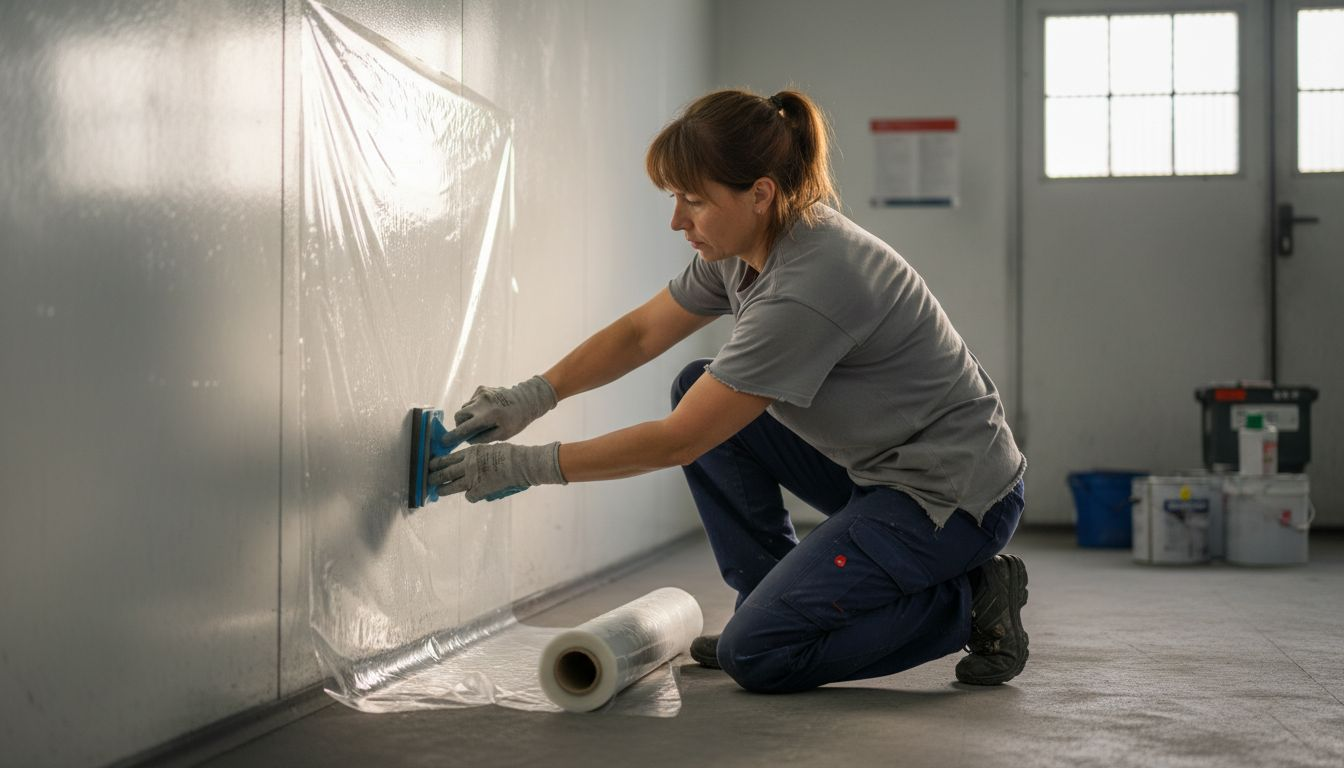
Pay close attention to critical areas such as corners, edges, and around equipment where dust and overspray are most likely to accumulate. Regularly inspect the applied films for any signs of wear, lifting, or damage, and be prepared to replace them promptly to maintain optimal protection. Ensure that all team members understand the importance of maintaining these protective films and are trained in proper application techniques.
Professional Tip: Invest in high quality film application tools and train multiple team members in precise film installation to ensure consistent and effective dust protection.
Step 4: Inspect Installation for Complete Coverage
Inspecting your dust protection film installation is a critical final step in ensuring a truly contamination-free spray booth environment. A thorough and systematic inspection can mean the difference between a flawless paint finish and costly rework.
Comprehensive booth maintenance checks require a methodical approach to verifying film coverage. Begin by using bright, direct lighting to illuminate the entire booth surface, carefully examining each section for potential gaps, wrinkles, or areas of incomplete coverage. Pay special attention to corners, edges, around equipment, and high-contact surfaces where film might lift or separate. Use your hands to gently press and verify film adhesion, checking for any bubbles, creases, or loose sections that could compromise your dust protection.
Focus on creating a detailed documentation process for your inspections. Record the date, specific areas checked, and any potential issues discovered. This not only helps maintain a consistent quality standard but also provides a valuable tracking mechanism for future maintenance and potential warranty claims. Implement a routine where multiple team members cross-check the installation to ensure nothing is overlooked.
Professional Tip: Create a standardized inspection checklist with specific zones and potential issue markers to ensure consistent and comprehensive film coverage verification.
Step 5: Maintain Regular Cleaning and Film Replacement
Maintaining a pristine spray booth requires consistent and systematic cleaning and film replacement strategies. This ongoing process is crucial for preserving paint quality, equipment performance, and overall operational efficiency.
Spray booth maintenance protocols demand a structured approach to cleaning and film management. Develop a comprehensive schedule that includes daily surface wiping, weekly detailed cleaning, and periodic protective film replacement. Use specialized cleaning agents designed for spray booth surfaces, ensuring you remove all overspray, dust, and potential contaminants without damaging the underlying materials. Pay special attention to high-contact areas, equipment interfaces, and surfaces prone to accumulating particulates. Airflow monitoring and filter maintenance are equally critical to sustaining a dust-free environment.
Establish a rigorous documentation system to track cleaning activities, film replacement intervals, and equipment performance. Create clear guidelines for your team that specify cleaning techniques, approved cleaning agents, and replacement thresholds for protective films. Implement a rotation system where multiple team members are trained in proper maintenance procedures to ensure consistency and accountability.
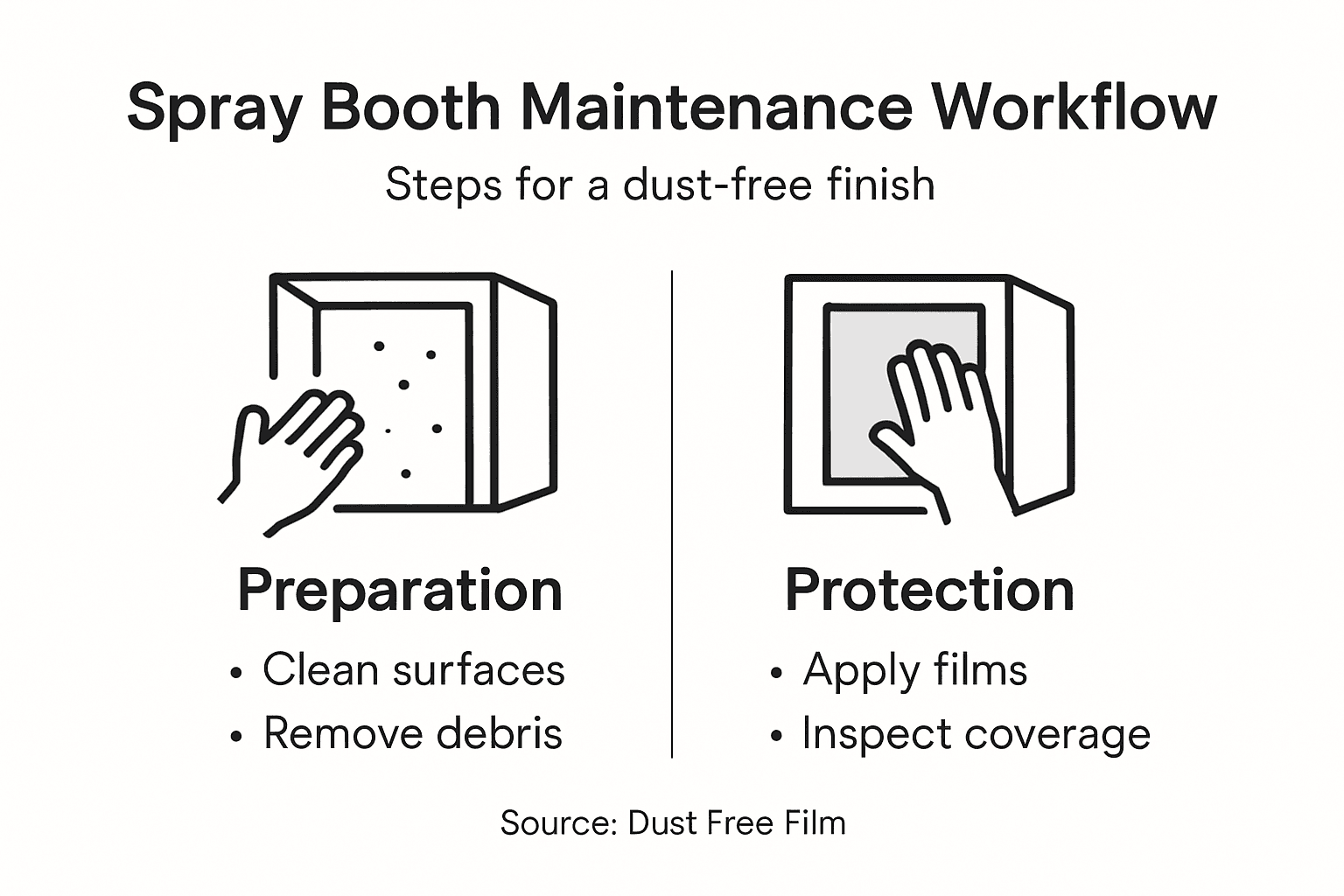
Here’s a comparison of key spray booth maintenance tasks and their impact:
| Task | Frequency | Primary Benefit |
|---|---|---|
| Surface cleaning | Daily/Weekly | Removes dust and overspray |
| Filter inspection | Weekly/Monthly | Ensures clean airflow |
| Film replacement | As needed | Prevents new contamination |
| Equipment checks | Weekly/Monthly | Reduces malfunction risk |
| Documentation updates | After each session | Tracks maintenance history |
Professional Tip: Create a digital maintenance log with photographic evidence to track spray booth conditions and demonstrate ongoing commitment to quality control.
Achieve Dust-Free Spray Booths with Proven Protection Solutions
Maintaining a pristine spray booth environment demands thorough cleaning, precise application of dust protection films, and ongoing vigilance against contaminants as detailed in the article “Spray Booth Maintenance Workflow for Dust-Free Results.” Key challenges include eliminating dust particles, preventing silicone residues, and ensuring complete coverage of dust protection films to avoid costly paint defects. You want reliable products that stick well, resist damage, and simplify maintenance so your team can focus on perfect paint finishes without stress.
At Dust Free Film, we specialize in premium, multi-layer electrostatic protective films designed specifically for spray booths in automotive and industrial painting settings. Our innovative, heat-resistant, and static-free films provide durable coverage for walls and floors, making them a critical part of any comprehensive maintenance protocol. With patented installation systems, your crew can achieve fast, bubble-free application for maximum dust control. Explore how our solutions directly address the contamination control and film replacement strategies highlighted in the workflow.
Take control of your spray booth environment today.

Discover how Dust Free Film can transform your maintenance routine and help you achieve flawless paint finishes. Visit our site now to learn more about our advanced dust protection films and start protecting your spray booth with confidence.
Frequently Asked Questions
How can I effectively prepare my spray booth environment for dust-free painting?
To prepare your spray booth environment, start by clearing all materials and debris. Clean floors and surfaces using a HEPA vacuum and microfiber cloths to ensure optimal cleanliness and dust-free results.
What are the best practices for removing contaminants from the spray booth?
Implement comprehensive contamination control measures, such as using contamination mats at entrances and regularly utilizing HEPA vacuums. Focus on high-touch areas and educate workers on minimizing movement to avoid introducing new contaminants.
How should I apply dust protection films in the spray booth?
Apply dust protection films by ensuring surfaces are thoroughly cleaned first, then unroll the film smoothly to avoid air bubbles. Use a soft squeegee to eliminate potential air pockets and ensure complete coverage of all critical areas.
What steps should I take to inspect the installation of dust protection films?
Inspect the installation by using bright lighting to check for gaps or wrinkles on the film. Make sure to document the inspection process, noting any issues and ensuring consistent quality for paint application.
How often should I clean the spray booth and replace protective films?
Establish a cleaning schedule that includes daily surface cleaning and weekly detailed cleanings with periodic film replacements based on condition. Regularly monitor booth maintenance to ensure a consistently dust-free environment.
What documentation should I maintain for spray booth maintenance?
Maintain a detailed log of cleaning activities, film replacement, and equipment checks to track booth conditions over time. Creating a digital log with photographs can help demonstrate your commitment to quality control.