

Every american facility maintenance manager knows that a single dust particle can ruin hours of precise work in a spray booth. With up to 80 percent of paint defects traced back to contamination issues, understanding the core terminology of spray booths becomes critical. Mastery of these terms helps you select the right technology, communicate efficiently with your team, and meet both quality and safety standards demanded across North America, Europe, and Asia.
Table of Contents
- Core Terminology Of Spray Booths Explained
- Types Of Spray Booths And Airflow Patterns
- Critical Components And Filtration Terms
- Safety Terminology And Compliance Standards
- Why Accurate Terms Improve Paint Results
Key Takeaways
| Point | Details |
|---|---|
| Understanding Spray Booth Components | Familiarize yourself with terms like enclosure, ventilation system, and filtration network to enhance painting quality and safety. |
| Choosing the Right Airflow Configuration | Select airflow types such as cross-draft or downdraft based on specific painting needs to improve results and reduce contamination. |
| Importance of Filtration Systems | Utilize an effective filtration system to capture and remove airborne contaminants, ensuring better paint application quality. |
| Regular Safety Audits and Training | Conduct safety audits and establish training protocols to maintain compliance and enhance worker safety in spray booth operations. |
Core Terminology of Spray Booths Explained
Spray booths represent sophisticated enclosed environments designed for industrial painting and coating processes. Understanding their core terminology is critical for maintaining high paint quality and operational safety. These specialized chambers are engineered to control airflow, contain overspray, and provide an optimal environment for achieving superior surface finishes.
The fundamental components of a spray booth include the enclosure, ventilation system, and filtration network. The enclosure creates a controlled space that prevents external contaminants from entering during painting processes. Occupational safety standards mandate specific design requirements for these enclosures to ensure worker protection and environmental safety. The ventilation system manages airflow dynamics, creating directional air movement that captures and removes paint particles, preventing potential redeposition on freshly painted surfaces.
Crucial terminologies facility managers must understand include overspray containment, air makeup units, and exhaust systems. Overspray containment refers to the booth’s ability to capture paint particles that do not adhere to the target surface. Air makeup units replace exhausted air and maintain consistent internal pressure, while exhaust systems remove contaminated air through specialized filter arrangements. Proper understanding of these terms directly impacts paint finish quality and workplace safety protocols.
Pro tip: Regularly calibrate your spray booth’s air pressure and filtration systems to maintain optimal painting conditions and prevent potential contamination.
Types of Spray Booths and Airflow Patterns
Spray booths are categorized based on their airflow configurations, which critically determine paint application quality and environmental safety. These configurations range from simple designs to advanced systems engineered for specific industrial requirements. Each type offers unique advantages in managing particulate movement, controlling contamination, and optimizing coating processes.
The primary types of spray booths include cross-draft, downdraft, and semi-downdraft configurations. Spray booth design standards specify critical parameters for each airflow pattern. Cross-draft booths feature horizontal airflow from one side to another, providing economical and straightforward ventilation. Downdraft booths channel air vertically from ceiling to floor, creating the most controlled environment by pulling overspray directly downward and away from painted surfaces, which minimizes potential contamination.
Airflow patterns significantly impact paint deposition, particle distribution, and overall finish quality. Semi-downdraft configurations blend horizontal and vertical air movements, offering intermediate performance characteristics. These designs are particularly useful in scenarios requiring balanced airflow and contamination control. Advanced electrostatic and powder coating booths often incorporate specialized airflow mechanisms that enhance particle attraction and reduce overspray, demonstrating the intricate relationship between booth design and coating efficiency.
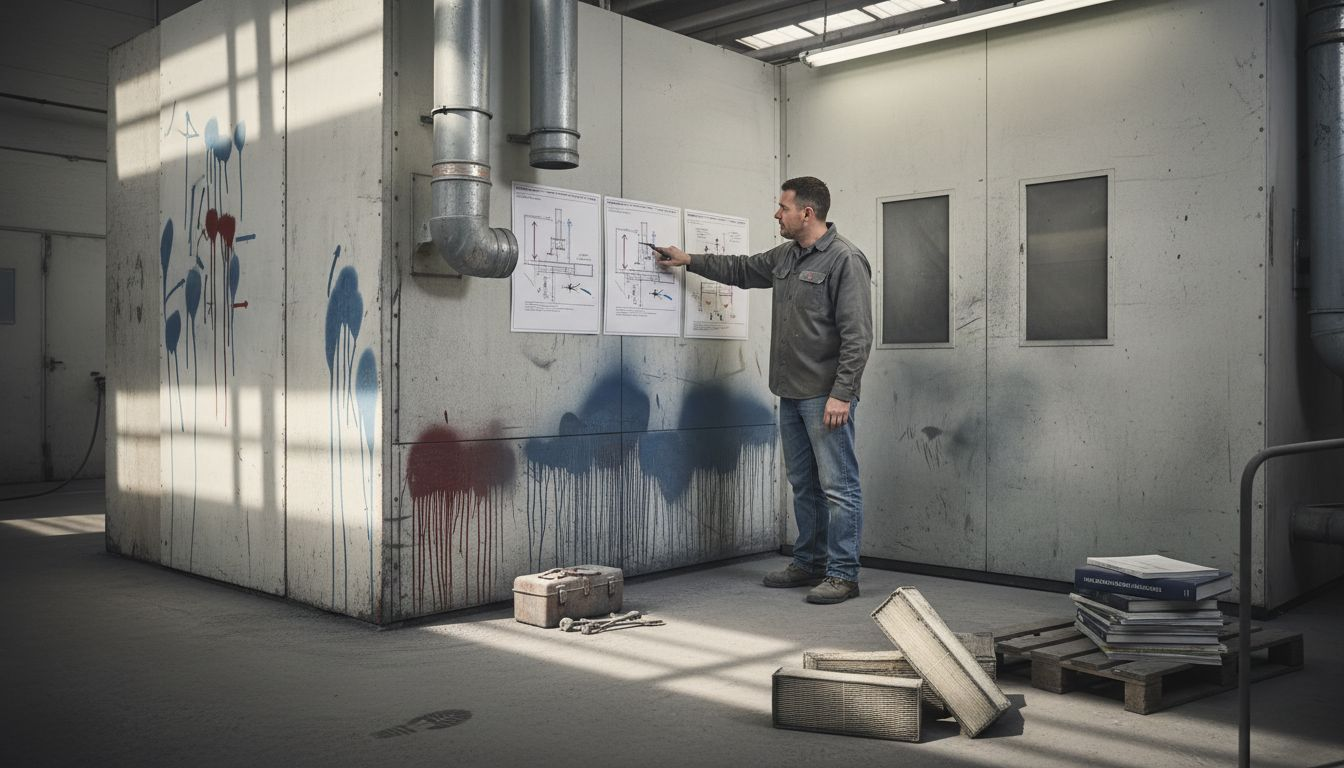
Here’s a quick comparison of spray booth airflow designs and their operational impact:
| Airflow Type | Air Movement Direction | Key Benefit | Common Use Case |
|---|---|---|---|
| Cross-draft | Horizontal (side-to-side) | Economical installation | Auto body shops |
| Downdraft | Vertical (ceiling to floor) | Superior contamination control | High-end industrial painting |
| Semi-downdraft | Mixed horizontal & vertical | Balanced airflow and quality | Custom fabrication booths |
| Electrostatic/Advanced | Targeted, controlled flow | Enhanced coating efficiency | Specialty powder coating |
Pro tip: Select your spray booth’s airflow configuration based on specific coating requirements, substrate characteristics, and environmental conditions to optimize paint quality and operational efficiency.
Critical Components and Filtration Terms
Spray booth filtration systems represent complex engineering solutions designed to manage airborne contaminants and ensure superior paint application quality. These intricate networks of components work synergistically to capture, filter, and remove particulate matter, protecting both the painting environment and worker health. Understanding the fundamental terminology and components is essential for maintaining optimal operational performance.
Filtration system engineering reveals multiple critical components that form the backbone of spray booth air management. The primary elements include intake filters, primary filters, and exhaust filters, each serving a distinct function in the particulate removal process. Intake filters prevent external contaminants from entering the booth, while primary filters capture larger paint particles during the application process. Exhaust filters represent the final line of defense, ensuring that only clean air is released into the external environment.
Specialized filter media play a crucial role in determining filtration efficiency. Synthetic media, fiberglass, and multi-layer composites offer varying levels of particulate capture, with each material designed to address specific paint application challenges. These filters are rated using minimum efficiency reporting value (MERV) standards, which quantify their ability to trap particles of different sizes. Advanced filtration systems incorporate progressive density designs that incrementally trap smaller particulates, creating a multi-stage filtration approach that maximizes air quality and paint finish consistency.
The following table summarizes key spray booth filtration components and their primary functions:
| Filter Type | Placement in Booth | Main Function | Typical Filter Media |
|---|---|---|---|
| Intake Filter | Entry point | Blocks external contaminants | Synthetic, multi-layer |
| Primary Filter | Painting area | Captures overspray particles | Fiberglass, dense mesh |
| Exhaust Filter | Air exit | Removes fine particulates | Progressive density media |
Pro tip: Implement a systematic filter replacement schedule based on manufacturer recommendations and actual usage conditions to maintain optimal spray booth performance and air quality.
Safety Terminology and Compliance Standards
Safety in spray booth operations represents a complex intersection of regulatory requirements, engineering standards, and workplace protocols designed to protect workers and maintain operational integrity. These comprehensive safety standards encompass multiple dimensions of spray booth management, from equipment design to personal protective measures and environmental controls.
Occupational safety regulations establish critical terminology and performance standards for spray booth environments. Key safety classifications include hazardous location classifications, explosive atmosphere ratings, and ventilation performance standards. These designations help facility managers understand specific risk mitigation requirements, ensuring that electrical equipment, fire suppression systems, and personal protective equipment (PPE) meet stringent safety benchmarks. Compliance involves understanding intricate definitions such as Class I, Division 1 and Division 2 locations, which specify the potential for explosive or flammable material concentrations.
The safety terminology extends beyond physical equipment to encompass comprehensive operational protocols. Ignition source control, material safety data sheet (MSDS) requirements, and emergency response procedures form critical components of spray booth safety frameworks. Electrical equipment must be specifically rated for potentially explosive environments, with special attention to preventing spark generation in zones where flammable vapors might accumulate. Advanced safety systems incorporate automatic shutdown mechanisms, real-time monitoring of volatile organic compound (VOC) levels, and comprehensive training protocols to minimize potential hazards.
Pro tip: Conduct quarterly comprehensive safety audits that review equipment ratings, employee training records, and compliance documentation to proactively identify and mitigate potential safety risks.
Why Accurate Terms Improve Paint Results
Accurate terminology serves as the fundamental communication backbone in spray booth operations, directly influencing paint quality, operational efficiency, and worker safety. Precise language eliminates ambiguity, reduces misunderstandings, and creates a standardized framework for understanding complex technical processes and equipment specifications. When professionals speak a common technical language, they minimize errors and optimize painting outcomes.
Technical terminology principles reveal how precise communication impacts performance across industrial environments. Standardized definitions enable technicians to understand critical parameters such as spray pattern, viscosity, and material compatibility with exceptional clarity. These terms are not mere academic exercises but practical tools that translate directly into paint application quality. For instance, understanding the precise meaning of overspray, transfer efficiency, and dry film thickness allows painters to make minute adjustments that significantly improve final finish quality.
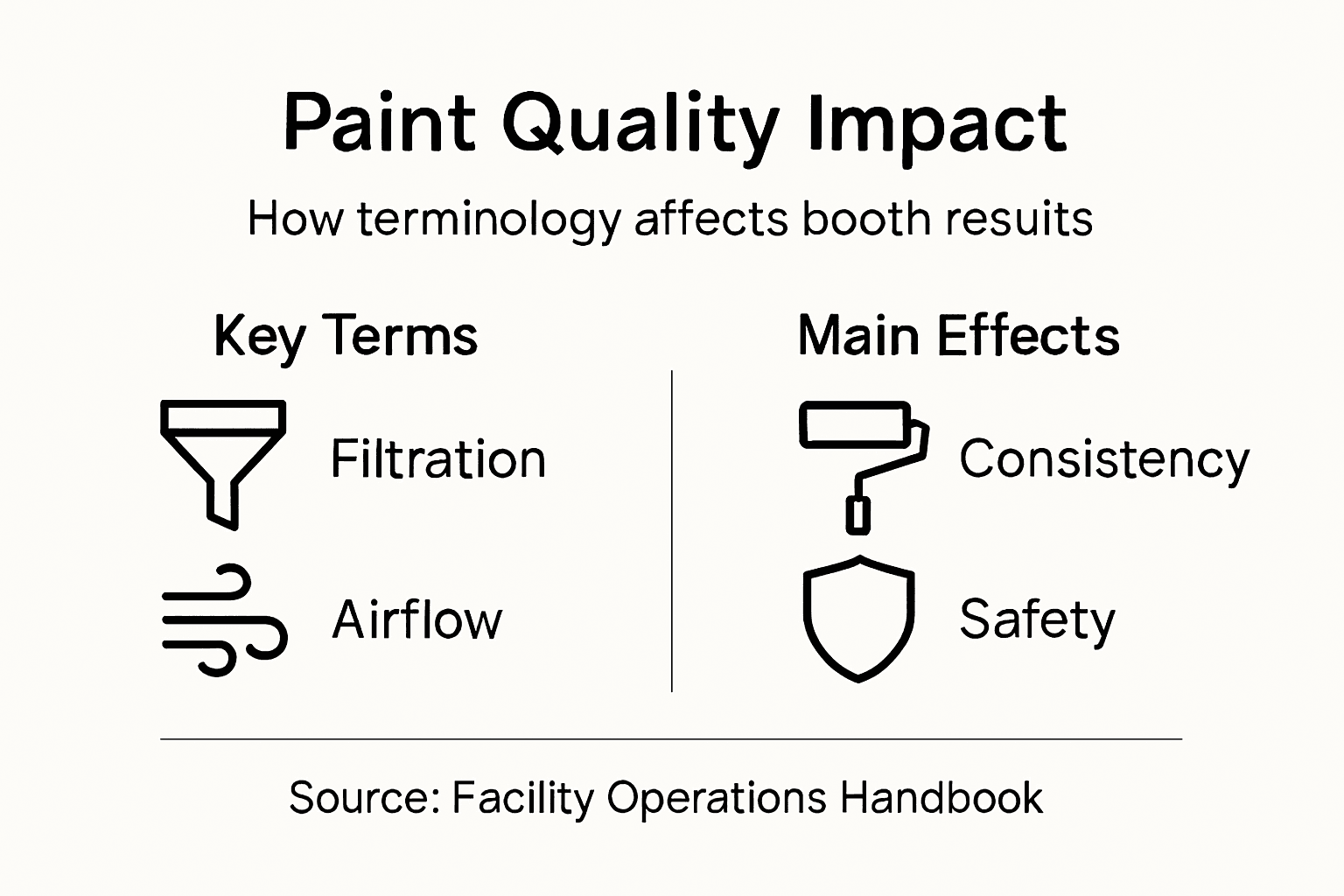
The ripple effects of accurate terminology extend beyond immediate painting processes. Precise language facilitates more effective training programs, enables more accurate equipment maintenance, and supports better interdepartmental communication. When team members share a consistent vocabulary, they can troubleshoot issues more rapidly, implement quality control measures more effectively, and develop more sophisticated painting strategies. Advanced spray booth operations rely on this linguistic precision to maintain high performance standards, reduce waste, and consistently produce superior paint finishes.
Pro tip: Develop and maintain a standardized glossary of spray booth terminology for your facility to ensure consistent understanding and communication across all operational levels.
Enhance Your Spray Booth Results With Superior Dust Protection
Mastering spray booth terminology is vital for optimizing paint quality and operational safety. Terms like overspray containment, airflow configurations, and filtration systems highlight how critical a clean controlled environment is to avoid contamination and achieve flawless finishes. However, even with perfect airflow and filtration, dust particles settling on surfaces can ruin your paint job and increase costly rework. This is where Dust Free Film solutions step in to elevate your spray booth performance.
Our premium multi-layer electrostatic protective films are engineered to create a dust-free barrier on booth walls and floors, directly addressing the challenges of airborne contaminants and overspray management outlined in the article. Designed for durability and quick, bubble-free installation with patented dispenser systems, Dust Free Film products help maintain pristine surfaces that support ideal transfer efficiency and paint adhesion. Manufactured to rigorous European standards and trusted by auto body shops and industrial paint facilities worldwide, these films minimize finish defects by controlling environmental dust exposure that standard filtration alone cannot capture.
Take control of your booth environment now by exploring how Dust Free Film can protect your investment, improve paint results, and optimize workflow efficiency. Visit Dust Free Film solutions today to learn more.

Don’t let dust undermine your expertise. Upgrade your spray booth protection today with Dust Free Film and experience cleaner, sharper paint finishes from every spray cycle. Discover the difference here.
Frequently Asked Questions
What are the main components of a spray booth?
The primary components of a spray booth include the enclosure, ventilation system, and filtration network. These elements work together to control airflow, contain overspray, and provide a controlled environment for painting processes.
How does airflow configuration affect paint quality in spray booths?
Airflow configuration, such as cross-draft, downdraft, and semi-downdraft, plays a significant role in determining paint application quality. Downdraft booths generally provide superior contamination control by pulling overspray directly downward, enhancing finish quality compared to cross-draft booths.
What are the different types of filters used in spray booths?
Spray booths typically utilize intake filters, primary filters, and exhaust filters. Intake filters block external contaminants, primary filters capture larger paint particles during the application process, and exhaust filters remove fine particulates from the air before it exits into the environment.
Why is accurate terminology important in spray booth operations?
Accurate terminology is crucial as it eliminates ambiguity and ensures clear communication among technicians. This clarity helps in understanding critical parameters, enhancing training, and optimizing paint application processes for improved paint quality.