

Ο αγώνας για τη διατήρηση άψογων επιστρώσεων στα βαφεία αυτοκινήτων ξεκινά συχνά με έναν αόρατο ένοχο: τον στατικό ηλεκτρισμό. Οι διαχειριστές εγκαταστάσεων σε όλες τις ευρωπαϊκές τοποθεσίες γνωρίζουν ότι αυτή η αθόρυβη δύναμη προκαλεί κινδύνους για την ασφάλεια και μετατρέπει τα premium φινιρίσματα σε δαπανηρή επανεπεξεργασία. Ο στατικός ηλεκτρισμός δημιουργείται από σταγονίδια χρώματος και ροή αέρα, όχι μόνο προσελκύοντας σκόνη αλλά και αυξάνοντας τους κινδύνους πυρκαγιάς όταν παραμένουν οι ατμοί του διαλύτη. Αυτός ο οδηγός σάς βοηθά να αντιμετωπίσετε τον στατικό ηλεκτρισμό και τη σκόνη κατά μέτωπο για ασφαλέστερους θαλάμους και σταθερά ανώτερα αποτελέσματα.
Πίνακας περιεχομένων
- Ορισμός στατικού ηλεκτρισμού σε θαλάμους ψεκασμού
- Πηγές και εφέ σε περιβάλλοντα ζωγραφικής
- Πώς ο στατικός ηλεκτρισμός επηρεάζει τη σκόνη και το φινίρισμα
- Μέθοδοι Πρόληψης και Λύσεις Προστατευτικών Φιλμ
- Κίνδυνοι, πρότυπα ασφαλείας και κοινά λάθη
Βασικά Takeaways
| Λεπτομέρειες σημείου | |
|---|---|
| Ο στατικός ηλεκτρισμός εγκυμονεί σημαντικούς κινδύνους | Τα συσσωρευμένα στατικά φορτία μπορούν να αναφλέξουν εύφλεκτους ατμούς, οδηγώντας σε πιθανές πυρκαγιές και εκρήξεις σε θαλάμους ψεκασμού. |
| Ο αποτελεσματικός στατικός έλεγχος βελτιώνει την ποιότητα της βαφής | Η σωστή γείωση και ο έλεγχος της υγρασίας μειώνουν την έλξη της σκόνης και βελτιώνουν την πρόσφυση της επίστρωσης, ελαχιστοποιώντας τα ελαττώματα. |
| Η τακτική συντήρηση είναι απαραίτητη | Διεξάγετε συχνές επιθεωρήσεις και παρακολουθείτε τα στατικά επίπεδα για να διασφαλίσετε την αποτελεσματική γείωση και τη συμμόρφωση με τα πρότυπα ασφαλείας. |
| Χρησιμοποιήστε προστατευτικές μεμβράνες για πρόσθετη ασφάλεια | Οι αντιστατικές προστατευτικές μεμβράνες μπορούν να μετριάσουν τη συσσώρευση στατικού φορτίου, παρέχοντας ένα επιπλέον στρώμα προστασίας τόσο για τις επιφάνειες όσο και για τα φινιρίσματα. |
Ορισμός στατικού ηλεκτρισμού σε θαλάμους ψεκασμού
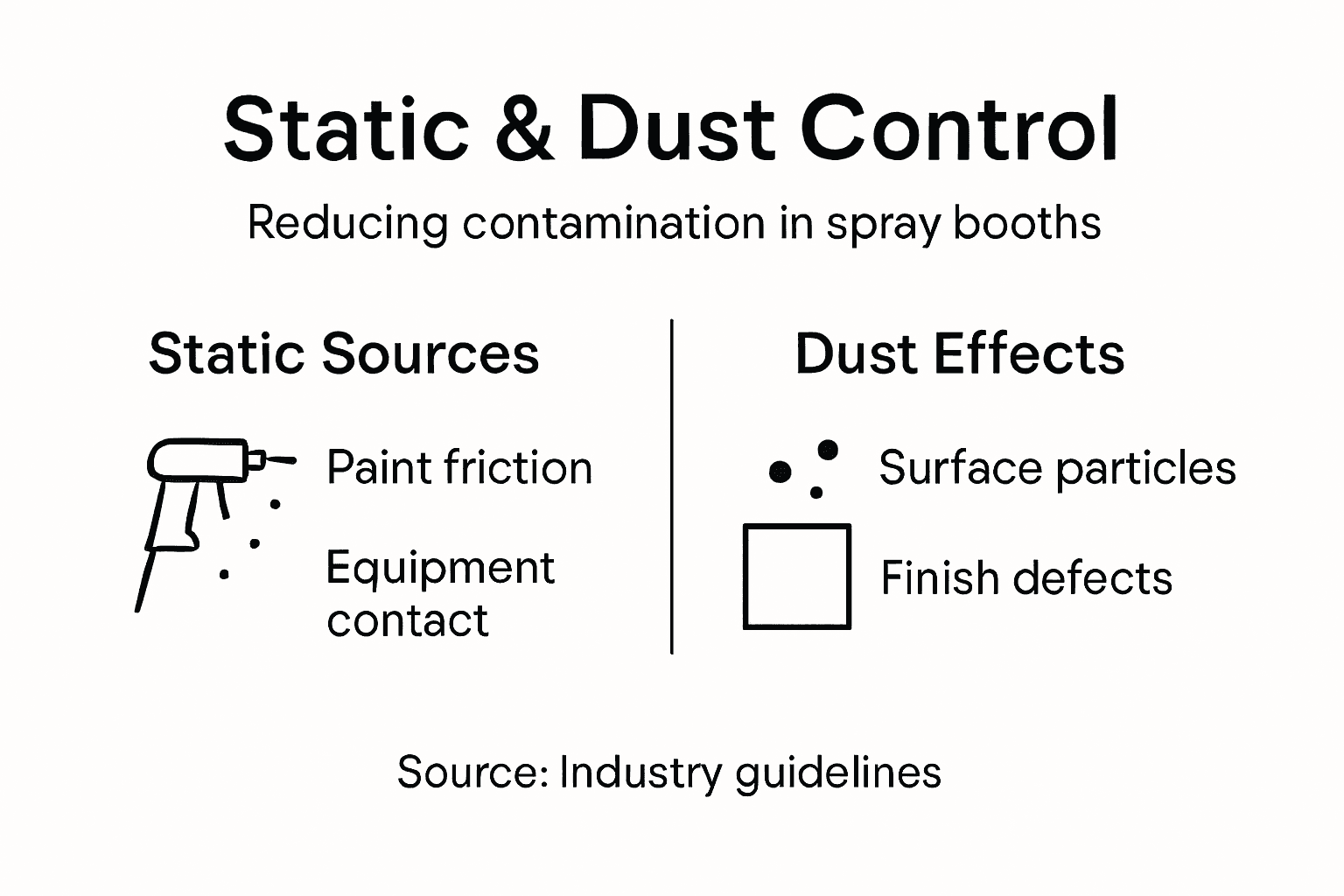
Ο στατικός ηλεκτρισμός στους θαλάμους ψεκασμού δεν είναι κάποια αφηρημένη έννοια που μαθαίνεις στο μάθημα της φυσικής και ξεχνάς. Είναι ένα πραγματικό, μετρήσιμο φαινόμενο που συμβαίνει καθημερινά στις εγκαταστάσεις σας και επηρεάζει άμεσα τόσο την ασφάλειά σας όσο και την ποιότητα της βαφής σας. Ο στατικός ηλεκτρισμός είναι η συσσώρευση ηλεκτρικού φορτίου που αναπτύσσεται μέσω της τριβής και της επαφής μεταξύ των επιφανειών - στην περίπτωσή σας, σταγονίδια χρώματος που συγκρούονται με τον αέρα, εξοπλισμός που τρίβεται με υλικά και ροή αέρα που κινείται μέσα από το θάλαμο. Αυτό το φορτίο συσσωρεύεται αθόρυβα μέχρι να φτάσει σε μια τάση αρκετά υψηλή ώστε να δημιουργήσει έναν σπινθήρα.
Δείτε τι το κάνει ιδιαίτερα σημαντικό για τη λειτουργία σας: όταν ο στατικός ηλεκτρισμός συσσωρεύεται στους θαλάμους ψεκασμού, δημιουργεί τρία άμεσα προβλήματα που επηρεάζουν άμεσα την απόδοση σας.
Το πρόβλημα των τριών μερών:
-
Κίνδυνος πυρκαγιάς και έκρηξης: Στο περιβάλλον του θαλάμου ψεκασμού σας, ατμοί διαλύτη κρέμονται στον αέρα. Ένας σπινθήρας από στατική εκκένωση μπορεί να αναφλέξει αυτούς τους ατμούς αμέσως, δημιουργώντας μια επικίνδυνη κατάσταση που απειλεί την ομάδα και τις εγκαταστάσεις σας. Αυτό δεν είναι θεωρητικό - είναι ο λόγος για τον οποίο οι ρυθμιστικοί φορείς λαμβάνουν τόσο σοβαρά υπόψη τον στατικό έλεγχο.
-
Έλξη σκόνης: Ο στατικός ηλεκτρισμός λειτουργεί σαν μαγνήτης για τους ατμοσφαιρικούς ρύπους και τα σωματίδια σκόνης. Οι φορτισμένες επιφάνειες κυριολεκτικά τραβούν σωματίδια από τον αέρα και πάνω στις υγρές επιφάνειες βαφής σας. Πιθανότατα το έχετε παρατηρήσει μόνοι σας - οι περιοχές με κακό στατικό έλεγχο εμφανίζουν περισσότερη φλούδα πορτοκαλιού, μύτες σκόνης και γενικά ελαττώματα φινιρίσματος.
-
Υποβάθμιση ποιότητας επίστρωσης: Όταν η σκόνη κατακάθεται στο χρώμα σας πριν σκληρύνει, εξετάζετε την επανεπεξεργασία, τα παράπονα πελατών και τη σπατάλη υλικού. Το φορτίο αντλεί σωματίδια που διαφορετικά θα παρέμεναν αιωρούμενα, μολύνοντας αυτό που θα έπρεπε να είναι ένα άψογο φινίρισμα.
Σκεφτείτε τον στατικό ηλεκτρισμό σαν έναν αόρατο μαγνήτη που διατρέχει τον θάλαμο ψεκασμού σας. Τα σταγονίδια βαφής μεταφέρουν φορτίο, ο εξοπλισμός μεταφέρει φορτίο, ακόμη και ο αέρας που κινείται μέσα από το περίπτερο σας δημιουργεί φορτίο μέσω της τριβής. Όλες αυτές οι κατηγορίες χρειάζονται κάπου να πάνε. Εάν συσσωρευτούν χωρίς σωστή γείωση ή διάχυση, καταλήγετε με αιχμές τάσης που προκαλούν αυτούς τους προβληματικούς σπινθήρες.
Ο στατικός έλεγχος του θαλάμου ψεκασμού σας καθορίζει άμεσα εάν επιτυγχάνετε φινιρίσματα υψηλής ποιότητας ή αφιερώνετε χρόνο στο τρίψιμο και το βάψιμο μολυσμένων επιφανειών.
Στα ευρωπαϊκά βαφεία αυτοκινήτων, αυτή η πρόκληση είναι ιδιαίτερα έντονη λόγω του μεγάλου όγκου και της εστιασμένης στην ακρίβεια φύσης της εργασίας σας. Δεν βάφετε απλώς αυτοκίνητα - δημιουργείτε φινιρίσματα που πρέπει να πληρούν αυστηρές προδιαγραφές OEM. Ο στατικός ηλεκτρισμός υπονομεύει αυτή την ακρίβεια εισάγοντας ένα στοιχείο τυχαιότητας. Δεν μπορείτε να ελέγξετε εάν ένα σωματίδιο σκόνης θα έλκεται από ένα συγκεκριμένο πάνελ σε μια συγκεκριμένη στιγμή, εάν ο στατικός σας έλεγχος είναι ανεπαρκής.
Τα επίπεδα τάσης που εμπλέκονται είναι εκπληκτικά υψηλά. Τα στατικά φορτία μπορούν να αυξηθούν σε χιλιάδες βολτ, κάτι που είναι υπεραρκετό για να δημιουργήσει σπινθήρες σε εύφλεκτα περιβάλλοντα. Αλλά εδώ είναι το πρακτικό μέρος: αυτά τα φορτία αναπτύσσονται σταδιακά μέσω της κανονικής λειτουργίας του θαλάμου - τριβή από το σπρέι βαφής, επαφή μεταξύ υλικών και κυκλοφορία αέρα. Δεν είναι κάτι που συμβαίνει ξαφνικά. είναι μια διαδικασία παρασκηνίου που απαιτεί συνεχή προσοχή.
Η κατανόηση του στατικού ηλεκτρισμού στο περίπτερό σας σημαίνει ότι τον αναγνωρίζετε ως ένα συστηματικό πρόβλημα που απαιτεί συστηματικές λύσεις. Δεν πρόκειται για περιστασιακές προφυλάξεις. πρόκειται για την οικοδόμηση στατικού ελέγχου στον τρόπο λειτουργίας του θαλάμου σας από την αρχή. Η επιλογή εξοπλισμού, ο σχεδιασμός του θαλάμου, οι προστατευτικές επιφάνειες και οι λειτουργικές διαδικασίες παίζουν ρόλο στην αποτελεσματική διαχείριση του στατικού.
Ακολουθεί μια γρήγορη αναφορά για το πώς ο στατικός ηλεκτρισμός επηρεάζει τις λειτουργίες του θαλάμου ψεκασμού:
| Περιοχή που επηρεάζεται | Άμεσες επιπτώσεις | Μακροπρόθεσμες συνέπειες |
|---|---|---|
| Ασφάλεια | Κίνδυνος ανάφλεξης για ατμούς | Ζημιά εγκατάστασης, κίνδυνος τραυματισμού |
| Ποιότητα βαφής | Σκόνη ενσωματωμένη σε υγρές επιστρώσεις | Αυξημένη επανεπεξεργασία και σπατάλη |
| Συνέπεια διαδικασίας | Τυχαία ελαττώματα φινιρίσματος | Απρόβλεπτη ποιότητα παραγωγής |
Επαγγελματική συμβουλή: Παρακολουθείτε τακτικά το σύστημα γείωσης του θαλάμου σας και βεβαιωθείτε ότι όλες οι αγώγιμες επιφάνειες είναι σωστά συνδεδεμένες για να εξαλείψετε τις διαδρομές που επιτρέπουν τη συσσώρευση στατικού φορτίου σε επικίνδυνα επίπεδα.
Πηγές και Επιδράσεις σε Περιβάλλοντα Ζωγραφικής
Ο στατικός ηλεκτρισμός δεν εμφανίζεται απλώς από το πουθενά στον θάλαμο ψεκασμού σας. Δημιουργείται μέσω συγκεκριμένων, προβλέψιμων μηχανισμών που συμβαίνουν κατά τη διάρκεια της ίδιας της διαδικασίας βαφής. Η κατανόηση από πού προέρχεται η φόρτιση είναι το πρώτο βήμα προς τον αποτελεσματικό έλεγχό της. Ο ψεκασμός με ψεκασμό είναι ο κύριος ένοχος - όταν το χρώμα ή ο διαλύτης πιέζεται και πιέζεται μέσα από τα ακροφύσια, σπάει σε μικροσκοπικά σταγονίδια. Αυτή η διαδικασία διάσπασης δημιουργεί τριβή και διαχωρισμό φορτίου καθώς σχηματίζονται σταγονίδια, δημιουργώντας ηλεκτρικό φορτίο που χρειάζεται κάπου να πάει.
Να τι συμβαίνει στην πραγματικότητα σε μοριακό επίπεδο: καθώς τα σταγονίδια υγρού διαχωρίζονται από το ρεύμα και γίνονται ομίχλη, σχηματίζεται ένα ηλεκτρικό διπλό στρώμα στη διεπαφή υγρού-αερίου. Αυτό δημιουργεί μια ανισορροπία φορτίου - μερικά σταγονίδια αποκτούν ηλεκτρόνια ενώ άλλα τα χάνουν. Στο περίπτερό σας, αυτό σημαίνει ότι κάθε πιστόλι ψεκασμού είναι ουσιαστικά μια μικροσκοπική γεννήτρια φορτίου, που παράγει στατικό συνεχώς όλη την ημέρα. Το ποσό της χρέωσης εξαρτάται από διάφορους παράγοντες που μπορείτε πραγματικά να επηρεάσετε.
Παράγοντες που επηρεάζουν τη στατική παραγωγή στο περίπτερό σας:
-
Σχεδιασμός ακροφυσίου ψεκασμού: Διαφορετικοί τύποι ακροφυσίων παράγουν διαφορετικές ποσότητες φόρτισης. Τα ακροφύσια υψηλής ταχύτητας παράγουν πιο στατικά από τα εναλλακτικά χαμηλής ταχύτητας, επειδή η αυξημένη πίεση εντείνει τη διαδικασία ψεκασμού και την τριβή.
-
Σύνθεση διαλύτη: Διαφορετικοί διαλύτες και συνθέσεις βαφής δημιουργούν διαφορετικά επίπεδα φορτίου. Οι πολύ εύφλεκτοι διαλύτες με χαμηλή αγωγιμότητα τείνουν να παράγουν περισσότερο στατικό φορτίο από τα αγώγιμα υγρά.
-
Πίεση λειτουργίας: Οι ρυθμίσεις υψηλότερης πίεσης ωθούν περισσότερα σταγονίδια μέσα από το ακροφύσιο πιο γρήγορα, αυξάνοντας την τριβή και τη δημιουργία φορτίου. Οι ρυθμίσεις πίεσης επηρεάζουν άμεσα τη συσσώρευση στατικού ηλεκτρισμού.
-
Θερμοκρασία και υγρασία: Οι θερμότερες, ξηρότερες συνθήκες αυξάνουν τη στατική παραγωγή. Τα κρύα, υγρά περιβάλλοντα στην πραγματικότητα καταστέλλουν τα στατικά φορτία επειδή η υγρασία αυξάνει την ηλεκτρική αγωγιμότητα.
Μόλις δημιουργηθούν αυτά τα φορτία, συσσωρεύονται σε πολλές επιφάνειες ταυτόχρονα. Η ηλεκτροδότηση με ψεκασμό συμβαίνει μέσω της αλληλεπίδρασης υγρών σταγονιδίων και αερίου, αλλά το πραγματικό πρόβλημα ξεκινά όταν αυτά τα φορτία δεν έχουν πού να διαλυθούν. Το φορτίο συσσωρεύεται στον εξοπλισμό ψεκασμού σας, συσσωρεύεται στο μέρος που βάφεται και εξαπλώνεται σε όλο τον αέρα του θαλάμου. Χωρίς σωστή γείωση και αγώγιμες οδούς, ουσιαστικά αποθηκεύετε ηλεκτρική ενέργεια που περιμένει μια σπίθα.
Τα αποτελέσματα στο ζωγραφικό σας περιβάλλον είναι άμεσα και αθροιστικά. Τα σταγονίδια χρώματος που μεταφέρουν φορτίο έλκονται από γειωμένες επιφάνειες και μεταξύ τους, αλλά έλκονται επίσης από τυχόν σκόνη ή σωματίδια ρύπων στον αέρα. Σκεφτείτε το - έχετε χιλιάδες μικροσκοπικά φορτισμένα σταγονίδια που αιωρούνται στον θάλαμο σας και χιλιάδες μικροσκοπικά σωματίδια σκόνης που αιωρούνται επίσης εκεί. Τα φορτισμένα σταγονίδια κυριολεκτικά τραβούν τη σκόνη προς το μέρος τους, ενσωματώνοντας τη μόλυνση σε υγρές επιφάνειες βαφής. Αυτό συμβαίνει πιο γρήγορα σε θαλάμους με κακό στατικό έλεγχο, γι' αυτό βλέπετε περισσότερα ελαττώματα φινιρίσματος όταν τα συστήματα γείωσης αποτυγχάνουν.
Πέρα από την έλξη σκόνης, το συσσωρευμένο φορτίο δημιουργεί συνεχή κίνδυνο ανάφλεξης. Ο θάλαμος σας περιέχει ατμούς διαλύτη που είναι εύφλεκτοι σε ορισμένες συγκεντρώσεις. Ένας σπινθήρας από στατική εκφόρτιση - που μπορεί να συμβεί όταν η συσσώρευση φορτίου φτάσει σε κρίσιμα επίπεδα τάσης - μπορεί να αναφλέξει αυτούς τους ατμούς αμέσως. Αυτό δεν είναι ένα σενάριο ίσως. είναι ένα σενάριο όταν αποτύχει ο στατικός έλεγχος. Οι ρυθμιστικοί φορείς αντιμετωπίζουν την πρόληψη στατικών κινδύνων ως κρίσιμη απαίτηση ασφάλειας, επειδή οι συνέπειες είναι σοβαρές.
Τα στατικά φορτία δεν δημιουργούν μόνο ελαττώματα καλλυντικού φινιρίσματος - δημιουργούν κινδύνους πυρκαγιάς και έκρηξης που απειλούν την ομάδα και τις εγκαταστάσεις σας.
Το περιβάλλον βιομηχανικής επίστρωσης ενισχύει αυτές τις προκλήσεις. Στο βαφείο αυτοκινήτων σας, ψεκάζετε πολλά μέρη συνεχώς, ενδεχομένως με διαφορετικές συνθέσεις βαφής και πιέσεις κατά τη διάρκεια της ημέρας. Κάθε αλλαγή στην τεχνική, το ακροφύσιο ή το υλικό αλλάζει τον ρυθμό στατικής παραγωγής. Ο θάλαμος σας πρέπει να χειρίζεται μεταβλητά στατικά φορτία διατηρώντας παράλληλα σταθερό έλεγχο μόλυνσης. Αυτός είναι ο λόγος για τον οποίο η στατική διαχείριση δεν μπορεί να είναι εκ των υστέρων - πρέπει να σχεδιαστεί για τον τρόπο λειτουργίας του θαλάμου σας.
Μια κρίσιμη εικόνα: τα στατικά αποτελέσματα επιδεινώνονται με την πάροδο του χρόνου. Ένας θάλαμος που χειρίζεται 10 εξαρτήματα την ημέρα με επαρκή γείωση μπορεί να δυσκολευτεί όταν η παραγωγή αυξάνεται στα 20 μέρη την ημέρα. Ο ρυθμός συσσώρευσης φόρτισης επιταχύνεται και εάν το σύστημα γείωσης δεν έχει σχεδιαστεί για αυτόν τον όγκο, χάνετε τον έλεγχο. Αυτός είναι ο λόγος για τον οποίο η κατανόηση της μόλυνσης του θαλάμου ψεκασμού και των επιπτώσεών της στην ποιότητα της βαφής καθίσταται απαραίτητη για τον προγραμματισμό συντήρησης.
Επαγγελματική συμβουλή: Παρακολουθήστε τα μοτίβα στατικής παραγωγής σας παρακολουθώντας την πίεση ψεκασμού, τον τύπο διαλύτη και τις συνθήκες θερμοκρασίας—και, στη συνέχεια, συσχετίστε αυτούς τους παράγοντες με ελαττώματα φινιρίσματος για να προσδιορίσετε ποιες λειτουργικές μεταβλητές επηρεάζουν περισσότερο τη στατική συσσώρευση στο συγκεκριμένο περίπτερο σας.
Πώς ο στατικός ηλεκτρισμός επηρεάζει τη σκόνη και το φινίρισμα
Η σύνδεση μεταξύ στατικού ηλεκτρισμού και ποιότητας φινιρίσματος είναι άμεση και μετρήσιμη. Όταν υπάρχουν φορτισμένες επιφάνειες στον θάλαμο ψεκασμού σας, δεν κάθονται απλώς εκεί ουδέτερα - τραβούν ενεργά τους ρύπους από τον αέρα. Τα ηλεκτροστατικά πεδία που δημιουργούνται από το στατικό φορτίο δημιουργούν μια αόρατη δύναμη που προσελκύει σκόνη, ίνες και αιωρούμενα σωματίδια με εκπληκτική δύναμη. Αυτά τα σωματίδια δεν κατακάθονται απαλά. έλκονται μαγνητικά σε φορτισμένες επιφάνειες και ενσωματώνονται σε υγρή μπογιά. Το αποτέλεσμα είναι ορατή μόλυνση που κυμαίνεται από μικρή τραχύτητα επιφάνειας έως εμφανή ελαττώματα που απαιτούν πλήρη επανεπεξεργασία.
Δείτε τι συμβαίνει σε μικροσκοπικό επίπεδο: ο στατικός ηλεκτρισμός σε βαμμένες επιφάνειες δημιουργεί ηλεκτροστατικά πεδία που προσελκύουν σκόνη και αιωρούμενα σωματίδια, οδηγώντας σε μόλυνση της επιφάνειας. Αλλά το πρόβλημα εκτείνεται πέρα από την απλή έλξη σωματιδίων. Το στατικό διαταράσσει επίσης το ίδιο το σπρέι βαφής - σταγονίδια που φέρουν αντίθετα φορτία απωθούν το ένα το άλλο, εμποδίζοντας τον σωστό ψεκασμό και κάλυψη. Το χρώμα δεν ρέει ομαλά. Αντίθετα, ραβδώνεται και λιμνάζει άνισα. Το πάχος του φιλμ γίνεται ασυνεπές σε όλο το πάνελ, δημιουργώντας αδύναμα σημεία στην επίστρωση που θέτουν σε κίνδυνο τόσο την εμφάνιση όσο και την ανθεκτικότητα.
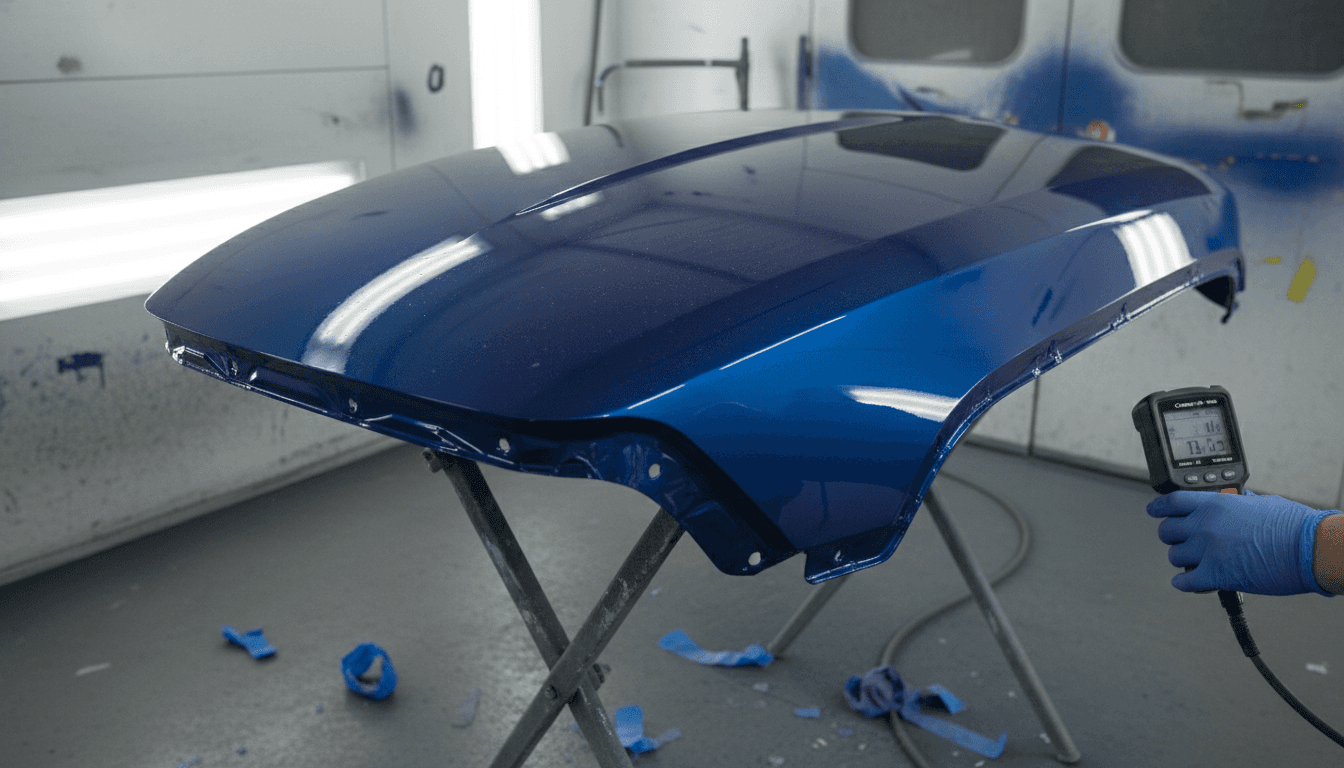
Για μεταλλικά και μαργαριταρένια φινιρίσματα, τα στατικά εφέ είναι ιδιαίτερα καταστροφικά. Αυτά τα φινιρίσματα εξαρτώνται από την ακριβή ευθυγράμμιση και τον προσανατολισμό της χρωστικής για να επιτύχουν τη χαρακτηριστική λάμψη και το βάθος τους. Όταν τα στατικά πεδία παρεμβαίνουν στη διαδικασία ψεκασμού, τα σωματίδια χρωστικής προσανατολίζονται τυχαία αντί για ομοιόμορφα. Καταλήγετε με χρωματική διακύμανση μεταξύ των πάνελ, απώλεια μεταλλικού εφέ και φινιρίσματα που φαίνονται θαμπά ή ασυνεπή σε σύγκριση με τα παρακείμενα μέρη. Αυτός είναι ο λόγος για τον οποίο η εργασία στην αυτοκινητοβιομηχανία υψηλών προδιαγραφών υποφέρει περισσότερο υπό κακό στατικό έλεγχο.
Τα συγκεκριμένα ελαττώματα που δημιουργεί ο στατικός ηλεκτρισμός:
-
Τρύπες και κρατήρες: Τα μολυσματικά σωματίδια παγιδεύουν φυσαλίδες αέρα στην επίστρωση, δημιουργώντας μικροσκοπικές οπές που εκθέτουν το υπόστρωμα και επιτρέπουν την έναρξη της διάβρωσης.
-
Υφή φλούδας πορτοκαλιού: Η ανομοιόμορφη ροή του χρώματος και η ηλεκτροστατική διαταραχή προκαλούν τη σκλήρυνση της επίστρωσης με ανάγλυφη επιφάνεια αντί για λείο φινίρισμα που μοιάζει με γυαλί.
-
Ελαττώματα fish-eye: Τα σωματίδια ρύπων δημιουργούν ανωμαλίες επιφανειακής τάσης όπου το χρώμα αρνείται να βραχεί σωστά, αφήνοντας εκτεθειμένες περιοχές που περιβάλλονται από υπερυψωμένα άκρα.
-
Χρωματική παραλλαγή και μεταλλική μετατόπιση: Η κακή ευθυγράμμιση της χρωστικής που προκαλείται από στατικό ηλεκτρισμό καταστρέφει την οπτική συνοχή των φινιρισμάτων που ταιριάζουν με τα χρώματα, κάνοντας τα πάνελ να φαίνονται διαφορετικά χρώματα κάτω από διαφορετικό φωτισμό.
-
Αποτυχία πρόσφυσης: Όταν οι ρύποι βρίσκονται μεταξύ του υποστρώματος και της επίστρωσης, η πρόσφυση εξασθενεί σημαντικά, προκαλώντας ξεφλούδισμα και αποκόλληση κατά τη διάρκεια της συντήρησης.
Ο κύκλος μόλυνσης δημιουργεί ένα κλιμακωτό πρόβλημα. Μόλις τα σωματίδια σκόνης προσγειωθούν σε βρεγμένο χρώμα, δεν μένουν απομονωμένα. Τα ηλεκτροστατικά φορτία στους θαλάμους ψεκασμού προσελκύουν σκόνη, ίνες και άλλους ρύπους που προσκολλώνται σε βαμμένες επιφάνειες προκαλώντας ατέλειες και κάθε ατέλεια γίνεται σημείο συγκέντρωσης τάσεων. Η αντοχή στη διάβρωση της επίστρωσης πέφτει επειδή οι ρύποι συχνά διεισδύουν μέσα από το στρώμα βαφής, φτάνοντας στο γυμνό μέταλλο. Τα φινιρίσματα του οχήματός σας χάνουν αξία, οι αξιώσεις εγγύησης αυξάνονται και η ικανοποίηση των πελατών πέφτει κατακόρυφα.
Για τους Ευρωπαίους κατασκευαστές αυτοκινήτων, αυτά τα ελαττώματα μεταφράζονται σε άμεση οικονομική ζημία. Ένα μόνο πάνελ μολυσμένο με σκόνη σε ένα premium όχημα μπορεί να απαιτήσει πλήρη βαφή, καταναλώνοντας χρόνο, υλικά και εργασία. Όταν ο στατικός έλεγχος αποτυγχάνει σε πολλούς πίνακες ή βάρδιες, αντιμετωπίζετε σημαντικές καθυστερήσεις επανεπεξεργασίας. Η απόδοση παραγωγής πέφτει, τα χρονοδιαγράμματα παράδοσης πέφτουν και η φήμη σας για την ποιότητα δέχεται πλήγμα.
Ο στατικός ηλεκτρισμός δεν δημιουργεί απλώς καλλυντικές ατέλειες - υπονομεύει την προστατευτική λειτουργία και τη μακροπρόθεσμη αντοχή ολόκληρης της επίστρωσης.
Η αλληλεπίδραση μεταξύ στατικών συστημάτων και συστημάτων ελέγχου σκόνης είναι κρίσιμη. Ένας θάλαμος με οριακό στατικό έλεγχο μπορεί να λειτουργεί επαρκώς υπό ιδανικές συνθήκες, αλλά να αποτυγχάνει όταν πέφτει η υγρασία, αυξάνεται η θερμοκρασία ή αυξάνεται ο όγκος παραγωγής. Όλες αυτές οι μεταβλητές επηρεάζουν τόσο τη στατική παραγωγή όσο και την ανάρτηση σκόνης, δημιουργώντας απρόβλεπτη ποιότητα φινιρίσματος. Αυτό το απρόβλεπτο σάς αναγκάζει να επιλέξετε μεταξύ της αποδοχής ελαττωμάτων ή της διακοπής της παραγωγής για την αντιμετώπιση του στατικού ελέγχου, καμία επιλογή δεν είναι αποδεκτή για παραγωγή μεγάλου όγκου.
Αυτό που κάνει αυτό το πρόβλημα επιλύσιμο είναι η κατανόηση ότι ο στατικός έλεγχος και η προστασία από τη σκόνη συνεργάζονται. Η σωστή γείωση εξαλείφει τη στατική συσσώρευση στην πηγή, ενώ οι προστατευτικές επιφάνειες του θαλάμου - ειδικά σχεδιασμένα αντιστατικά υλικά - εμποδίζουν την ανακατασκευή του στατικού και την προσέλκυση ρύπων. Ο συνδυασμός αντιμετωπίζει και τις δύο βασικές αιτίες ταυτόχρονα.
Επαγγελματική συμβουλή: Εφαρμόστε καθημερινούς στατικούς ελέγχους χρησιμοποιώντας έναν στατικό μετρητή στις επιφάνειες και τον εξοπλισμό του θαλάμου πριν ξεκινήσει η παραγωγή—αυτό εντοπίζει νωρίς τις αστοχίες ελέγχου προτού η μόλυνση καταστρέψει πολλά πάνελ και σας κοστίσει ώρες επανεπεξεργασίας.
Μέθοδοι πρόληψης και λύσεις προστατευτικών φιλμ
Η πρόληψη του στατικού ηλεκτρισμού στους θαλάμους ψεκασμού δεν είναι ενιαία και δεν είναι κάτι που χειρίζεστε με μία μόνο παρέμβαση. Χρειάζεστε μια πολυεπίπεδη προσέγγιση που αντιμετωπίζει πολλούς παράγοντες κινδύνου ταυτόχρονα. Ξεκινήστε με το θεμέλιο: σωστή γείωση. Κάθε μεταλλική επιφάνεια στο περίπτερό σας - πιστόλια ψεκασμού, φωτιστικά, ράφια, πλαίσια εξοπλισμού - πρέπει να συνδεθεί ηλεκτρικά και να γειωθεί για να διαχέεται με ασφάλεια το φορτίο προτού συσσωρευτεί σε επικίνδυνα επίπεδα. Αυτό σημαίνει αγώγιμες διαδρομές από τον εξοπλισμό στη γείωση, που επαληθεύονται τακτικά για να διασφαλίζεται ότι οι συνδέσεις δεν έχουν διαβρωθεί ή χαλαρώσει. Η γείωση αποτρέπει τη συσσώρευση φόρτισης εξαρχής, κάτι που είναι πολύ ανώτερο από την προσπάθεια διαχείρισης της φόρτισης αφού έχει ήδη συσσωρευτεί.
Ο περιβαλλοντικός έλεγχος είναι ο δεύτερος κρίσιμος μοχλός σας. Ο έλεγχος της υγρασίας μεταξύ 50-65% μειώνει τη συσσώρευση στατικού, καθώς ο ξηρός αέρας ευνοεί τη συσσώρευση φορτίου. Σε ευρωπαϊκές εγκαταστάσεις με μεταβλητές εποχιακές συνθήκες, αυτό σημαίνει ενεργή διαχείριση του κλίματος του θαλάμου όλο το χρόνο. Ο χειμώνας φέρνει εξαιρετικά ξηρό αέρα που αυξάνει δραματικά τη στατική παραγωγή. Η καλοκαιρινή υγρασία μπορεί να φαίνεται ότι βοηθά, αλλά μπορεί να ταλαντευτεί πολύ, δημιουργώντας διαφορετικά προβλήματα ροής χρώματος. Το παράθυρο υγρασίας 50-65% είναι όπου ελαχιστοποιείται η στατική παραγωγή χωρίς να διακυβεύεται η εφαρμογή της βαφής. Πολλές εγκαταστάσεις εγκαθιστούν ειδικά συστήματα ελέγχου υγρασίας ειδικά επειδή αυτό το εύρος είναι κρίσιμο τόσο για τη στατική διαχείριση όσο και για την ποιότητα της επίστρωσης.
Πέρα από τη γείωση και την υγρασία, η επιλογή υλικού έχει τεράστια σημασία. Τα αγώγιμα υλικά για εξαρτήματα και επιφάνειες εμποδίζουν τη συσσώρευση φορτίου στα σημεία επαφής. Τα αντιστατικά χαλάκια στις επιφάνειες εργασίας, τα αγώγιμα δάπεδα σε περιοχές με μεγάλη κυκλοφορία και τα γειωμένα ρούχα για τους τεχνικούς ψεκασμού σας μειώνουν την πιθανότητα συσσώρευσης στατικού ηλεκτρισμού. Αλλά εδώ είναι η πρακτική πραγματικότητα: ακόμη και με τέλειο έλεγχο γείωσης και υγρασίας, εξακολουθείτε να χρειάζεστε προστατευτικά μέτρα στις ίδιες τις επιφάνειες του θαλάμου.
Λύσεις προστατευτικής μεμβράνης για στατικό έλεγχο
Εδώ είναι που οι αντιστατικές προστατευτικές μεμβράνες γίνονται η λειτουργική σας αλλαγή του παιχνιδιού. Αυτά δεν είναι συνηθισμένα πλαστικά καλύμματα - είναι σχεδιασμένες λύσεις σχεδιασμένες με ενσωματωμένες ιδιότητες στατικής διάχυσης. Προστατευτικές μεμβράνες που είναι αγώγιμες ή αντιστατικές μπορούν να εφαρμοστούν σε επιφάνειες για να μετριάσουν τη συσσώρευση στατικού φορτίου και να προστατεύσουν τα φινιρίσματα βαφής κατά τον ψεκασμό. Όταν τα φορτισμένα σταγονίδια έρχονται σε επαφή με τους τοίχους ή το δάπεδο του θαλάμου, η αγώγιμη μεμβράνη διαχέει με ασφάλεια αυτό το φορτίο αντί να το αφήνει να συσσωρευτεί.
Να γιατί οι προστατευτικές μεμβράνες είναι ιδιαίτερα αποτελεσματικές για τις ευρωπαϊκές εγκαταστάσεις αυτοκινήτων:
-
Διπλή προστασία: Αποτρέπουν ταυτόχρονα τη συσσώρευση στατικού ηλεκτρισμού ΚΑΙ προστατεύουν τις επιφάνειες του θαλάμου από μόλυνση, δίνοντάς σας δύο κρίσιμες λειτουργίες σε μία λύση.
-
Ευελιξία εγκατάστασης: Οι μεμβράνες μπορούν να εφαρμοστούν σε τοίχους, δάπεδα, ακόμη και καλύμματα εξοπλισμού, δημιουργώντας ένα ολοκληρωμένο στατικά ελεγχόμενο περιβάλλον χωρίς σημαντικές τροποποιήσεις θαλάμου.
-
Δυνατότητα αφαίρεσης και συντήρησης: Οι ποιοτικές μεμβράνες αφαιρούνται και αντικαθίστανται, ώστε να μπορείτε να διατηρείτε την καθαριότητα του θαλάμου χωρίς μόνιμες ταλαιπωρίες εγκατάστασης.
-
Διασφάλιση συμμόρφωσης: Οι ειδικά σχεδιασμένες αντιστατικές μεμβράνες πληρούν τις κανονιστικές απαιτήσεις για την ασφαλή λειτουργία του θαλάμου ψεκασμού στο φινίρισμα αυτοκινήτων.
-
Αποτελεσματικότητα κόστους: Σε σύγκριση με την επανακαλωδίωση των συστημάτων γείωσης ή την αντικατάσταση της υποδομής του θαλάμου, οι προστατευτικές μεμβράνες προσφέρουν άμεσο στατικό έλεγχο με χαμηλότερη επένδυση κεφαλαίου.
Η πιο αποτελεσματική προσέγγιση συνδυάζει λύσεις γείωσης, ελέγχου υγρασίας και προστατευτικής μεμβράνης που συνεργάζονται. Η γείωση χειρίζεται την κύρια διαδρομή διάχυσης φορτίου. Ο έλεγχος υγρασίας αποτρέπει την υπερβολική δημιουργία φορτίου. Οι προστατευτικές μεμβράνες δημιουργούν ένα πρόσθετο στρώμα ασφαλείας και προστατεύουν ταυτόχρονα τις επιφάνειες.
Αυτή η περίληψη υπογραμμίζει τον τρόπο με τον οποίο συνεργάζονται διαφορετικές μέθοδοι στατικού ελέγχου:
| Ο | ρόλος της μεθόδου στη στατική πρόληψη | προστιθέμενη αξία |
|---|---|---|
| Γείωση | Αφαιρεί το φορτίο από τον εξοπλισμό και τις επιφάνειες | Μειώνει τον κίνδυνο πυρκαγιάς και σπινθήρα |
| Έλεγχος υγρασίας | Καταστέλλει τον στατικό ηλεκτρισμό με περιβαλλοντικά μέσα | Διατηρεί σταθερή ποιότητα |
| Προστατευτικές μεμβράνες | Διαχέει την επιφανειακή φόρτιση, προστατεύει τον θάλαμο | Διευκολύνει τον καθαρισμό, μειώνει το κόστος |
Η στατική πρόληψη είναι πιο αποτελεσματική όταν αντιμετωπίζετε το πρόβλημα σε πολλαπλά επίπεδα αντί να βασίζεστε σε οποιαδήποτε μεμονωμένη στρατηγική.
Όταν επιλέγετε προστατευτικές μεμβράνες, βεβαιωθείτε ότι έχουν ειδική βαθμολογία για αντιστατικές ιδιότητες. Δεν δημιουργούνται όλες οι προστατευτικές μεμβράνες ίσες - ορισμένες παρέχουν προστασία από τη σκόνη αλλά προσφέρουν ελάχιστη στατική διάχυση. Αναζητήστε μεμβράνες με τεκμηριωμένες ηλεκτροστατικές ιδιότητες και θερμική αντίσταση κατάλληλες για περιβάλλοντα θαλάμου ψεκασμού. Οι μεμβράνες πρέπει να είναι αρκετά ανθεκτικές ώστε να αντέχουν τον καθημερινό καθαρισμό και την έκθεση σε διαλύτες χωρίς να αλλοιώνονται και θα πρέπει να διατηρούν τις στατικές τους ιδιότητες διάχυσης καθ' όλη τη διάρκεια ζωής τους.
Η στρατηγική εφαρμογής έχει επίσης σημασία. Ξεκινήστε προστατεύοντας περιοχές υψηλού κινδύνου όπου η μόλυνση και τα στατικά προβλήματα ήταν πιο προβληματικά. Οι τοίχοι των θαλάμων όπου συσσωρεύεται υπερβολικός ψεκασμός, οι επιφάνειες δαπέδου όπου τα μέρη κάθονται πριν από τη βαφή και οι ζώνες σταδιοποίησης του εξοπλισμού επωφελούνται από προστατευτικές μεμβράνες. Καθώς βλέπετε βελτιώσεις στην ποιότητα φινιρίσματος και μειωμένα ελαττώματα, επεκτείνετε την κάλυψη με βάση τα συγκεκριμένα λειτουργικά σας μοτίβα.
Επαγγελματική συμβουλή: Τοποθετήστε προστατευτικές μεμβράνες κατά τη διάρκεια των προγραμματισμένων παραθύρων συντήρησης θαλάμου και επαληθεύστε τη στατική διάχυση με ένα μετρητή πριν συνεχίσετε την παραγωγή—αυτό επιβεβαιώνει ότι η εγκατάσταση της μεμβράνης ήταν επιτυχής και εξαλείφει τον στατικό κίνδυνο προτού καταστρέψει τα φινιρίσματα σας.
Κίνδυνοι, πρότυπα ασφαλείας και κοινά λάθη
Ας είμαστε άμεσοι: ο στατικός ηλεκτρισμός στον θάλαμο ψεκασμού σας δεν είναι μια ποιοτική ανησυχία που μπορείτε να αγνοήσετε και να ελπίζετε ότι θα βελτιωθεί. Είναι ένας κίνδυνος για την ασφάλεια που απαιτεί σοβαρή προσοχή. Ο πρωταρχικός κίνδυνος είναι απλός και τρομακτικός - ανάφλεξη εύφλεκτων ατμών, προκαλώντας πυρκαγιές ή εκρήξεις. Ο θάλαμος ψεκασμού σας περιέχει ατμούς διαλύτη που βρίσκονται σε ένα στενό εύρος συγκέντρωσης όπου είναι εξαιρετικά εκρηκτικοί. Ένας μόνο σπινθήρας από στατική εκκένωση μπορεί να αναφλέξει αυτό το σύννεφο ατμών αμέσως. Δεν μιλάς για μια μικρή φωτιά. Μιλάτε για μια έκρηξη που μπορεί να καταστρέψει εξοπλισμό, να τραυματίσει ή να σκοτώσει την ομάδα σας και να κλείσει τις εγκαταστάσεις σας επ' αόριστον.
Πέρα από τον κίνδυνο έκρηξης, ο στατικός ηλεκτρισμός δημιουργεί δευτερεύοντες κινδύνους που επιδεινώνουν τον κίνδυνο. Η ανεπαρκής γείωση αφήνει ανεξέλεγκτες τις οδούς φόρτισης, επιτρέποντας την απρόβλεπτη αύξηση της τάσης. Ο κακός έλεγχος υγρασίας αφαιρεί το περιβαλλοντικό σας ρυθμιστικό έναντι της στατικής παραγωγής. Αυτές οι συνθήκες δεν αυξάνουν απλώς τον κίνδυνο σταδιακά - τον πολλαπλασιάζουν. Οι ρυθμιστικοί φορείς σε όλη την Ευρώπη αντιμετωπίζουν τη στατική διαχείριση ως αδιαπραγμάτευτη, επειδή οι συνέπειες είναι πολύ σοβαρές για να αποδεχτούν την περιστασιακή συμμόρφωση.
Κατανόηση των κανονιστικών απαιτήσεων
Τα πρότυπα ασφαλείας για θαλάμους ψεκασμού δίνουν έμφαση σε τρεις βασικές στρατηγικές πρόληψης: γείωση, αγώγιμα υλικά και περιβαλλοντικούς ελέγχους. Αυτές δεν είναι προτάσεις - είναι κανονιστικές απαιτήσεις σε εγκαταστάσεις φανοποιίας αυτοκινήτων. Η Ευρωπαϊκή Οδηγία 2014/34/ΕΕ και τα σχετικά πρότυπα ορίζουν ότι οι χειριστές θαλάμων ψεκασμού πρέπει να εφαρμόζουν πρωτόκολλα στατικής διαχείρισης. Ανάλογα με την τοποθεσία σας, ενδέχεται να ισχύουν πρόσθετοι εθνικοί κανονισμοί. Η μη συμμόρφωση δεν είναι απλώς ένα ζήτημα ασφάλειας. είναι μια νομική ευθύνη που εκθέτει τις εγκαταστάσεις σας σε αναφορές, πρόστιμα και πιθανή ποινική ευθύνη εάν συμβεί ένα περιστατικό.
Τα πρότυπα απαιτούν ολοκληρωμένη τεκμηρίωση που να δείχνει ότι τα συστήματα στατικής διαχείρισης σχεδιάζονται, εγκαθίστανται, συντηρούνται και επαληθεύονται τακτικά. Αυτό σημαίνει:
- Γραπτές διαδικασίες στατικού ελέγχου για τον θάλαμο ψεκασμού σας
- Τακτικοί έλεγχοι του συστήματος γείωσης με τεκμηριωμένα αποτελέσματα
- Αρχεία παρακολούθησης και συντήρησης συστήματος ελέγχου υγρασίας
- Πιστοποίηση εξοπλισμού που δείχνει αγώγιμες ιδιότητες υλικών
- Τεκμηρίωση εκπαίδευσης προσωπικού σχετικά με στατικούς κινδύνους και ασφαλείς πρακτικές
- Διαδικασίες αναφοράς συμβάντων σε περίπτωση συμβάντων που σχετίζονται με στατικό ηλεκτρισμό
Συνηθισμένα λάθη που δημιουργούν κίνδυνο
Οι εγκαταστάσεις κάνουν προβλέψιμα λάθη που υπονομεύουν τη στατική ασφάλεια. Το πιο κρίσιμο λάθος είναι η ανεπαρκής γείωση. Οι χειριστές εγκαθιστούν αρχικά συστήματα γείωσης αλλά στη συνέχεια αποτυγχάνουν να τα συντηρήσουν. Η διάβρωση βασίζεται στις συνδέσεις, χαλαρώνοντάς τις. Προστίθεται νέος εξοπλισμός χωρίς να είναι σωστά συνδεδεμένος στο σύστημα γείωσης. Συμβαίνουν τροποποιήσεις θαλάμου και διακόπτονται οι διαδρομές γείωσης. Με την πάροδο του χρόνου, αυτό που ξεκίνησε ως λειτουργικό σύστημα γεμίζει με κενά. Ο θάλαμος φαίνεται κανονικός, αλλά το σύστημα γείωσης δεν παρέχει πλέον την προστασία που υποτίθεται.
Ο λανθασμένος έλεγχος υγρασίας είναι εξίσου επικίνδυνος. Οι εγκαταστάσεις θέτουν στόχους υγρασίας, αλλά δεν επενδύουν σε ενεργά συστήματα ελέγχου. Υποθέτουν ότι ο φυσικός αερισμός χειρίζεται την υγρασία. Στη συνέχεια φτάνει ο χειμώνας και ο ξηρός αέρας προκαλεί αύξηση της στατικής παραγωγής. Το καλοκαίρι φέρνει διακυμάνσεις υγρασίας που επηρεάζουν την εφαρμογή βαφής και τη στατικότητα ταυτόχρονα. Χωρίς ενεργή παρακολούθηση και ρύθμιση, η υγρασία μετατοπίζεται εκτός του προστατευτικού εύρους 50-65% και ο στατικός κίνδυνος αυξάνεται σημαντικά.
Ο στατικός ηλεκτρισμός ενέχει σημαντικούς κινδύνους ανάφλεξης που απαιτούν ολοκληρωμένη διαχείριση φορτίου, συμπεριλαμβανομένης της χρήσης αγώγιμων υλικών, γείωσης, ελεγχόμενης ύγρανσης και συνεχούς παρακολούθησης. Ωστόσο, πολλές εγκαταστάσεις παραβλέπουν εντελώς τις στατικές διαδρομές εκκένωσης. Εστιάζουν στην κύρια περιοχή ψεκασμού, αλλά αγνοούν άλλες τοποθεσίες όπου συσσωρεύεται φορτίο—αγωγούς εξαερισμού όπου συσσωρεύεται υπερβολικός ψεκασμός χρώματος, χώρους αποθήκευσης εξοπλισμού ψεκασμού, ακόμη και σταθμούς καθαρισμού πιστολιών ψεκασμού. Η φόρτιση μπορεί να συσσωρευτεί σε αυτές τις δευτερεύουσες θέσεις και να εκφορτιστεί απροσδόκητα όταν κάποιος χειρίζεται εξοπλισμό.
Ένα άλλο επικίνδυνο σφάλμα είναι η υποτίμηση των κινδύνων στατικής φόρτισης. Οι χειριστές υποθέτουν ότι εάν δεν είχαν ακόμη ένα περιστατικό, ο στατικός έλεγχος δεν είναι πραγματικά απαραίτητος. Αυτή είναι η αντίστροφη λογική. Δεν χρειάζεστε στοιχεία κινδύνου για να γνωρίζετε ότι υπάρχει κίνδυνος. Οι συνθήκες ανάφλεξης είναι παρούσες κάθε μέρα. Το γεγονός ότι μια έκρηξη δεν έχει συμβεί ακόμα δεν σημαίνει ότι δεν θα συμβεί - σημαίνει απλώς ότι ήσασταν τυχεροί.
Η ασφάλεια του στατικού ηλεκτρισμού δεν είναι αντιδραστική. είναι προληπτικό. Εφαρμόζετε ελέγχους πριν συμβούν τα περιστατικά, όχι μετά.
Οι εγκαταστάσεις κάνουν επίσης το λάθος να εφαρμόζουν στατικούς ελέγχους μεμονωμένα. Βελτιώνουν τη γείωση αλλά αγνοούν την υγρασία. Τοποθετούν αγώγιμο δάπεδο, αλλά δεν επαληθεύουν ότι ο εξοπλισμός ψεκασμού είναι σωστά συνδεδεμένος. Ο στατικός έλεγχος λειτουργεί μόνο όταν όλα τα εξαρτήματα λειτουργούν μαζί. Η έλλειψη οποιουδήποτε στοιχείου αφήνει κενά που μπορεί να εκμεταλλευτεί ο στατικός.
Συνήθη λάθη που πρέπει να αποφύγετε:
- Παράλειψη τακτικών επιθεωρήσεων και συντήρησης του συστήματος γείωσης
- Αποτυχία παρακολούθησης και ενεργού ελέγχου των επιπέδων υγρασίας
- Μη συγκόλληση νέου εξοπλισμού ή τροποποιήσεων θαλάμου στο σύστημα γείωσης
- Παράβλεψη δευτερευουσών τοποθεσιών όπου μπορεί να συσσωρευτεί φορτίο
- Υποθέτοντας ότι η ιστορική ασφάλεια σημαίνει ότι τα τρέχοντα συστήματα είναι επαρκή
- Βασιζόμενοι σε μια ενιαία στρατηγική πρόληψης αντί για πολλαπλά επίπεδα
- Αναβολή βελτιώσεων στατικού ελέγχου "μέχρι το επόμενο παράθυρο συντήρησης"
Επαγγελματική συμβουλή: Καθιερώστε έναν τριμηνιαίο στατικό έλεγχο συστήματος όπου επιθεωρείτε φυσικά όλες τις συνδέσεις γείωσης για διάβρωση, δοκιμάζετε τη λειτουργία του συστήματος ελέγχου υγρασίας και επαληθεύετε ότι τυχόν πρόσφατες αλλαγές εξοπλισμού είναι σωστά συνδεδεμένες—αυτό πιάνει φθορά προτού δημιουργήσει κινδύνους.
Προστατέψτε τον θάλαμο ψεκασμού σας από στατικό ηλεκτρισμό και μόλυνση από σκόνη
Ο στατικός ηλεκτρισμός εγκυμονεί σοβαρούς κινδύνους στους θαλάμους ψεκασμού, από την ανάφλεξη εύφλεκτων ατμών έως την προσέλκυση σκόνης που καταστρέφει τα φινιρίσματα βαφής. Εάν προσπαθείτε για άψογες επιστρώσεις και ένα ασφαλέστερο περιβάλλον εργασίας, ο έλεγχος της συσσώρευσης στατικού ηλεκτρισμού και σκόνης είναι κρίσιμος. Η συσσώρευση ηλεκτροστατικού φορτίου μπορεί να οδηγήσει σε δαπανηρή επανεπεξεργασία, κινδύνους για την ασφάλεια και ασυνεπή ποιότητα. Αυτός είναι ο λόγος για τον οποίο οι εξειδικευμένες, αντιστατικές προστατευτικές λύσεις είναι το κλειδί για τη διατήρηση ενός καθαρού θαλάμου χωρίς σκόνη.
Πάρτε τον έλεγχο της μόλυνσης από σκόνη που σχετίζεται με στατικά σήμερα με το Dust Free Film, έναν αξιόπιστο ηγέτη στην αντιστατική προστασία θαλάμου ψεκασμού. Οι premium προστατευτικές μεμβράνες τους έχουν σχεδιαστεί για να διαχέουν με ασφάλεια το στατικό φορτίο και να προστατεύουν τους τοίχους και τα δάπεδα του θαλάμου σας από μόλυνση. Σχεδιασμένες για ανθεκτικότητα, αντοχή στη θερμότητα και εύκολη εγκατάσταση, αυτές οι πολυστρωματικές μεμβράνες σάς βοηθούν να μειώσετε ελαττώματα όπως φλούδα πορτοκαλιού και μάτι ψαριού, ενώ πληρούν αυστηρά ευρωπαϊκά πρότυπα ασφαλείας. Μην περιμένετε μέχρι ο στατικός ηλεκτρισμός να καταστρέψει έναν άλλο τερματισμό ή να απειλήσει την ασφάλεια της ομάδας σας. Επισκεφτείτε τώρα το Dust Free Film και ανακαλύψτε δοκιμασμένες λύσεις που βελτιώνουν τον έλεγχο της σκόνης και τη στατική διαχείριση του θαλάμου ψεκασμού σας για ανώτερη ποιότητα βαφής και ηρεμία.
Συχνές Ερωτήσεις
Τι είναι ο στατικός ηλεκτρισμός και πώς επηρεάζει τους θαλάμους ψεκασμού;
Ο στατικός ηλεκτρισμός είναι η συσσώρευση ηλεκτρικού φορτίου που παράγεται μέσω της τριβής και της αλληλεπίδρασης μεταξύ των επιφανειών σε ένα θάλαμο ψεκασμού. Μπορεί να οδηγήσει σε κινδύνους πυρκαγιάς, έλξη σκόνης σε βαμμένες επιφάνειες και υποβάθμιση της ποιότητας της επίστρωσης.
Πώς συμβάλλει ο στατικός ηλεκτρισμός στην προσέλκυση σκόνης στους θαλάμους βαφής;
Ο στατικός ηλεκτρισμός δημιουργεί ηλεκτροστατικά πεδία που τραβούν ενεργά την αερομεταφερόμενη σκόνη και τους ρύπους προς τις φορτισμένες επιφάνειες μέσα στο θάλαμο. Αυτό έχει ως αποτέλεσμα τα σωματίδια να ενσωματώνονται σε υγρή βαφή, οδηγώντας σε ελαττώματα και προβλήματα ποιότητας φινιρίσματος.
Ποιες είναι οι βέλτιστες πρακτικές για τον έλεγχο του στατικού ηλεκτρισμού σε θάλαμο ψεκασμού;
Για τον έλεγχο του στατικού ηλεκτρισμού, διασφαλίστε τη σωστή γείωση όλων των αγώγιμων επιφανειών, διατηρήστε τα επίπεδα υγρασίας μεταξύ 50-65% και χρησιμοποιήστε αντιστατικές προστατευτικές μεμβράνες στις επιφάνειες του θαλάμου για να αποτρέψετε τη συσσώρευση φορτίου και την έλξη σκόνης.
Πώς μπορώ να αναγνωρίσω εάν ο στατικός ηλεκτρισμός επηρεάζει την ποιότητα της βαφής μου;
Τα σημάδια ότι ο στατικός ηλεκτρισμός μπορεί να επηρεάζει την ποιότητα της βαφής περιλαμβάνουν αξιοσημείωτα ελαττώματα όπως υφή φλοιού πορτοκαλιού, τρύπες, ατέλειες στα μάτια ψαριού και χρωματικές παραλλαγές, τα οποία συχνά συσχετίζονται με μόλυνση από σκόνη σε βαμμένες επιφάνειες.
Συνιστάται
- Ηλεκτροστατική προστατευτική μεμβράνη: Βελτίωση της απόδοσης του θαλάμου ψεκασμού
- Προστατευτική μεμβράνη χωρίς στατικά: Ενίσχυση των αποτελεσμάτων του θαλάμου ψεκασμού
- Τι είναι ο θάλαμος ψεκασμού και ο αντίκτυπός του στην ποιότητα της βαφής
- Ποιότητα αέρα σε θαλάμους ψεκασμού: Επίδραση στην ποιότητα του φινιρίσματος