Every maintenance manager knows how easily dust and static can disrupt smooth operations in busy automotive spray booths. Keeping surfaces truly protected in high-traffic environments is an ongoing challenge that demands smarter solutions. Embracing static-free protective film means moving beyond old methods to achieve reliable control against dust contamination and electrostatic risks. This guide sheds light on the latest advancements and practical options that help you boost operational efficiency while maintaining pristine workspaces.
Table of Contents
- What Is Static-Free Protective Film?
- Types And Multi-Layer Designs Explained
- Key Features: Electrostatic, Heat Resistance, Durability
- How Protective Film Improves Spray Booths
- Comparing Alternatives And Common Mistakes
Key Takeaways
| Point | Details |
|---|---|
| Static-Free Protective Films | These films shield sensitive surfaces from electrostatic discharge (ESD) and enhance manufacturing quality across various industries. |
| Multi-Layer Design | Their complex structure includes multiple layers for electrostatic management, durability, and heat resistance. |
| Operational Benefits | Effective use of protective films in environments like spray booths can improve contamination control, reduce maintenance, and extend equipment lifespan. |
| Selection Considerations | Careful evaluation of static dissipation ratings and surface compatibility is essential when choosing protective solutions. |
What Is Static-Free Protective Film?
Static-free protective film represents a sophisticated technological solution designed to shield sensitive surfaces from the potentially damaging effects of electrostatic discharge (ESD). In industrial environments like automotive spray booths and electronics manufacturing, these specialized films prevent static electricity accumulation, ensuring superior protection for delicate components and work surfaces.
The core purpose of static-free protective films is to mitigate risks associated with electrostatic buildup. Advanced anti-static technologies enable these films to neutralize potential static charges that could compromise manufacturing processes. Manufacturers leverage these films across multiple critical industries, including:
- Automotive refinishing
- Electronics manufacturing
- Semiconductor production
- Pharmaceutical packaging
- Precision instrument protection
These multi-layered protective films are engineered with specialized materials that actively dissipate static electricity. Unlike traditional protective coverings, static-free films incorporate conductive polymers and surface treatments that provide comprehensive electrostatic discharge prevention. Typical manufacturing processes involve treating polyethylene terephthalate (PET) or similar polymers with anti-static compounds that create a consistent, uniform protective barrier.
Static-free protective films transform potential electrical hazards into manageable, predictable manufacturing environments.
The benefits of implementing these advanced protective films extend far beyond simple dust prevention. They represent a critical technological intervention that safeguards expensive equipment, ensures consistent product quality, and reduces potential manufacturing defects caused by uncontrolled static electricity.
Pro tip: Always verify the specific static dissipation rating of protective films to ensure they match your precise industrial application requirements.
Types And Multi-Layer Designs Explained
Static-free protective films represent a complex engineering marvel, with multi-layer designs serving as the cornerstone of their exceptional performance. These sophisticated films are meticulously constructed to provide comprehensive protection against electrostatic discharge, mechanical damage, and environmental contaminants.
Nano-multilayered protective technologies have revolutionized the approach to surface protection, enabling manufacturers to create increasingly advanced protective solutions. The typical multi-layer design incorporates several key structural elements:
- Base polymer layer (typically PET)
- Conductive anti-static treatment layer
- Adhesive bonding layer
- Optional protective top coating
- Specialized release liner
Each layer serves a critical function in the overall protective strategy. The base polymer provides structural integrity, while the conductive layer actively neutralizes static electricity. Some advanced designs incorporate nano-engineered intermediate layers that enhance mechanical properties and durability.
Multi-layer protective films transform simple surface coverings into sophisticated engineering solutions that actively manage electrostatic risks.
Manufacturers have developed several distinct types of static-free protective films tailored to specific industrial requirements. These include:
- Temporary surface protection films
- Permanent anti-static films
- High-temperature resistant variants
- Transparent electrostatic dissipative films
- Specialized semiconductor-grade protective films
The complexity of these multi-layer designs allows for precise customization. Some films can be engineered with specialized multilayer protective structures that enable progressive layer removal, ensuring continuous protection without complete film replacement.

Pro tip: Select multi-layer protective films by evaluating their specific static dissipation ratings and layer composition to match your exact industrial application requirements.
Key Features: Electrostatic, Heat Resistance, Durability
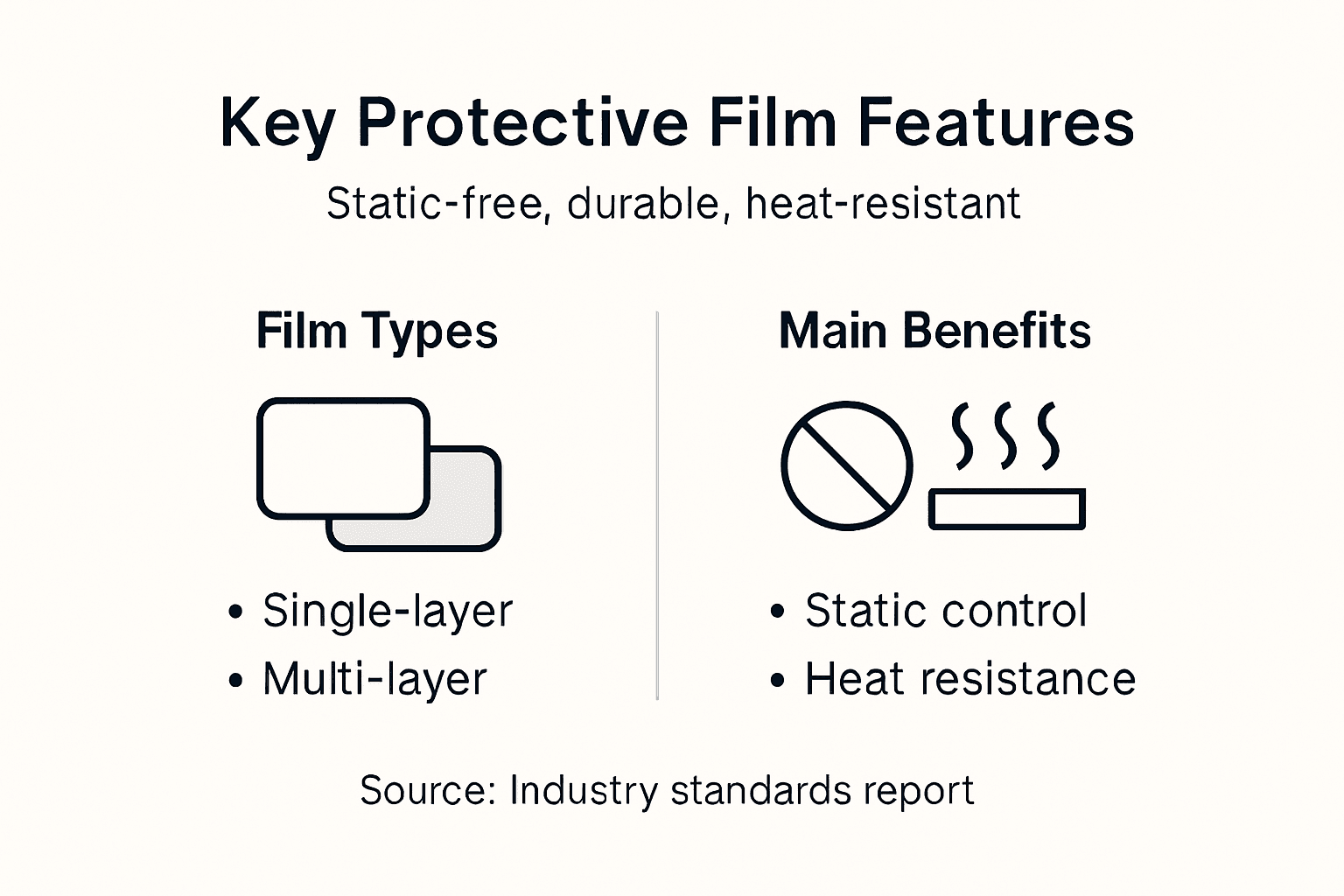
Static-free protective films represent a sophisticated engineering solution with three critical performance characteristics that distinguish them in industrial environments. Electrostatic protection, heat resistance, and mechanical durability form the foundational triad of advanced protective film technologies, ensuring comprehensive surface safeguarding across demanding manufacturing scenarios.
Anti-static protective film technologies incorporate specialized materials designed to neutralize and dissipate electrical charges systematically. The fundamental features of these advanced films include:
- Rapid static charge dissipation
- Uniform electrical conductivity
- Consistent performance across temperature ranges
- Molecular-level charge neutralization
- Robust surface protection mechanisms
Heat resistance represents another crucial performance parameter for industrial protective films. Modern static-free films can withstand extreme temperatures ranging from -40°F to 300°F, making them ideal for high-temperature spray booth environments. The materials maintain structural integrity and protective capabilities even under intense thermal stress.
Advanced protective films transform surface vulnerability into engineered resilience, providing comprehensive industrial protection.
Mechanical durability ensures long-term performance and cost-effectiveness. Anti-static PET polyester films demonstrate exceptional resistance to abrasions, chemical exposure, and environmental contaminants. Key durability characteristics include:
- Scratch-resistant surface coatings
- Molecular-level material reinforcement
- Chemical interaction resistance
- Consistent mechanical strength
- Predictable wear characteristics
The sophisticated engineering behind these films enables manufacturers to create robust protective solutions that address multiple critical performance requirements simultaneously. By integrating electrostatic management, thermal stability, and mechanical resilience, these films represent a comprehensive approach to industrial surface protection.

The table below summarizes how key features of static-free protective films enhance manufacturing outcomes:
| Feature | Engineering Approach | Manufacturing Benefit |
|---|---|---|
| Electrostatic Protection | Conductive polymers dissipate charges | Fewer ESD-related defects |
| Heat Resistance | Advanced polymers, molecular stability | Reliable under high temperature |
| Durability | Reinforced materials, scratch-resistant coat | Lower replacement frequency, cost savings |
Pro tip: Conduct periodic performance assessments of your protective films to ensure they maintain optimal electrostatic, thermal, and mechanical properties throughout their service life.
How Protective Film Improves Spray Booths
Spray booth protective films represent a critical technological intervention that dramatically transforms industrial painting environments. These advanced films are not merely surface coverings, but sophisticated engineering solutions designed to address multiple operational challenges simultaneously, ensuring superior paint finish quality and operational efficiency.
Spray booth protective technologies deliver comprehensive performance improvements through strategic contamination management. The primary benefits include:
- Preventing dust and overspray accumulation
- Maintaining booth surface cleanliness
- Enhancing painter visibility and working conditions
- Reducing equipment maintenance frequency
- Extending overall booth operational lifespan
Contamination control represents the most significant advantage of protective films in spray booth environments. By creating a barrier against particulate matter, these films prevent microscopic debris from compromising paint finish quality. The non-woven adhesive surfaces trap potential contaminants efficiently, ensuring a consistently clean working environment that supports precision painting techniques.
Protective films transform spray booths from vulnerable spaces into controlled, high-performance painting environments.
Mechanical protection extends beyond simple dust management. Modern protective films offer additional benefits that directly impact operational workflows:
- Quick and easy installation processes
- Seamless surface coverage
- Minimal surface preparation requirements
- Rapid replacement capabilities
- Cost-effective contamination prevention
The strategic application of protective films enables facility managers to standardize their painting processes, reduce unexpected downtime, and maintain consistently high-quality output. By mitigating environmental variables, these films create a more predictable and controlled spray booth ecosystem.
Pro tip: Implement a systematic film replacement schedule to ensure continuous optimal protection and maintain peak spray booth performance.
Comparing Alternatives And Common Mistakes
Selecting the right protective solution for spray booths requires a nuanced understanding of available technologies and potential pitfalls. While multiple options exist, each comes with distinct advantages and limitations that can significantly impact operational efficiency and paint quality.
Protective film selection strategies reveal several critical alternatives for industrial painting environments. The primary protective options include:
Here’s a structured comparison of protective film alternatives for spray booths and their main business impacts:
| Protective Solution Type | Advantages | Limitations | Business Impact |
|---|---|---|---|
| Liquid Spray Coating | Low upfront cost, simple application | Short lifespan, uneven coverage | Frequent maintenance costs |
| Adhesive Protective Film | Easy removal, strong dust barrier | Needs proper installation, adhesive residue risk | Consistent quality, reduced downtime |
| Fabric-like Wraps | Superior dust trapping, longer use | Higher initial cost, installation complexity | Enhanced product finish, less rework |
| Disposable Sheeting | Quick change, minimal prep needed | Poor durability, limited protection | Increased consumable costs |
| Reusable Barriers | Environmentally friendly, long-term use | Requires cleaning, higher upfront investment | Reduced waste, long-term savings |
- Liquid spray coatings
- Adhesive protective films
- Fabric-like protective wraps
- Disposable protective sheeting
- Reusable protective barriers
Liquid spray coatings represent the most basic protective approach, offering low initial costs but presenting significant long-term challenges. These coatings require frequent removal to prevent performance degradation and can create uneven surface protection. Their primary drawbacks include:
- Limited durability
- Inconsistent coverage
- Complex removal processes
- Higher maintenance requirements
- Potential surface contamination
Not all protective solutions are created equal - understanding nuanced differences can prevent costly operational mistakes.
Adhesive protective films provide a more sophisticated alternative, offering superior dust capture and easier removal. However, facility managers must be aware of common installation mistakes that can compromise their effectiveness. Critical errors to avoid include:
- Improper surface preparation
- Inconsistent film application
- Using low-quality adhesive materials
- Neglecting temperature and humidity considerations
- Failing to train personnel on proper installation techniques
Fabric-like wraps present another compelling option, particularly for facilities prioritizing comprehensive dust protection. These solutions typically feature higher initial costs but deliver enhanced dust trapping capabilities and longer-term performance. Strategic implementation requires careful evaluation of specific operational requirements and environmental conditions.
Pro tip: Conduct comprehensive performance testing of different protective film alternatives before full-scale implementation to identify the most suitable solution for your specific spray booth environment.
Elevate Your Spray Booth Protection with Advanced Static-Free Film Solutions
The challenge of managing static electricity, heat resistance, and durability in spray booths can compromise paint quality and operational efficiency. This article highlights the importance of multi-layer static-free protective films designed to eliminate electrostatic discharge, shield surfaces from contamination, and withstand demanding industrial conditions. If your goal is to reduce defects, maintain a dust-free environment, and enhance spray booth longevity, addressing these key pain points is essential.
At Dust Free Film, we specialize in providing premium multi-layer static-free protective films engineered precisely for environments like automotive refinishing and industrial painting. Our patented, easy-to-install systems ensure rapid, bubble-free application that maximizes electrostatic protection and heat resistance, precisely matching the advanced technologies explored in this article. Discover how our durable solutions deliver superior mechanical strength and reduce downtime, helping you achieve spotless, high-quality finishes every time.
Looking to protect your spray booth and boost your paint results today? Explore our innovative products and patented application systems at Dust Free Film.

Don’t let static buildup or contamination jeopardize your workflow. Invest in reliable, European-standard protective films now and experience the difference. Visit our landing page to learn more about how our solutions can upgrade your spray booth protection and streamline operations. Act today to secure your spray booth’s future with Dust Free Film.
Frequently Asked Questions
What is static-free protective film?
Static-free protective film is a specialized material designed to prevent electrostatic discharge (ESD) by neutralizing static electricity, thus protecting sensitive surfaces and components in industrial environments like spray booths and electronics manufacturing.
How does protective film improve spray booth results?
Protective film enhances spray booth results by preventing dust and overspray accumulation, maintaining surface cleanliness, improving painter visibility, reducing maintenance frequency, and extending the operational lifespan of the booth.
What types of static-free protective films are available for spray booths?
There are several types of static-free protective films, including temporary surface protection films, permanent anti-static films, high-temperature resistant variants, and specialized semiconductor-grade protective films, each catering to different industrial requirements.
What are the key features to look for in protective films for industrial applications?
When selecting protective films for industrial applications, consider key features such as electrostatic protection capabilities, heat resistance, and mechanical durability, as these attributes can significantly impact performance and cost-effectiveness.