

TL;DR:
- Dust protection film dramatically reduces cleaning time and contamination in spray booths.
- It extends booth surface life, maintains lighting reflectivity, and improves paint finish quality.
- Using film enhances workflow efficiency, reduces rework, and provides consistent long-term booth performance.
Top Benefits of Dust Protection Film for Spray Booths
Every painter knows the sinking feeling: you pull a freshly sprayed panel out of the booth and spot a dust nib embedded in the clearcoat. That single particle can mean hours of compounding, re-clearing, or a full respray. Dust contamination is the leading cause of rework in both auto body shops and industrial painting facilities, and traditional cleaning routines simply cannot keep pace with production demands. Dust protection film addresses this problem directly, turning a slow, labor-intensive process into a fast, repeatable system that protects your booth surfaces, preserves your paint quality, and keeps your team moving.
Table of Contents
- Why dust protection film matters in spray booth operations
- Key benefits of dust protection film for automotive and industrial booths
- Comparing dust protection film with other dust control methods
- How dust protection films improve workflow and efficiency
- A practical expert take: The real-world impact of dust protection film
- Upgrade your painting process with industry-leading dust protection solutions
- Frequently asked questions
Key Takeaways
| Point | Details |
|---|---|
| Superior dust control | Dust protection film stops contamination, saving paint jobs and reducing costly rework. |
| Easier, faster cleaning | Cleanup time drops from hours to minutes, allowing for more jobs and less downtime. |
| Protects booth surfaces | Film prevents overspray and chemical damage to booth floors and walls, reducing maintenance expenses. |
| Improves color accuracy | Non-yellowing films keep booth lighting clear, supporting professional color matching and finish quality. |
Why dust protection film matters in spray booth operations
Dust is not a nuisance you manage once and forget. It is a constant threat that accumulates on booth walls, floors, and fixtures every single day. Even a freshly cleaned booth will collect airborne particles within minutes of normal activity. When those particles settle on a wet painted surface, the result is contamination that demands rework, and rework costs time, materials, and customer goodwill.
Traditional decontamination methods rely on manual scrubbing, solvent wiping, and tack cloths. These approaches are labor-intensive and inconsistent. A technician spending two hours cleaning a booth is a technician not painting, not billing, and not contributing to throughput. Worse, manual cleaning rarely removes all contamination from porous or textured booth surfaces. Dust hides in seams, corners, and surface irregularities, ready to become airborne again the moment air movement increases.
Dust protection film is purpose-built to solve this problem at the source. Rather than cleaning surfaces after contamination occurs, films seal those surfaces so dust and overspray cannot embed in them at all. When the film is spent, you peel it off, exposing a clean layer underneath or a freshly protected surface, and you move on. No scrubbing, no solvents, no extended downtime.
The benefits go beyond cleanliness. As noted in research on paint booth protection, quality films withstand temperatures up to 200°F, maintain light reflectivity for color matching, and cost far less than repairing surfaces damaged by overspray and chemical exposure. That combination of durability and performance is what makes film the modern standard for professional paint environments.
To enhance booth quality consistently, you need a system, not a one-time fix. Film delivers that system.
“Consistent film use means less booth downtime, smoother handoffs between jobs, and a measurable improvement in first-pass finish quality.”
Key reasons dust protection film has become standard in professional booths:
- Prevents overspray from bonding to booth walls and floors
- Eliminates the need for chemical scrubbing between paint cycles
- Reduces the risk of airborne recontamination during changeover
- Protects booth lighting panels and fixtures from degradation
- Enables faster, cleaner transitions between different coating systems
Pro Tip: Apply a fresh film layer at the start of each work week and track the time your team saves on cleaning. Most shops report recovering 3 to 5 productive hours per week within the first month.
Key benefits of dust protection film for automotive and industrial booths
Having set the context, let’s map out the specific benefits you should expect from a well-chosen dust protection film.
The most immediate gain is cleaning time. A manual booth cleanup can take two hours or more, factoring in wiping walls, scrubbing floors, and re-tacking every surface. With protective film in place, that process drops to under 15 minutes. You peel the used layer, inspect the surface beneath, and you’re ready for the next job. That time difference compounds across a full week of production, adding up to significant recovered capacity.
Surface protection is the second major benefit. Booth floors and walls absorb overspray, solvents, and catalysts over time, degrading the surface and reducing reflectivity. Repairs and repaints of booth interiors are expensive and disruptive. Protective film shields surfaces from chemical damage, extending booth life and deferring costly maintenance.
Heat resistance matters in any booth running cure cycles. Films rated to withstand up to 200°F hold their integrity through standard bake cycles, meaning you don’t lose protection when the booth heats up. This is critical for facilities running waterborne basecoat systems combined with high-temperature clears.
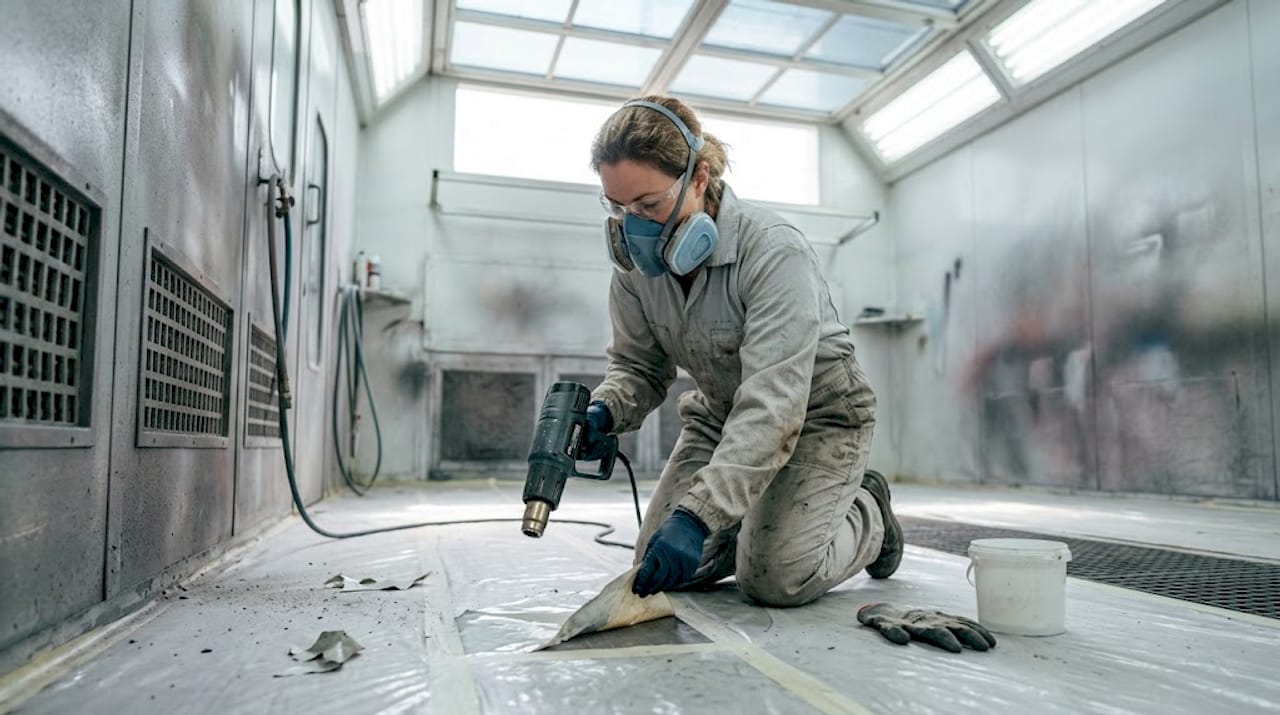
Lighting quality directly affects color accuracy. Non-yellowing films maintain the reflectivity of booth walls and ceilings, ensuring your color-matching conditions stay consistent shift after shift. Yellowed or dirty surfaces throw off color perception, leading to mismatches that cost time and materials to correct.
For boosting booth efficiency with water-based paint systems, film provides another layer of protection. Waterborne coatings are more sensitive to airborne contamination than solvent-based products, and any dust particle that lands in a wet basecoat layer can cause visible defects. Film reduces the surface area from which those particles can originate.
Summary of key measurable benefits:
- Cleanup time reduced from 2+ hours to under 15 minutes per cycle
- Booth surface life extended by preventing chemical absorption and mechanical wear
- Color-matching accuracy maintained through consistent lighting reflectivity
- Waterborne coating quality improved by reducing environmental contamination sources
- Rework rates drop as first-pass finish quality improves across all job types
Pro Tip: When switching to waterborne coatings, install fresh film immediately before your first spray cycle. Water-based products are unforgiving with dust, and starting on a protected surface gives you the cleanest possible foundation.
The removable film benefits extend to the end of the film’s life as well. Clean, residue-free removal means no adhesive contamination to deal with when you change layers, which keeps your booth surfaces in pristine condition and eliminates one more variable from your finishing process.
Comparing dust protection film with other dust control methods
Once clear on the benefits, a practical comparison with older dust control options clarifies why films are the modern standard.
Most shops have tried multiple approaches before committing to protective film. Tack cloths are a quick-fix option, but they only address the surface you’re about to paint, not the booth environment itself. Manual washing with solvents is thorough but slow, and it introduces chemical waste handling requirements. Temporary floor coverings like paper or cardboard offer some overspray absorption but provide no wall protection and can become contamination sources themselves when they shift or tear.
The cost difference in protective film applications versus repair costs from surface damage makes the financial case clearly. The film cost is typically lower than repairing booth interiors damaged by years of unprotected overspray exposure.
| Method | Effectiveness | Labor required | Surface coverage | Cost over 1 year |
|---|---|---|---|---|
| Dust protection film | High | Low | Walls + floors | Low |
| Tack cloths | Partial | Moderate | Surface only | Moderate |
| Manual solvent wipe | Moderate | High | Walls + floors | High |
| Paper floor covering | Low | Moderate | Floor only | Moderate |
| No protection | None | Very high (cleanup) | None | Very high |
The table makes the operational picture clear. Film wins on every dimension that matters to a working shop: it covers the most surface area, requires the least ongoing labor, and delivers the lowest total cost when you factor in avoided repairs and rework.
Steps for transitioning from legacy cleaning methods to integrated film solutions:
- Audit your current weekly cleaning time per booth and document it as your baseline.
- Identify which surfaces experience the heaviest overspray accumulation in each booth.
- Select film products appropriate for your booth dimensions, heat cycle temperatures, and coating chemistry.
- Install floor and wall films during a scheduled downtime period, following the manufacturer’s application guide.
- Train all technicians on correct film layering, monitoring, and replacement intervals.
- Track cleaning time, rework incidents, and booth surface condition monthly for the first quarter.
- Adjust replacement frequency based on production volume and contamination observations.
This structured transition removes the guesswork and gives your team clear ownership of the process from day one.
How dust protection films improve workflow and efficiency
Understanding the comparative value, let’s see how films actually optimize your day-to-day workflow and business efficiency.
The workflow impact is most visible in throughput. A booth that requires two hours of cleaning between major jobs limits how many vehicles or parts you can process in a day. Cutting that to 15 minutes per cycle can add one or two additional job slots per week per booth, depending on your production mix. At typical refinishing labor rates, that is a meaningful revenue gain.
Films also reduce inter-job contamination risk. When you change from a dark color to a light color, any overspray residue left on booth surfaces becomes a potential contamination source. Peeling a spent film layer eliminates that residue entirely. You start every color cycle with a surface that has not been exposed to previous coatings. This matters especially for fleets and industrial operations where color consistency across multiple panels is a quality requirement.
Research consistently confirms that cleaning time drops sharply when protective film is used, and that booth reflectivity remains steady across the life of the film installation. Both factors feed directly into finish consistency and team morale.
Staff frustration is an underappreciated efficiency factor. Technicians who spend a significant portion of their shift on repetitive cleaning tasks become disengaged over time. Giving them a system that is fast, clean, and predictable improves job satisfaction and reduces turnover, which is a real operational cost in any skilled trade environment.
To apply film correctly in booths and maximize these gains, following a consistent installation protocol is essential. Bubble-free application, proper edge sealing, and correct overlap at seams all contribute to a film that stays in place through an entire production cycle without lifting or creating new contamination risks.
Secondary workflow improvements that come with consistent film use:
- Reduced equipment wear from airborne overspray settling on fans, filters, and spray guns
- Better environmental compliance because overspray is contained within the film rather than embedded in porous surfaces
- Improved safety because slippery overspray buildup on booth floors is eliminated
- Faster booth certification renewals because surfaces remain in better condition over time
- More consistent quality audits for shops operating under OEM or fleet contracts
Understanding the purpose of protective floor films in particular helps managers make the case to ownership: floor films prevent slip hazards, protect concrete or steel decking, and make insurance inspections straightforward.
A practical expert take: The real-world impact of dust protection film
Most articles on spray booth maintenance focus on the obvious: less cleaning, better finishes. Those points are valid, but they miss something important. The real competitive advantage of dust protection film is what it does to your booth’s consistency over time.
Shops that use film religiously report something that shops relying on manual cleaning rarely achieve: a booth that performs the same way on Friday afternoon as it did on Monday morning. Without film, booth surfaces degrade gradually. Reflectivity drops. Overspray accumulates in corners. Color-matching conditions shift in ways that are hard to quantify but easy to feel in the quality of your work.
Skeptics point to the added cost of purchasing film regularly. That concern is understandable. But when you account for avoided rework, extended booth surface life, and time recovered for billable work, the return on investment is not close. It favors film decisively. The shops we hear from who resisted film longest are typically the same ones who eventually made the switch after one too many costly resprays driven by contamination.
High-quality film also eliminates the residue problem that plagues cheaper protective solutions. Residue left by low-grade adhesives creates new contamination risks and can damage booth surfaces over time. Committing to film that removes cleanly, as described in ensuring dust-free booths, sets a new operational standard that raises the quality ceiling for everything your shop produces.
The bottom line from years of working with professional shops: film is not a cost. It is infrastructure.
Upgrade your painting process with industry-leading dust protection solutions
The time savings, quality gains, and operational improvements that dust protection film delivers are not theoretical. They show up in your booth’s performance every single week. If your shop is still relying on manual cleaning cycles, tack cloths, and temporary fixes, you are leaving efficiency and finish quality on the table.
Dust Free Film solutions are engineered specifically for the demands of professional spray booths, from single-bay auto body shops to large-scale industrial painting lines. Our multi-layer films, patented dispenser systems, and heat-resistant formulations are designed to fit your workflow, not disrupt it. Whether you need wall protection, floor coverage, or a complete booth protection system, we have options built for your production volume and coating chemistry. Ready to see what the right film does for your operation? Request a quote and our team will help you identify the best configuration for your booth.
Frequently asked questions
How often should I replace dust protection film in a spray booth?
Replace the film every 2 to 4 weeks or when heavily contaminated, depending on production volume and the type of coatings you are applying. High-volume shops may need more frequent changes.
Can dust protection film withstand high-temperature spray booth cycles?
Yes. Quality films are rated to withstand 200°F, making them fully compatible with standard bake cycles used in automotive and industrial refinishing.
Does using protective film affect the lighting or visibility in the booth?
No. Modern non-yellowing films are designed to maintain light reflectivity throughout their service life, keeping your color-matching conditions accurate and consistent.
Is dust protection film difficult to apply or remove?
Most professional-grade films feature easy application systems and clean, residue-free removal, so changeovers are fast and do not leave adhesive contamination behind.
Does dust protection film work for water-based paint applications?
Absolutely. These films are ideal for waterborne systems where dust and humidity sensitivity make surface contamination especially damaging to finish quality.