

TL;DR:
- Dust protection in spray booths involves engineering controls, PPE, surface stabilization, and management practices. Combining all four methods offers the most effective way to prevent dust contamination and ensure safety.
What are the main types of dust protection for spray booths?
Spray booth dust protection falls into four categories: engineering controls, personal protective equipment (PPE), surface stabilization, and management best practices. Each layer addresses a different point in the contamination chain, and the most effective programs stack all four rather than relying on any single method.
The key categories at a glance:
- Engineering controls: Local Exhaust Ventilation (LEV) systems that capture dust at its source before it reaches booth air or surfaces
- Personal protective equipment: NIOSH-classified respirators and Powered Air-Purifying Respirators (PAPRs) for individual worker protection
- Surface stabilization: Physical barriers including multi-layer protective films, coatings, and dry dust suppression methods suited to spray environments
- Management best practices: Operation-specific audits, scheduled monitoring, and maintenance routines that keep every other layer performing
OSHA mandates dust exposure limits and requires documented respiratory protection programs under 29 CFR 1910.134©. NIOSH provides the classification framework for approved respirators. Dustfreefilm’s multi-layer electrostatic films address the surface stabilization layer specifically, filling the gap that ventilation and PPE alone cannot close.
Table of Contents
- Engineering controls: how LEV systems capture dust at the source
- Personal protective equipment options for spray booth dust protection
- Surface stabilization methods to minimize dust generation in spray booths
- Best practices for dust control management in industrial spray environments
- Why clean, non-porous surfaces are critical in spray booths
- Monitoring and maintenance recommendations to ensure dust protection effectiveness
- How do different dust protection materials compare?
- How dust particle size determines which protection type you need
- Cost and installation considerations for dust protection methods
- Dustfreefilm’s surface protection films for spray booth operators
- Key Takeaways
Engineering controls: how LEV systems capture dust at the source
Local Exhaust Ventilation systems are the industry standard for dust control in processing and finishing environments. They use negative pressure to pull dust-laden air away from the generation point and route it through ductwork to a filtration device, preventing contamination of the breathing zone before it starts.
A well-designed LEV system includes four core components:
- Enclosing hoods that physically surround the dust source, maximizing capture efficiency and preventing dilution of dust-laden air
- Ductwork sized to maintain transport velocity and carry captured particles to the collector
- Filtration devices such as baghouses or cartridge collectors that separate dust from the airstream
- Fans that generate the negative static pressure driving the entire system
Properly designed enclosing hoods that surround the dust generation point maximize capture efficiency, avoiding dilution of dust-laden air and improving filtration performance. In a spray booth, this principle applies directly to air supply and exhaust plenum design: the booth envelope itself functions as a large enclosing hood when airflow is balanced correctly.
LEV systems also handle very fine respirable particles that wet suppression cannot reliably capture, and they perform consistently in cold conditions where water-based systems can freeze or fail. For operations where any moisture would compromise the coating, dry LEV collection is often the only viable engineering control.
Personal protective equipment options for spray booth dust protection
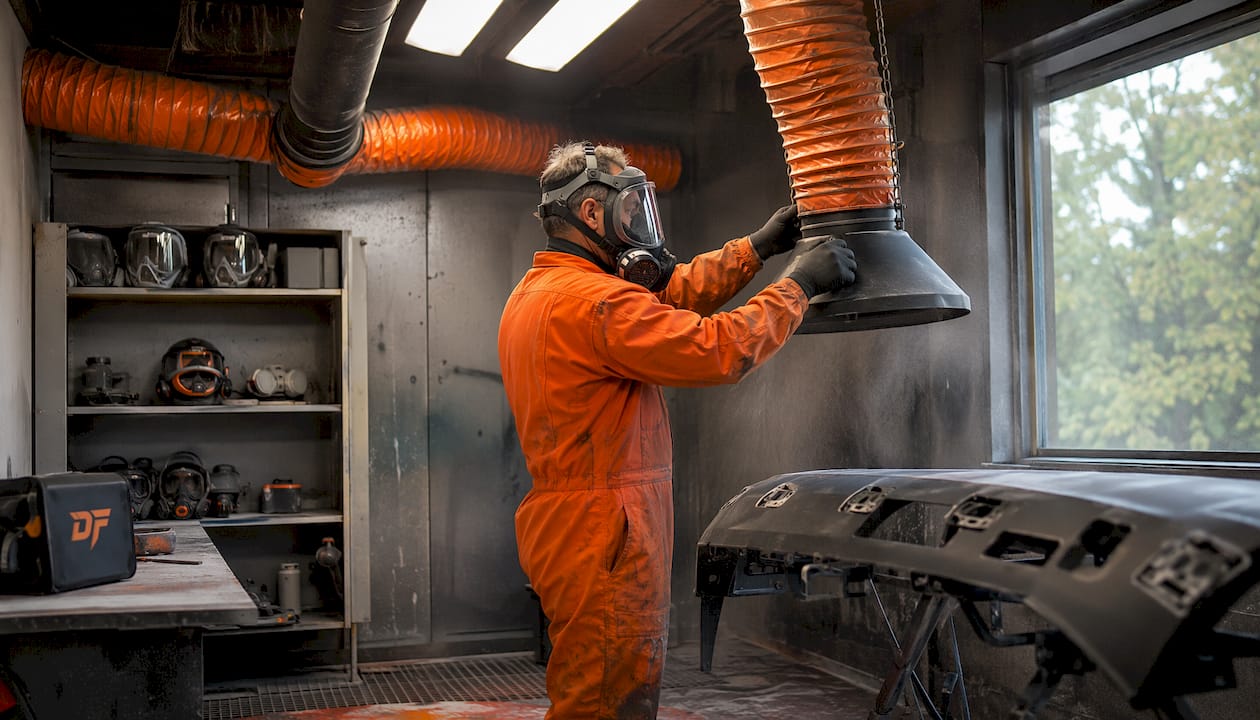
PPE is a secondary defense, not a primary one. Relying solely on respirators is a secondary defense; engineering controls are the primary strategy for effective dust management due to behavioral inconsistencies in PPE use. That said, when engineering controls cannot reduce exposure to safe levels, the right respirator makes a real difference.
NIOSH classifies respirators into two broad categories:
- Non-powered (negative-pressure) respirators: These include filtering facepiece respirators (FFRs, such as N95s) and reusable half-mask respirators with replaceable cartridges. They are lighter and require no power source, but the wearer must overcome filter resistance with every breath. Fit testing is required, and facial hair compromises the seal.
- Powered Air-Purifying Respirators (PAPRs): A fan draws air through the filter, eliminating breathing resistance. PAPRs often integrate head, face, and respiratory protection in one unit. All three PAPR filter classes (HE, PAPR100-N, PAPR100-P) must demonstrate a minimum efficiency of 99.97%. The trade-off is battery maintenance and higher upfront cost.
For filter selection in spray environments, N-series filters work for mineral dusts where no oil mist is present. If oil mist is a factor, R-series or P-series filters are required. PAPRs require battery maintenance and correct use, but their integrated protection makes them preferable in high-intensity industrial dust environments where workers spend extended shifts in the booth.
Pro Tip: Run positive and negative pressure seal checks every time a non-powered respirator is donned. A small leak at the facepiece seal defeats the filter’s rated efficiency entirely.
Surface stabilization methods to minimize dust generation in spray booths
Surface stabilization addresses dust that has already settled or is embedded in booth surfaces. The goal is to prevent re-entrainment into booth air during painting operations.
- Chemical dust suppressants (water-based, surfactant-enhanced) work well in outdoor and mining contexts, but they introduce moisture into a spray booth environment. Humidity causes paint defects, adhesion failures, and finish inconsistencies, which makes wet suppression largely incompatible with quality coating work.
- Dry surface protection films are the preferred solution for spray booth operators. Multi-layer films applied to walls and floors create a non-porous barrier that traps existing dust and prevents new contamination from porous substrate materials. When a layer becomes contaminated, it peels away to reveal a clean surface beneath.
- Sealants and coatings applied to booth walls can reduce surface porosity, but they require cure time and periodic reapplication. They do not offer the layer-by-layer renewal that multi-layer films provide.
Spray booth operators prefer dry dust collection and multi-layer surface protection films over wet suppression to avoid humidity-related paint defects and maintain consistent control. Dustfreefilm’s films are static-free and heat-resistant, which matters in booths where curing temperatures can reach levels that would degrade standard plastic sheeting. The films meet European manufacturing standards, and their patented dispenser system allows bubble-free application without shutting down operations for extended periods.
Best practices for dust control management in industrial spray environments
A dust control program is only as good as the audit that designed it. Dust control experts emphasize operation-specific audits to select dust control equipment, since universal solutions reduce efficiency and increase operational costs. Before specifying any equipment or film, map every dust generation point in your booth: air supply plenums, floor drains, wall joints, entry curtains, and transfer points where workers move in and out.
Key management practices:
- Audit first: Identify dust sources, particle sizes, and generation mechanisms before selecting controls. A booth with heavy overspray buildup on walls needs surface film protection; one with airborne fine particles needs LEV optimization.
- Monitor regularly: Regular monitoring using standardized observation methods such as EPA Method 22 is critical to ensure containment measures remain effective during operations.
- Maintain cleaning schedules: Follow a spray booth maintenance checklist that covers filter replacement, film layer removal, and floor cleaning at defined intervals rather than when contamination becomes visible.
- Protect transfer points: Install dust curtains at booth entry and exit points to reduce air movement and isolate dust-generating zones.
Pro Tip: Proper airflow management including physical curtains or barriers at air entry and exit points prevents turbulence that stirs settled dust and undermines filtration effectiveness. Keep booth air velocity consistent and avoid opening doors during active spray cycles.
Why clean, non-porous surfaces are critical in spray booths
Porous booth surfaces act as dust reservoirs. Paint overspray, sanding residue, and airborne particles embed into rough or degraded wall and floor materials, then re-enter the air column whenever airflow shifts or workers move through the space. A single contaminated wall can undo the work of an otherwise well-maintained LEV system.
Non-porous surfaces break this cycle. They do not absorb particles, so cleaning removes contamination rather than redistributing it. For maintaining clean spray booths at a level that produces consistent finish quality, the surface material matters as much as the cleaning frequency. Multi-layer protective films restore a non-porous surface condition without requiring booth reconstruction or extended downtime.
Monitoring and maintenance recommendations to ensure dust protection effectiveness
Dust protection degrades silently. Filters load gradually, film layers accumulate overspray, and curtains develop gaps that go unnoticed until a paint defect reveals the problem. A structured maintenance workflow prevents that outcome.
Recommended intervals for spray booth operators:
| Component | Recommended Action | Frequency |
|---|---|---|
| Intake and exhaust filters | Inspect and replace per pressure drop readings | Weekly or per manufacturer schedule |
| Booth wall films | Peel contaminated layer, inspect substrate | After each major job cycle |
| Floor protection films | Replace when overspray buildup affects traction | Weekly in high-volume operations |
| Entry curtains | Inspect for tears, gaps, and seal integrity | Daily |
| LEV ductwork | Check for blockages and transport velocity | Monthly |
Visual inspection using EPA Method 22 standards provides a consistent baseline for detecting visible emissions or dust escape at booth boundaries. Pair visual checks with pressure differential readings across filters to catch loading before airflow drops enough to affect capture efficiency. A dust-free maintenance workflow that ties these checks to a written schedule removes the guesswork from booth upkeep.
How do different dust protection materials compare?
Each material category has a defined role, and the gaps between them are where contamination enters.
| Material / Technology | Primary Function | Best Fit | Limitation |
|---|---|---|---|
| LEV filters (baghouse, cartridge) | Capture airborne particles | Respirable fine dust | Cannot address settled surface dust |
| Dust curtains | Isolate zones, reduce air movement | Entry/exit points, transfer zones | Require regular inspection for gaps |
| Surface sealants | Reduce substrate porosity | New booth construction | Cure time; no layer renewal |
| Multi-layer protective films | Non-porous surface barrier, layer-by-layer renewal | Booth walls and floors in active use | Requires proper dispenser for bubble-free install |
| Water curtains | Capture airborne dust in wet environments | Mining, heavy industrial | Incompatible with spray finishing |
Dust control interventions like wet dust extraction, dry extraction, and air curtains can reduce dust levels above 95% under the right conditions. Dry extraction and air curtain systems consistently reach that threshold for respirable dust, which is why they appear in well-designed spray booth engineering controls alongside physical surface protection.
How dust particle size determines which protection type you need
Particle size drives protection selection more than any other single variable. Coarse particles above 10 microns settle quickly under gravity and accumulate on horizontal surfaces, making floor and wall films the primary defense. Respirable particles below 4 microns stay airborne far longer and penetrate deep into the lungs, requiring LEV capture and properly rated respirator filters.
For silica-containing dusts common in body filler sanding, OSHA’s silica standard for construction (29 CFR 1926.1153) matches specific tasks to required controls and respirator ratings. N-series filters handle mineral dust without oil mist; P-series filters are required when oil mist is present. PAPRs with HE filters cover the full respirable range. Surface films address the settled fraction of all particle sizes, preventing re-entrainment regardless of the original particle diameter.
Cost and installation considerations for dust protection methods
LEV systems carry the highest upfront cost of any dust protection method, covering equipment, ductwork, electrical, and commissioning. They also deliver the broadest protection and are often required for OSHA compliance, making the investment non-negotiable for most industrial spray operations.
PPE sits at the opposite end of the cost spectrum. Disposable FFRs are low cost per unit but add up in high-volume operations, and they provide no surface or air protection beyond the individual wearer. PAPRs cost more upfront but reduce per-shift consumable expense and offer better protection in sustained high-dust conditions.
Multi-layer surface protection films occupy the middle ground. Installation requires no specialized tools beyond the dispenser system, and the layer-by-layer renewal model means a single roll installation serves multiple job cycles. Compared to repainting or resurfacing degraded booth walls, the ongoing film cost is a fraction of the alternative. For operators running industrial spray booth setups at volume, the time saved on cleaning between jobs often offsets the material cost within the first month of use.
Dustfreefilm’s surface protection films for spray booth operators
Dustfreefilm has built its product line around one specific problem: keeping booth surfaces genuinely clean between jobs without shutting down operations. Since 2012, the company has manufactured multi-layer electrostatic wall and floor protectors built to European manufacturing standards, with a patented dispenser system that allows bubble-free application in minutes rather than hours.
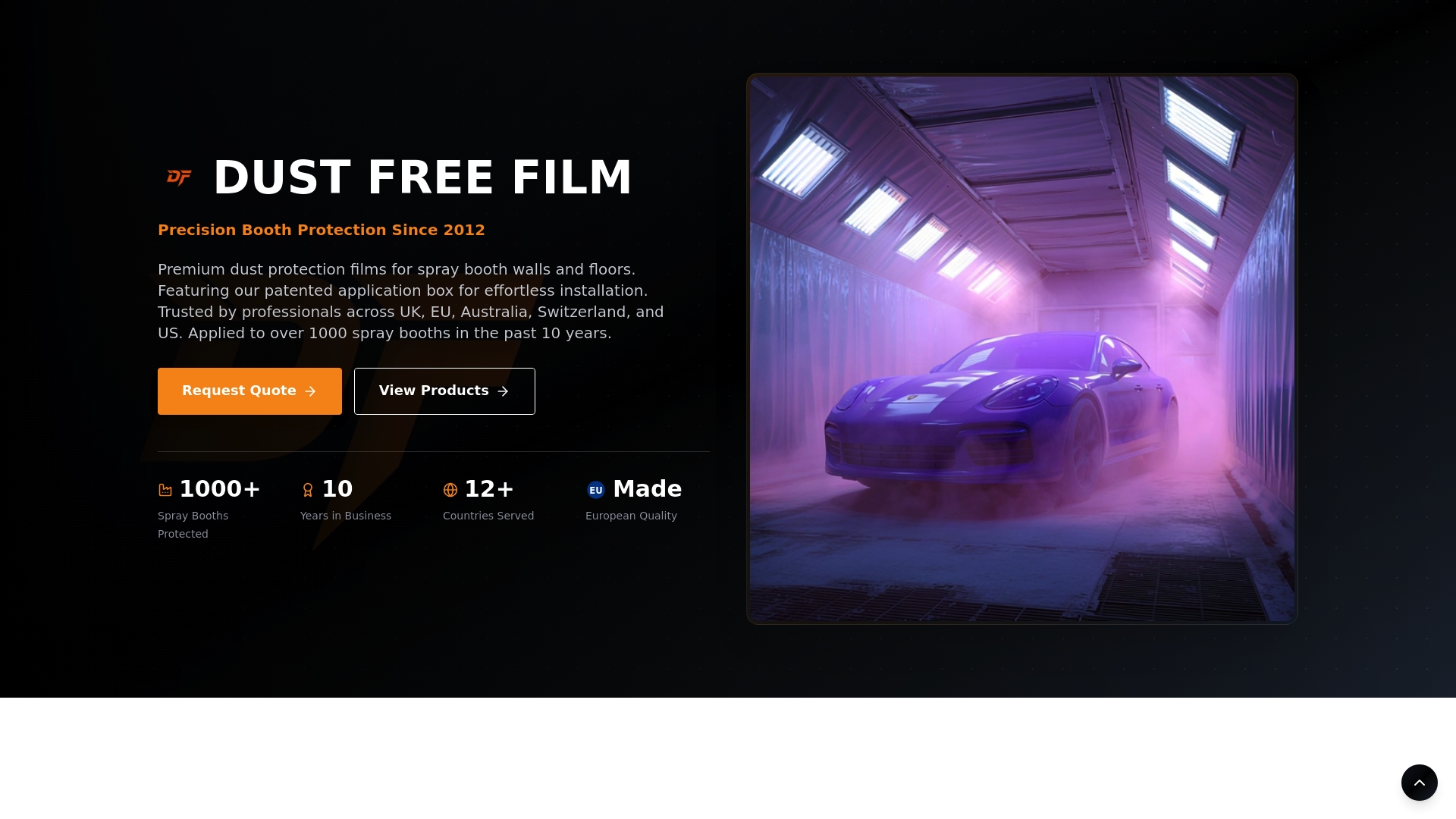
The films are heat-resistant and static-free, which means they stay flat against booth surfaces during curing cycles and do not attract additional airborne particles the way standard plastic sheeting does. Each layer peels away cleanly, leaving a fresh non-porous surface ready for the next job. For high-volume auto body shops and industrial painting facilities, that layer-by-layer renewal eliminates the scrubbing and solvent cleaning that typically interrupts production schedules.
Custom configurations and bulk purchasing options make Dustfreefilm practical for large-scale operations. Get a quote or explore product options at dustfreefilm.com to find the right film configuration for your booth dimensions and job volume.
Key Takeaways
Engineering controls, surface films, and PPE each address a different point in the contamination chain, and no single method replaces the others in a spray booth environment.
| Point | Details |
|---|---|
| Engineering controls first | LEV systems capture dust at the source and are the primary defense required by OSHA standards. |
| PPE is secondary | NIOSH-classified respirators and PAPRs protect workers when engineering controls cannot fully eliminate exposure. |
| Particle size drives selection | Respirable particles below 4 microns require LEV and rated respirator filters; coarse particles need surface film protection. |
| Audit before specifying | Operation-specific audits identify dust sources and prevent costly mismatches between controls and actual contamination points. |
| Dustfreefilm for surfaces | Multi-layer electrostatic films from Dustfreefilm provide layer-by-layer surface renewal, keeping booth walls and floors non-porous between jobs. |