

TL;DR:
- Choosing the right industrial floor protector depends on matching material properties to specific environment hazards, traffic loads, and maintenance needs. Proper substrate preparation is critical for durability, while layered protection strategies—combining coatings, mats, and films—offer optimal floor longevity and safety. Selecting materials based on environmental factors, load capacity, and hazard-specific functions helps facility managers prevent costly failures and downtime.
When the wrong floor protector fails under a loaded forklift or dissolves under chemical spillage, you are not just replacing a mat. You are managing downtime, safety incidents, and repair costs that dwarf the original purchase price. Choosing among the many types of industrial floor protectors requires you to match material properties against your exact environment, traffic loads, and maintenance capacity. This guide breaks down every major category with the specificity you need to make that call confidently.
Table of Contents
- Key takeaways
- 1. Types of industrial floor protectors: epoxy and polyurea coatings
- 2. Modular floor tiles and HDPE panels
- 3. Specialized industrial mats: anti-fatigue, safety drainage, and sticky mats
- 4. Rubber matting options: SBR, EPDM, nitrile, and specialized rubber types
- 5. Comparison of industrial floor protectors by environment
- My take after years working with industrial floor protection
- Protect your floors with Dustfreefilm’s proven solutions
- FAQ
Key takeaways
| Point | Details |
|---|---|
| Match protector to environment | Chemical exposure, load weight, and moisture define which floor protector type will last. |
| Substrate prep determines success | No protector performs well on an unprepared or contaminated floor surface. |
| Know hardness vs. comfort tradeoffs | Shore A hardness in rubber mats governs load capacity versus anti-fatigue feel. |
| Cost per year beats upfront price | Cheap coatings replaced in three years cost more than premium systems lasting fifteen. |
| Layer your protection strategy | Combining permanent coatings with removable mats covers both durability and day-to-day safety needs. |
1. Types of industrial floor protectors: epoxy and polyurea coatings
For permanent, load-bearing floor protection, coatings are the foundation of any serious industrial floor protection strategy. The two dominant options are epoxy and polyurea, and they are not interchangeable.
Epoxy coatings bond chemically to concrete, creating a rigid surface with compressive strength exceeding 70 MPa, which makes them suitable for heavy forklift zones and manufacturing floors. Mortar-grade epoxy systems handle the kind of point loads that would crack or debond thinner coatings. The tradeoff is cure time. Epoxy requires days of curing before you can run heavy traffic over it, and premature traffic ruins the coating. Planning installation around a production shutdown is not optional.
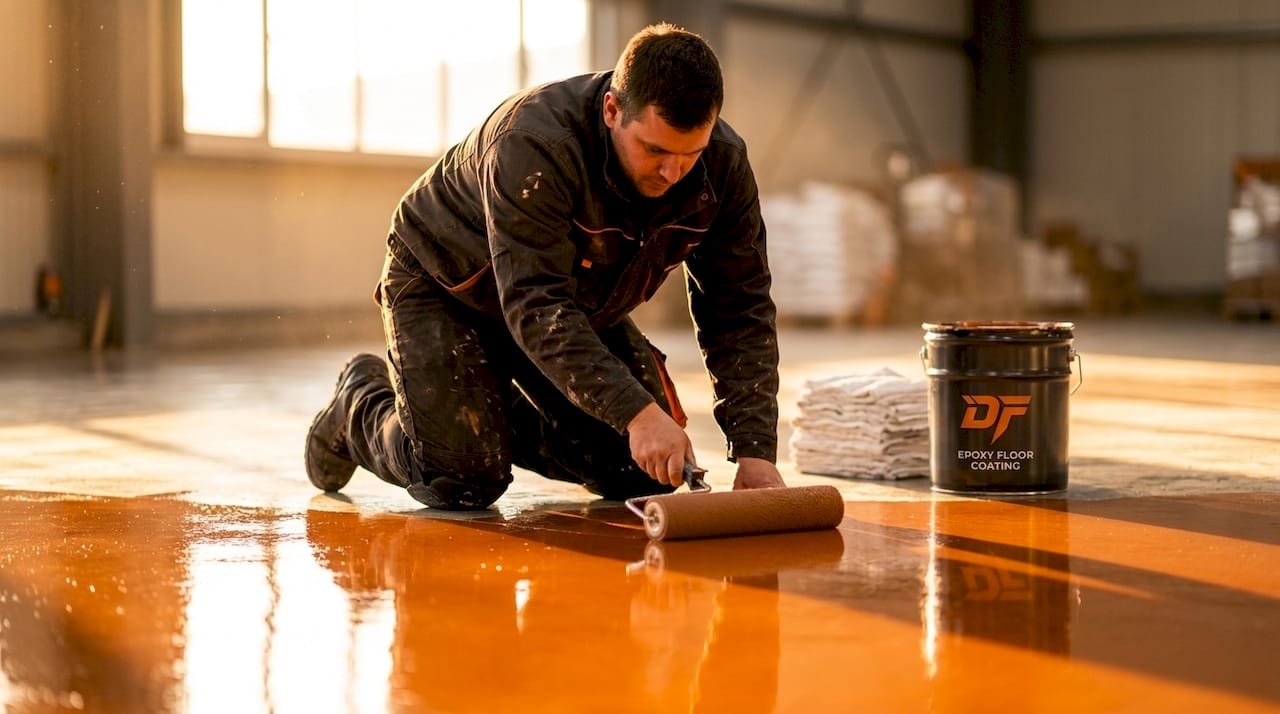
Polyurea coatings cure fast, often within hours, and they resist UV yellowing better than standard epoxy. They also flex under vibration, which matters in facilities where machinery creates constant floor stress. For lifespan, polyurea and urethane cement systems last 10 to 20 years in heavy-use areas versus 7 to 15 years for standard epoxy systems. That gap becomes significant when you factor in the cost and disruption of reapplication.
Key application differences:
- Epoxy: best for dry warehouses, manufacturing floors, food processing areas with moderate chemical exposure
- Polyurea: best for loading docks, automotive facilities, outdoor-adjacent zones with UV exposure
- Urethane cement: best for food-grade kitchens, wet processing environments, thermal shock zones
Pro Tip: Categorize your floor zones by chemical type, temperature range, and traffic weight before selecting a coating. A single facility often needs two or three different systems across zones, not one coating applied everywhere.
2. Modular floor tiles and HDPE panels
Modular systems appeal to facility managers who need heavy-duty floor coverings without committing to a permanent installation. The ability to pull up a section, inspect the substrate, replace a damaged tile, and reinstall makes these systems attractive for facilities that require periodic floor access.
Heavy-duty HDPE flooring systems handle loads up to 600 PSI, while standard modular tiles support around 250 PSI at a cost of roughly $5 to $6 per square foot. That load capacity difference matters when you are parking fully loaded reach trucks or placing stationary machinery on the surface.
Rubber composite tiles occupy the middle ground. They offer more cushioning than rigid HDPE, making them workable for areas where workers stand for extended periods, and they handle moderate vehicle traffic.
Installation considerations that most guides skip:
- Snap-together systems seem foolproof until you install them on textured or slightly uneven concrete. Edge framing on uneven surfaces is mandatory to prevent shifting under heavy equipment.
- Ignoring edge frames on textured floors creates gaps that collect debris and become trip hazards within weeks of installation.
- For partial coverage areas, buy roughly 10% more material than your measured square footage to account for cutting at edges and obstacles.
Pro Tip: Run a loaded pallet jack across your tile layout before declaring installation complete. Edge movement you discover during testing is far cheaper to fix than a shifted tile array under production conditions.
3. Specialized industrial mats: anti-fatigue, safety drainage, and sticky mats
Industrial floor mats are not a single product category. They are a family of solutions, each optimized for a specific hazard. Mixing them up costs you both safety and money.
Anti-fatigue mats work by reducing the static loading on leg joints and lower back muscles during prolonged standing. Polyurethane cushioning density in heavy-use mats typically ranges from 12 to 16 pounds per cubic foot. Lower density feels softer initially but compresses permanently under sustained load. For assembly lines and packing stations, you want closed-cell foam or polyurethane construction, not hollow gel inserts that degrade quickly.
Safety drainage mats prioritize slip prevention over cushioning. Open-grid drainage mats meet DIN 51130 R11 slip resistance ratings and allow liquids to drain through rather than pool on the surface. The tradeoff is that open-grid drainage mats offer less cushioning than closed-cell foam mats. In a wet processing area, the slip prevention function outweighs the ergonomic one.
Welding-safe mats are a category that gets underspecified regularly. Standard rubber mats melt or ignite near welding operations. Proper welding-safe mats tolerate temperatures up to 1800°F and are made from silicone or ceramic-fiber composites. Specifying a standard anti-fatigue mat in a welding bay is a fire risk.
Sticky mats serve a different function entirely. Sticky mats use multi-layer peel-off films to trap particulate contamination as workers walk from dirty to clean zones. A 60-layer replaceable mat placed at the entrance to a cleanroom or spray booth captures what cleaning protocols miss. They complement cleaning rather than replace it, serving as a final barrier at transition points.
ESD mats complete the picture for electronics assembly and controlled environments. They dissipate static charges that would otherwise damage components or create spark hazards near flammable materials.
Pro Tip: Assign one primary function per workstation mat rather than searching for a single mat that does everything. Identifying whether your priority is anti-fatigue, anti-slip, temperature resistance, or contamination control gets you to the right product faster and at better value.
4. Rubber matting options: SBR, EPDM, nitrile, and specialized rubber types
Rubber matting is one of the most nuanced categories in the types of floor shields available to facility managers. The base material changes everything about performance, and the wrong rubber in the wrong environment fails fast.
| Rubber type | Best environment | Chemical resistance | Relative cost |
|---|---|---|---|
| SBR (Styrene-Butadiene) | Dry indoor, general use | Low to moderate | Low |
| EPDM | Outdoor, UV exposure, extreme temps | Moderate | High (50-100% premium) |
| Nitrile (NBR) | Oily, fuel, hydraulic fluid zones | High (oils and fuels) | Moderate to high |
| Neoprene | Mixed chemical environments | Broad | Moderate |
SBR rubber is the cost-effective indoor option, and its recycled content makes it a reasonable choice for general-purpose applications. The limitation is outdoor UV exposure, where SBR degrades and cracks within months. EPDM excels outdoors with UV and temperature resistance but carries a 50 to 100% cost premium over SBR. For loading dock ramps, outdoor walkways, and exposed areas, that premium is worth paying once instead of replacing SBR mats annually.
Nitrile rubber is the mandatory choice for any floor area that contacts oils, fuels, or hydraulic fluids. SBR and EPDM swell and degrade in contact with hydrocarbons. Nitrile resists them. In automotive repair bays, machine shops, and fuel handling areas, nitrile is not optional.
Surface profiles also matter more than most buyers realize. Ribbed and coin-top profiles increase the contact surface area, improving grip for wheeled equipment and foot traffic. Studded profiles raise the worker slightly above the floor surface, helping in wet environments by keeping feet out of standing liquid.
Shore A hardness deserves more attention than it gets. Lower Shore A values favor anti-fatigue comfort while higher values handle heavy loads and chemical exposure better. A mat rated at Shore A 40 feels noticeably softer underfoot than one rated at Shore A 70, but the harder mat holds its shape under a steel-wheeled cart. For workstations combining both needs, some manufacturers offer dual-density constructions with a soft top layer bonded to a firm base.
Pro Tip: Always request Shore A hardness specifications when sourcing rubber mats. Most vendors can supply this figure, and it removes the guesswork from comparing products across suppliers.
5. Comparison of industrial floor protectors by environment
Matching the right protector to the right environment is where facility managers either protect their investment or waste it. Here is a practical breakdown.
| Environment | Recommended protector | Key reason |
|---|---|---|
| Dry warehouse / forklift traffic | Epoxy or polyurea coating | Load capacity, longevity, easy cleaning |
| Wet processing / food production | Urethane cement coating | Thermal shock resistance, slip control |
| Assembly line / standing workers | Anti-fatigue mats (polyurethane) | Ergonomic reduction of fatigue injuries |
| Cleanrooms / spray booths | Sticky mats plus floor protection film | Particulate control at transition zones |
| Oily machine shops | Nitrile rubber matting | Hydrocarbon resistance, grip |
| Outdoor loading docks | EPDM rubber or modular HDPE | UV stability and load handling |
| Electronics assembly | ESD matting | Static dissipation to protect components |
For facilities with mixed-use zones, the floor protection strategies for dust-free shops used in spray booth environments offer a transferable model. You divide the floor into exposure categories and assign a protection type to each zone rather than trying to cover the whole facility with one system.
The maintenance and lifespan gap between options is real. Epoxy and polyurea coatings require only periodic resealing. Rubber mats require regular cleaning to prevent oil and chemical absorption from degrading the material. Modular tiles need periodic inspection for edge creep and cracking.
Pro Tip: Factor in installation downtime when comparing options. A polyurea coating that cures in four hours may justify its higher material cost entirely based on avoided production downtime compared to a three-day epoxy cure schedule.
My take after years working with industrial floor protection
I’ve seen the same mistake play out repeatedly: a facility manager selects a floor protector based on the lowest unit price without categorizing the floor zone first. A general-purpose SBR mat in an oily machine shop lasts three months before it is swelling and slipping. A standard epoxy coating in a food plant with daily steam cleaning delaminates within two years. The choice looks economical at purchase and expensive within a year.
What I’ve learned is that facility managers who select on cost alone instead of environment matching consistently face premature failures. The decision framework that actually works is simple: categorize each zone by its top three hazards (load, chemical, moisture), match those hazards to material properties, and then optimize price within the qualifying options.
I also think the industry undervalues substrate preparation. You can specify the best coating or mat available, and it will fail if the concrete is contaminated, porous, or has moisture vapor transmission issues. Neglecting acid etching or surface cleaning leads to delamination regardless of product quality. The protector gets blamed when the substrate was the problem all along.
The layered approach works in practice. Permanent coatings as your base, modular tiles or mats for specific workstation needs, and films or sticky mats at transition points. Each layer solves a different problem without duplicating cost. That is what I’ve seen work in high-functioning facilities.
— Dust
Protect your floors with Dustfreefilm’s proven solutions
Dustfreefilm specializes in multi-layer electrostatic floor protection films designed specifically for spray booths, industrial painting facilities, and manufacturing environments where dust contamination and floor damage cannot be tolerated. Their patented dispenser system allows quick, bubble-free installation that complements the floor protection strategy you are already building. Whether you are protecting a freshly coated epoxy floor in a paint booth or controlling contamination at a cleanroom entry point, Dustfreefilm’s heat-resistant, static-free films provide the final layer that most floor protection plans miss. Explore the full range of surface protectors for industrial applications at Dustfreefilm.com, or contact the team directly for custom configurations suited to your facility’s scale and requirements.
FAQ
What are floor protectors in industrial settings?
Floor protectors are materials applied to or laid over industrial floors to prevent damage from load, chemicals, moisture, or contamination. They range from permanent coatings like epoxy to removable mats and films, each suited to specific hazards.
How do I choose between epoxy and polyurea coatings?
Choose epoxy for high compressive strength in dry, stable environments and polyurea when you need fast curing, UV resistance, or vibration flexibility. Polyurea typically lasts longer in harsh conditions but carries a higher initial cost.
What is the difference between anti-fatigue and anti-slip mats?
Anti-fatigue mats reduce physical strain during prolonged standing through cushioned construction, while anti-slip mats prioritize grip and drainage to prevent falls in wet or oily conditions. Selecting one function per workstation produces better safety outcomes than seeking a hybrid.
Are sticky mats a replacement for floor cleaning?
No. Sticky mats complement cleaning protocols by capturing residual particulate at transition zones. They function as a final contamination barrier, not a substitute for regular cleaning in cleanrooms or spray booths.
How long do industrial floor coatings last?
Standard epoxy and polyaspartic systems last 7 to 15 years, while polyurea and urethane cement coatings last 10 to 20 years in heavy-use environments, depending on traffic, chemical exposure, and maintenance quality.