

Over half of European automotive refinishing shops face persistent dust challenges that threaten paint quality and worker safety. Facility managers constantly balance tight deadlines with the need for safe, contaminant-free environments, all while navigating complex systems inspired by American safety standards. Uncover how proven dust protection solutions can transform your spray booth operations, ensuring flawless finishes and streamlined workflows without the setbacks caused by inefficient methods.
Table of Contents
- Spray Booth Protectors: Purpose And Misconceptions
- Variations Of Spray Booth Protectors And Films
- Key Features And Materials Used In Protectors
- Proper Installation Processes And Lifespan Factors
- Comparing Alternatives And Avoiding Common Mistakes
Key Takeaways
| Point | Details |
|---|---|
| Importance of Spray Booth Protectors | Spray booth protectors are essential for safety and quality in industrial painting, controlling hazardous conditions effectively. |
| Misconceptions in Safety | Many facility managers underestimate the complexity of ventilation systems needed for effective risk management in spray painting environments. |
| Material and Installation Matters | The choice of protective materials and proper installation are crucial for maximizing lifespan and performance of spray booth protectors. |
| Avoid Cost Over Quality | Prioritizing initial costs over long-term durability can lead to inadequate protection and increased operational issues. |
Spray Booth Protectors: Purpose and Misconceptions
Spray booth protectors are critical safety systems designed to control hazardous painting environments, preventing potential workplace accidents and ensuring high-quality finish results. Understanding these protective mechanisms goes far beyond basic equipment maintenance - they represent comprehensive risk management strategies for industrial painting operations.
At their core, spray booth protectors serve multiple essential functions: capturing dangerous overspray, filtering toxic fumes, and minimizing fire risks through carefully engineered ventilation systems. Ventilation effectiveness plays a crucial role in maintaining a safe workspace, controlling potentially explosive vapor concentrations and protecting worker respiratory health. Industrial painting environments generate numerous airborne contaminants that require sophisticated containment and filtration approaches.
Common misconceptions about spray booth protectors can lead to dangerous operational mistakes. Many facility managers incorrectly assume standard ventilation is sufficient, overlooking the complex engineering required to truly manage painting risks. Spray painting booths demand rigorous safety protocols that extend well beyond basic exhaust systems. These protectors must integrate multiple safety components: explosion-proof equipment, proper personal protective gear, precise airflow management, and contamination prevention technologies.
Pro tip: Conduct monthly comprehensive inspections of your spray booth protective systems, checking ventilation filters, electrical connections, and airflow sensors to prevent potential safety failures.
Variations of Spray Booth Protectors and Films
Spray booth protectors come in diverse configurations, each designed to address specific industrial painting challenges and environmental conditions. These protective solutions range from multi-layer electrostatic films to specialized containment systems, offering facility managers comprehensive options for maintaining clean, safe painting environments. Dust Free Film protective solutions represent advanced technologies tailored to meet complex industrial requirements.
The primary variations of spray booth protectors include wall films, floor coverings, and comprehensive containment systems. Wall films typically feature multi-layer electrostatic compositions that capture airborne particulates and prevent cross-contamination during painting processes. Advanced floor protectors complement wall systems by creating a complete sealed environment, preventing dust and debris from compromising paint quality. These protective films are engineered with specific characteristics like heat resistance, static elimination, and durability to withstand high-traffic industrial settings.
Different spray booth protection variations serve unique operational needs. Temporary protective films work best for short-term projects, while permanent installation systems provide long-term environmental control. Some specialized films offer enhanced features like quick bubble-free application, custom sizing options, and compatibility with various painting techniques. Facility managers must carefully evaluate their specific painting requirements, considering factors such as surface type, painting frequency, environmental conditions, and potential contamination risks when selecting appropriate protective solutions.
Below is a comparison of the main spray booth protector types and their ideal use cases:
| Protector Type | Main Benefit | Best Application | Typical Lifespan |
|---|---|---|---|
| Wall Film | Captures airborne particulates | Fixed installations | 10-12 weeks |
| Floor Covering | Prevents dust on surfaces | High-traffic paint booths | 8-12 weeks |
| Containment System | Complete environment control | Large-scale operations | 12+ weeks (multi-layer) |
| Temporary Film | Easy installation/removal | Short-term projects | Varies (usually under 8 weeks) |
Pro tip: Conduct a comprehensive assessment of your specific painting environment before selecting spray booth protectors, matching film characteristics precisely to your operational requirements and performance expectations.
Key Features and Materials Used in Protectors
Spray booth protectors encompass a sophisticated range of materials engineered to deliver precise environmental control during industrial painting processes. These protective solutions integrate advanced polymers, electrostatic compounds, and specialized adhesive technologies designed to capture particulates, prevent contamination, and ensure consistent paint quality. The fundamental requirement for any protective material is its ability to create a controlled, clean painting environment while maintaining durability and performance.
Spray booth protective materials typically feature multi-layered compositions with unique characteristics. Common materials include transparent tacky films, biodegradable coatings, and electrostatic polymers that effectively trap overspray and dust. These advanced materials are engineered to remain functional under varying temperature and humidity conditions, with some formulations maintaining tackiness for 10-12 weeks. The most effective protectors combine multiple performance attributes: dust capture, environmental safety, ease of application, and simple removal processes.
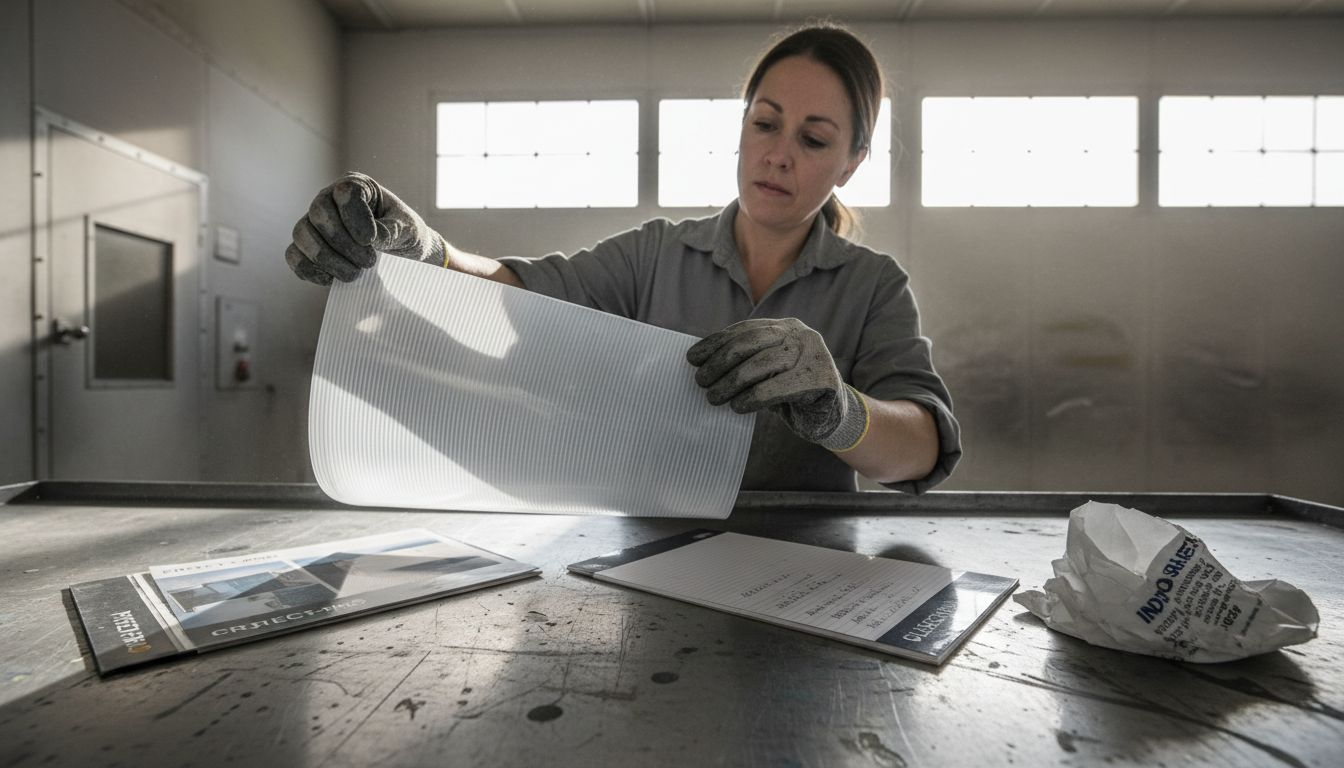
Key material features distinguish high-performance spray booth protectors from standard options. Advanced films incorporate properties like heat resistance, static elimination, and custom sizing capabilities. Some specialized protectors offer quick bubble-free application, enhanced adhesion technologies, and compatibility with diverse painting techniques. Facility managers must evaluate material composition based on specific operational requirements, considering factors such as paint type, surface interactions, environmental conditions, and anticipated traffic levels in the painting workspace.
Pro tip: Evaluate protective material compatibility with your specific painting environment by requesting manufacturer sample testing and conducting small-scale trials before full implementation.
Proper Installation Processes and Lifespan Factors
Proper installation of spray booth protectors requires meticulous preparation and precision to ensure maximum effectiveness and longevity. The process begins with comprehensive surface preparation, which involves thoroughly cleaning and degreasing booth surfaces to create an optimal adhesion environment. Facility managers must carefully inspect surfaces for contaminants, uneven textures, or potential adhesion barriers that could compromise the protective film’s performance.
The installation technique significantly impacts the protective film’s lifespan and functionality. Dust Free Film protective solutions recommend a systematic approach that includes careful alignment, minimal air bubble prevention, and precise tension management. Critical steps involve using specialized application tools, maintaining consistent pressure during installation, and ensuring complete surface coverage without stretching or distorting the protective material. Technicians must work methodically, starting from one edge and progressively smoothing the film to eliminate potential air pockets or misalignments.
Multiple factors influence the lifespan of spray booth protective films, including environmental conditions, painting frequency, and material quality. High-traffic painting environments with frequent use and extreme temperature variations will naturally experience faster film degradation. Facility managers should anticipate replacement intervals based on specific operational conditions, typically ranging from 8-12 weeks for standard applications. Advanced protective films featuring enhanced durability and multi-layer compositions can extend protection periods, providing more consistent performance and reduced maintenance requirements.
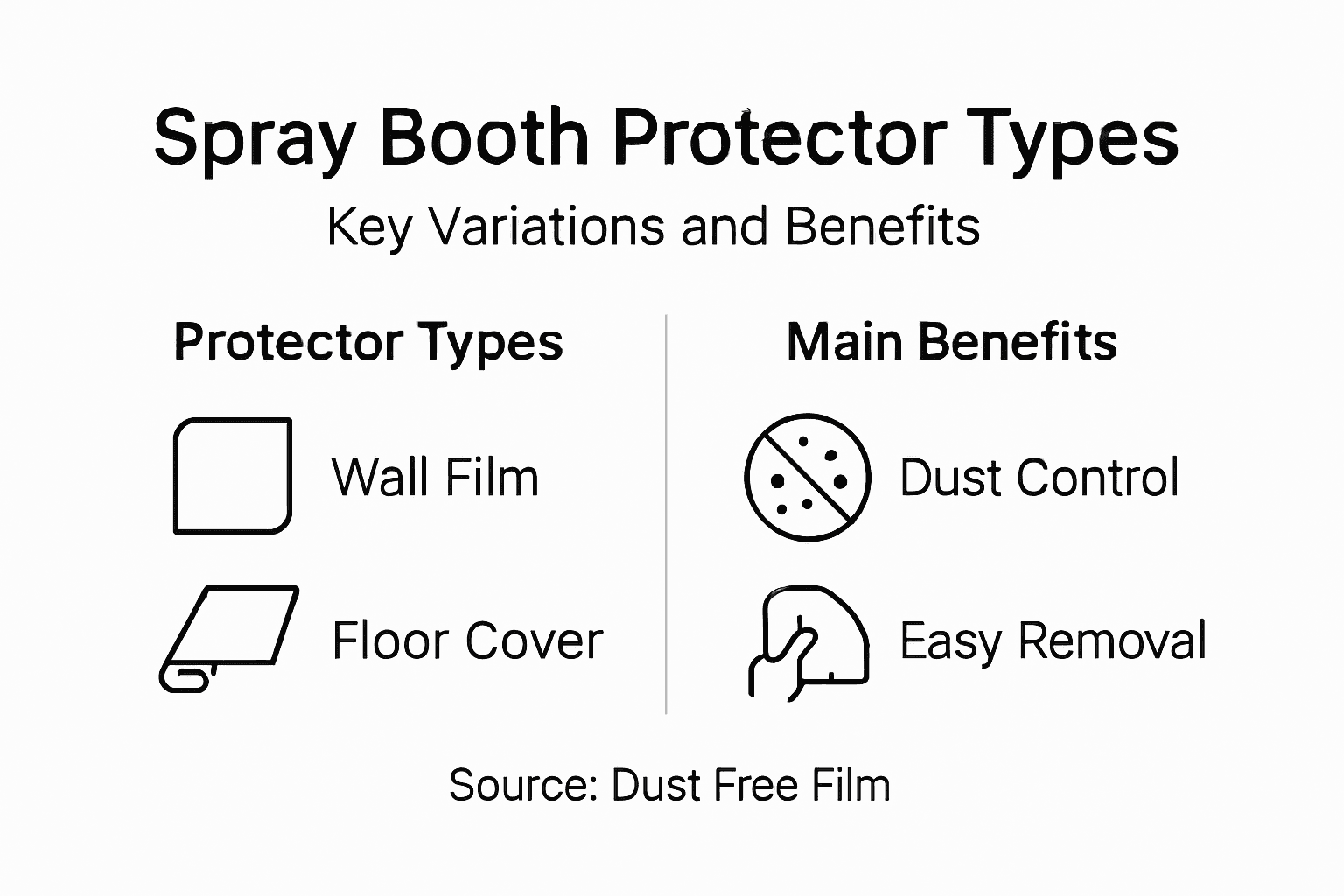
The following table outlines key factors that impact spray booth protector performance and replacement scheduling:
| Factor | Impact on Performance | Influence on Lifespan |
|---|---|---|
| Environmental Conditions | Temperature/humidity effects | Faster wear in extremes |
| Painting Frequency | Increases contaminant buildup | Requires more frequent changes |
| Installation Quality | Ensures full protection | Proper install extends lifespan |
| Material Type | Determines durability features | Advanced materials last longer |
Pro tip: Implement a regular inspection schedule to monitor protective film integrity, checking for signs of wear, adhesion loss, or particulate buildup that could compromise painting environment quality.
Comparing Alternatives and Avoiding Common Mistakes
Selecting the appropriate spray booth protection requires careful evaluation of alternative solutions and understanding potential pitfalls that can compromise painting quality and operational efficiency. Facility managers must critically assess various protection strategies, weighing the unique advantages and limitations of different approaches to ensure optimal performance in their specific painting environments.
Inflatable paint booth alternatives present an interesting option for operations seeking flexibility, but come with significant trade-offs. Traditional fixed booth protectors typically offer superior environmental control, more consistent finish quality, and better long-term durability. Portable solutions like inflatable booths made from PVC or vinyl provide rapid deployment and storage convenience but may lack the precise airflow management and comprehensive protection required for high-quality industrial painting.
Common mistakes in spray booth protection selection often stem from overlooking critical operational requirements. Facility managers frequently err by prioritizing initial cost over long-term performance, selecting cheaper protective materials that deteriorate quickly or fail to provide adequate contamination prevention. Other critical mistakes include neglecting surface preparation, improper installation techniques, and failing to match protective film characteristics to specific painting environment conditions. Successful protection strategies demand a holistic approach that considers paint type, surface interactions, environmental variables, and anticipated operational stress.
Pro tip: Conduct comprehensive performance testing with multiple protective film samples under your exact operational conditions before making a final selection to identify the most suitable solution for your specific painting environment.
Enhance Your Spray Booth Protection With Proven Dust Free Film Solutions
Choosing the right spray booth protectors is essential to control airborne contaminants, ensure a dust-free environment, and maintain top-quality paint finishes. The article highlights challenges like managing overspray, selecting durable films, and ensuring proper installation to maximize lifespan and safety. If you are facing difficulties finding reliable, heat-resistant, and static-free protective films or want to avoid costly mistakes like improper surface preparation or short-lived materials, Dust Free Film offers specialized solutions tailored for your unique industrial painting needs.
Our advanced multi-layer electrostatic booth wall and floor protectors deliver superior dust control and durability for high-traffic automotive and industrial spray booths. Designed with patented application systems for bubble-free installation, our films provide consistent environmental control to improve your workspace safety and paint quality. Learn more about how our Dust Free Film protective solutions can transform your spray booth operations.
Take control of your spray booth environment today to reduce contamination risks and extend protection life.
Explore our premium spray booth protectors now and experience the difference in quality and efficiency. Visit Dust Free Film to discover the best protection options for your shop and get started with a solution trusted by leading automotive body shops and industrial painting facilities worldwide.
Frequently Asked Questions
What are spray booth protectors?
Spray booth protectors are safety systems designed to control hazardous painting environments by capturing overspray, filtering toxic fumes, and minimizing fire risks through engineered ventilation systems.
What are the different types of spray booth protectors?
The primary types of spray booth protectors include wall films, floor coverings, containment systems, and temporary films, each tailored for specific industrial painting challenges and operational needs.
How long do spray booth protectors typically last?
The lifespan of spray booth protectors varies by type: wall films usually last 10-12 weeks, floor coverings 8-12 weeks, and temporary films typically last under 8 weeks, depending on environmental conditions and usage frequency.
What factors affect the performance and lifespan of spray booth protectors?
Key factors include environmental conditions (like temperature and humidity), painting frequency, installation quality, and the type of material used, all of which influence how quickly protectors may need replacement.