
TL;DR:
- A crossdraft spray booth uses horizontal airflow from one end to the other to control painting environments and dust. Proper operation, including correct fan sizing and maintenance, ensures safety and finish quality, especially in industrial coating applications. It is best suited for primer and general work, but requires strict discipline to prevent contamination and safety hazards.
A crossdraft spray booth is an enclosed painting workspace where filtered air flows horizontally from one end of the booth to exhaust filters at the opposite end, maintaining controlled ventilation for spray painting and dust control. The industry standard term is “crossdraft” or “cross-draft” booth, and both refer to the same horizontal airflow design. Regulated under OSHA 29 CFR 1910.94© and NFPA 33, crossdraft booths are the most widely installed booth type in general industrial and automotive primer applications. They cost less to install than downdraft systems because they require no below-grade pit construction. Dustfreefilm has worked with facilities running crossdraft setups since 2012, and the pattern is consistent: the booth design is simple, but the operational details determine whether you get acceptable results or chronic rework.
How does a crossdraft spray booth work in industrial painting?
The crossdraft paint booth operates on a straightforward airflow principle. Filtered supply air enters through a plenum at the front of the booth, travels horizontally across the workpiece, and exits through exhaust filters mounted at the rear wall. The exhaust fan pulls this air through the booth continuously, creating a controlled airstream that carries overspray away from the painter and the work surface.
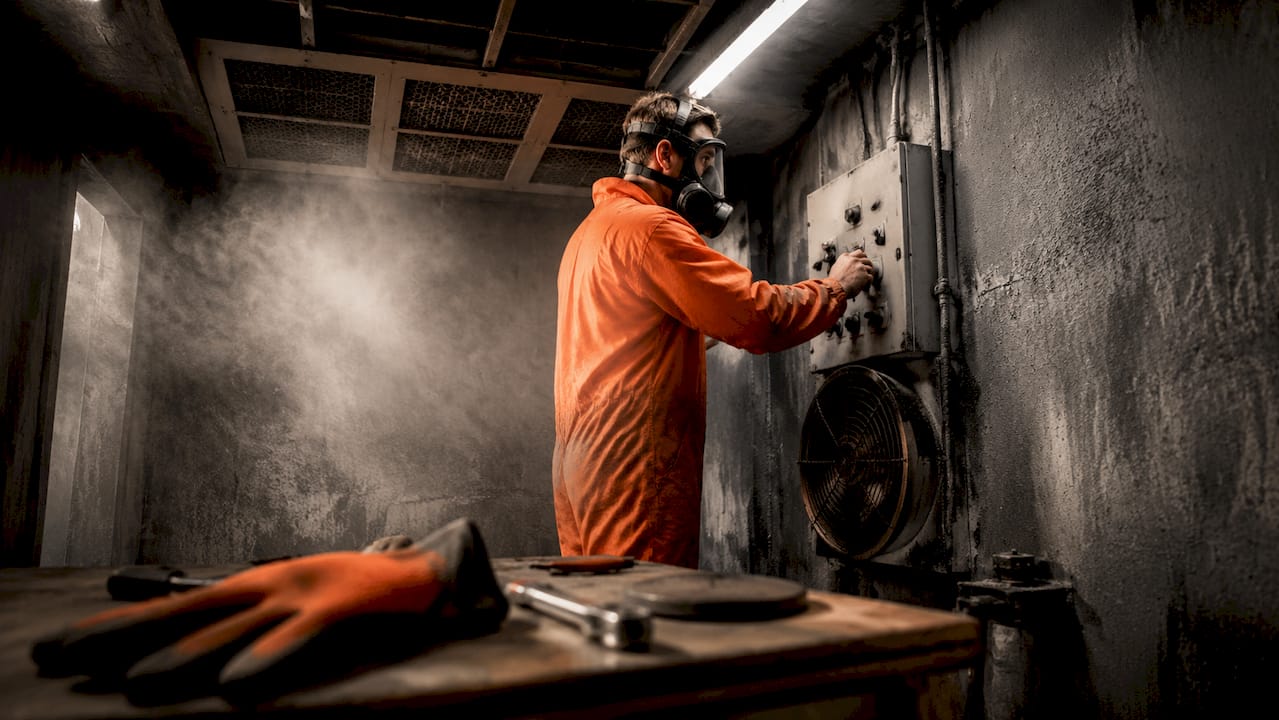
OSHA 29 CFR 1910.94© sets the airflow velocity target at 100 feet per minute at the booth face. That figure is not arbitrary. At 100 FPM, the airstream moves overspray particles fast enough to prevent them from settling on wet surfaces while keeping the painter’s exposure to solvents within safe limits.
The operational sequence in a crossdraft booth follows these steps:
- Supply air enters through intake filters at the front wall or ceiling plenum, removing particulates before air contacts the work area.
- Air travels horizontally across the full length of the booth, passing over and around the workpiece.
- Overspray is captured as the airstream carries paint particles toward the rear exhaust filters.
- Exhaust filters trap overspray before the fan discharges air outside the building.
- The exhaust fan maintains negative pressure inside the booth, preventing contaminated air from escaping into the facility.
The airflow direction is front-to-back, unlike downdraft booths, which push air vertically downward. That distinction directly affects finish quality and worker safety, which is why crossdraft booths occupy a specific niche rather than replacing downdraft systems entirely.
Pro Tip: Size your exhaust fan for the booth’s full cubic footage, not just the rated CFM of the spray gun. An undersized fan is the single most common cause of compliance failures and premature filter clogging in crossdraft installations.
What are the main benefits and limitations of crossdraft spray booths?
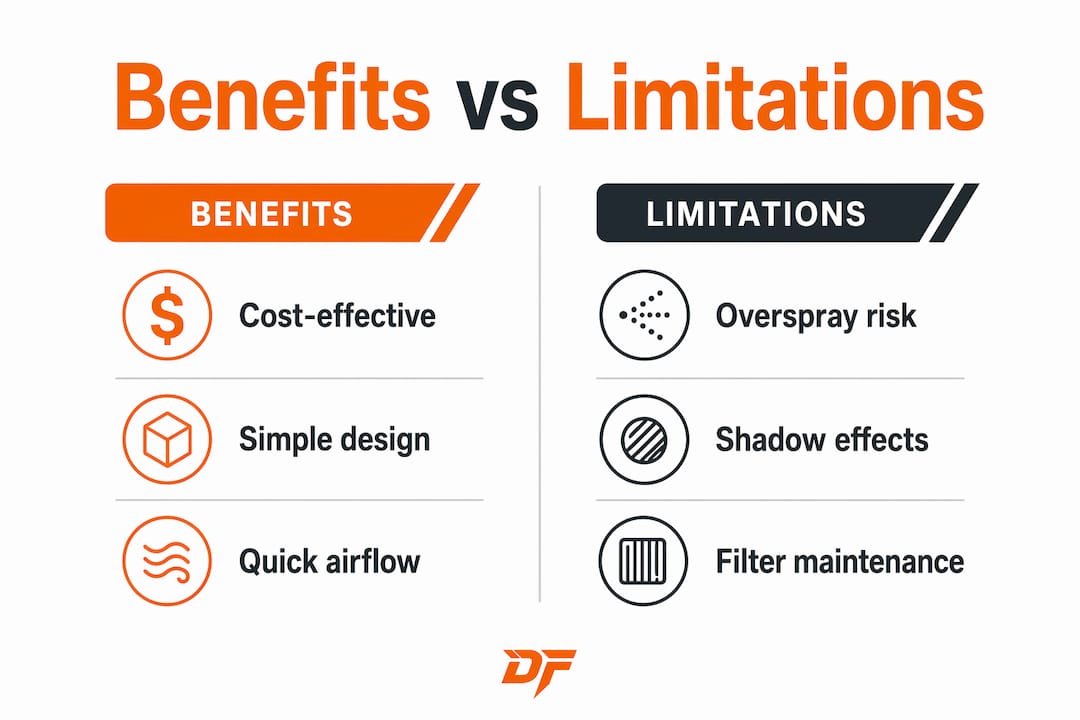
Crossdraft booths deliver real advantages for the right applications. They also carry limitations that facility managers need to understand before committing to the design.
Key advantages
- No pit excavation required. Avoiding below-grade construction cuts installation costs and timelines significantly. Retrofitting an existing building with a crossdraft booth is far simpler than installing a downdraft system that requires floor modifications.
- Lower energy consumption. Crossdraft booths use smaller fans and lower CFM rates than downdraft systems. That translates directly to lower utility costs over the life of the booth.
- Space efficiency. The horizontal airflow design works within standard building footprints. You do not need extra ceiling height or specialized floor drainage.
- Faster commissioning. Simpler mechanical requirements mean shorter lead times from purchase to production-ready operation.
- Cost-effective for primer and general industrial work. Crossdraft booths suit general industrial or primer coating tasks where Class A finish quality is not the primary requirement.
Limitations to plan around
- Moderate finish quality. Overspray travels horizontally across wet surfaces before reaching the exhaust filters. That path creates a real risk of contamination on freshly coated panels.
- Operator exposure. The painter stands in the airstream path. Solvent vapors and overspray particles pass through the breathing zone before exhausting at the rear.
- Sensitivity to part size and placement. Large workpieces can disrupt the horizontal airflow pattern, creating dead zones where overspray settles rather than exhausts.
- Not suited for high-end topcoats. Facilities targeting showroom-quality finishes on automotive topcoats will find the crossdraft design limiting.
Pro Tip: Position the largest surface of the workpiece perpendicular to the airflow direction. This reduces the shadow effect behind the part and keeps overspray moving toward the exhaust filters rather than settling on adjacent surfaces.
What design and safety considerations are critical for effective crossdraft booth operation?
Safe crossdraft booth operation depends on meeting specific ventilation and fire safety standards. The table below summarizes the critical design parameters.
| Design Parameter | Requirement | Regulatory Reference |
|---|---|---|
| Airflow velocity at booth face | 100 FPM minimum | OSHA 29 CFR 1910.94© |
| Flammable vapor concentration | Below 25% of LEL | NFPA 33 |
| Air change rate | 80–120 changes per hour | NFPA 33 / industry standard |
| Exhaust filter efficiency | 95% minimum recommended | Industry best practice |
| Makeup air vs. exhaust balance | Within 10% of exhaust volume | Operational standard |
Mechanical ventilation must keep flammable vapor concentrations below 25% of the Lower Explosive Limit during all spray operations. Crossing that threshold creates an explosion risk. Air change rates of 80–120 per hour are the accepted range for maintaining safe solvent vapor levels in crossdraft configurations.
The exhaust fan is the most consequential component in the system. An undersized fan reduces filter life and causes operational failures that compound over time. Correct fan sizing is not just a performance issue. It is a compliance issue that affects the booth’s operational life over 20 or more years.
Filter maintenance is equally critical. Filters with less than 95% efficiency allow overspray buildup inside ductwork, reducing airflow by up to 30% within six months. That reduction increases fire hazard from accumulated solvent particles and pushes the booth out of regulatory compliance. Staying current on spray booth fire safety practices is non-negotiable for any facility running solvent-based coatings.
Pro Tip: Track filter static pressure differential rather than relying on a calendar-based replacement schedule. When pressure drop across the exhaust filters exceeds the manufacturer’s limit, replace immediately regardless of how recently you last changed them.
Negative pressure inside the booth prevents contaminated air from escaping into the facility. However, mismatched makeup and exhaust volumes create a different problem. Makeup air must match exhaust volume within 10% to prevent the booth from pulling unfiltered air through building gaps, which introduces dust directly onto wet paint surfaces. Compliance tracking for spray booth equipment is a discipline in itself, and resources on compliance in equipment management can help facility managers build structured maintenance and audit programs.
How can facility managers optimize performance in crossdraft spray booths?
Crossdraft booths reward disciplined operations. The design has inherent limitations, but most finish quality problems in crossdraft environments trace back to operational gaps rather than the booth itself.
Practical optimization starts with these priorities:
- Monitor makeup air balance continuously. Do not assume the system is balanced because it was commissioned correctly. Fan performance degrades as filters load. Check the balance monthly and after every filter change.
- Train painters on crossdraft-specific technique. Operator technique and part placement are critical in crossdraft booths. Painters who learned on downdraft systems need specific retraining. The horizontal airflow changes how overspray behaves relative to the gun path.
- Inspect filters on a set schedule. Replace exhaust filters before they restrict airflow. Restricted airflow drops velocity below 100 FPM, which fails OSHA requirements and degrades finish quality simultaneously. A spray booth maintenance checklist keeps these inspections consistent across shifts and operators.
- Control temperature and humidity. Coatings cure within specific environmental windows. Most solvent-based topcoats require temperatures between 65°F and 75°F and relative humidity below 60%. Crossdraft booths with makeup air units that condition incoming air give you control over these variables.
- Sequence production to reduce contamination risk. Schedule primer and sealer work in the crossdraft booth. Reserve higher-quality finishing environments for topcoat applications where Class A results matter. This approach maximizes throughput without forcing the crossdraft design beyond its capability.
- Keep booth walls and floors clean. Overspray accumulates on booth surfaces and becomes a secondary contamination source when it dries and flakes. Dustfreefilm’s multi-layer electrostatic protective films trap overspray on the surface rather than letting it bond to booth walls, making cleanup faster and protecting the booth structure.
Understanding how airflow affects finish quality is the foundation for every optimization decision in a crossdraft environment. More airflow is not always better. Balancing airflow ensures consistent coverage and maintains safety without creating turbulence that scatters overspray unpredictably.
Key Takeaways
A crossdraft spray booth delivers cost-effective, code-compliant ventilation for general industrial painting when facility managers match the design to the right applications and maintain strict operational discipline.
| Point | Details |
|---|---|
| Horizontal airflow defines the design | Air moves front-to-back at 100 FPM per OSHA 29 CFR 1910.94©, carrying overspray to rear exhaust filters. |
| Best suited for primer and general coatings | Crossdraft booths are not designed for Class A topcoat finishes; match the booth type to the coating task. |
| Fan sizing determines compliance | An undersized exhaust fan reduces filter life, drops airflow below safe limits, and creates regulatory exposure. |
| Makeup air balance prevents contamination | Exhaust and makeup air volumes must stay within 10% of each other to avoid pulling unfiltered air into the booth. |
| Filter maintenance is a fire safety issue | Filters below 95% efficiency allow overspray buildup that reduces airflow and increases fire hazard within months. |
The real cost of underestimating crossdraft booth operations
Crossdraft booths get underestimated in both directions. Some facility managers dismiss them as second-rate equipment. Others install them expecting downdraft-level results without downdraft-level discipline. Both positions create problems.
The honest reality is that a well-run crossdraft booth produces consistent, acceptable finishes for the applications it was designed to handle. The failure mode I see most often is not the booth design itself. It is the assumption that simpler installation means simpler operation. The airflow mechanics are straightforward, but the operational variables, including painter positioning, filter condition, makeup air balance, and temperature control, require the same attention you would give any production environment.
Regulatory compliance is where the stakes get real. OSHA 29 CFR 1910.94© and NFPA 33 are not suggestions. A booth running below 100 FPM or above 25% LEL is a liability, not just a quality problem. The facilities that run crossdraft booths well treat compliance as a daily operational discipline, not an annual inspection event.
My advice to facility managers evaluating crossdraft booths: be honest about your finish quality requirements before you commit. If your production mix includes high-end automotive topcoats, a crossdraft booth is the wrong primary finishing environment. If you are running primers, sealers, and general industrial coatings at reasonable volume, a properly maintained crossdraft booth is a sound, cost-effective choice. The key word is “properly maintained.”
— Dust
Dustfreefilm solutions for crossdraft spray booth cleanliness
Crossdraft booths accumulate overspray on walls and floors faster than downdraft systems because the horizontal airflow pushes paint particles directly against booth surfaces. That buildup becomes a contamination source and a fire hazard if left unmanaged.

Dustfreefilm manufactures multi-layer electrostatic protective films specifically designed for spray booth walls and floors. The films trap overspray on the surface layer, which peels away cleanly without leaving residue or damaging the booth structure. The patented dispenser system allows quick, bubble-free installation, so changeover between production runs takes minutes rather than hours. For facilities running crossdraft booths at high volume, Dustfreefilm’s booth protection solutions reduce cleaning time, protect booth surfaces, and support the cleanliness standards that OSHA and NFPA 33 require. Learn more about maintaining dust-free results in your spray booth environment.
FAQ
What is a crossdraft spray booth?
A crossdraft spray booth is an enclosed painting workspace where filtered air enters at one end and exhausts horizontally through filters at the opposite end. It is regulated under OSHA 29 CFR 1910.94© and is the most common booth type for general industrial and primer coating applications.
How does a crossdraft booth differ from a downdraft booth?
A crossdraft booth moves air horizontally from front to back, while a downdraft booth pushes air vertically downward through floor grates. Downdraft systems deliver better finish quality but require pit construction and higher installation costs.
What airflow velocity does a crossdraft spray booth require?
OSHA 29 CFR 1910.94© sets the minimum airflow velocity at 100 feet per minute at the booth face. Falling below this threshold creates both a safety violation and a finish quality problem from inadequate overspray removal.
What are the main limitations of a crossdraft spray booth?
The horizontal airflow path carries overspray across wet surfaces before exhausting, increasing contamination risk on freshly painted panels. Crossdraft booths are not suited for Class A topcoat finishes or high-end automotive refinishing work.
How often should crossdraft booth filters be replaced?
Replace exhaust filters when the static pressure differential across the filter exceeds the manufacturer’s rated limit, regardless of time elapsed. Filters below 95% efficiency allow overspray buildup that can reduce airflow by up to 30% within six months and increase fire hazard from accumulated solvent particles.