

Over 60 percent of paint defects in spray booths are directly linked to airborne dust contamination, frustrating facility maintenance managers everywhere. Clean, controlled environments are non-negotiable for operations focused on achieving flawless finishes, whether in American automotive refinishing shops or European industrial paint lines. This overview sheds light on the core principles of spray booths, showing how smart dust control strategies can directly improve application quality, safety, and efficiency in any region.
Table of Contents
- Spray Booths Defined And Core Concepts
- Types Of Spray Booths For Professional Use
- How Spray Booths Maintain Dust-Free Environments
- Key Features For Efficient And Safe Operation
- Common Mistakes And Essential Maintenance Tips
Key Takeaways
| Point | Details |
|---|---|
| Spray Booth Functionality | Spray booths are essential for controlling hazardous spray materials, ensuring worker safety, and achieving high-quality paint applications. |
| Airflow Configurations | Downdraft, crossdraft, and semi-downdraft booths cater to varying needs, with downdraft providing the best contamination control. |
| Maintenance Importance | Regular cleaning and filter replacements are crucial for optimal performance and quality; neglect can lead to poor finishes and equipment failure. |
| Safety Features | Modern spray booths utilize advanced safety technologies, including multi-sensor systems and automated fire suppression, to enhance operational safety. |
Spray Booths Defined and Core Concepts
A spray booth is a specialized, power-ventilated enclosure engineered to safely contain and control spray painting and coating operations. According to federal regulatory standards, these controlled environments are designed to confine hazardous spray materials by directing vapors, mists, and residues through carefully managed exhaust systems.
At their core, spray booths serve multiple critical functions beyond basic containment. They regulate airflow dynamics, manage potential fire hazards, and create an optimal environment for achieving superior paint application quality. By isolating the painting process, these structures prevent external contaminants like dust, debris, and particulate matter from compromising the finish. Different configurations exist, including waterwash and dry filtration models, each tailored to specific industrial requirements and safety protocols.
The engineering behind spray booths involves sophisticated ventilation systems that maintain precise air pressure gradients. These systems typically incorporate multi-stage filtration mechanisms that capture overspray, filter incoming air, and ensure a clean working environment. Controlled spray booth environments dramatically improve both worker safety and paint application consistency by minimizing external contamination risks and creating stable atmospheric conditions for coating processes.
Pro tip: Regularly inspect and replace your spray booth filters to maintain optimal air quality and prevent potential paint defects during application.
Types of Spray Booths for Professional Use
Spray booths are engineered with distinct configurations to meet diverse industrial requirements, each designed to optimize paint application and environmental control. Spray booth types range from dry filter and waterwash models to sophisticated airflow designs that cater to specific manufacturing needs.
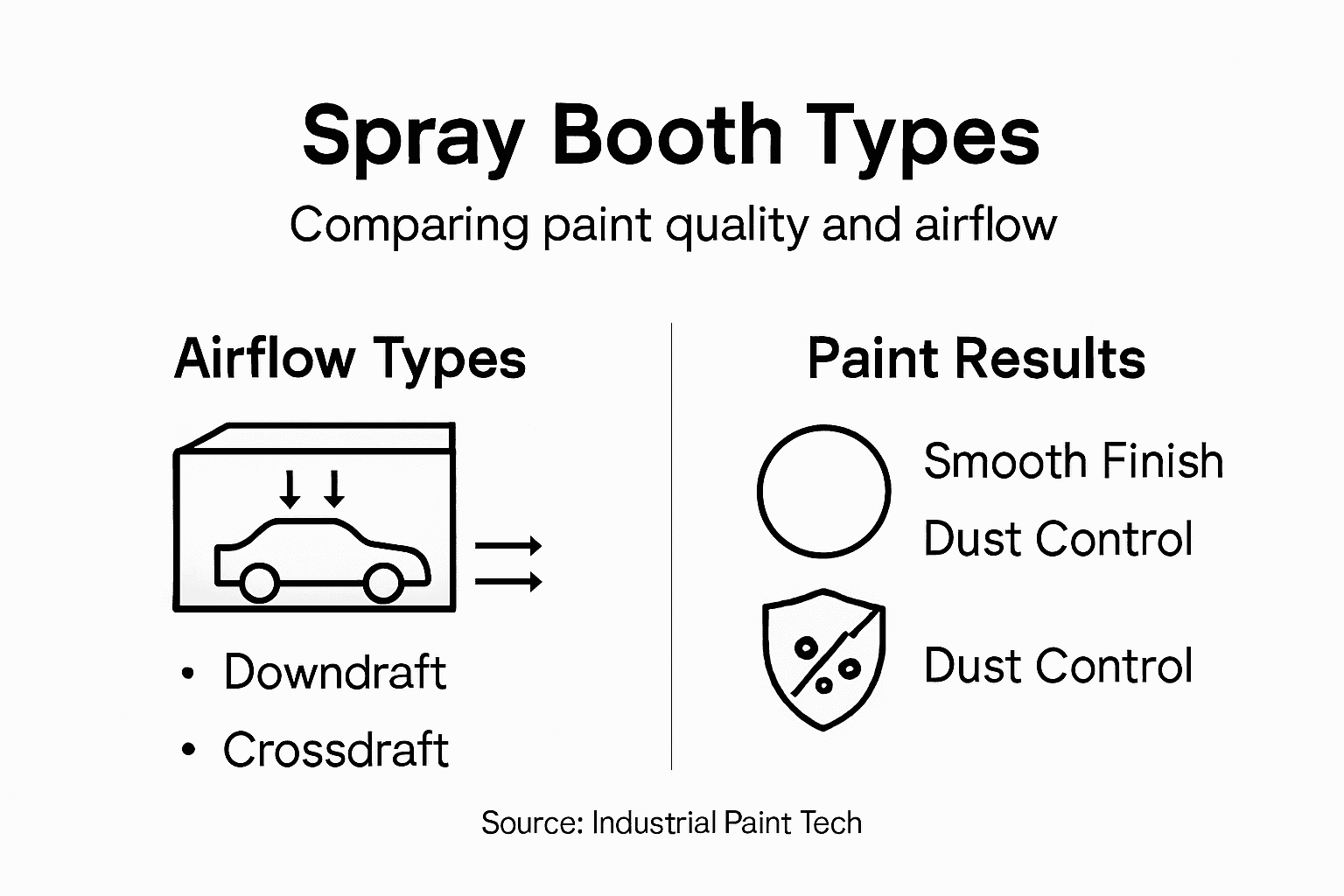
Three primary airflow configurations dominate professional spray booth design: downdraft, crossdraft, and semi-downdraft booths. Downdraft booths provide the most comprehensive contamination control, directing airflow vertically from ceiling to floor, which effectively captures overspray and ensures the cleanest possible painting environment. Crossdraft booths, characterized by horizontal airflow, offer a more economical solution for smaller operations, while semi-downdraft models provide a hybrid approach that balances performance and cost-effectiveness.
Here’s a summary of major spray booth airflow configurations and their strengths:
| Airflow Type | Contamination Control | Application Quality | Ideal Use Case |
|---|---|---|---|
| Downdraft | Very high | Superior | Large, high-volume jobs |
| Crossdraft | Moderate | Consistent | Small-scale operations |
| Semi-Downdraft | Balanced | Good | Flexible production needs |
Professional spray booth categories are further distinguished by their specific industry applications. Industrial spray booths are designed for heavy-duty metal finishing, automotive spray booths feature advanced filtration for vehicle refinishing, and specialized wood finishing booths accommodate intricate furniture coating processes. Each type incorporates unique features like multi-stage filtration systems, precise temperature controls, and customizable dimensions to match specific production requirements.
Pro tip: When selecting a spray booth, consider not just immediate needs but potential future production scalability to ensure long-term operational flexibility.
How Spray Booths Maintain Dust-Free Environments
Maintaining a dust-free environment is critical for achieving superior paint finishes, and spray booths employ sophisticated strategies to minimize contamination. Dust control protocols involve a comprehensive approach that begins with managing potential contamination sources both inside and outside the painting environment.
The first line of defense in dust prevention is the intake filtration system. High-efficiency air filters block microscopic particles like pollen, dust, and other airborne contaminants before they can enter the spray booth. These multi-stage filtration systems work continuously to capture particulates, ensuring that only clean air circulates within the painting area. Extraction filters complement this process by capturing overspray and paint residues, effectively creating a sealed environment that protects the painting surface from external contamination.
Personnel management plays an equally crucial role in maintaining a dust-free environment. Minimizing dust contamination requires strict protocols for operator behavior, including wearing clean protective equipment, limiting unnecessary movement, and following rigorous cleaning schedules. Operators must wear full-face masks and clean overalls, and the booth itself requires regular surface cleaning to prevent dust accumulation. Careful attention to these details ensures that human factors do not compromise the painting environment’s cleanliness.
Pro tip: Implement a daily pre-spray booth cleaning routine and establish a strict personal protective equipment protocol to dramatically reduce potential dust contamination sources.
Key Features for Efficient and Safe Operation
Effective spray booth operations demand sophisticated safety and performance technologies that protect both workers and production quality. Modern safety features integrate advanced sensor systems and automated protection mechanisms to create a comprehensive safety environment that goes beyond basic operational requirements.
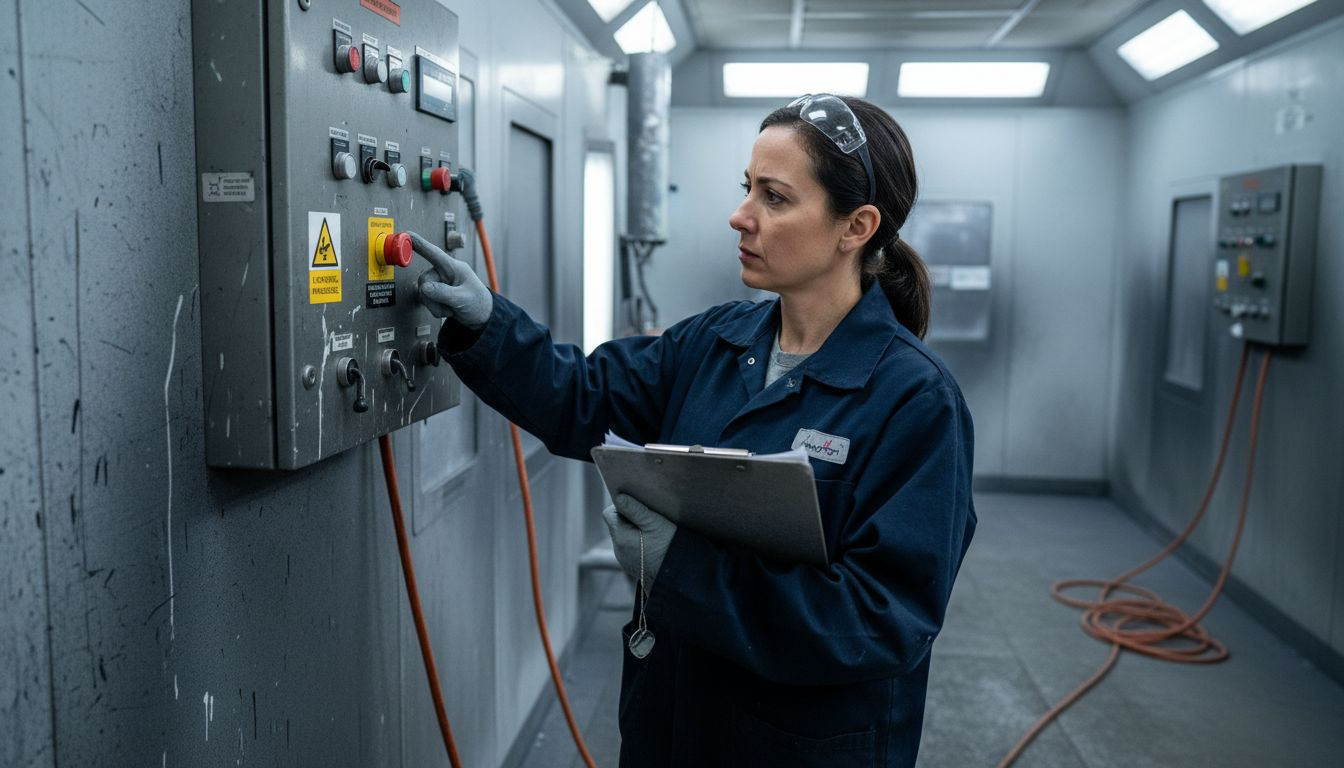
Fire prevention represents a critical component of spray booth safety engineering. Multi-sensor detection systems continuously monitor for potential hazards, utilizing flame, heat, and smoke sensors that can instantly identify dangerous conditions. Automated fire suppression systems stand ready to deploy water, foam, or inert gases, protecting sensitive equipment and preventing catastrophic production interruptions. Ventilation design further enhances safety through explosion-proof fans and specialized ductwork that prevents flammable vapor accumulation, ensuring a controlled and secure painting environment.
Operational efficiency relies on precise environmental control and monitoring technologies. Digital control systems enable real-time parameter adjustments, managing critical factors like temperature, humidity, and airflow to optimize paint application and curing processes. Advanced lighting configurations reduce shadowing, while high-efficiency filtration systems continuously remove airborne contaminants. These integrated technologies not only protect worker health but also ensure consistent, high-quality paint finishes by maintaining ideal application conditions.
Below is a comparison of key safety and efficiency features found in modern spray booths:
| Technology | Primary Function | Operational Benefit |
|---|---|---|
| Multi-sensor systems | Detect fire and hazards | Rapid risk mitigation |
| Automated suppression | Deploy fire protection | Limits production loss |
| Digital controls | Adjust environmental settings | Ensures quality consistency |
| Explosion-proof fans | Prevent vapor buildup | Enhances worker safety |
Pro tip: Implement a quarterly comprehensive safety system audit to ensure all sensors, suppression systems, and environmental controls are functioning at peak performance.
Common Mistakes and Essential Maintenance Tips
Spray booth performance depends on meticulous maintenance and proactive management of potential operational challenges. Maintenance errors can significantly compromise both equipment longevity and paint finish quality, making systematic prevention strategies critical for professional operations.
One of the most frequent mistakes is neglecting regular filter maintenance and cleaning protocols. Intake and exhaust filters require consistent replacement approximately every three months, with careful attention to preventing dust and overspray accumulation. Spray gun and hose connector cleanliness is equally crucial, as residue buildup can cause equipment malfunction and dramatically reduce finish quality. Thorough daily interior cleaning, comprehensive ventilation system inspections, and strict shutdown procedures help mitigate potential fire hazards and maintain optimal air quality.
Operator training plays a pivotal role in preventing maintenance-related issues. Proactive maintenance approaches involve comprehensive staff education on proper cleaning techniques, filter monitoring using manometers, and ensuring electrical components remain free of paint residue. By establishing clear maintenance protocols and providing ongoing training, facilities can significantly reduce human error, extend booth lifespan, and maintain compliance with health and safety regulations.
Pro tip: Create a detailed maintenance checklist with specific timelines and responsibilities, and conduct monthly training refreshers to ensure consistent adherence to best practices.
Enhance Your Spray Booth Performance with Premium Dust Protection
Maintaining a dust-free spray booth environment is essential for achieving high-quality paint finishes and operational safety as highlighted in “What Is a Spray Booth and Its Impact on Paint Quality.” Challenges such as airborne contaminants, filter maintenance, and dust management directly affect paint consistency and worker safety. If you want to overcome these common pain points and ensure your spray booth delivers superior results, advanced dust protection solutions are vital.
At Dust Free Film, we specialize in innovative, multi-layer electrostatic films designed specifically for spray booth walls and floors. Our products help reduce dust accumulation, minimize overspray contamination, and extend filter life. These durable films protect sensitive surfaces in high-traffic industrial settings, complementing the sophisticated ventilation and filtration systems described in the article. By integrating our heat-resistant and static-free protective films, your spray booth can maintain a consistently clean environment, leading to improved paint quality and fewer maintenance interruptions.
Explore how our patented application systems ensure quick, bubble-free installation to streamline your operations. Ready to enhance your spray booth’s dust control and protect your investment? Visit Dust Free Film and discover solutions that help you achieve flawless finishes every time.
Take control of contamination today and elevate your paint quality with trusted spray booth protection.

Discover superior dust protection now at Dust Free Film and experience the difference in your spray booth performance.
Frequently Asked Questions
What is a spray booth?
A spray booth is a specialized enclosure designed to safely contain and control spray painting and coating operations, effectively managing vapors, mists, and hazardous materials through regulated exhaust systems.
How do spray booths improve paint application quality?
Spray booths enhance paint application quality by providing a controlled environment that minimizes external contaminants, such as dust and debris, while regulating airflow dynamics and maintaining stable atmospheric conditions during the painting process.
What types of spray booths are available for professional use?
There are various types of spray booths, including downdraft, crossdraft, and semi-downdraft models, each with its specific airflow configurations designed to optimize contamination control and paint application for specific industrial needs.
Why is regular maintenance of a spray booth important?
Regular maintenance, including filter replacement and equipment cleaning, is crucial for ensuring optimal air quality and preventing potential paint defects, fire hazards, and prolonging the lifespan of the spray booth.