
Many professionals assume all protective films perform identically in spray booths, but this misconception can lead to finish failures and costly downtime. Heat-resistant films differ significantly in thermal stability, dust control capabilities, and durability under spray booth conditions. Understanding these variations is essential for automotive refinishers and industrial painters who demand consistent, dust-free results. This guide clarifies what heat-resistant film truly is, explains key material properties, and helps you select the right protection for your operation.
Table of Contents
- Understanding Heat-Resistant Films: Materials And Thermal Properties
- How Heat-Resistant Films Improve Spray Booth Efficiency And Finish Quality
- Comparing Heat-Resistant Film Options: Performance And Cost Factors
- Best Practices For Applying And Maintaining Heat-Resistant Films In Spray Booths
- Explore Spray Booth Protection Products At Dust Free Film
- Frequently Asked Questions
Key takeaways
| Point | Details |
|---|---|
| Material matters | Polypropylene, ceramic, and polyimide films offer different thermal tolerances and dust protection levels for spray booths. |
| Efficiency gains | Heat-resistant films reduce cleaning downtime by up to 75% while blocking overspray and dust accumulation. |
| Cost vs performance | Film prices vary significantly; ceramic costs roughly 20% less than crystalline options with slightly reduced performance. |
| Application precision | Proper surface preparation and installation techniques maximize film lifespan and adhesion quality in high-heat environments. |
Understanding heat-resistant films: materials and thermal properties
Heat-resistant films are specialized protective barriers engineered to maintain structural integrity and adhesion under elevated temperatures common in spray booth operations. These films serve dual purposes: protecting booth surfaces from paint overspray while withstanding the heat generated during curing and baking processes. The most common materials used in spray booth applications include polypropylene, ceramic composites, and polyimide, each offering distinct thermal performance characteristics.
Polypropylene films provide reliable protection for standard spray booth temperatures, typically handling ranges up to 120°C without degradation. These films work well for automotive refinishing operations where curing temperatures remain moderate. Ceramic-based films incorporate nano-ceramic particles that reflect infrared radiation, offering enhanced heat rejection while maintaining transparency. For extreme temperature environments, polyimide films maintain mechanical properties at temperatures up to 400°C, making them suitable for industrial baking operations and powder coating applications.
Selecting appropriate thermal resistance depends on your specific spray booth configuration and operating temperatures. Standard automotive paint booths with forced air drying systems typically require films rated for 80-120°C, while infrared curing systems may demand materials capable of withstanding 150-200°C. Industrial baking operations often exceed these ranges, necessitating polyimide or specialized high-temperature composites.
“The thermal stability of protective films directly impacts both finish quality and operational safety. Selecting materials that match or exceed your maximum operating temperature prevents film failure, adhesive residue, and potential contamination of painted surfaces.”
Understanding the various types of spray booth films available helps you match material properties to application requirements. Consider these thermal performance factors when evaluating films:
- Maximum continuous operating temperature without degradation or adhesive failure
- Thermal expansion coefficients that affect film tension and adhesion during temperature cycling
- Infrared reflectivity or absorption characteristics impacting heat transfer to protected surfaces
- Static dissipation properties that prevent dust attraction in heated environments
Material selection becomes particularly critical in operations using infrared or convection heating systems, where booth surfaces and protective films experience rapid temperature changes. Films with inadequate thermal ratings may shrink, wrinkle, or release adhesive compounds that contaminate paint finishes.
How heat-resistant films improve spray booth efficiency and finish quality
Heat-resistant films deliver measurable operational benefits beyond basic surface protection. Booth Wrap® 4X High Temp Film reduces standard application downtime by 75% by eliminating the need for frequent booth cleaning and repainting. This efficiency gain translates directly to increased throughput and reduced labor costs in high-volume operations. The films act as sacrificial barriers, capturing overspray and dust particles that would otherwise accumulate on booth walls and floors.
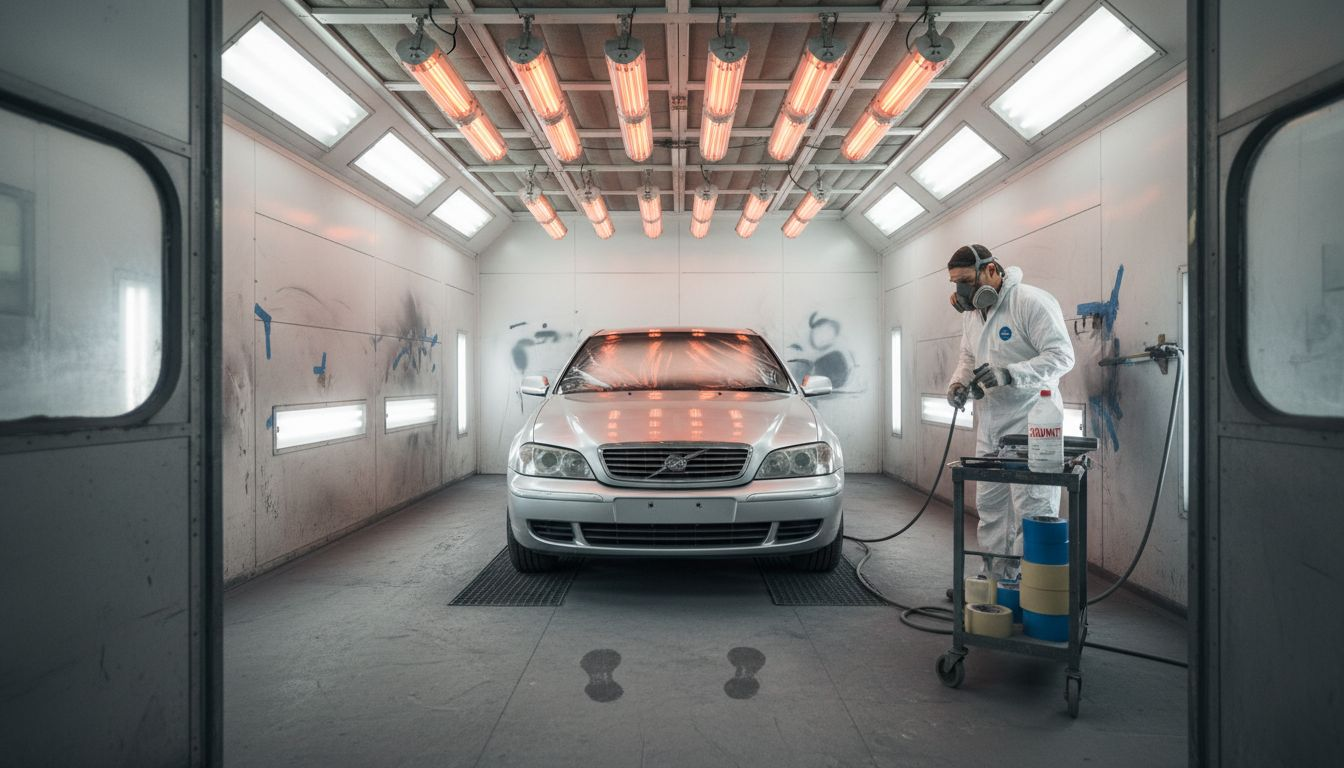
Dust control represents the primary quality advantage of heat-resistant films in spray environments. Unprotected booth surfaces develop texture over time from accumulated overspray and contaminants. When this texture dries and flakes, particles become airborne and embed in wet paint layers, creating defects that require costly rework. Heat-resistant films prevent this contamination cycle by providing smooth, replaceable surfaces that maintain dust-free conditions throughout their service life.
Operational efficiency improvements stem from extended maintenance intervals and simplified booth upkeep. Consider these specific benefits:
- Elimination of chemical stripping and repainting booth walls, saving 4-8 hours per maintenance cycle
- Reduced risk of cross-contamination between different paint colors or coating types
- Maintained booth reflectivity for consistent lighting conditions during application and inspection
- Decreased ventilation system maintenance from reduced airborne particulate load
Finish quality improvements become particularly evident in high-gloss and metallic paint applications where dust contamination is immediately visible. Films designed to protect spray booths for dust-free painting create controlled environments that minimize defect rates and warranty claims. The static-free properties of quality films prevent electrostatic dust attraction, a common issue in dry booth environments.
Pro Tip: Clean booth surfaces thoroughly with isopropyl alcohol before applying heat-resistant films. Any residual dust or oils trapped under the film will create adhesion weak points that can fail under thermal cycling, potentially contaminating subsequent paint jobs.
The benefits of removable protective films extend to simplified booth reconfiguration and seasonal maintenance. Films can be replaced between major jobs or when switching between coating types, ensuring optimal surface conditions for each application. This flexibility proves valuable for shops handling diverse work, from automotive refinishing to industrial equipment coating.
Cost analysis of film protection versus traditional booth maintenance reveals significant long-term savings. While initial film investment may seem substantial, eliminating recurring painting labor and material costs typically generates positive ROI within 3-6 months for active shops. High-volume operations often see payback periods under 60 days.
Comparing heat-resistant film options: performance and cost factors
Selecting the optimal heat-resistant film requires balancing thermal performance, dust control effectiveness, and budget constraints. Three primary film categories dominate spray booth applications, each offering distinct advantages for specific operating conditions. Understanding these differences enables informed decisions that maximize both protection and value.
Polypropylene-based films represent the most economical option, providing adequate thermal resistance for standard automotive refinishing operations. These films typically withstand temperatures up to 120°C and offer excellent overspray protection at competitive price points. Polypropylene films work well for shops using forced air drying systems without infrared or high-temperature baking equipment. Their primary limitation involves reduced infrared heat rejection compared to ceramic or specialty films.
Ceramic composite films incorporate nano-ceramic particles that reflect infrared radiation, offering superior heat management in booths equipped with infrared curing systems. These films reject up to 65% of infrared heat while maintaining high visible light transmission. The improved thermal performance protects booth surfaces more effectively and can reduce cooling costs in facilities using infrared technology. Crystalline costs roughly 20% more than ceramic, creating a cost-benefit calculation based on your specific heating methods and throughput requirements.
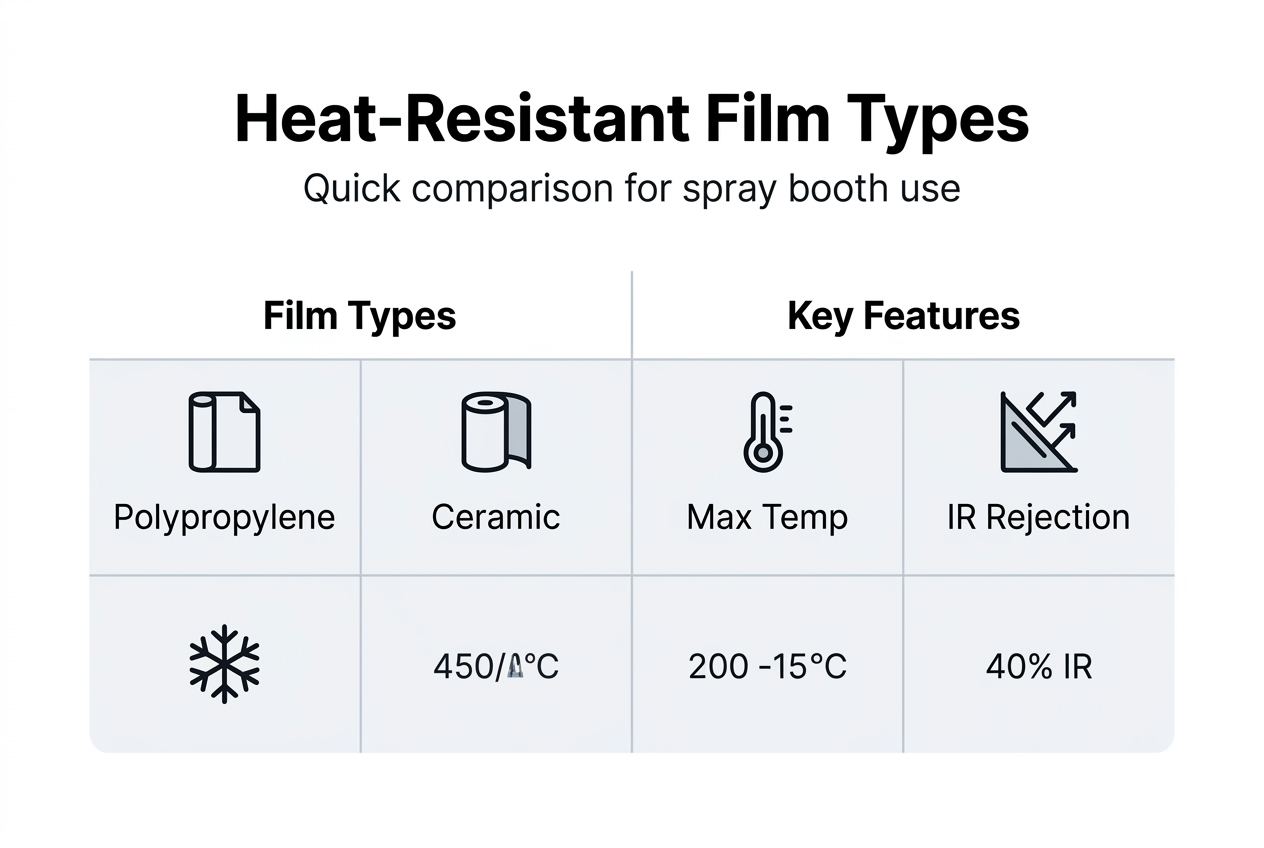
| Film Type | Max Temperature | IR Rejection | Typical Cost | Best Application |
|---|---|---|---|---|
| Polypropylene | 120°C | 25-35% | Baseline | Standard automotive refinishing |
| Ceramic Composite | 180°C | 60-70% | +40-60% | Infrared curing systems |
| Polyimide | 400°C | 45-55% | +200-300% | Industrial baking operations |
| Multi-layer Hybrid | 200°C | 70-80% | +80-120% | High-volume mixed applications |
Polyimide films command premium pricing but deliver unmatched thermal stability for extreme temperature applications. These films maintain structural integrity in industrial powder coating and high-temperature baking environments where other materials would fail catastrophically. The investment makes sense for operations routinely exceeding 200°C or requiring absolute reliability in demanding conditions.
Pro Tip: Calculate your true cost per square foot over the film’s service life, not just the initial purchase price. A film lasting 200 spray cycles at twice the upfront cost delivers better value than one requiring replacement every 80 cycles. Factor in labor time for film changes when comparing options.
Durability differences between film types impact replacement frequency and total cost of ownership. Premium films typically offer:
- Enhanced tear resistance during installation and removal, reducing waste
- Superior adhesive formulations that prevent residue while maintaining hold under thermal stress
- UV stabilizers extending useful life in booths with natural lighting or UV curing equipment
- Multi-layer constructions providing redundant protection if outer layers are damaged
When evaluating best paint booth wall films, consider your specific operational profile. High-volume shops benefit from premium films with extended service life, while lower-volume operations may find economy options provide adequate protection at better initial cost. Match thermal ratings to your maximum operating temperature plus a 20-30% safety margin for unexpected conditions.
Best practices for applying and maintaining heat-resistant films in spray booths
Proper installation technique determines whether heat-resistant films deliver their full protective potential or fail prematurely. Surface preparation represents the critical first step that many operators underestimate. Begin by removing all existing overspray, dust, and contaminants from booth surfaces using appropriate solvents. Any particles trapped between film and substrate create adhesion weak points that expand under thermal cycling.
Follow these installation steps for optimal results:
- Clean surfaces with isopropyl alcohol or approved booth cleaner, working from top to bottom
- Allow surfaces to dry completely; moisture under film causes bubbling and adhesion failure
- Measure and cut film sections with 2-3 inch overlap at seams for continuous protection
- Apply film starting from one edge, using a squeegee to eliminate air bubbles progressively
- Overlap seams by minimum 2 inches to prevent overspray penetration at joints
- Press firmly along edges and corners where thermal stress concentrates
Temperature during installation affects film adhesion and positioning. Apply films when booth temperature is between 15-25°C for optimal adhesive activation. Cold temperatures reduce adhesive tack, making installation difficult and potentially compromising bond strength. Excessive heat can cause premature adhesive activation, making repositioning impossible.
Maintenance practices extend film service life and preserve protective effectiveness. Inspect films regularly for damage, focusing on high-traffic areas and zones near heating elements. Small tears or lifted edges should be repaired immediately with patch sections to prevent contamination migration under the film. Remove and replace films before they show signs of thermal degradation, such as discoloration, brittleness, or adhesive weeping.
Common installation pitfalls to avoid include:
- Applying film over dirty or oily surfaces that prevent proper adhesion
- Stretching film during installation, which creates tension that fails under heat
- Leaving gaps or inadequate overlap at seams where overspray can penetrate
- Using incompatible cleaning chemicals that degrade film or adhesive properties
Proper surface preparation and film application are crucial for optimal performance, as confirmed by protective coatings industry standards. Following manufacturer specifications for your specific film product ensures compatibility with booth materials and operating conditions.
Pro Tip: Mark film installation dates on each section with permanent marker. This simple practice helps you track service life, identify high-wear zones requiring more frequent replacement, and optimize your film replacement schedule based on actual performance data rather than estimates.
Film removal technique impacts both booth surface preservation and worker safety. Peel films slowly at a 45-90 degree angle to minimize adhesive residue. If residue remains, use manufacturer-recommended solvents rather than aggressive chemicals that may damage booth surfaces. Dispose of used films according to local regulations, as they may contain paint residues classified as hazardous waste in some jurisdictions.
For comprehensive guidance on booth configuration and film integration, consult the spray booth setup guide covering complete system optimization. Proper film application represents just one component of maintaining dust-free painting environments, but it delivers disproportionate impact on finish quality and operational efficiency.
Explore spray booth protection products at Dust Free Film
Achieving consistent, dust-free finishes requires more than technique alone; it demands professional-grade protective films engineered specifically for spray booth environments. Dust Free Film offers comprehensive spray booth protection products designed to meet the demanding requirements of automotive refinishing and industrial painting operations. Our solutions combine heat resistance, dust control, and operational efficiency in products refined through over a decade of industry experience.
Our specialized spray booth wall protector film features multi-layer construction with electrostatic properties that actively repel dust particles while withstanding high-temperature curing processes. The patented dispenser system enables bubble-free installation in minutes, reducing setup time and ensuring consistent coverage across all booth surfaces. Whether you operate a single-bay refinishing shop or manage multi-booth industrial facilities, our flexible product configurations and bulk purchasing options support operations of any scale. Request a quote for spray booth films tailored to your specific booth dimensions, temperature requirements, and throughput demands.
Frequently asked questions
What is heat-resistant film?
Heat-resistant film is a protective barrier material engineered to maintain structural integrity and adhesion when exposed to elevated temperatures in spray booth environments. These films protect booth surfaces from overspray and dust while withstanding temperatures ranging from 120°C for standard applications to 400°C for extreme industrial baking operations. They combine thermal stability with dust control properties to maintain finish quality.
Why does heat resistance matter in spray booths?
Spray booths use forced air, infrared, or convection heating systems that expose protective films to sustained elevated temperatures during paint curing. Films without adequate thermal resistance will shrink, wrinkle, or release adhesive compounds that contaminate painted surfaces, causing defects and costly rework. Heat-resistant films maintain dimensional stability and adhesion throughout temperature cycling, preventing booth surface degradation and maintaining dust-free conditions essential for quality finishes.
What are the main differences between polypropylene, ceramic, and polyimide films?
Polypropylene films handle temperatures up to 120°C and provide economical protection for standard automotive refinishing operations. Ceramic composite films incorporate nano-ceramic particles that reflect up to 70% of infrared radiation, offering superior thermal management for booths with infrared curing systems at moderate price premiums. Polyimide films withstand extreme temperatures exceeding 400°C, making them essential for industrial baking and powder coating applications despite their significantly higher cost.
How do I choose the right heat-resistant film for my spray booth?
Match the film’s maximum temperature rating to your booth’s highest operating temperature plus a 20-30% safety margin. Consider your heating method: forced air systems typically need films rated for 120°C, infrared curing requires ceramic films rated for 180°C, and industrial baking demands polyimide films. Evaluate cost per use over the film’s service life rather than initial price alone. High-volume operations benefit from premium films with extended durability, while lower-volume shops may find economy options adequate.
How often should heat-resistant films be replaced in spray booths?
Replacement frequency depends on booth usage intensity, operating temperatures, and film quality. High-volume automotive shops typically replace films every 100-200 spray cycles or when visible damage occurs. Industrial operations with higher temperatures may need more frequent replacement every 60-100 cycles. Monitor films for signs of thermal degradation including discoloration, brittleness, or lifted edges. Replace films before they show significant wear to prevent contamination of painted surfaces.
Can heat-resistant films reduce spray booth maintenance costs?
Yes, heat-resistant films eliminate the need for frequent booth repainting and chemical stripping, reducing standard maintenance downtime by up to 75%. They prevent overspray buildup that requires 4-8 hours of labor to remove through traditional methods. Films maintain booth cleanliness and reflectivity, reducing defect rates and warranty claims while extending intervals between major maintenance procedures. Most active shops achieve positive ROI within 3-6 months of implementing film protection systems.