
TL;DR:
- Premium booth protection uses multi-layer, self-adhesive films to shield surfaces from overspray, dust, and damage. White films improve defect detection and light reflectivity, especially in high-end refinishing. Proper installation and material choice extend booth lifespan, enhance paint quality, and reduce maintenance costs.
Premium booth protection is a multi-layer, self-adhesive film or peelable coating system designed to shield spray booth surfaces from overspray, dust, and chemical damage. For automotive refinishing and industrial painting operations, this protection is a functional requirement, not an optional upgrade. Products like the BAXT LAYERSHIELD WP10 and 3M Booth Coating represent the category’s two main approaches: peelable film systems and liquid coatings. Understanding what is premium booth protection, how these systems work, and which materials suit your operation directly affects paint quality, maintenance costs, and equipment lifespan.
What is premium booth protection and how does it work?
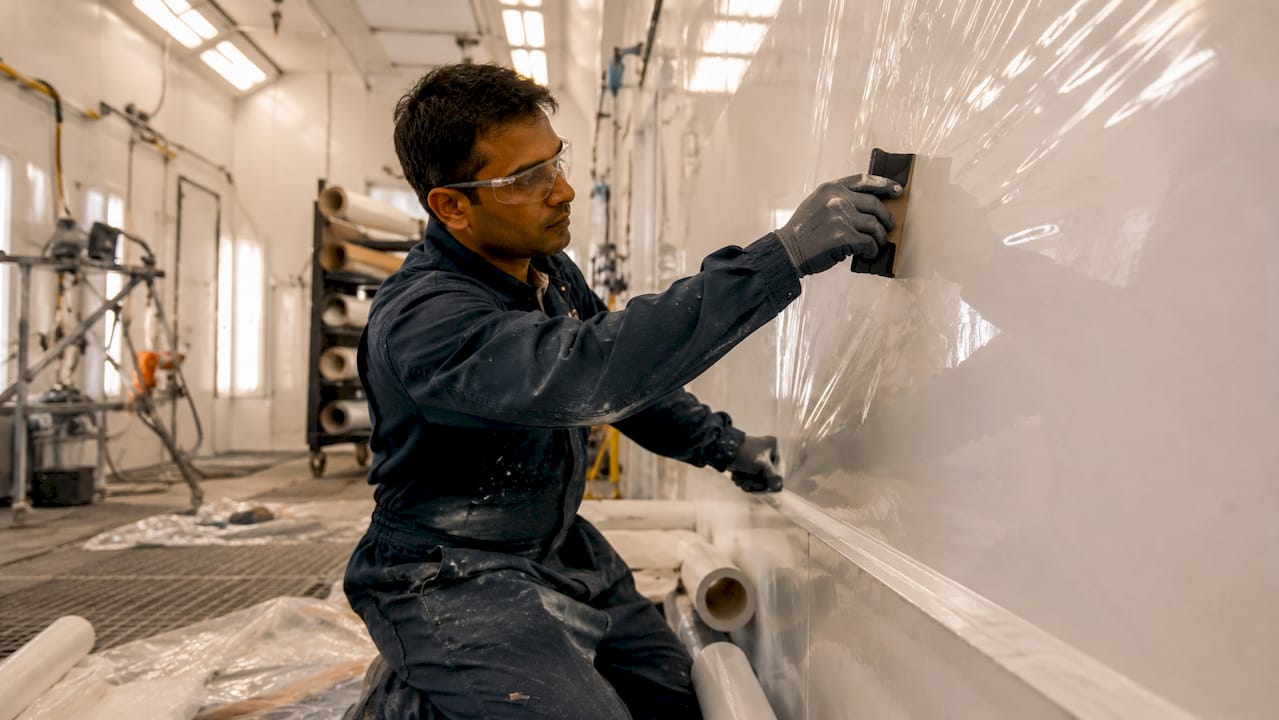
Premium booth protection is defined as a multi-layer protective film system applied to booth walls and floors to create a renewable, contamination-resistant surface. Each film layer acts as a fresh barrier. When one layer accumulates overspray or debris, the technician peels it away to reveal a clean surface underneath. This peel-and-refresh cycle eliminates the need for solvent scrubbing between jobs.
The technology behind premium systems goes beyond simple plastic sheeting. Key functional features include:
- Static charging: Statically charged films act like magnets for airborne dust and paint particles, actively pulling contaminants toward the wall surface and away from the vehicle being painted.
- Multi-layer construction: A single roll contains multiple bonded layers. Peeling one layer takes seconds and restores surface cleanliness without tools or chemicals.
- Tape-free installation: Premium films use pressure-sensitive adhesive backing. Multi-layer tape-free systems reduce manual taping labor and lower heat loss, cutting operational costs.
- Insulating properties: The film layers add a thermal barrier to booth walls, reducing heat loss during bake cycles and lowering energy consumption.
Pro Tip: Apply film to walls before installing floor protection. Overspray from wall application can contaminate a freshly laid floor film, forcing a premature layer peel.
How do premium booth protection materials compare?
Not all booth protection materials deliver the same results. The choice between film types, colors, and formats has direct consequences for paint quality and maintenance frequency.
Clear vs. white protective films
Color is the most underrated specification in booth protection. White protective films maximize light reflectivity and help technicians detect subtle paint defects, including orange peel texture and fish-eye patterns, far more reliably than clear films. Clear films are adequate for general overspray containment but fall short in high-end refinishing environments where color accuracy and defect detection are critical. Experienced painters working on premium vehicles consistently prefer white films for this reason.
Multi-layer films vs. liquid peelable coatings
| Feature | Multi-layer films | Liquid peelable coatings |
|---|---|---|
| Application method | Pressure-sensitive adhesive roll | Sprayed or brushed on |
| Refresh speed | Seconds per layer peel | Hours of drying time |
| Wall lifespan | Up to 12 months | Typically shorter |
| Floor lifespan | 60–90 days between replacements | Variable |
| Heat resistance | Up to 200°F for floor films | Product-dependent |
| Non-slip surface | Yes (floor-specific films) | Rarely |
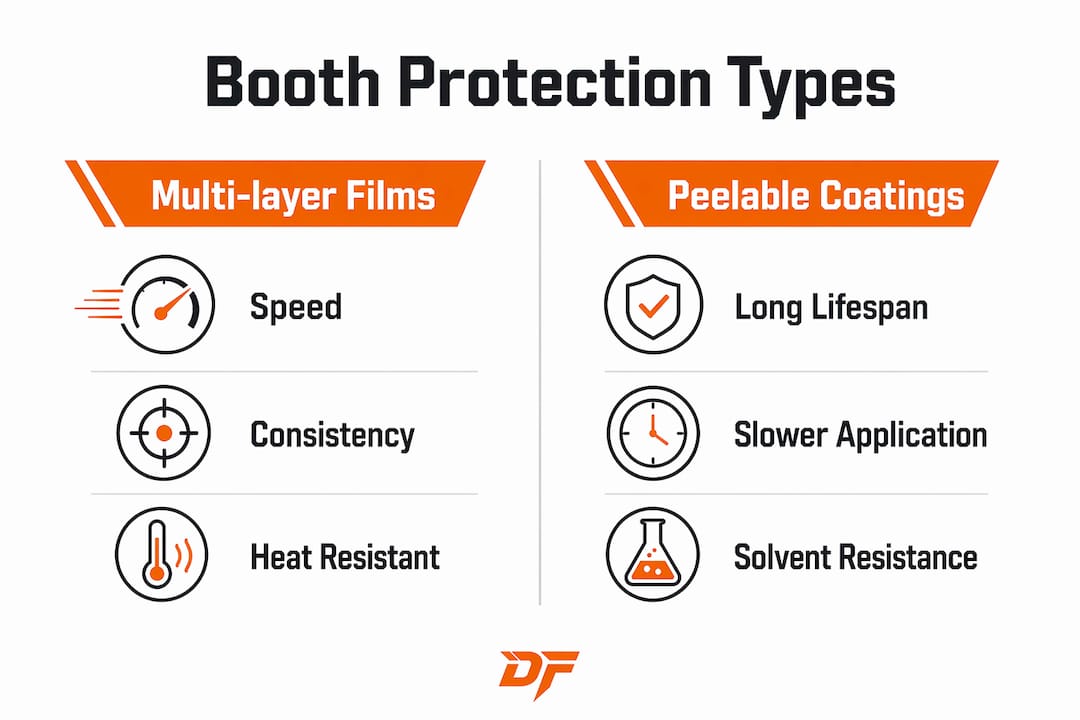
Multi-layer films win on speed and consistency. Floor films rated to 200°F with non-slip surfaces are the only practical choice for high-throughput shops running multiple bake cycles daily. Liquid coatings can work in lower-volume settings but introduce drying downtime that film systems eliminate entirely.
Pro Tip: For floor protection in industrial painting facilities, choose films with a textured, non-slip surface. Smooth films become hazardous when wet with solvent or water during cleaning.
The lifespan difference matters operationally. Wall films lasting up to 12 months mean a single installation covers a full production year. That reduces the total number of shutdown periods for maintenance and keeps the booth generating revenue.
Booth wall protectors vs. floor protectors
Booth wall protectors and floor protectors share the same multi-layer concept but differ in material thickness and surface treatment. Floor films carry heavier gauge material to withstand foot traffic, rolling equipment, and vehicle positioning. Wall films prioritize static charge retention and light reflectivity. Running the same film on both surfaces is a false economy. Dustfreefilm manufactures distinct wall and floor products for this reason, with each film engineered for its specific load and environmental conditions.
How to select and install premium booth protection correctly
Selecting the right film is only half the job. Incorrect installation causes premature failure and can introduce the contamination the film was meant to prevent.
-
Degrease all surfaces before application. Removing wax, silicone, and oils before laying film is the single most critical preparation step. Residual contamination breaks adhesive contact and causes edge curling within days. Use a dedicated panel wipe or isopropyl alcohol solution on every surface.
-
Work from top to bottom on walls. Start at the ceiling line and work downward. This prevents air pockets from forming under the film and ensures gravity assists adhesion rather than working against it.
-
Trim precisely around windows, lights, and vents. Precision cutting near airflow zones prevents peeling during drying cycles. Use a razor-sharp blade and cut slightly away from the edge of fixtures, not flush against them. A flush cut leaves no film margin to hold against airflow pressure.
-
Overlap seams by at least 2 inches. Gaps between film panels create channels where overspray can reach the underlying booth surface. Overlapping seams closes those channels and maintains a continuous protective barrier.
-
Establish a replacement schedule based on operation intensity. High-volume shops running three or more vehicles per day should plan floor film replacement every 60 days. Wall films can run up to 12 months in most operations, but inspect edges monthly for lifting or contamination ingress.
-
Document installation dates. Mark the installation date on a corner of each film panel with a paint marker. This removes guesswork from replacement scheduling and gives new technicians a clear reference point.
Proper installation also means accounting for the booth’s airflow pattern. Booths with cross-draft airflow create different pressure zones than downdraft designs. Film edges facing the primary airflow direction need the most secure adhesion and the most careful trimming.
What are the operational benefits of booth wall protection?
Booth protection is a capital investment safeguard, not a consumable expense. The distinction matters for how shop managers justify the cost.
“Protective films reduce labor-intensive solvent cleaning and prevent chemical damage to booth surfaces, extending equipment life significantly.” — Paint Booth Protective Film: Why It’s Essential For Your Floor And Walls
The operational benefits stack across multiple categories:
- Paint quality: Cleaner booth surfaces reflect more light, improving color matching accuracy. Protective films maintain lighting reflectivity critical for detecting defects before a vehicle leaves the booth.
- Reduced rework: Fewer dust inclusions and contamination events mean fewer sand-and-buff cycles. Each rework event costs labor time and materials. Eliminating even two rework jobs per month produces measurable savings.
- Equipment longevity: Chemical exposure degrades booth panels over time. Films form a resilient barrier that absorbs solvent contact instead of the booth structure itself.
- Technician morale: A clean, well-lit booth is a better working environment. Technicians working in maintained booths report higher confidence in their output and spend less time on pre-job cleaning.
- Throughput: Faster surface refresh between jobs means shorter turnaround times. Peeling a layer takes under a minute. Solvent cleaning takes 20 minutes or more.
Dustfreefilm’s multi-layer wall and floor systems are built around this throughput logic. The patented dispenser system allows quick, bubble-free installation, which means less time setting up and more time painting. For shops running on tight scheduling, that difference compounds across hundreds of jobs per year.
Key Takeaways
Premium booth protection is the most direct investment a spray booth operation can make to protect paint quality, reduce maintenance costs, and extend equipment life simultaneously.
| Point | Details |
|---|---|
| Definition of booth protection | Multi-layer, self-adhesive films or peelable coatings that shield booth surfaces from overspray and contaminants. |
| Static charging advantage | Charged films actively attract dust particles, reducing contamination in active spray zones. |
| White films outperform clear | White films improve light reflectivity and defect detection for high-end refinishing work. |
| Surface prep is non-negotiable | Degreasing before installation prevents adhesive failure, edge curling, and contamination ingress. |
| Operational ROI is measurable | Faster layer refresh, fewer rework events, and reduced solvent cleaning produce direct cost savings. |
What I’ve learned after years of watching shops get this wrong
Most shops that struggle with paint quality are not struggling with their spray guns or their paint. They are struggling with their booth environment. I have seen operations invest heavily in premium coatings and then apply them in booths with contaminated walls and floors that undermine every job. The booth is the controlled environment. If the environment is not controlled, nothing else compensates for it.
The shift I find most significant in recent years is the move away from liquid peelable coatings toward multi-layer film systems. Liquid coatings were the standard for a long time, and they work. But the drying time between applications is a real operational cost that shops often undercount. A film system that refreshes in seconds versus a coating that needs hours to cure is not a marginal improvement. It changes how a shop schedules its day.
I also think the industry undervalues white films. Clear films look cleaner on the roll and feel like the obvious choice. But in practice, white films catch defects that clear films miss. Any shop doing high-end work, custom finishes, or fleet refinishing should be running white wall films as a baseline. The defect detection alone justifies the choice.
The next evolution I expect to see is thinner films with higher static charge retention, reducing material waste per peel cycle while maintaining contamination capture performance. Dustfreefilm’s direction toward European manufacturing standards and patented dispensing systems points toward that kind of precision engineering.
— Dust
Dustfreefilm’s booth protection solutions for spray booths
Dustfreefilm has specialized in spray booth protection films since 2012, building a product line specifically for the demands of automotive refinishing and industrial painting operations.
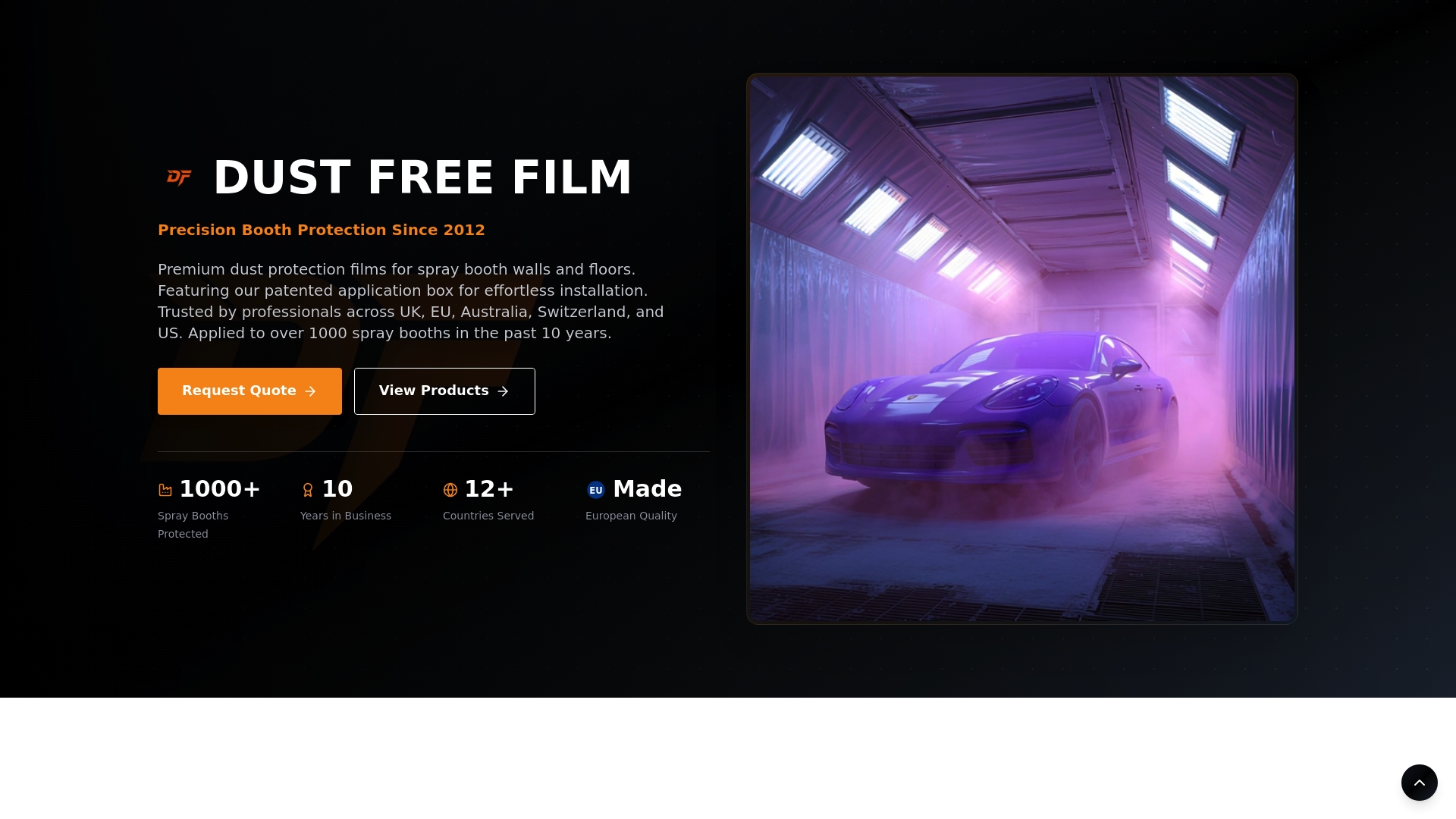
Their multi-layer wall and floor protection films combine static-charging technology, heat resistance, and tape-free installation into a single system. The patented dispenser allows quick, bubble-free application, cutting setup time on every job. Whether you run a single-bay auto body shop or a high-volume industrial facility, Dustfreefilm offers spray booth protection films in configurations that match your operation’s scale and intensity. Custom configurations and bulk purchasing options are available for large-scale facilities. Explore the full range of wall and floor protection solutions at Dustfreefilm to find the right fit for your booth.
FAQ
What is booth wall protection made of?
Booth wall protection is made from multi-layer, self-adhesive plastic films with static-charging properties. Products like the BAXT LAYERSHIELD WP10 use five bonded layers that peel away individually to refresh the surface.
How long does premium booth protection last?
Wall films last up to 12 months in most operations. Floor films require replacement every 60–90 days due to heavier foot and equipment traffic.
Why use premium booth protection instead of basic plastic sheeting?
Premium systems provide static charging, multi-layer refresh capability, and heat resistance up to 200°F. Basic plastic sheeting offers none of these features and requires full replacement rather than a quick layer peel.
What are booth wall protectors used for?
Booth wall protectors shield booth surfaces from overspray, dust accumulation, and solvent damage. They also maintain light reflectivity, which is critical for accurate color matching during paint application.
How do you choose the right booth protection film?
Choose white films for high-end refinishing work where defect detection matters. Choose floor-specific films with non-slip surfaces and high heat ratings for any booth running regular bake cycles.