

TL;DR:
- Worn floor coatings in spray booths lead to contamination, safety hazards, and increased repair costs. Protective films and proper coating selection extend floor life, improve paint quality, and reduce downtime. Regular inspections and timely film replacement prevent costly deterioration and maintain regulatory compliance.
Worn floor coatings are one of the most overlooked causes of failed paint jobs in industrial and automotive spray booths. When a coating degrades, it stops acting as a barrier. Dust, overspray residue, and chemical contaminants work into the exposed concrete, become airborne during spraying, and land on wet paint. The result is rework, downtime, and repair costs that dwarf what proper floor protection would have cost. Here is what every booth operator needs to know.
Why floor coating wear matters at a glance:
- Worn coatings release dust and particles that contaminate fresh paint finishes
- Degraded surfaces absorb overspray, making cleaning harder and more expensive
- Reduced light reflectivity from dirty floors impairs color matching accuracy
- Slip hazards increase when coatings break down in wet overspray zones
- Neglected floors trigger regulatory compliance issues and liability exposure
- Protective films like those from Dustfreefilm intercept contamination before it reaches the base coating
What floor coatings actually do inside a spray booth
Floor coatings serve as engineered barriers protecting concrete from moisture, abrasion, and chemicals, and that function directly shapes how clean and efficient your booth operates. Bare or degraded concrete is porous. It absorbs paint solvents, traps dust, and releases particles into the air column every time someone walks across it. A properly coated floor seals those pores, giving you a surface you can actually clean.
Safety is the other function operators underestimate. Non-slip surfaces reduce accident risk in wet overspray conditions, where a standard concrete floor becomes genuinely dangerous. Beyond traction, a smooth coated surface reflects light back into the booth, which matters for color accuracy during spraying.
Core functions of a healthy booth floor coating:
- Seals concrete against solvent and moisture penetration
- Provides a cleanable, non-porous surface that resists overspray bonding
- Delivers anti-slip traction in wet conditions
- Reflects ambient light to support accurate color matching
- Supports regulatory compliance for workplace safety standards
What causes floor coating wear in spray environments
Wear in spray booths comes from three directions at once: mechanical, chemical, and thermal. Understanding each one tells you where to focus your protection strategy.
| Wear Type | Primary Cause | Effect on Coating |
|---|---|---|
| Mechanical abrasion | Foot traffic, carts, equipment wheels | Surface scratches, thinning, exposed concrete |
| Chemical attack | Paint overspray, solvents, cleaning agents | Softening, discoloration, delamination |
| Thermal stress | Heat cycles during curing, moisture vapor | Cracking, blistering, peeling |
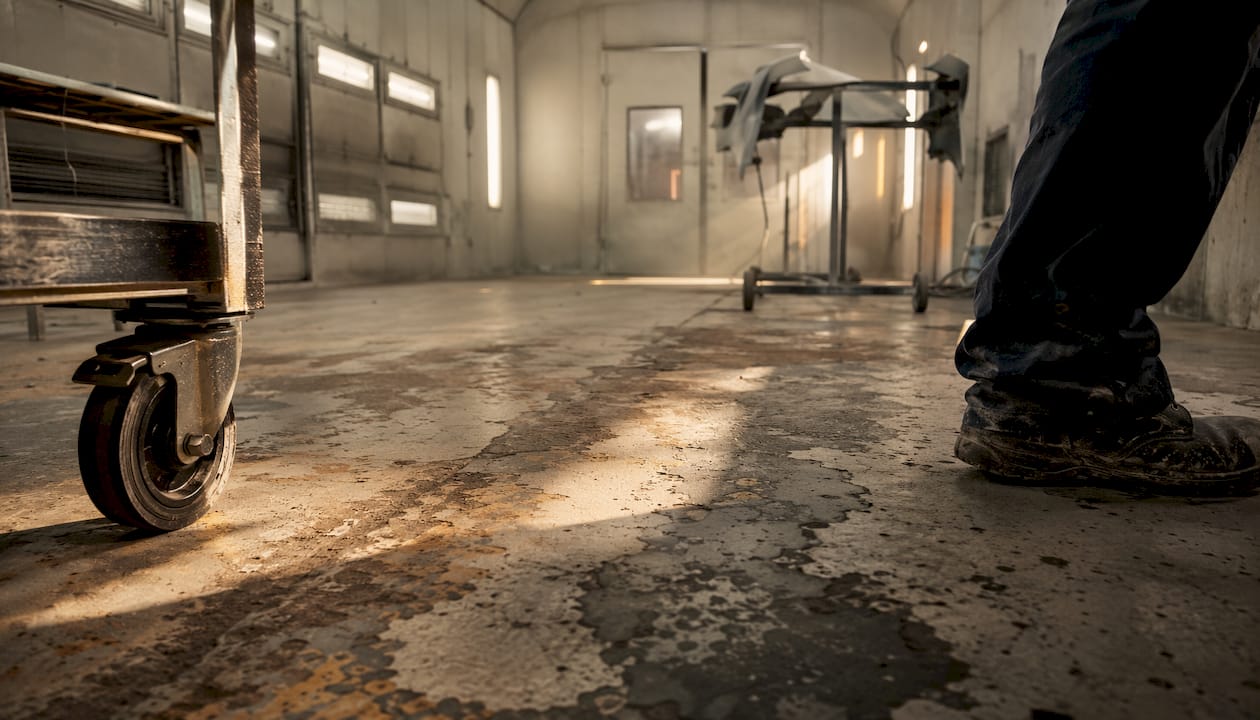
High-traffic booth zones degrade floor coatings within months without protective strategies, creating porous contamination traps. The area directly in front of the vehicle takes the worst mechanical beating, while solvent-heavy cleaning compounds attack the chemistry of the coating itself over repeated applications.
Coating chemistry mismatch accelerates all three wear types. Selecting coating systems based only on upfront cost, without accounting for chemical exposure and traffic patterns, leads to premature failures. An epoxy system that performs well in a light-duty shop can fail quickly in a high-volume automotive refinishing operation running aggressive solvent cleaners daily.
Moisture vapor transmission is a failure mode most operators do not see coming. Concrete slabs transmit moisture from below, and coatings that cannot tolerate that vapor pressure blister and delaminate from the substrate up. By the time you see bubbling at the surface, the bond has already broken across a wide area.
How worn coatings damage paint quality and operations
Coated floors improve lighting reflectivity and maintain workspace brightness essential for paint quality. When overspray builds on a degraded floor, that reflectivity drops, shadows increase, and color matching becomes unreliable. A painter working under dimmed conditions from contaminated surfaces will miss defects that only show up under proper light.
Dust and particle contamination follow directly from wear. Once the coating surface breaks down, concrete dust and embedded overspray particles become mobile. They go airborne during normal booth activity and settle on wet paint, producing fish-eyes, nibs, and texture defects that require sanding and recoating.
Neglecting floor coating wear results in economic burdens from repairs, lost productivity, and regulatory non-compliance. Frequent deep cleaning sessions, professional restoration services, and unplanned booth downtime all carry real dollar costs. Regulatory exposure adds another layer: OSHA and EPA standards for industrial workplaces require safe, maintainable floor surfaces, and a visibly degraded booth floor can trigger citations during inspections.
Best practices for protecting and maintaining booth floor coatings
The most effective protection strategy combines the right base coating with a sacrificial film layer on top. Protective films reduce cleaning frequency and labor compared to chemical cleaning that fails to restore worn surfaces. Instead of scrubbing hardened overspray off your coating, you peel and replace the film in minutes.
Dustfreefilm’s floor protection films are built specifically for this environment. They are heat-resistant up to 200°F, static-free to avoid attracting dust, and designed for quick installation without bubbles or adhesive residue. For high-volume operations running multiple jobs daily, spray booth floor protection is the single fastest way to cut cleaning time and protect the base coating from accelerated wear.
Pro Tip: Match your base coating chemistry to your actual chemical exposure before adding film protection. Polyurethane and polyaspartic systems handle solvent-heavy environments better than standard epoxy alone. Film protection extends the life of any base coating, but it cannot compensate for a mismatched system underneath.
For coating selection, matching chemistry to booth demands means evaluating traffic volume, solvent types, moisture conditions, and how much downtime you can tolerate for curing. Epoxy suits standard operations; polyaspartic cuts return-to-service time to 24–48 hours for facilities that cannot afford extended shutdowns.
Key protective methods:
- Apply a sacrificial protective film over your base coating in high-traffic zones
- Replace film regularly depending on spray volume, or sooner when buildup is visible
- Use pH-neutral cleaners on coated surfaces to avoid chemical degradation
- Address chips, scratches, and wear spots before they spread to adjacent areas
- Conduct proper surface preparation including moisture testing before any recoating work
How often should you inspect and replace booth floor coatings?
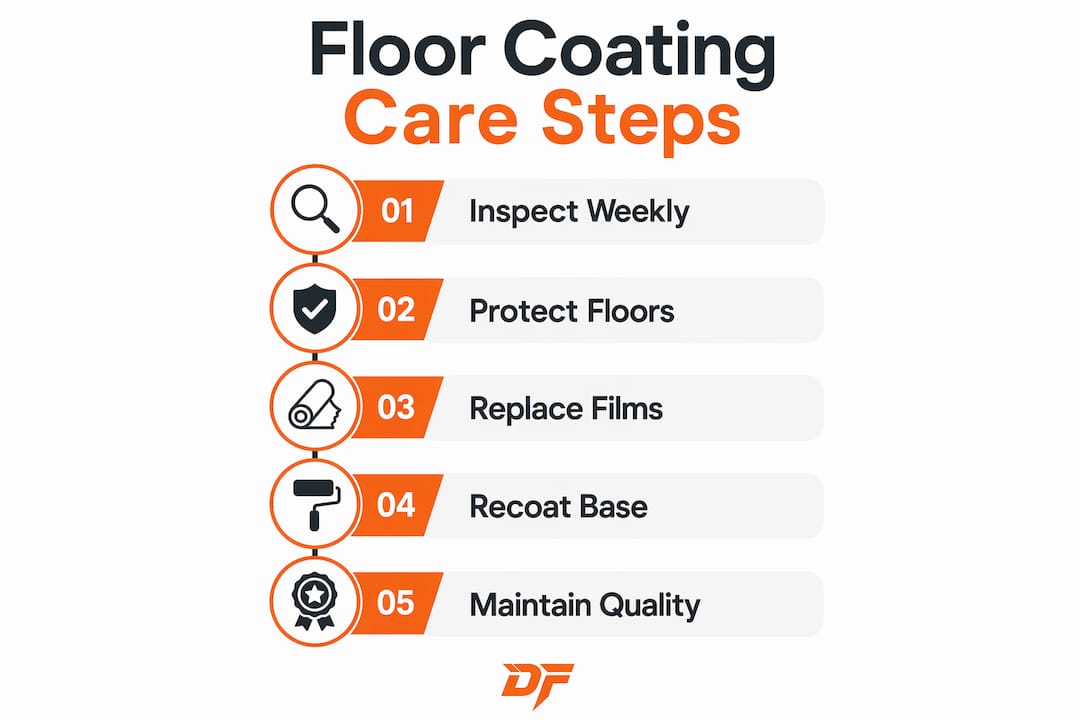
A practical inspection schedule for active spray booths runs on two tracks: a quick visual check every week and a thorough hands-on inspection monthly. Weekly checks catch obvious issues: visible wear patches, peeling film edges, or overspray buildup that signals the film needs replacement. Monthly inspections go deeper, checking for soft spots, delamination at seams, and any areas where the base coating has thinned.
For protective films specifically, most operations replace floor film every 60–90 days under normal spray volumes. High-volume shops running multiple vehicles daily may need more frequent replacement of the protective film. A proactive maintenance schedule with regular inspection, prompt damage repair, and timely film replacement substantially extends floor lifespan and keeps paint quality consistent.
Base coating recoating cycles depend on traffic and chemistry. A well-specified epoxy system in a properly maintained booth, with film protection in place, can last many years before requiring full recoating.
What happens when booth operators skip floor maintenance
A high-volume auto body shop running three to four vehicles daily without floor film protection typically sees visible coating degradation within three to four months in the staging and spray zones. Overspray bonds to the exposed concrete, cleaning becomes progressively harder, and the shop eventually faces a choice between expensive professional restoration or a full recoat. Either option means booth downtime measured in days, not hours.
The paint quality impact shows up first in customer complaints about texture defects, particularly on horizontal surfaces like hoods and roofs where airborne particles settle most readily. Rework on a single vehicle can consume more labor hours than a full season of film replacement would have cost.
Facilities that skip industrial floor slab maintenance also face structural consequences over time. Solvent penetration into unprotected concrete weakens the slab surface, accelerating cracking and spalling that eventually require structural repair rather than just a fresh coating.
How to choose the right floor coating for your booth environment
Coating selection comes down to four variables: traffic intensity, chemical exposure, moisture conditions, and acceptable downtime for installation or recoating.
| Booth Environment | Recommended Coating | Key Reason |
|---|---|---|
| Light-duty, low solvent exposure | Standard epoxy | Cost-effective, strong adhesion |
| High-volume automotive refinishing | Polyurethane or polyaspartic topcoat | Solvent resistance, faster cure |
| Facilities with moisture vapor issues | Moisture-mitigated epoxy system | Prevents delamination |
| Operations needing fast return to service | Polyaspartic | 24–48 hour cure window |
Choosing floor coatings based only on upfront cost leads to premature failures and frequent repairs that cost far more over time. A properly specified system designed for your actual traffic and chemical load should last ten years or longer with routine maintenance and film protection in place.
For operators running multiple floor protection options, layering a durable base coating with a replaceable film on top gives you the best of both: long-term structural protection from the coating and day-to-day contamination control from the film.
Key Takeaways
Floor coating wear in spray booths directly degrades paint quality, increases cleaning costs, and creates safety and compliance risks that compound over time without a proactive protection strategy.
| Point | Details |
|---|---|
| Wear creates contamination | Degraded coatings release dust and overspray particles that land on wet paint and cause defects. |
| Light reflectivity suffers | Overspray buildup on worn floors dims the booth, impairing color matching accuracy. |
| Film protection cuts labor | Replacing protective film every 60–90 days costs far less than chemical deep cleaning or surface restoration. |
| Chemistry matching matters | Polyurethane and polyaspartic systems outperform standard epoxy in high-solvent, high-traffic booth environments. |
| Inspection prevents escalation | Weekly visual checks and monthly hands-on inspections catch wear before it reaches the base concrete. |
Dustfreefilm’s multi-layer floor and wall protection films are engineered for exactly the conditions described above: heat resistance up to 200°F, static-free adhesion, and a patented dispenser system that makes installation fast enough to do between jobs. If your booth floor is showing wear, the fix does not have to mean days of downtime.