

Every operations manager knows that even a small amount of dust or paint overspray can ruin a carefully prepared finish in your spray booth. The right approach to floor protection in spray booths makes all the difference, not only for paint quality but also for minimizing downtime and reducing safety risks. By establishing a clean, controlled environment with professional protection systems, you support consistent results, easier compliance with workplace safety regulations, and a more efficient workflow for your team.
Table of Contents
- Floor Protection In Spray Booths Defined
- Types Of Floor Protection Solutions Available
- How Protective Films And Coverings Work
- Impact On Paint Quality And Contamination Control
- Safety, Legal, And Compliance Considerations
- Comparing Costs And Common Mistakes To Avoid
Key Takeaways
| Point | Details |
|---|---|
| Importance of Floor Protection | Proper floor protection in spray booths is vital for maintaining contamination control and ensuring high paint quality. It reduces the likelihood of rework and associated costs due to dust and paint overspray. |
| Types of Solutions | Various floor protection options exist, including adhesive-backed films and permanent coatings, each suited for different operational needs and budgets. Selecting the right type can significantly impact performance and efficiency. |
| Compliance and Safety | Implementing effective floor protection meets safety and regulatory requirements, reducing risks related to fire hazards and chemical exposure. Proper documentation of these measures supports compliance during audits. |
| Cost Considerations | While investing in professional-grade floor protection may seem higher initially, it results in significant savings over time by minimizing rework and maintenance costs. Calculating total cost ownership is essential for informed decisions. |
Floor protection in spray booths defined
Floor protection in spray booths refers to specialized coverings or protective systems applied to the floor surface within a spray painting environment to prevent contamination, dust accumulation, and paint overspray from affecting your work quality. These protective barriers create a controlled, clean environment where dust and debris cannot settle on freshly painted surfaces, a critical factor that directly impacts the final finish quality of automotive and industrial coating applications. Essentially, floor protection acts as the foundation of your spray booth’s contamination control strategy, working alongside wall protection systems to maintain the sterile conditions your precision paint applications demand.
Floor protection takes several forms depending on your operational needs and booth specifications. The most common approach involves multi-layer protective films that can be quickly installed over existing flooring without requiring permanent alterations to your facility. These spray booth floor protection options typically feature adhesive backing systems that allow for bubble-free application, electrostatic properties to minimize dust attraction, and heat resistance capabilities to withstand the temperature fluctuations common in active spray environments. Unlike temporary plastic sheeting or basic vinyl coverings, professional-grade floor protection incorporates specialized materials designed to remain stable during high-traffic operations, preventing wrinkles, tears, or lifting that would compromise your contamination control effectiveness.
What distinguishes true floor protection from generic floor coverings is the engineering behind it. Your booth floor experiences constant foot traffic, equipment movement, solvent exposure, and temperature variations that require protective systems engineered for industrial durability rather than basic dust blocking. Professional floor protection combines static-dissipative properties to prevent electrostatic discharge that could ignite volatile paint vapors, adhesion systems that secure the protective layer without leaving residue, and material thickness that resists punctures from tool drops or cart wheels. This combination ensures your floor protection investment performs consistently throughout its operational life without creating new contamination sources or safety hazards.
The practical benefit for your operation centers on reducing rework rates and material waste. When floor protection fails, dust particles migrate upward during the spray application process, embedding themselves in wet paint and forcing you to sand, repair, and respray affected panels. This directly translates to increased labor costs, extended project timelines, and reduced throughput capacity in your booth. Effective floor protection eliminates this costly cycle by preventing dust migration at its source, allowing your team to maintain consistent spray schedules and quality standards that customers expect.
Pro tip: Install your floor protection before introducing any equipment or materials into the booth, and ensure the adhesive backing bonds completely to your floor surface within the first 24 hours to prevent edge lifting during high-traffic periods.
Types of floor protection solutions available
Your spray booth floor protection options range from basic temporary coverings to engineered multi-layer systems designed for industrial durability. Understanding the differences between these solutions helps you select the right approach for your facility’s specific operational demands, paint application volume, and budget constraints. Not all floor protection performs equally, and choosing the wrong system can compromise contamination control or create unexpected maintenance issues that disrupt your production schedule.
The most common floor protection categories include adhesive-backed protective films, roll-applied protective barriers, and specialty coatings designed for permanent floor treatment. Adhesive-backed films represent the most flexible option for operations that require frequent booth reconfiguration or temporary protection during specific projects. These systems attach directly to your existing flooring and can be removed without permanent damage, making them ideal for facilities managing multiple spray stations with varying protection needs. Spray booth floor protectors with multi-layer construction provide superior dust blocking compared to single-layer alternatives, incorporating electrostatic dissipation properties that prevent charge buildup while maintaining aggressive adhesion to prevent edge lifting during heavy traffic periods.
Roll-applied protective barriers work well for larger facilities where you need rapid coverage of expansive floor areas without seams that could trap dust. These systems typically come in wider formats that reduce installation time and create fewer potential contamination points compared to sheet-based solutions. Permanent floor coatings represent a different category altogether, offering long-term protection but requiring professional installation and extended downtime during application and curing. The trade-off with permanent solutions involves higher upfront investment and inability to modify your booth configuration without recoating affected areas. Many operations managers combine multiple protection types, using permanent flooring in high-traffic access zones while deploying temporary adhesive films within the spray chamber itself, creating layered contamination control that adapts to operational changes.
Temperature resistance and static-dissipative properties distinguish industrial-grade floor protection from basic plastic sheeting commonly found in hardware stores. Your spray booth environment generates heat from air circulation systems, equipment operation, and exothermic chemical reactions during paint curing. Basic plastic coverings can shrink, warp, or release volatile compounds when exposed to sustained heat, compromising their protective function. Professional floor protection systems maintain structural integrity across temperature ranges of 40 to 140 degrees Fahrenheit, with some specialized formulations handling even higher extremes. Static control becomes critical in automotive and industrial applications where flammable paint vapors create ignition hazards if electrostatic discharge occurs near wet paint surfaces.
Here’s a quick comparison of popular spray booth floor protection types and their suitable applications:
| Protection Type | Best For | Lifespan | Notable Advantage |
|---|---|---|---|
| Adhesive-backed films | Temporary setups | 8-12 weeks | Fast installation, easy removal |
| Roll-applied barriers | Large facilities | 6-10 weeks | Seamless coverage, rapid use |
| Permanent floor coatings | Continuous operations | Several years | High durability, low upkeep |
Pro tip: Match your floor protection solution to your spray application schedule by using temporary adhesive films for seasonal or project-based work, and investing in permanent coatings for high-volume continuous operations where floor access occurs multiple times daily.
How protective films and coverings work
Protective films and coverings operate on a deceptively simple principle: they create a removable barrier between your spray booth surfaces and the contamination generated during paint application. When you activate your spray gun, paint particles, dust, and overspray don’t vanish into thin air. They travel through the booth environment and settle on whatever surface they encounter first. Without protection, that surface is your expensive flooring or walls. With protection in place, those contaminants land on the film instead, leaving your actual booth infrastructure clean and uncontaminated.
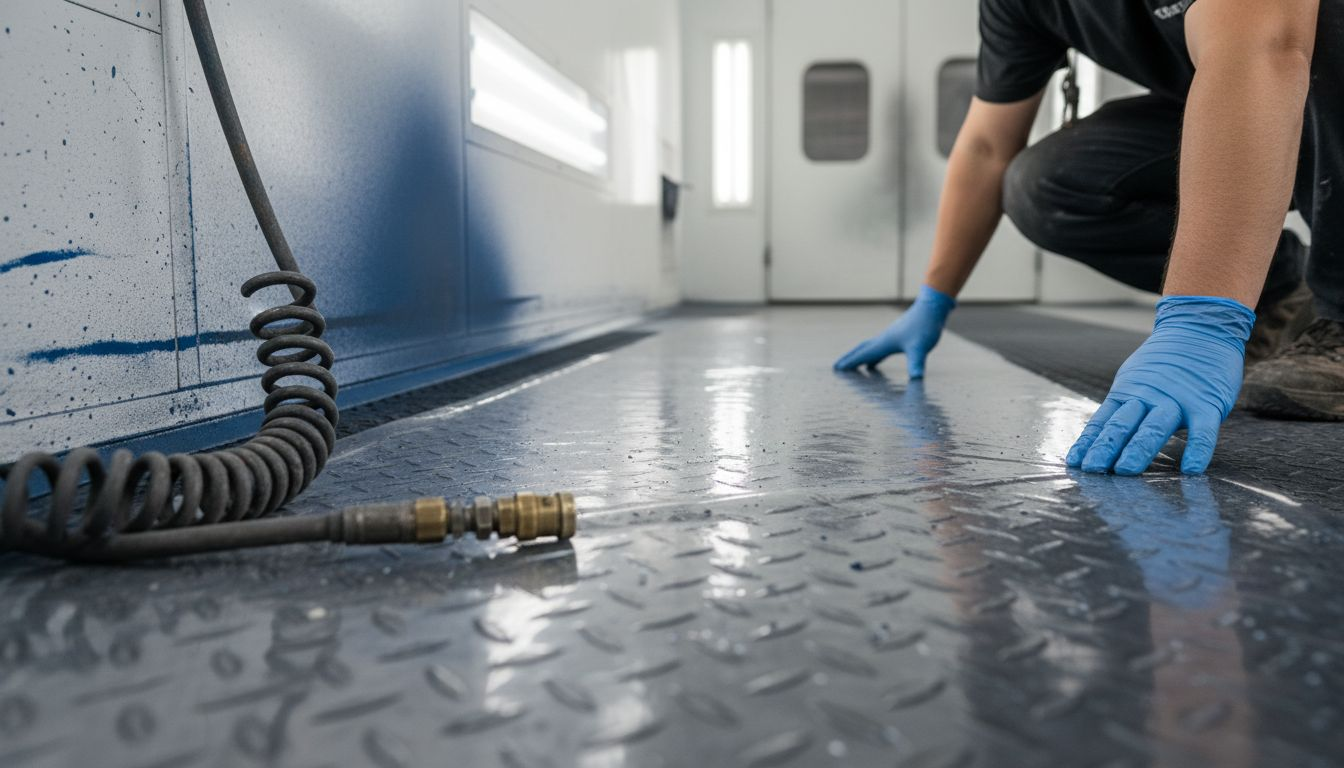
The mechanics behind effective floor protection involve multiple layers working in concert. The bottom layer features a pressure-sensitive adhesive that bonds to your floor surface without leaving residue when removed. This adhesive must be aggressive enough to hold firm during foot traffic and equipment movement, yet release cleanly without damaging the underlying flooring material. The middle layers provide the bulk of the protective function, trapping dust particles and paint overspray on their surface through electrostatic attraction and mechanical adhesion. Protective films ensuring dust-free spray booths incorporate multi-layer construction specifically designed to handle the abuse of active spray environments. The top layer remains smooth and non-tacky, preventing paint from bonding permanently to the film while still capturing particles that land on it. This design allows you to easily peel away contaminated protection and reveal clean flooring underneath.
Temperature dynamics play a critical role in how well floor protection performs during your spray operations. As your booth air circulation system heats the environment and spray guns create localized temperature spikes, protective films must expand and contract uniformly without warping, shrinking, or releasing volatile compounds. Professional-grade protective films maintain dimensional stability across the temperature ranges typical in active spray booths, preserving their adhesive properties and barrier function throughout extended work sessions. Basic plastic sheeting fails because it lacks this thermal engineering, shrinking away from floor edges and creating gaps where dust can migrate underneath.
The removal process represents the practical payoff of proper protective film design. When your spray session concludes, you simply peel away the contaminated film and dispose of it, taking all the trapped dust and overspray with it. This eliminates the need for extensive floor cleaning with solvents or pressure washing, reducing your chemical exposure and downtime between projects. The underlying flooring remains pristine because contamination never contacted it directly. For operations managers running tight production schedules, this efficiency gain translates directly to increased throughput capacity and reduced labor costs per project.
Pro tip: Plan your film removal during natural breaks in your spray schedule to avoid peeling protection while paint vapors remain active in the booth, which can cause airborne particles to resettle on exposed flooring.
Impact on paint quality and contamination control
Paint quality failures rarely announce themselves with fanfare. Instead, they arrive quietly as customer complaints, warranty claims, or jobs that require complete rework. The connection between floor protection and paint quality seems indirect until you understand the physics of spray booth contamination. Dust particles suspended in your booth’s air environment represent the primary threat to finish quality. When paint atomizes from your spray gun, it creates a mist of microscopically small droplets traveling at high velocity toward your workpiece. During this journey, suspended dust particles collide with wet paint, embedding themselves in the coating before it cures. Once embedded, these particles remain permanently, creating the rough surface texture and visual defects that customers notice immediately.
Floor contamination serves as a constant source of airborne dust that circulates through your booth despite your air filtration systems. Every footstep on an unprotected floor releases dust particles that become suspended in the circulating air. Equipment movement, tool drops, and general traffic patterns all contribute to floor-generated contamination. When floor protection is absent or fails, this contamination cycle becomes self-perpetuating. Your air handlers remove some particles, but others resettle on the floor, get disturbed again by traffic, and recirculate through the booth environment. Spray booth contamination impacting paint quality creates a compound problem where each spray session adds to the contamination load if your floor protection system has degraded. Professional floor protection systems interrupt this cycle by trapping particles at their source, preventing them from becoming airborne contaminants that compromise your sprayed finishes.
The financial impact of contamination-related paint defects compounds rapidly across your operation. A single contaminated panel might require light sanding and spot repair, consuming 45 minutes to 2 hours of skilled labor. Severe contamination affecting multiple panels in a job forces complete panel refinishing, consuming 8 to 16 hours of labor plus materials costs. When contamination becomes endemic because floor protection has failed, your rework rate climbs into double digits, consuming 15 to 25 percent of your total spray booth capacity. That capacity represents lost revenue and customer dissatisfaction. Effective floor protection reduces your rework rates to below 2 percent by maintaining consistent contamination control throughout your spray sessions. The prevention cost of floor protection becomes trivial compared to the rework costs it eliminates.
Consistent paint quality also depends on maintaining stable environmental conditions within your booth. Unprotected floors generate dust that compromises your air quality metrics, forcing your filtration systems to work harder and cycle filters more frequently. This increases maintenance costs and reduces the effectiveness of your climate control systems. Protected floors generate minimal airborne contamination, allowing your booth’s environmental systems to maintain the temperature, humidity, and air quality parameters that spray applications require for optimal atomization and curing. Your painters experience less frustration from contamination defects, improving morale and reducing the variability that comes from operator stress.
Pro tip: Implement a floor protection inspection routine every 4 hours during active spray sessions, checking for edge lifting, wrinkles, or separation that could allow dust migration underneath the protective layer.
Safety, legal, and compliance considerations
Floor protection in spray booths extends far beyond operational convenience or quality control. It sits at the intersection of worker safety, legal liability, and regulatory compliance that directly impacts your facility’s legal standing and insurance coverage. Regulatory agencies like OSHA and NFPA have established specific requirements for spray booth operations, and your floor protection strategy plays a measurable role in meeting these obligations. Ignoring these compliance requirements exposes your operation to penalties, liability claims, and potential facility shutdowns that can devastate your business.
Fire safety represents the most critical compliance concern in spray booth operations. Paint overspray and residual coating particles settle on unprotected floors, creating a highly flammable dust layer that accumulates over time. When this combustible residue reaches sufficient concentration, static electricity discharge or a spark from equipment can trigger a catastrophic explosion or fire. OSHA spray booth regulations specifically mandate the use of noncombustible floor materials and coverings that facilitate safe cleaning and removal of hazardous residues. Professional floor protection systems meet these fire safety standards by preventing flammable material accumulation at the source rather than relying solely on frequent cleaning to manage the hazard. Your insurance provider likely requires documented compliance with these regulations, and failure to maintain proper floor protection could void your coverage if a fire or explosion occurs.
Worker safety implications extend beyond fire hazards to include chemical exposure and slip hazards. Unprotected floors accumulate solvent residues and paint sludge that create slipping hazards and expose workers to volatile organic compounds through skin contact and inhalation. Proper floor protection eliminates direct contact with these hazardous materials, reducing workers’ compensation claims and occupational health exposures. NFPA fire safety standards and EPA environmental guidelines require facilities to prevent hazardous sludge buildup and maintain contamination control through effective protective systems. When your facility undergoes OSHA inspections or insurance audits, documented compliance with floor protection standards becomes your evidence of commitment to worker safety.
Liability protection emerges as a practical benefit that operations managers often overlook until an incident occurs. If a worker sustains an injury traceable to contaminated flooring or a fire starts from accumulated flammable residues, your facility bears liability regardless of whether the incident was foreseeable. Insurance companies investigate whether you maintained industry-standard floor protection systems. If you did not, they may deny claims or cancel your coverage. Maintaining professional-grade floor protection demonstrates due diligence and reasonable precaution, protecting your facility’s legal standing. Documentation of floor protection maintenance, inspection routines, and replacement schedules creates a compliance record that supports your defense if incidents occur.
Environmental compliance represents an additional consideration that varies by jurisdiction. Some regions regulate how you dispose of paint residues and contaminated flooring materials. Professional floor protection simplifies disposal by concentrating contaminated material in removable film rather than dispersed throughout your facility infrastructure. This containment approach aligns with environmental regulations while reducing your disposal costs and liability exposure.
Pro tip: Maintain detailed records of floor protection installation dates, inspection schedules, and replacement cycles to demonstrate compliance during regulatory audits and insurance reviews.
For easy reference, here are key compliance and safety consideration differences with floor protection:
| Consideration | With Protection | Without Protection | Regulatory Impact |
|---|---|---|---|
| Fire safety | Blocks flammable residue | Accumulates paint dust | Meets OSHA/NFPA |
| Worker health | Limits chemical exposure | Increases slip risk | Supports EPA standards |
| Legal liability | Demonstrates due diligence | High insurance risk | Eases audits/claims |
Comparing costs and common mistakes to avoid
Floor protection represents a straightforward cost analysis when you factor in the true expenses of both options. The initial investment in professional floor protection films typically ranges from 0.50 to 1.50 dollars per square foot depending on film thickness, multi-layer construction, and application complexity. For a standard 20 by 40 foot spray booth, that translates to 400 to 2400 dollars for complete floor protection. This cost seems significant until you compare it against the consequences of floor protection failures. A single contaminated job requiring complete rework costs 800 to 3200 dollars in labor and materials alone. When contamination forces rework on just two jobs annually, your floor protection investment pays for itself while you still save thousands in avoided rework expenses.
The most common mistake operations managers make involves selecting the cheapest floor protection available rather than evaluating total value. Basic plastic sheeting costs 0.05 to 0.10 dollars per square foot, making it tempting for budget-conscious facilities. However, this approach creates false economy. Basic plastic shrinks under heat, tears easily during equipment movement, and leaves adhesive residue on your floor that requires hours of cleaning. You end up replacing it every 2 to 4 weeks, consuming 20 to 40 percent of your total protection budget on constant replacements. Professional multi-layer films cost more initially but remain effective for 8 to 12 weeks of continuous use, reducing your replacement frequency and total cost of ownership by 60 to 75 percent. When comparing floor protection solutions, calculate the cost per week of effective protection rather than initial purchase price.
Another widespread mistake involves installing floor protection incorrectly or failing to maintain it during operations. Improper installation that leaves wrinkles, bubbles, or loose edges defeats the entire contamination control purpose. Dust migrates underneath poorly installed protection, contaminating your floor and still compromising paint quality. Many facilities skip routine inspection and maintenance, allowing edge separation and small tears to expand until protection fails completely. This happened to me at a facility where management refused to allocate 30 minutes daily for protection inspections. Within three weeks, edge lifting had compromised 40 percent of the floor coverage, and we experienced a contamination crisis that shut down operations for two days while we replaced all protection and cleaned accumulated residue. Effective floor protection demands basic maintenance attention that takes minimal time but prevents catastrophic failures.
Underestimating disposal costs represents a third critical mistake. Contaminated floor protection becomes hazardous waste containing flammable paint residues. Improper disposal violates environmental regulations and creates liability exposure. Professional floor protection systems simplify disposal by concentrating contaminated material, while uncontained floor contamination requires specialized cleanup and disposal procedures costing 500 to 2000 dollars per incident. Spray booth floor protection options designed with disposal efficiency in mind reduce these hidden costs significantly.
Pro tip: Calculate your total cost of ownership including replacements, disposal, and rework prevention over a 12-month period rather than comparing only initial purchase prices when selecting floor protection systems.
Elevate Your Spray Booth Floor Protection Today
The article highlights a critical challenge faced by spray booth operators: maintaining flawless paint finishes while controlling dust and contamination originating from floor surfaces. Common pain points such as dust migration, edge lifting, and the need for heat-resistant and static-dissipative materials are central to preventing costly rework and protecting your workforce. At Dust Free Film, we understand these unique challenges and offer advanced multi-layer floor protection films engineered specifically to withstand industrial spray booth environments with superior adhesion and durability.

Experience the difference that patented, easy-to-install floor and wall protectors can make in achieving unmatched contamination control. Don’t let poor floor protection compromise your paint quality and safety compliance. Take action now by exploring how our innovative solutions can fit your operation’s demands at Dust Free Film. Find out why countless facilities trust our electrostatic, heat-resistant protective films to maintain pristine spray booths and reduce costly downtime. Visit Spray Booth Floor Protection Options to learn more and secure your facility’s future today.
Frequently Asked Questions
What is floor protection in spray booths?
Floor protection in spray booths refers to specialized coverings or protective systems applied to floor surfaces to prevent contamination, dust accumulation, and paint overspray, ensuring a clean environment for quality paint applications.
Why is floor protection important for paint quality?
Effective floor protection prevents dust particles on the floor from becoming airborne and embedding themselves in wet paint, ultimately maintaining high finish quality and reducing the need for costly rework.
What types of floor protection solutions are available for spray booths?
Common options include adhesive-backed protective films, roll-applied protective barriers, and permanent floor coatings, each offering different advantages based on operational needs and budget constraints.
How can I ensure my floor protection remains effective during spray operations?
To maintain effectiveness, install floor protection properly, perform routine inspections every few hours, and replace it as needed to prevent edge lifting or damage that may allow dust to migrate underneath.