

Dust settling on freshly painted vehicles can mean the difference between flawless finishes and costly do-overs. For american automotive refinishing managers, even a hair-thin speck can result in customer complaints and extra labor. With compliance requirements tightening across the United States, Canada, and Europe, finding reliable spray booth protection is more urgent than ever. This overview explains proven dust control strategies that help high-volume shops consistently deliver top-tier results while minimizing operational setbacks.
Table of Contents
- What Is Paint Booth Protection?
- Types of Spray Booth Contaminants
- How Protective Films Work in Booths
- Risks of Unprotected Paint Environments
- Cost and Compliance Impacts of Protection
Key Takeaways
| Point | Details |
|---|---|
| Importance of Paint Booth Protection | Effective paint booth protection enhances worker safety, maintains paint quality, and controls environmental factors. |
| Impact of Contaminants | Various contaminants, including particulates and chemicals, jeopardize both health and paint quality. |
| Benefits of Protective Measures | Implementing advanced filtration systems and protective films significantly reduces contamination risks. |
| Cost and Compliance Considerations | Investing in paint booth protection can lead to lower compliance costs and improved operational efficiency. |
What Is Paint Booth Protection?
Paint booth protection is a comprehensive safety and quality management strategy designed to control environmental factors that can compromise paint finish quality and workplace safety. At its core, protection involves creating controlled environments that minimize contamination risks during automotive and industrial painting processes.
Traditionally, paint booth protection focuses on three critical dimensions: worker safety, environmental control, and finish quality. Mechanical protection involves physical barriers that prevent dust, debris, and particulate matter from interfering with paint application. Environmental control manages temperature, humidity, and airflow to ensure consistent painting conditions. Safety protocols protect workers from hazardous chemical exposures and potential respiratory risks.
The primary objectives of paint booth protection include preventing external contamination, maintaining precise environmental conditions, and ensuring worker health. Effective protection systems help control emissions of hazardous air pollutants and volatile organic compounds, which pose significant risks to both workers and surrounding communities. Key protective measures often include:
Below is a summary of how different protective measures contribute to overall paint booth performance:
| Measure | Primary Function | Operational Benefit |
|---|---|---|
| Multi-layer wall/floor films | Blocks contaminants | Smoother finishes, less rework |
| Advanced filtration systems | Removes particles/chemicals | Fewer defects, safer environment |
| Electrostatic dust control | Captures airborne particles | Reduced dust on surfaces |
| Proper ventilation | Manages airflow/emissions | Controlled humidity and temperature |
| PPE for workers | Shields from hazardous exposure | Improved worker health and safety |
- Multi-layer wall and floor films
- Advanced filtration systems
- Electrostatic dust control mechanisms
- Proper ventilation design
- Personal protective equipment (PPE)
Pro tip: Invest in high-quality, multi-layer protective films specifically designed for spray booth environments to dramatically reduce contamination risks and improve overall paint finish consistency.
Types of Spray Booth Contaminants
Spray booth environments are vulnerable to multiple types of hazardous contaminants that can compromise both worker safety and paint finish quality. Contaminants range from particulate matter to toxic chemical emissions, each presenting unique challenges for industrial painting operations.
Particulate Contaminants represent the most common type of spray booth contamination. These include paint overspray, dust particles, airborne fibers, and microscopic debris that can easily settle on wet paint surfaces. Such particles originate from multiple sources like workers’ clothing, surrounding workspace environments, ventilation systems, and the painting process itself. When these contaminants land on freshly painted surfaces, they create imperfections that compromise the final finish quality.
Chemical contaminants pose even more significant risks. Toxic materials like isocyanates, solvent vapors, and volatile organic compounds (VOCs) can create serious health hazards beyond surface imperfections. These chemical contaminants can cause respiratory issues, potential long-term health problems, and create environmental pollution. Specific chemical contaminants include:
- Isocyanates from two-part paints
- Solvent vapors
- Volatile organic compounds
- Flammable chemical mists
- Toxic paint additives
Pro tip: Implement regular air quality monitoring and invest in high-efficiency particulate air (HEPA) filtration systems to systematically reduce both particulate and chemical contaminants in your spray booth environment.
How Protective Films Work in Booths
Protective films in paint booths represent sophisticated engineering solutions designed to create pristine painting environments by systematically blocking and capturing potential contaminants. These advanced multi-layer films function as critical barriers that prevent dust, debris, and particulate matter from compromising paint quality and finish integrity.
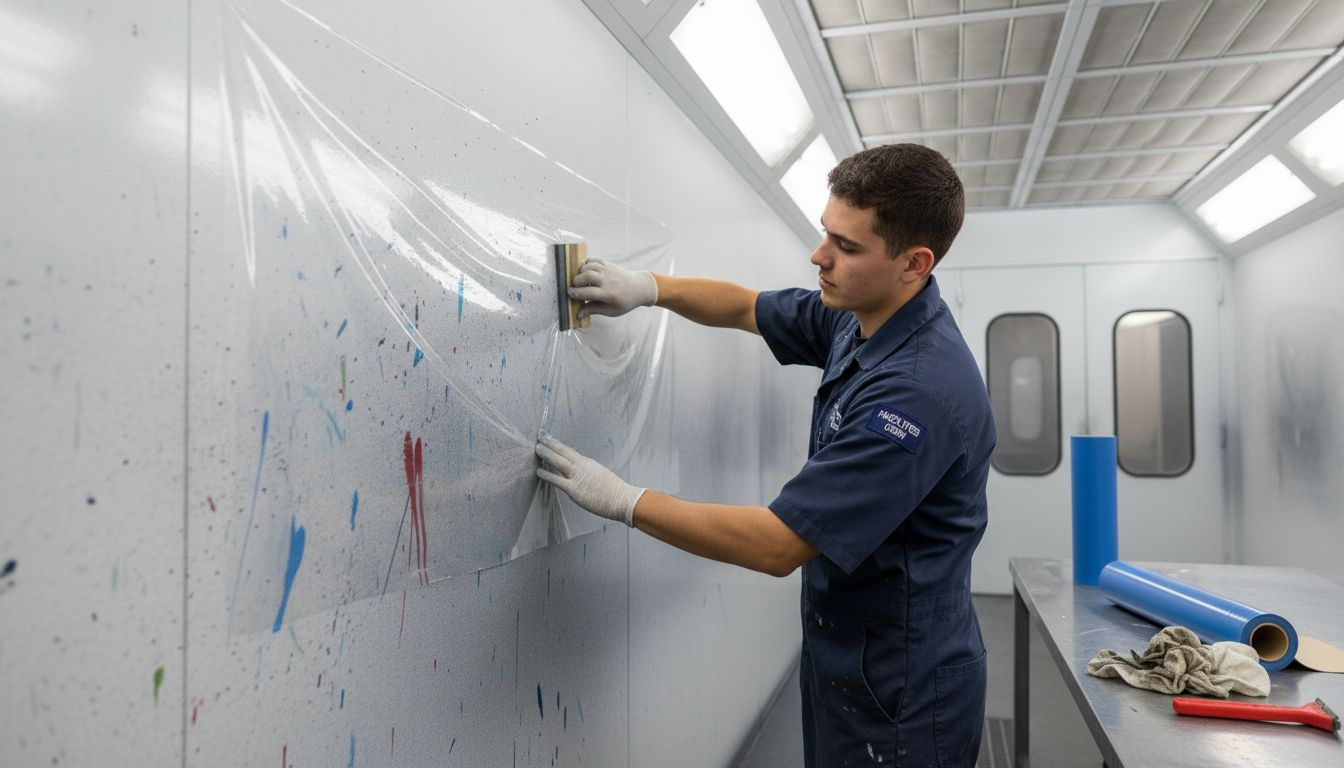
Filtration Mechanics involve complex interaction between the protective film’s specialized layers and incoming contaminants. The films utilize electrostatic charges, micro-porous structures, and advanced adhesive technologies to trap microscopic particles before they can settle on painted surfaces. Some films incorporate multiple filtration zones with progressively finer mesh designs, allowing them to capture contaminants of varying sizes while maintaining optimal airflow through the spray booth.
Protective film technologies draw inspiration from industrial and automotive protection strategies, adapting thin thermoplastic urethane principles to create comprehensive contamination barriers. These films typically feature engineered characteristics like:
- Static dissipative properties
- High particulate capture efficiency
- Temperature and chemical resistance
- Minimal air resistance
- Quick and easy installation mechanisms
Pro tip: Select protective films with verifiable micron-level filtration ratings and ensure proper installation techniques to maximize contamination prevention in your spray booth environment.
Risks of Unprotected Paint Environments
Unprotected paint environments create significant health and safety hazards that extend far beyond surface-level concerns. Industrial painting operations without proper containment and protection expose workers to complex risks involving chemical exposure, potential respiratory damage, and environmental contamination.
Health Risks represent the most immediate and critical consequence of unprotected paint environments. Workers can experience acute and chronic health problems from direct exposure to toxic compounds. Volatile organic compounds and hazardous chemicals in paint fumes can trigger immediate symptoms like headaches and dizziness, while potentially causing long-term damage to vital organs. These health challenges include respiratory complications, neurological impairments, and increased risks of serious medical conditions.
Beyond human health, unprotected paint environments compromise critical operational parameters. Contaminants like dust, airborne particles, and chemical residues can dramatically impact paint quality, leading to:
This table compares the risks in protected vs. unprotected paint booth environments:
| Aspect | Protected Environment | Unprotected Environment |
|---|---|---|
| Worker Health | Minimal exposure | High risk of illness/injury |
| Paint Quality | Consistent, high-grade | Frequent imperfections/rework |
| Compliance Costs | Lower, predictable | Fines, increased insurance |
| Equipment Longevity | Improved | Faster wear, more failures |
- Inconsistent paint finishes
- Increased product rejection rates
- Higher rework and refinishing costs
- Reduced equipment performance
- Potential equipment damage
- Decreased overall workplace productivity
Pro tip: Implement comprehensive environmental monitoring systems and invest in multi-layered protective technologies to systematically mitigate chemical exposure risks and maintain a safe, high-quality painting workspace.
Cost and Compliance Impacts of Protection
Paint booth protection strategies represent critical investments that directly impact operational financial performance and regulatory compliance, extending far beyond simple safety considerations. Industrial painting operations must navigate complex regulatory landscapes while maintaining cost-effective production environments that minimize financial risks.
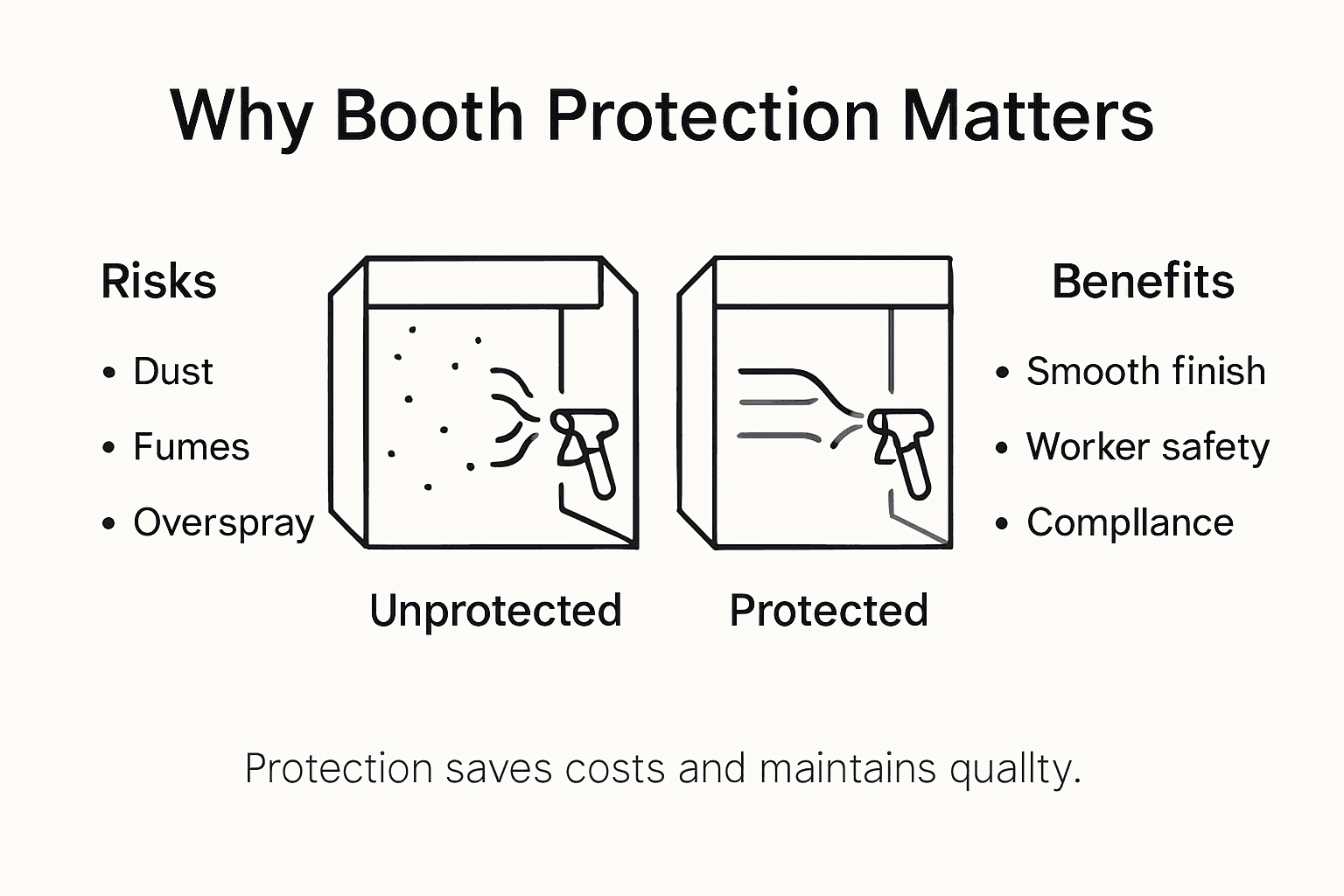
Regulatory Compliance emerges as a fundamental driver of protection investments. Companies face substantial financial penalties for inadequate safety measures, with potential consequences including workplace injury claims, environmental violation fines, and operational shutdowns. Implementing comprehensive protection systems can significantly reduce environmental impact and avoid costly legal challenges, transforming protection from an expense into a strategic financial management tool.
The financial implications of effective paint booth protection manifest across multiple operational dimensions:
- Reduced worker compensation claims
- Lower insurance premium rates
- Minimized equipment maintenance expenses
- Decreased product rejection and rework costs
- Enhanced overall production efficiency
- Improved workplace safety metrics
- Streamlined regulatory compliance processes
Pro tip: Conduct a comprehensive cost-benefit analysis of your current paint booth protection strategy, quantifying potential savings from reduced accidents, improved quality control, and minimized regulatory risks.
Elevate Your Paint Booth Protection for Flawless Finishes
The article highlights the critical challenge of contamination risks in paint booths that threaten both worker safety and finish quality. Dust, chemical vapors, and airborne particles not only cause costly imperfections but also create health hazards. Achieve your goal of consistent, high-grade paint finishes by controlling these variables with advanced protective solutions.
Dust Free Film specializes in premium multi-layer, electrostatic protective films developed to create dust-free environments in spray booths. Our durable wall and floor films are heat-resistant, static-free, and engineered for quick installation using patented application systems. These features directly address the article’s emphasis on environmental control, filtration effectiveness, and contamination prevention for superior paint quality and operational safety.
Explore how our innovative protective films can transform your workspace and safeguard your workforce while enhancing paint performance. Learn more about our industry-leading solutions at Dust Free Film and how we help automotive refinishing and industrial painting facilities meet strict safety and quality standards.
Protect your spray booth now with trusted multi-layer protection from Dust Free Film. Visit us to discover effective ways to reduce contamination, safeguard health, and ensure flawless finishes that keep you competitive. Act today to minimize costly rework and improve operational efficiency.
Frequently Asked Questions
What is paint booth protection and why is it important?
Paint booth protection involves creating controlled environments to minimize contamination during painting processes. It’s vital for ensuring paint quality, protecting worker health, and maintaining environmental safety by controlling hazardous emissions.
What types of contaminants can affect paint quality in spray booths?
Spray booths can be affected by particulate contaminants like dust, airborne fibers, and paint overspray, as well as chemical contaminants such as isocyanates, solvent vapors, and volatile organic compounds (VOCs), which can compromise finish quality and pose health risks to workers.
How do protective films work to enhance paint booth performance?
Protective films use specialized layers to block contaminants from settling on painted surfaces. They employ electrostatic charges, porous structures, and advanced adhesives to trap particles while maintaining optimal airflow, ensuring higher quality paint finishes.
What are the risks of not using protection in paint booths?
Unprotected paint environments can expose workers to hazardous chemicals, leading to health risks such as respiratory issues and long-term health problems. They also result in inconsistent paint finishes, increased rework costs, and potential regulatory fines.